


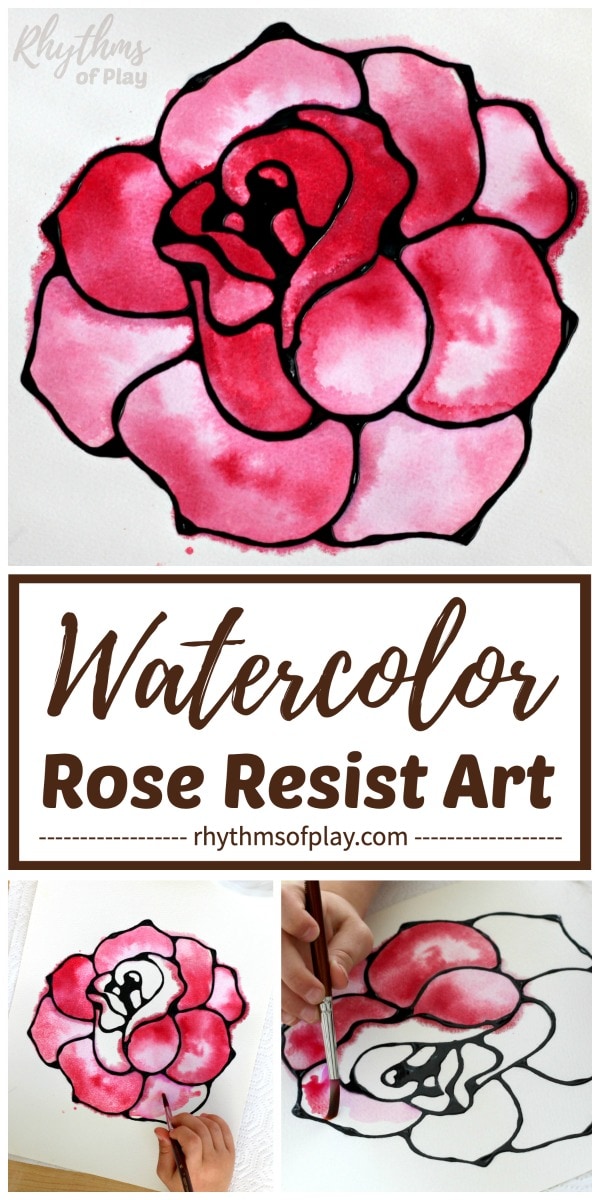
Paint a rose with watercolors and a black resist medium to create gorgeous faux stained glass rose art, as shown in the how-to photographs below.
Here’s a fun watercolor rose painting idea for kids, teens, and adults. This easy step-by-step tutorial will teach you how to paint a rose with watercolors and a black resist medium to create gorgeous faux-stained glass art. Painting a watercolor rose bloom is a fun and easy flower painting art project for kids, teens, and adults. Check out this list of fun and easy flower art projects and painting ideas for more flower art ideas.
The rose watercolor painting instructions below include 1) how to use a black colored resist medium (glue, pastel, or crayon) to create faux stained glass rose art, 2) how to make black glue, and 3) basic beginning watercolor techniques to help you learn how to paint a rose with watercolors. First published on April 11, 2018, this watercolor rose painting tutorial for kids (or adults) is regularly updated and republished to stay current and improve the content. You might also enjoy this sunflower art template, which you can color or paint and make into a flower crown!

Rose Art Watercolor Painting Idea for Kids and Adults:
Invite your children to paint a watercolor rose and join the fun! I had as much fun painting a watercolor rose as my 4-year-old daughter. Put completed rose art in a frame for an easy gift idea for mom, grandma, or your child’s favorite teacher. Or, try any one of these homemade gift ideas kids can make. You might also enjoy this list of gifts for mom.
Benefits of Painting A Rose:
For children or adults, painting rose art offers numerous benefits beyond creating a beautiful image. For children, painting roses is a creative outlet that allows them to learn how to paint with watercolors while improving fine motor skills and hand-eye coordination.
Painting roses also provides a creative outlet for children to express their emotions. It can teach patience and perseverance as children learn to blend colors inside each rose petal. This rose art project can also foster a sense of accomplishment and pride, boosting self-esteem and confidence.
Painting roses can be therapeutic in many of the same ways for adults, as it offers an artistic, meditative escape from daily stressors. Like other self-regulation strategies, it encourages mindfulness and relaxation, promoting mental well-being. Moreover, it allows self-expression and exploration of one’s creative abilities, regardless of age or artistic ability. Ultimately, painting a rose can bring kids and adults joy, satisfaction, and a deeper appreciation for the beauty found in nature.
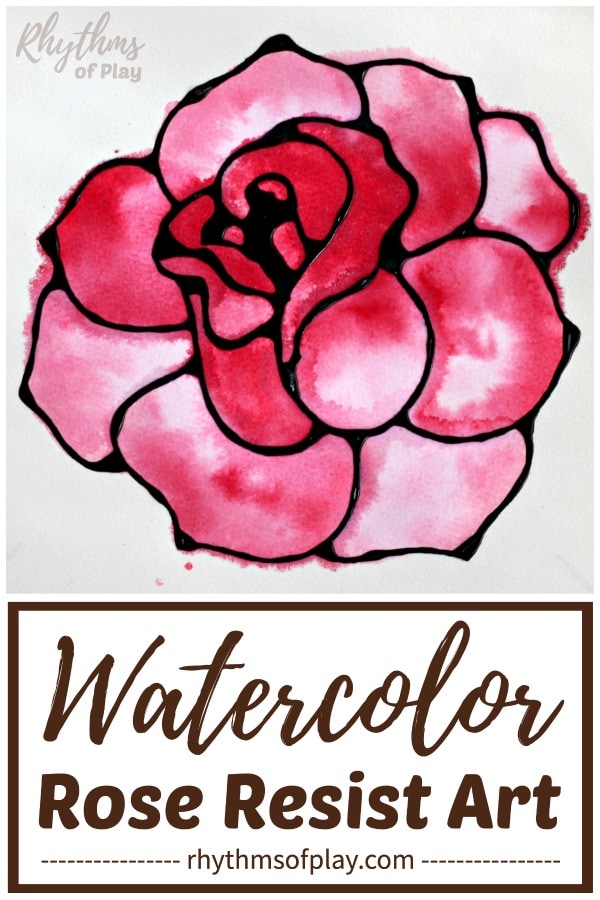
How to Paint Faux-Stained Glass Rose Art
Before starting your watercolor rose painting, please read the instructions below and let each painter decide which resist medium they want to use: black glue, black oil pastel, or black crayon. If you use black glue, follow the how-to instructions in the next section to make it—you can’t go wrong! You might also enjoy these under-the-sea black glue and watercolor art projects.
If you use a black oil pastel or crayon to draw a rose or trace the rose outline, you can skip learning how to make black glue and move on to the step-by-step directions to paint rose art. Please remember that creating and using black glue will require allowing the black glue to dry before painting a rose, so consider that before starting your rose painting. Decide on the art supplies you would like to use from the watercolor rose art materials listed below.
Related: Real Flower Nature Crafts
Watercolor Rose Art Materials:
- Choose one of the watercolor resist mediums below to work with:
- Black Glue (white glue
 mixed with black acrylic paint–scroll down for step-by-step instructions to make black glue)
 - Black oil pastel
- Black crayon
- Using black gives the roses a stained-glass look. However, you can also use white glue, white pastel, white crayon, or hot glue for an art effect with a slightly different color contrast.
- Black Glue (white glue
- Heavyweight cardstock or 140 lb cold press watercolor paper
- Rose art template (optional–alternatively, you can draw a rose)
- Choose one of the following watercolor paints to make rose art:
- Watercolor Paintbrushes
- Art storage picture frame (optional, but makes a great gift with the rose painting)

 Using black gives the roses a stained-glass look. However, you can also use white glue, white pastel, white crayon, or hot glue for an art effect with a slightly different color contrast.
  or 140 lb cold press


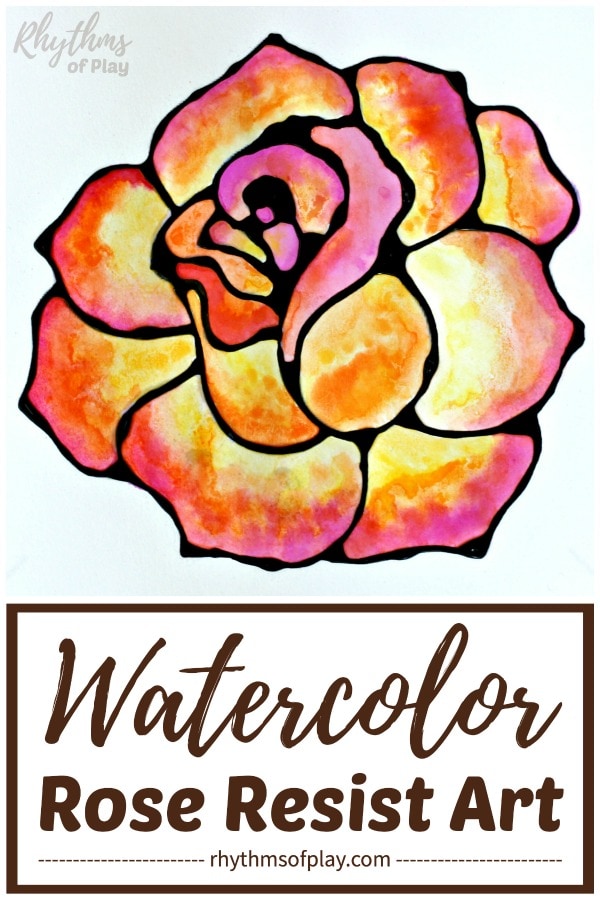
Related: Fun Art and Craft Ideas for Kids
Make Black Glue for Rose Painting or Use A Black Oil Pastel or a Crayon:
- If you use a black crayon or a black oil pastel as the resist medium to paint faux stained glass rose art, skip to the step-by-step directions for painting a rose in the next section.
- Otherwise, follow the simple step-by-step instructions below to make black glue:
How to Make Black Glue:
Making black glue is simple. My daughter and I have a small bottle of what was once white glue dedicated to continually mixing white glue and black acrylic paint into it to make a never-ending supply of black glue. We never measure, and it always turns out fine. However, I recommend an approximate ratio of 1 tablespoon of black acrylic paint for every three to four ounces of white glue.
- Prepare the bottle: Dump some white glue out of a small bottle (if needed) or fill another squeeze bottle halfway with white glue.
- It is best to make black glue with a used bottle of white glue that is halfway empty, leaving room to add acrylic paint and mix the solution.
- If the bottle is less than half full, add white glue from another bottle to the used glue.
- Add black paint: Squeeze or pour black acrylic paint into the small bottle of white glue and shake well.
- You will need approximately one tablespoon for a 4-ounce bottle.
- Because white glue dries clear, you don’t need to add a lot of black acrylic paint to make black glue look black.
- In other words, black glue will look grey when wet but black after it dries.
- Mix thoroughly: Shake the bottle vigorously or use a chopstick to stir the black paint to ensure it is mixed throughout the bottle.
- Adjust black glue mixture as needed: If the bottle of black glue is not dark enough, add a little more black acrylic paint and shake well, or mix with a chopstick again.
- Store and use: Use the black glue for this rose art project, then store it for later use.
- Add more white glue and black acrylic paint to the same bottle to make more black glue when needed for other art projects such as this Starfish.
 into the small bottle of
  and shake well.
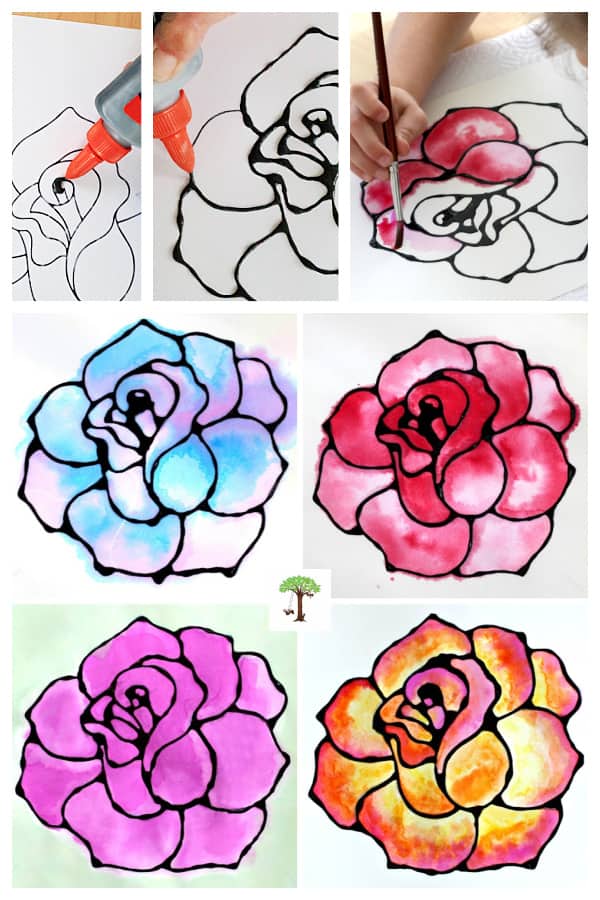
How to Paint a Rose Watercolor Painting with A Black Resist Medium to Create Faux-Stained Glass Art:
Follow the easy steps below to complete this watercolor rose painting project. If you are working with young children, we recommend doing this faux stained glass rose art project in stages over two days. On the first day, draw or print the rose art template, then trace it with a black resist medium of choice: black glue, black oil pastel, or black crayon.
On the second day, get out the watercolors and invite the children to paint their roses. If you use black oil pastel or black crayon as the resist medium for painting a rose, you can complete your rose art in one day, as long as everyone has the energy to continue. Remember, children find art much more fun when we make it easy! You might also enjoy making fingerprint flower Glass Magnets.
1. Draw a rose or download the printable rose art template:
- Either sketch or draw a rose on watercolor paper, create several rose sketches on a larger canvas or get the rose outline template and print it onto heavy cardstock.
 .
.2. Trace the rose art printable template with black glue, oil pastel, or crayon:
- Trace the outline of the rose art drawing or printable with black glue (use the recipe and directions above to make it), a black oil pastel, or a black crayon.
- Older children and adults can do this step independently, while preschoolers and kindergarteners may need assistance or guidance.
- If you use black glue for this rose art watercolor painting project, it’s best to allow it to dry overnight before moving on to the next step.
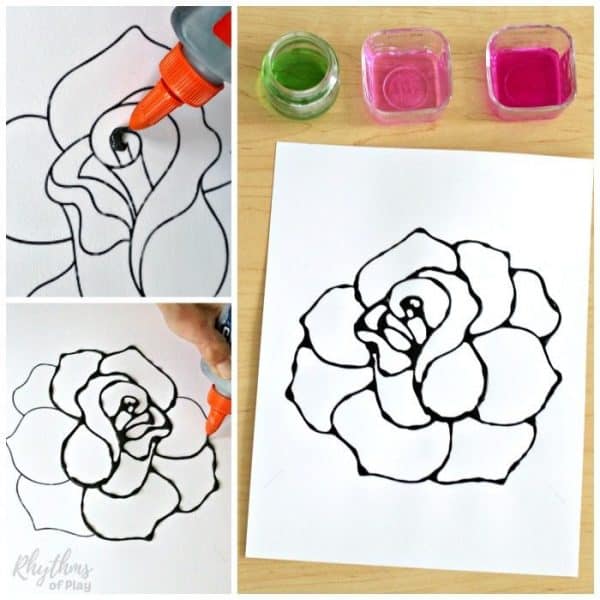
3. Paint the rose with watercolor paints:
- When the black glue rose art outline is completely dry, invite children to use watercolors to paint a watercolor rose inside the outline.
- The black glue, crayon, or oil pastel will resist the watercolor paint and give the rose artwork the appearance of stained glass, as shown in the photos above and below.
- Aren’t the faux stained glass rose paintings in the photographs gorgeous?!
- Scroll down to read the watercolor painting tips before painting a rose.
4. Put the watercolor rose painting in a frame to hang or gift:
- Faux-stained glass rose art looks beautiful on display in an art storage picture frame in your home or classroom.
- The art storage picture frame recommended above makes it easy to store several paintings and display them one at a time.
- Framed watercolor rose paintings also make excellent gifts for Mom or Grandma on Mother’s Day, Grandparents Day, or her birthday.
- You might also enjoy these DIY gifts for Mom.
Rose Watercolor Art Process and Tips:
I thought it might be helpful to share how my daughter and I painted roses with watercolors to demonstrate how to paint with kids. Read through the rose watercolor painting tips below to learn more about creating rose art and working with children.
First, I printed out and traced two roses with black glue the night before introducing this watercolor art project to my daughter. Next, I traced two rose printables with black glue so that I could paint a rose with watercolors, too!
Because my daughter has had a lot of experience working with wet-on-wet watercolors as a student of Waldorf education, I decided to let her give this project a go without demonstrating it first. I was curious to see her process without my influence, so I told her I would paint mine after her. However, suppose your kids (or students) have never worked with watercolors. In that case, I recommend preparing at least one extra rose to demonstrate how to paint it with watercolors before asking the children to paint their own.
Show children how to paint with watercolors while describing what you are doing in simple terms they can easily understand. Young children are imitative creatures and learn best by watching others. (See evidence of this in “Round Two” below.)
Invite children to paint the rose petals individually with watercolor paints. Alternatively, paint the entire rose outlined in black glue or another resist medium. You can even use hot glue or white glue, pastel, or crayon, but the final art effect will be different. The black glue will resist the watercolor paint if it doesn’t get soaking wet. If it gets too wet, a little black will likely pull into the painting, so use water sparingly.
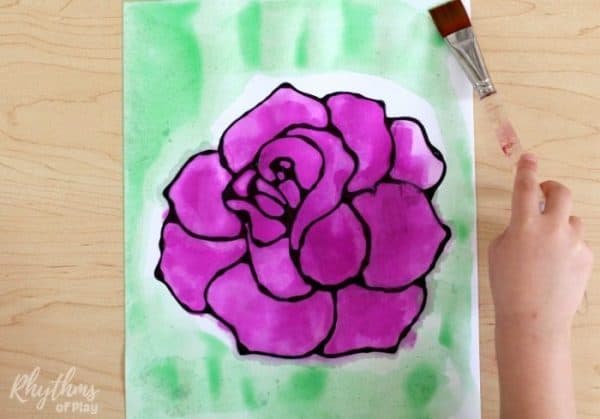
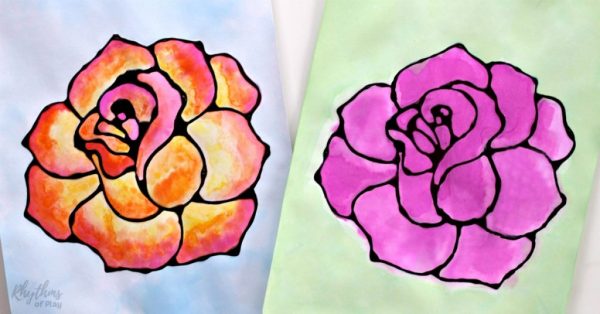
My daughter loves pink, so she painted a rose with light and dark pink watercolor paint and light green for the background. Before starting, I shared a color story about a rosebud that longed to be bright and colorful, and away she went. (For more information about telling an optional “color story,” read the how-to instructions in single-color wet-on-wet watercolor painting.)
Related: Starfish Watercolor Art
Faux Stained Glass Watercolor Rose Painting (Process Continued):
Because I took pictures of my daughter painting a rose with watercolors, she wanted to take photos of me painting rose art. I mentioned that children love to imitate what they see the adults around them doing, right? So, no surprise there.
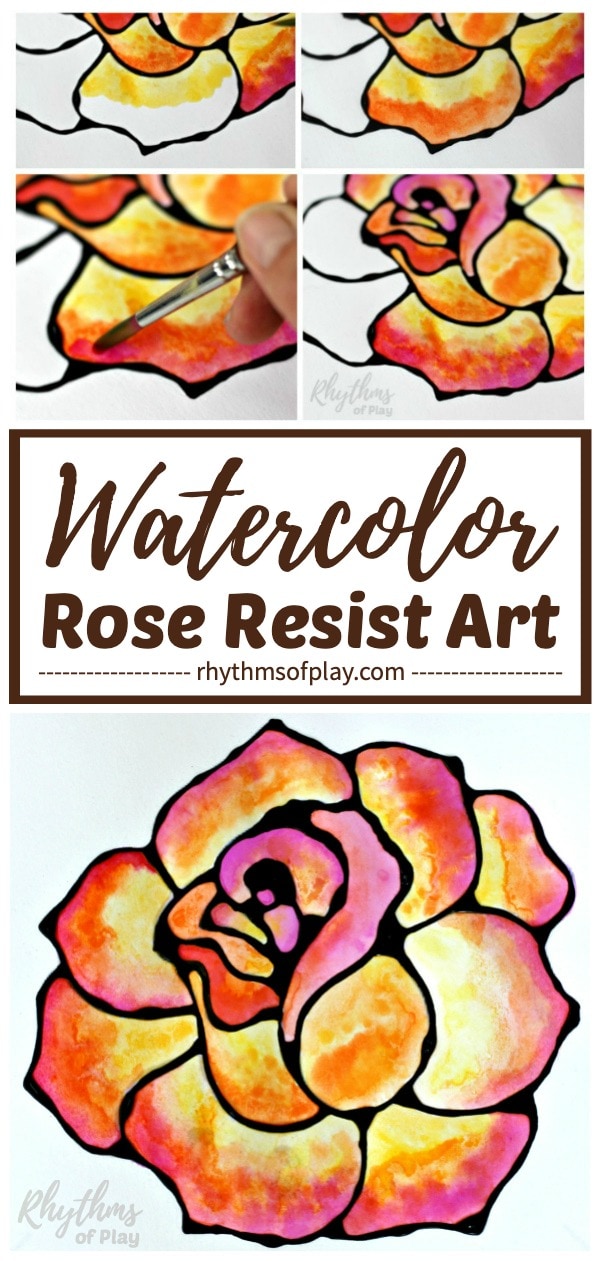
I gave her my camera and decided to paint a rose with yellow cadmium, orange, and magenta watercolor paint. My daughter took the photos in the image below as I worked. I was so impressed with her pictures of my yellow rose watercolor painting that I included them in the photo collage below.
In the step-by-step watercolor rose art photo tutorial below, you can see how to lay the watercolor paints from the center of the rose to each petal edge by layering them on top of each other and mixing and blending to create deeper dimensions in each rose petal. But painting a watercolor rose is a perfectly imperfect art form.
The key to painting a rose with watercolors is to go with the flow. You want to work with how the watercolor paint flows instead of against the watercolors’ natural flow. In other words, use more or less water to help the colors mix, blend, layer, or flow. But know that watercolors have a mind of their own. You can use what they do as part of your art by turning it into a beautiful oops or an exercise in mindfulness. Or, even better, do both!
Related: Four-Season Hand and Fingerprint Tree
Related: Art and Science Experiment with Watercolor Resist
Watercolor Rose Painting Project (My Daughter’s Second Rose Painting):
After she took photos of me painting a rose, my daughter begged me to print more roses to trace with black glue and paint with watercolors because she enjoyed this rose painting project so much, so I did! I was amazed at what happened next.
A few days after her first watercolor rose painting, she painted two more roses with different colors. Even though she had watched me paint a rose with watercolor a few days prior, I could see the influence that observing my work had on her rose art painting.
This time, she started to paint a rose with a flat wash watercolor brush but soon switched to a smaller round brush, like the one I used for my rose painting. This is where it gets fascinating.
She began layering the watercolors and using water like she saw me paint a rose to add texture and dimension to her rose artwork. This is amazing yet true and perfectly normal, too! As I mentioned above, children learn best by watching others. I did not instruct her at all, and I didn’t give her one tip or even a tiny bit of advice.
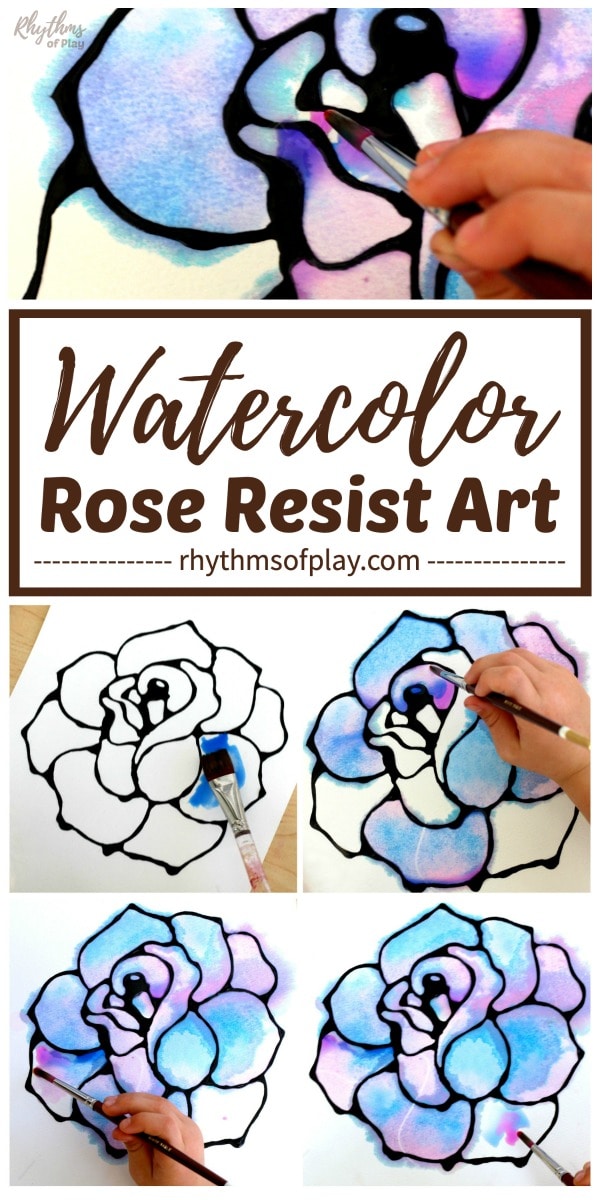
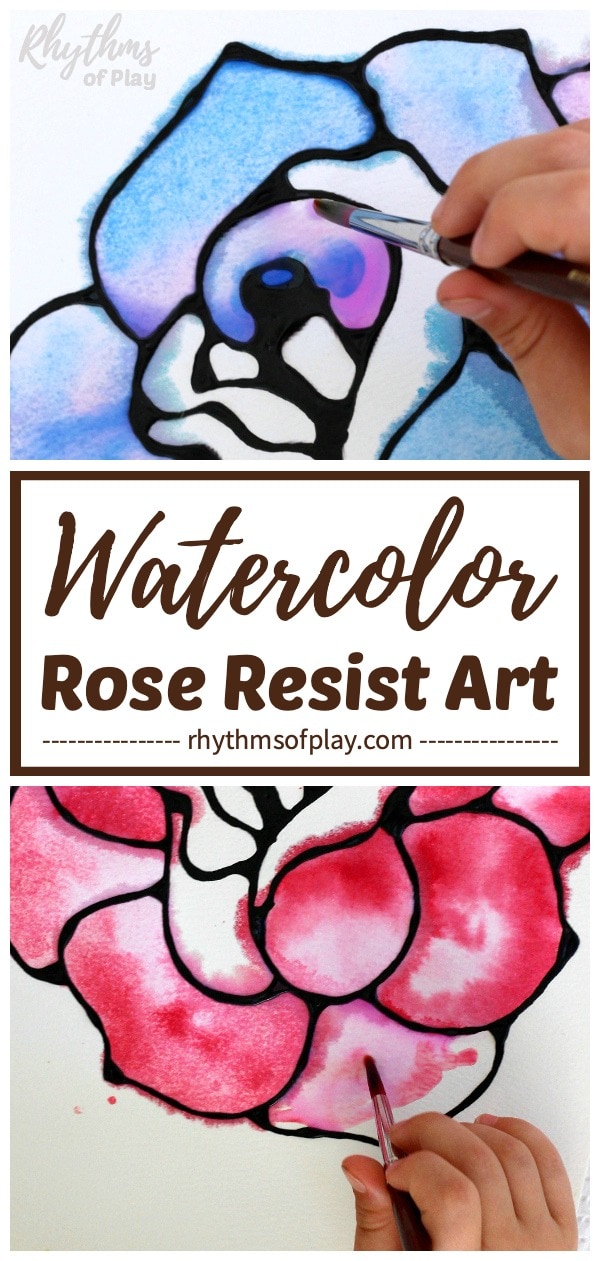
She watched me paint a watercolor rose, took photos, and learned! Monkey watch, monkey learn, monkey see, monkey do! Look at the pink and blue rose and the gorgeous pink and red rose she painted below using her new watercolor layering and blending skills. Look at how beautifully the colors blend near the center of the rose.
Watercolor Painting Tip: Use more or Less Water to Vary the effect:
When using a single color, such as the red my daughter is demonstrating in these photographs, use more or less water to create light and dark areas or dimensions that almost look like different shades of color—such as the lighter pink my daughter is painting the rose in the photograph above. The photo below is an image of the final version of the rose painted with red watercolors.
Related: Easy Felt Flowers with Twig Stems
Watercolor Rose Painting with Black Glue Resist:
A black glue rose is too gorgeous to stash away or sneak into the round file known as the trash can. This artwork would look fantastic framed and hung in the home or given away as a gift.
My daughter can’t wait to give the black glue roses she painted for each of her grandmothers for Mother’s Day! You may also like these cute fingerprint flower glass magnets and this collection of unique custom homemade gifts kids can make.
You can also use this fun sunflower crown coloring page printable to make a paper flower crown with a gorgeous sunflower tiara with watercolor paints or colored pencils. Alternatively, you can make a flower crown with felt flowers.
Learn more about Nell Regan Kartychok, author, photographer, and creator of this original watercolor art activity and Rhythms of Play HERE!
More Black Glue Watercolor Resist Art Projects:
If you like working with black glue, you may be interested in other art projects on the list below. Click on the title to see the full tutorial for each art project.
- Winter Tree Black Glue Watercolor Resist Art
- Under the Sea Black Glue Watercolor Resist Art Projects
- Starfish Black Glue Resist Art Project
- Fall Leaves Black Glue Watercolor Resist Art Project
Popular Art Ideas for Kids:
- Best Flower Art Projects for Kids
- Rainbow Rainy Day Art
- Heart Art Projects (and Cute Heart Crafts, Too!)
- Four Season Handprint and Fingerprint Tree
- Heart Art Salt Painting
- Best Fall Art Projects
- Rainbow Shamrock Art Project
- Rainbow Art Projects Kids LOVE!
- Surprise Watercolor Heart Art
- Best Winter Art Projects
Holiday Art Projects for Kids:
- Valentine’s Day Art Projects
- Saint Patrick’s Day Arts and Crafts
- Easter Art Projects for Kids
- Halloween Art Projects for Kids
- Christmas Art Ideas for Kids





Hi there Nell!
This is a gorgeous project that I am interested in trying out with the kids in my Library programs. While there is lots of rose clip-art online, I really like the one you used. Do you have link to where you found it? Or know where the image can be downloaded? I would be so incredibly thankful if you could help!
Thanks so much for posting this,
Sally
Hi Sally! So glad you like the project and the rose I used. Creating my own printable is on a very long list of to-dos. I will move it up in priority and do my best to get to it in the next day or two.
Oh! I didn’t realize you made it yourself. Nell, I would be deeply grateful if I could receive a copy – whenever you are able to. If it is easier, my email is sally.samuel@wbrl.ca. Thanks so very, very much!!
Okay, Sally, I have edited the post to include a link to a free rose template that you may use for personal use only. You may copy them for students to use, but they may not be distributed. Enjoy! 🙂
THANK YOU, Nell! You are amazing!!!!!!!! 🙂
Awww, gee, thanks… blushing 🙂
I printed the template and put the black glue on and let it dry overnight. When I put watercolor on, black started running into the paint. Any ideas on what might be causing this? Thanks so much.
Hi Laura,
I’m sorry that happened to you! Let’s troubleshoot what may have caused your rose watercolor painting to run black. My guess is either that the black glue was not completely dry (even though you waited overnight), or you may have used a bit too much black acrylic paint mixed into the white glue. The most exciting thing about making black glue is that you only need a little bit of black acrylic paint. The glue will always appear black when it dries because white glue dries clear. My suggestion is to make another batch of black glue or add a bunch of white glue to the solution you already made and try it again. I promise it works!
Nell