
Tame Tantrums and help calm anxious children at home or in the classroom with this list of emotional regulation strategies, calm-down tools, and calming resources for kids.
Learning to calm down and self-regulate is an essential social-emotional skill for both children and adults. The ability to regulate emotions is a key component of emotional intelligence. This makes social-emotional learning one of childhood’s most important, often forgotten, developmental domains. However, most people don’t master it until adulthood, if at all.
Kids and adults can use the self-regulation strategies below to prevent, reduce, and eliminate many adverse reactions and behaviors that can occur in response to life’s challenges. Learning first to co-regulate and later to self-regulate lies at the heart of this developmental domain.
Children (and adults) who have learned emotional regulation skills can stay calm in stressful situations, handle intense emotions, adapt to difficult circumstances, control their reactions to life’s varied events, and respond appropriately to their environment. Challenges with self-regulation are more common in younger children, children on the autism spectrum, those with special needs or learning disabilities (LDs) like ADD or ADHD, and those living in poor or otherwise disadvantaged conditions.
A lack of self-regulation skills can lead to social-emotional, behavioral, and academic challenges. Children who can self-regulate are more likely to experience success. Thankfully, learning how to cope and adapt is a brain-based skill that develops through practice over time. Punishment and medication may reduce challenging behaviors in the moment. However, they cannot teach children the essential life skills they need to manage stress and self-regulate, such as the activities and strategies listed below.
Scroll down to learn more about co-regulation and self-regulation and why these are essential social-emotional skills for children and adults to master. Then, look through the list of calm-down strategies. It is filled with simple activities you can do to help kids learn how to self-regulate. You might also enjoy reading children’s fairy tales, as they can aid in social-emotional learning and growth.
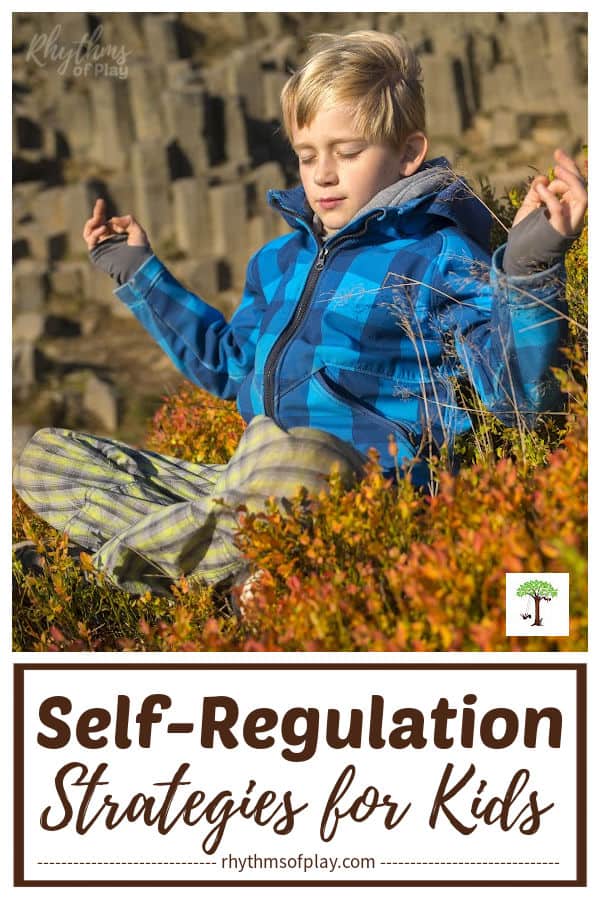
What is Self-Regulation?
Self-regulation, also called emotional regulation, is the ability to manage our thoughts, impulses, emotional responses, actions, and behaviors when we feel anxious, upset, or overwhelmed. Essentially, it’s about how we respond in stressful situations. Becoming more aware of how we react and choosing to respond calmly rather than getting upset or engaging in other harmful behaviors is how we master this essential skill.
When we know how to self-regulate, it’s easier to stay calm in challenging circumstances, adapt to stressful situations and environments, cope with big emotions, and respond in healthier, more appropriate ways. Could you imagine what the world would be like if more people knew how to self-regulate and took the time to think before acting?
And yes, I am talking to myself here as well. We can each do our part to help make this world a more emotionally regulated place — lol! No one is perfect. As human beings, we can all sometimes overreact and lash out. But learning to self-regulate can reduce or eliminate the frequency and duration of our negative responses as we become more emotionally adept and mindful of our reactions. This makes self-regulation an essential social-emotional skill for both kids and adults to master.
Challenging behaviors are often just a sign that children cannot handle their big emotions. And sometimes, these emotions, whether mad, scared, or sad, can become too overwhelming to deal with, and the child cannot remain calm. Fortunately, the list of self-regulation strategies for kids below can help parents, teachers, and other caregivers teach this essential social-emotional skill to children.
Why is Self-Regulation an Important Skill to Learn?
Learning to calm down and self-regulate is an essential skill for kids (and adults) because it fosters emotional maturity and our ability to form social connections. Self-regulated children are better at coping with disappointment, stress, and frustration. Thus, they tend to be calmer, more centered, and more focused than dysregulated children.
When children can self-regulate, they are more likely to do well in school, make lasting friendships, become efficient problem solvers, and form strong family bonds at home. In contrast, the inability to self-regulate can lead to social, emotional, behavioral, and academic issues. Thus, teaching children how to self-regulate can help reduce the amount, severity, and duration of times they become overwhelmed and assist them in those moments when they lose control.
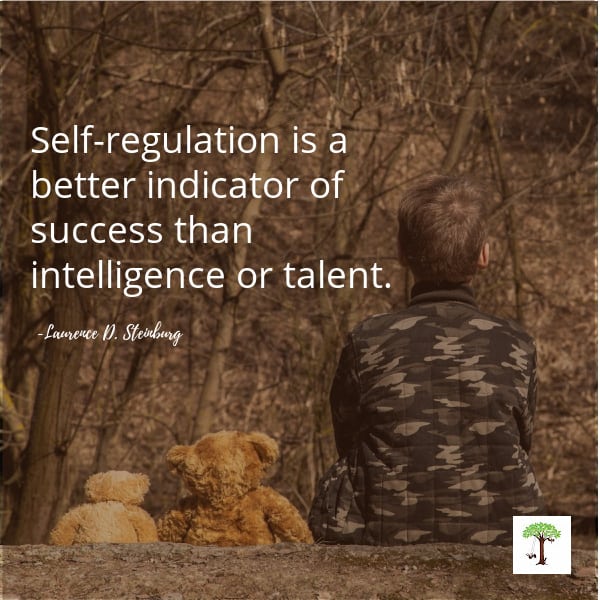
Best of all, those moments of distress will become less likely as the child gets better at self-regulation. When children work to master self-regulation, they become better at controlling their reactions and responding in life’s most challenging moments. Their problem-solving abilities will also improve when faced with everything from simple setbacks to highly challenging situations, making children who can self-regulate more likely to experience success.
signs of Poor Self-Regulation in children:
Signs of poor self-regulation in children include frequent, intense emotional outbursts or meltdowns, extreme impulsivity, difficulty adjusting to changes or transitions, and challenges managing social interactions such as sharing or resolving conflicts. These behaviors often manifest as explosive reactions to minor frustrations, difficulty calming down, or excessive physical outbursts.
Key Indicators of Poor Self-Regulation Include:
- Impulse Control: Acting without thinking, interrupting conversations, taking excessive risks, or struggling to wait a turn.
- Emotional Dysregulation: Severe meltdowns, tantrums, or overreactions to minor issues that appear disproportionate to the situation.
- Difficulty with Transitions: Struggling to shift from one activity to another, often leading to resistance, anxiety, or emotional outbursts.
- Slow Recovery from Upset: Extended meltdowns that may last over an hour, or the inability to calm down on their own.
- Physical or Sensory Behaviors: Constant fidgeting, moving around, or using excessive force (i.e., hitting, throwing, biting, kicking, or aggressive vocal tones).
- Social and Academic Challenges: Having trouble managing conflicts, sharing with peers, or focusing on learning tasks at home or at school.
Children with poor self-regulation may show rigid, inflexible, or overly controlled behaviors. They might also experience physical symptoms, such as stomachaches or headaches, due to emotional stress. In some cases, poor regulation can lead to dangerous, self-harmful, or aggressive behavior. If safety is an issue or if these behaviors are severe and persistent, please seek advice from a pediatrician or child psychologist.
How Do You Teach Kids to Self-Regulate?
If you are wondering, “How can I help my child self-regulate? You have come to the right place. Understanding self-regulation and helping children master this social-emotional skill is crucial for parents, teachers, and other caregivers. Thankfully, learning how to cope and adapt is a brain-based skill that children can learn with practice. There are several tools and helpful activities you can use to teach kids how to self-regulate.
Below is a list of calming strategies for kids, from toddlers to teens, to help children self-regulate. But before we get started, it is important to understand that children can experience moments of emotional dysregulation well into adolescence and adulthood. Learning emotional regulation skills doesn’t happen overnight; it is a gradual, lifelong process every single one of us needs to practice and maintain.
It’s also essential to understand the role we play in our children’s ability to self-regulate. This is why it is crucial to both be gentle with our children and with ourselves as we help them develop these essential skills. It can be difficult for some children to develop the skills they need to calm down. Especially without the help of a self-regulated parent, teacher, or caregiver.
This is why children living in subpar, disadvantaged environments or experiencing abuse will often have much more difficulty regulating their emotions and behaviors, and experiencing success. Because oftentimes, these kids do not have a self-regulated caregiver to help them co-regulate.
What is Co-Regulation?
The ability to self-regulate begins with co-regulation. Co-regulation occurs when a caring, calm adult helps a child handle strong feelings. Young children aren’t born knowing how to calm themselves; instead, they learn by first borrowing our calm. Co-regulation is being a calm presence so children can learn to manage their own distress in challenging moments.
When a child is upset, you can stay nearby, speak softly, and calmly help them recognize what they are feeling by labeling their emotions. Helping children identify their emotions by first labeling what they are feeling and then asking for confirmation is a great way to co-regulate. For example, when a child is visibly struggling with a toy, you can say, ” It looks like you’re feeling frustrated because you can’t get that toy to work. Do I have that right?
It can also be helpful to model different strategies, such as taking calming breaths or taking breaks. This is another excellent strategy to help children learn to regulate their feelings. For example, you can slow your breathing, offer a hug, or sit quietly together during these moments. Over time, the child begins to imitate these skills on their own during moments of distress.
Conversely, when you grab a child aggressively, tell them to calm down forcefully, or smack them on the bottom when they get upset or act out, it does little to teach these essential life skills. The process of self-regulation develops with support, patience, and practice. When the adults around them model healthy emotional regulation, children can gradually learn to calm their own bodies, minds, and feelings.
Children Need Healthy Role Models to Co-Regulate:
Babies need loving parents or caregivers to develop cognitively, emotionally, and socially. In other words, babies and young children need a positive role model (a parent or caregiver) to develop healthy cognitive and social-emotional skills and life habits.
Co-regulation begins when a parent or caregiver is present for a baby during stressful moments and responds appropriately to the baby’s needs as described in the previous section. First, they calmly attune to what the baby is experiencing or might need. Then they attend to that experience, or those needs, in an emotionally healthy or meaningful way.
It’s also best when healthy role models remain available to meet the child’s developing needs well into adulthood. This is one of the primary reasons children who experience trauma, or abuse, or live in a low-income, war-torn, or otherwise disadvantaged environment find learning how to self-regulate challenging.
How Does Self-Regulation Develop?
Self-regulation develops in early childhood (between the ages of three and seven) primarily through environmental influences and the experiences we have in our day-to-day lives. This means that first, we learn by watching how our parents, family, and other caregivers respond to life’s events and experiences. Later, we learn by watching our friends, teachers, and co-workers deal with various situations.
Of course, other factors, such as autism and other mental health conditions, stressful environments, neglect or abuse, past traumatic experiences, or the lack of a healthy caregiver to assist with co-regulation, can negatively impact children’s ability to calm down, self-soothe, and learn to self-regulate.
However, most of us grow up unconsciously modeling the actions and behaviors we see the people around us doing. As the common saying goes, “Monkey see monkey do.” Fortunately, we can become more conscious of these unconscious habits and improve our self-regulation by using the preventive calm-down strategies listed below. Best of all, most of the calming self-regulation strategies on the lists below are free (or easy to make)!
At What Age Does Self-Regulation Develop?
Children are not born able to regulate their emotions independently. This skill develops gradually over time. Infants from 0 to 2 years old cannot self-regulate, so babies and toddlers usually depend entirely on caregivers to soothe them. By age 1, children begin to understand that parents can help them manage their emotions. At this stage, they can start learning to regulate their feelings through co-regulation with caregivers.
Two-year-olds often begin using basic strategies they observe others employ, but they still rely heavily on adults. Genuine independent emotional regulation typically doesn’t develop until ages 3 to 7. Preschoolers start to use simple tools, such as taking deep breaths or speaking words, but they still require a lot of support.
Tantrums usually peak around age 2 and decrease by age 5. By that age, children tend to gain better control over their emotions. This helps lessen the frequency of emotional outbursts. Between ages 5 and 7, many children can handle daily feelings with support, but strong emotions can still be difficult.
Once children start elementary school, they become better at managing a wider range of complex emotions and using cognitive strategies like problem-solving. By age 8 or 9, children usually gain better control over their feelings. However, true self-regulation continues to develop throughout childhood and into adolescence as the brain matures. Even adults sometimes need help calming down, and that is normal.
Other Factors Involved with Co-Regulation and Learning How to Self-Regulate
When helping children learn to calm down and self-regulate, it’s also important to consider the other factors that can contribute to their distress. Lack of sleep, hunger, inadequate nutrition, and overstimulation can amplify negative emotions and increase stress and anxiety levels astronomically.
Educating ourselves as parents and teachers, and working to prevent these issues from negatively affecting children’s behavior, is a great way to help them calm down and increase their ability to self-regulate. Several calm-down strategies listed below can help children manage and resolve these crucial issues. And most of them are free and easy to implement.
Toddlers and preschoolers, children from disadvantaged environments, and children who have experienced abuse or trauma in their past generally have a more challenging time with self-regulation. The same is true for children with learning difficulties, ADHD, and other special needs.
Severe anxiety, autism, or other mental health conditions can negatively affect a child’s ability to calm their emotions independently. If your child has any of these diagnoses, or you think they might, please seek the help of an Occupational Therapist, Doctor, Psychologist, or expert in the field.
Calm-Down Strategies for Kids: 25 Ways to Help Kids (From Toddlers to Teens) Learn to Self-Regulate
Prevent emotional meltdowns and violent outbursts at home and in the classroom with the calming strategies for kids, from toddlers to teens, on the list below. When I worked as an ocean lifeguard, one of the essential mottos drilled into my mind was the phrase, “Prevents before rescues.” In other words, lifeguards are taught to go out and inform the public. To make “prevents” so people are less likely to need help, get themselves into trouble, or need to be “rescued” in the future.
Not only does it take much more time, effort, and resources to help people in trouble than to prevent them from getting into trouble, but it also takes much more time, effort, and resources to help people in trouble than to prevent them from getting into trouble. It’s also much easier and safer to prevent accidents than to fix them once they occur.
Each self-regulation strategy, tool, and resource on the list below can help parents, teachers, and caregivers do the same. Use the self-regulation strategies on the list below to “make prevents before rescues” at home and in the classroom. In other words, use the social-emotional strategies and tools below to prevent tantrums, reduce the severity and duration of emotional outbursts, and help children learn to self-regulate. So they don’t need to be rescued (as often) in the future.
1. Provide Clear Expectations of Behavior (with Visual Aids if necessary):
Clear expectations help children feel safe. When kids know what is expected, they use less energy guessing and have more energy to learn. Simple, consistent rules give them a steady guide for how to act, even when emotions run high. This makes managing feelings easier.
Keep expectations clear, brief, and positive. Clearly state what you want children to do, not just what to avoid. For example, “Use gentle hands” is much more effective than “No hitting.” Calmly review expectations before transitions, playdates, or new situations. Kids perform better when they know what to expect.
Consistency is key. When adults respond consistently, children understand what to anticipate. Calm reminders, visual cues, and regular routines reinforce the message. Over time, kids start to connect their feelings, choices, and outcomes. That connection is an important step toward emotional regulation.
2. Establish Clear Rules with Logical Consequences at Home and in the Classroom:
Clear rules, paired with logical consequences if broken, can help create structure and consistency in the home or classroom when enforced in a kind and straightforward way. Children need boundaries to feel safe and secure, and when they do, they are less likely to act out or have an emotional meltdown. Create clear rules with logical consequences to help children with self-regulation issues. For more information on positive discipline and logical consequences, look at this list of positive discipline books for parents, teachers, and caregivers.
3. Model Positive Behaviors:
Help children co-regulate by staying calm in moments of distress and modeling healthy self-regulation skills. Most children learn to manage their anger and self-regulate by watching and learning from the people they spend the most time with, their parents and caregivers. As the saying goes, “Monkey see–monkey do.”
Because children tend to mirror the reactions and behaviors of the adults around them, it is best when parents, caregivers, and teachers can model appropriate responses to life events and situations. For example, speaking with a warm and gentle tone, even when angry or upset, is just one of the many ways we can model positive behavior and help our children learn to co-regulate and eventually self-regulate.
But remember, if things don’t go as planned, and you mess up, that’s okay too. How will children learn from their mistakes if we don’t show them? I’m nowhere near perfect. I still make plenty of mistakes. I just do the best I can, like every other parent, caregiver, or teacher in the world. It doesn’t matter how many years I spent in graduate school pursuing an M.A. and a doctorate in psychology. Nor does it matter that I have over 25 years of experience teaching, coaching, and caring for children.
Do your best to stay calm and model the self-regulation skills you hope to see your children use. Doing this will help them learn to co-regulate. Several more examples are included below and sprinkled throughout the remainder of this helpful article. Learn more about teaching children through the power of example in How to Teach Kids Good Manners and How to Raise a Helper.
How Do You Model Self-Regulation Skills to Children?
The most important thing you can do to teach children healthy self-regulation skills is to model appropriate ways of relating through co-regulation. Whether we are communicating with them directly or they are watching us relate to others, it’s important to apologize, communicate, and do our best to be calm, kind, empathetic, and respectful. Of course, that’s not always possible; we are human after all, so we just do the best we can moment by moment.
Sharing where I went wrong, what I can do to fix it, if anything, and how I plan to do better next time using the method described below is a helpful strategy for getting through the most challenging moments. When you get angry or upset, do your best to show children appropriate ways to manage these intense feelings with the self-regulation techniques like those below:
- Taking a deep breath to calm down.
- Counting down from 10 before responding.
- Speaking in a warm, gentle tone.
- Accepting responsibility for the role you played.
- Sharing your feelings when appropriate.
- Apologizing for actions or behaviors when necessary.
- Stating what you plan to do to fix your mistake if needed.
4. Always Start with Empathy: Validate Feelings and Emotions First:
One of the best things anyone can do for another person, a toddler, a child, or an adult, is to validate their concerns, feelings, and emotions. Doing our best to learn how someone is feeling and to express our understanding and empathy for their situation, regardless of our opinions, is a parent, teacher, or caregiver’s greatest calling. As well as our most challenging duty.
Always start with empathy by validating what you hear them say or mirroring their emotions as calmly as possible first. Your opinions, judgments, policing, and emotional reactions in this moment will only make them more upset and unreasonable. Please save them for later. Kids (and adults) often get more upset when they don’t feel heard. This is why it is best to make them feel heard and understood before you do anything else.
Most tantrums and emotional upsets are caused, or intensified, when we don’t feel understood. And most toddlers (and teens) are notorious for thinking that we don’t know what they want and freaking out to get their way. This makes remaining cool, calm, and collected extremely difficult in some situations, and often, our judgments, opinions, biases, and bad habits can get in the way. (Guilty, as charged!) So, I have a simple recipe for statements and phrases that work in many of these types of situations:
How to Demonstrate Empathy and Validate Feelings in Moments of Distress
The best way to demonstrate empathy and validate their feelings is when your children are on the verge of a meltdown: name what they seem to want, or repeat back exactly what they are saying. In other words, first mirror back their own actions and words to reflect what they seem to want, need, or feel. Then, tell them why they can’t have what they want now. Finally, deliver a compromise.
I promise that using this technique outlined below will make it easier to guide children in those challenging moments. It’s a fantastic recipe for relating with others in challenging moments, no matter their age. An example would be your toddler screaming and yelling when you tell them it’s time to go:
- Start by taking a deep breath and calmly saying, “I can see that you are upset and don’t want to leave the park right now.” (Calm yourself and mirror or repeat back what they say or do to show them that you understand what they want.)
- After a short pause, say, “But right now, we have to go pick up your sister, so how about we come back tomorrow?” (Give them a moment before telling them why they can’t have what they want right now, and deliver a compromise.)
In other words, validate their emotions instead of forcing them to do what you want, telling them what you think of the situation, or trying to fix it. Validate their feelings first; you can help them fix the problem, discipline them, or give them the logical consequences of their actions later.
The simple statements in the next section work wonders to help children open up and share what’s going on. However, you must use your listening ears and only repeat what you hear the child say, or mirror back whatever you think they want when they can’t use their words to tell you.
Simple recipe of statements to validate feelings and emotions:
Simple recipe of statements you can say that help someone feel heard and validated, or allow them the chance to share their feelings with you, or what’s going on for them in the moment:
- “What’s happening now?” This open-ended question allows the other person to share whatever is on their mind.
- “I hear you saying” or “it looks like you want.” Repeat what you hear the other person say using their exact words (or what they seem to want if they can’t tell you) to validate their feelings in the moment. Then, ask, “Do I have that right?”
- “You sound, seem, or I hear you’re (upset, frustrated, angry, sad, etc.) Do you want to tell me about it, or do you need some space?”
Notice how the recipe of open-ended and emotionally validating statements you can use to communicate above does not tell you to make the person feel like they are doing something or feeling emotions that are wrong or bad. Telling someone they shouldn’t feel angry or upset, or that there’s no reason to cry, doesn’t help them feel heard or understood. But the statements above can.
5. Eat a Healthy, Well-Balanced Diet:
Eating a healthy, balanced diet is one way to help reduce stress and anxiety during times of upset and overwhelm. A well-balanced, healthy diet can also help regulate blood sugar levels, which can help us manage our emotions. Feeding kids a healthy, well-balanced diet is a helpful self-regulation strategy you can use at home and in the classroom to prevent emotions from getting out of control.
When my daughter gets upset when she hasn’t eaten in a while, I will say, “It sounds like you need something to eat.” Most of the time, depending on how hangry she is, she won’t even object. Instead, she softens, and her angry eruption turns into a gentle wail of how did you know I was hungry distress. Then she lets me help her find something to eat.
Right now, you might be asking yourself, “Is feeling hangry real?” Yes, you do get angry when you’re hungry, and now there is research to prove it!
“…the experience of being hangry is real, insofar as hunger was associated with greater anger and irritability, and lower pleasure… These results may have important implications for understanding everyday experiences of emotions…”
Research Article Published on July 6, 2022, by Viren Swami, Samantha Hochstöger, Erik Kargl, Stefan Stieger.
6. Ensure Kids (Especially Toddlers and Teens) Get Enough Sleep:
Helping kids develop healthy sleep habits and get the rest they need is a great way to help children stay calm, cool, and collected in times of stress. Ensuring your children get plenty of sleep is one of the most important things you can do to give your kids a head start.
In my experience, creating a daily rhythm is one of the best and easiest ways to ensure children get enough rest at night and throughout the day. Please see the section below for more information about creating a daily and weekly rhythm to help your children get the sleep and downtime they desperately need.
How Much Sleep Do Kids Need by Age?
Typically, toddlers and teens need more sleep than the rest of us. Their brains and bodies are so busy developing during these crucial growth periods that they need a little extra time to rest and rebuild. Fortunately, naps work wonders if you can get them to go for it. Unfortunately, many toddlers and teens refuse to rest. So, do your best to help them get the sleep they need. For sleep recommendations by age, check out this fantastic CDC resource.
I also recommend a fantastic parenting book by Marc Weissbluth, M.D., titled “Healthy Sleep Habits, Healthy Child.” It’s one of the most dog-eared and coveted parenting books on my bookshelf, and I didn’t even purchase it. It was passed on from a friend with four children, the last pair of whom are twins.
After my daughter was born, she thrust it into my hands, as if she were handing me a valuable piece of gold she wasn’t quite sure she wanted to part with, saying, “This book saved my life. I don’t know what I would have done without it.” After I read it, I knew why. It offers valuable advice, with examples, on helping your children sleep so they get the rest they need, and YOU can, too!
Caregivers, Teachers, and Parents Need Their Rest Too!
Parents, teachers, and caregivers also need to get enough rest to be our best. That’s why it’s important for the whole family to get plenty of sleep each night. Remember, children are watching and learning from everything we do.
Teach your children how to take care of themselves and get the rest they need by doing it yourself. They will likely follow your example, even if it doesn’t happen right away. Our most formative relationships unconsciously shape us more than we realize once we reach adulthood.
How many have you said or thought, gah! “I sound like my Mom or Dad?” This is yet another great reason why it’s so important to provide children with positive examples. Getting enough sleep each night by going to bed and getting up at a regular time is a healthy habit and daily rhythm I recommend modeling and enforcing in your home.
7. Create Structure and Consistency with a Daily Routine and Weekly Rhythm:
Using the universal law of rhythm to create a daily and weekly routine is a great way to create the structure and consistency needed to help children learn to self-regulate and live calmer, happier lives. How can we expect our children to develop good habits and strong life skills if we don’t use them ourselves? Learn how to create a weekly rhythm with the Quick Start Weekly Planning Guide.
Having clear rules and following a consistent daily routine can not only help children and their caregivers get the sleep they need but also help them stay on track. It can also reduce tantrums and meltdowns, and create a strong foundation that will help the whole family thrive.
When children know what to expect and what we expect of them, they are less likely to become upset during transitions. They are also less likely to have a major meltdown or fly into a rage when something changes. Predictability decreases stress because it helps everyone understand what’s coming next.
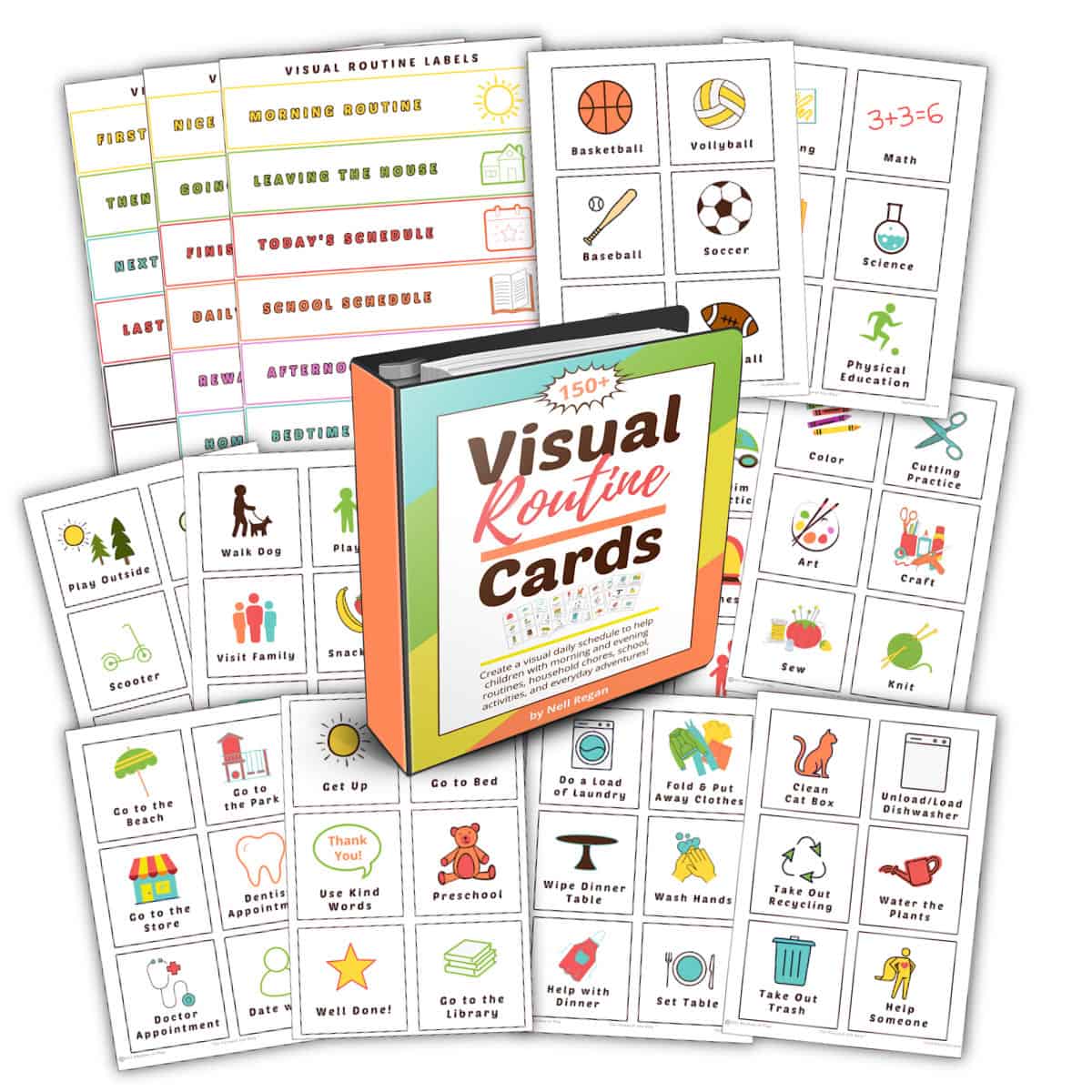
To put it another way, toddlers love the status quo, and parents are always changing things. Create a daily and weekly rhythm, and use tools such as visual routine cards, to help children know what to expect in their day-to-day lives. This will help reduce anxiety when it’s time to transition or move on to the next thing.
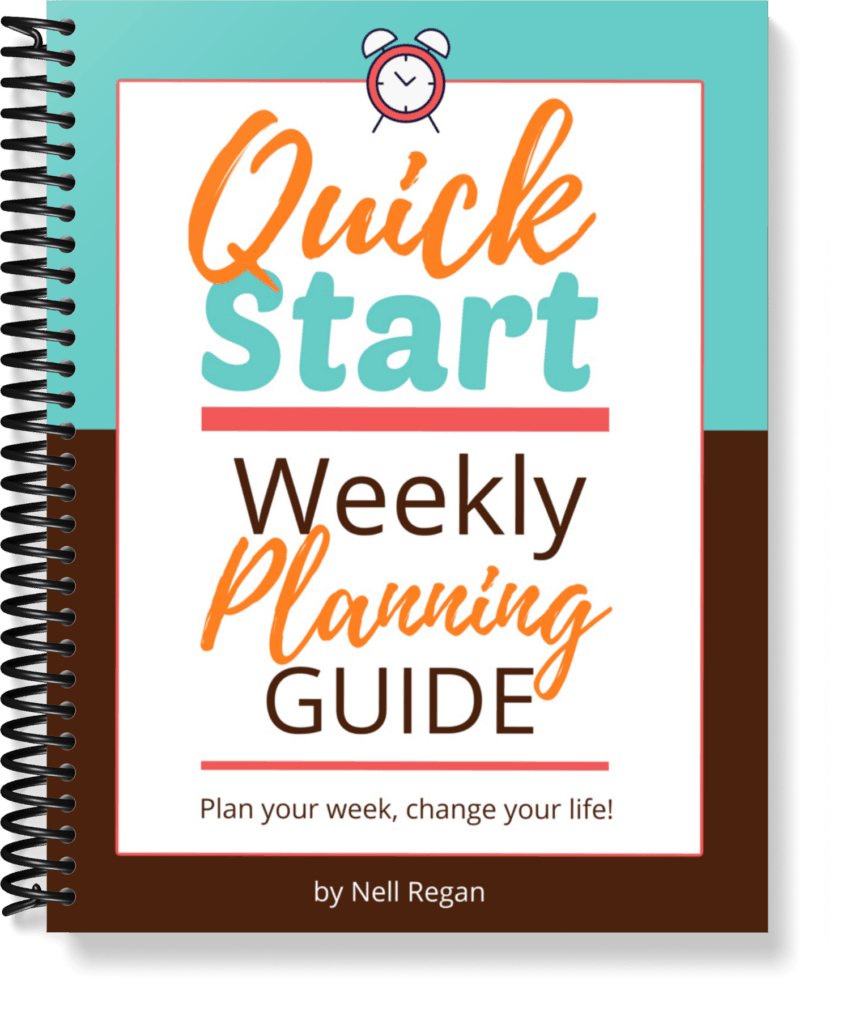
Ready to put the to-do list on autopilot?
Learn how to create rhythms and routines that keep everything in order and help the whole family THRIVE. Opt-in below, and we’ll send the QuickStart Guide straight to your email inbox!
8. Use a Visual Routine Chart Or Checklist:
A visual routine chart, or checklist, is a valuable self-regulation tool for kids from toddlers to teens. Even adults find checklists helpful. I sure do! Put visual routine cards into a visual routine chart, or use a printable checklist to help children know what to expect, stay on task, complete their chores and homework, plan activities they enjoy, and make transitions much easier to manage.
I include both of these fantastic self-regulation tools inside the Family Systems Toolbox. Alternatively, you can purchase Home & School Tools for Kids or Visual Routine Cards separately. (Psst–if you haven’t grabbed a copy of the Quick Start Weekly Planning Guide, I recommend starting with that. New subscribers get a sweet deal on the Family Systems toolbox!)
9. Reduce Unnecessary Demands:
Ensure children’s schedules are not overloaded. Too many responsibilities or extracurricular activities throughout the day can increase stress and decrease children’s self-regulation. Reducing the number of planned activities, events, and excursions can help children stay emotionally regulated.
10. Spend Time in Nature:
Spending time in nature is a great way to calm mental chatter, reduce stress, calm an overwhelmed child, and connect with the natural world. This popular self-regulation practice has been in use since ancient times.
How does spending time in nature help children (and adults) Self-REgulate?
Ancient earth-based cultures have long revered the natural world and celebrated nature’s seasonal rhythms, such as the winter solstice and the spring equinox. Evidence of the benefits of spending time outdoors immersed in nature continues to grow as more scholarly research is conducted.
“..the results indicate that a three-minute exposure to natural environments could potentially already help us improve self-regulatory capacity needed to control impulses. As a strong self-regulatory capacity is important for numerous health out-comes, our findings once more stress the importance of exposure to nature in our daily lives.”
(Source research study about exposure to nature and self-regulation published in December 2014 in the Journal of Environmental Psychology)
Fortunately, you don’t need to go far to use this calming self-regulation strategy for kids. Your backyard or patio works fine in a pinch, but going out into the natural world is even better if you can get there easily and make it happen.
The Japanese call it “Forest Bathing,” Richard Louv named it “Vitamin N,” Florence Williams calls it “The Nature Fix, and most psychologists today call it “Forrest Therapy” or “Nature Therapy.” No matter what you call it, most of us know and have experienced the myriad of positive psychological benefits that spending time in nature can provide.
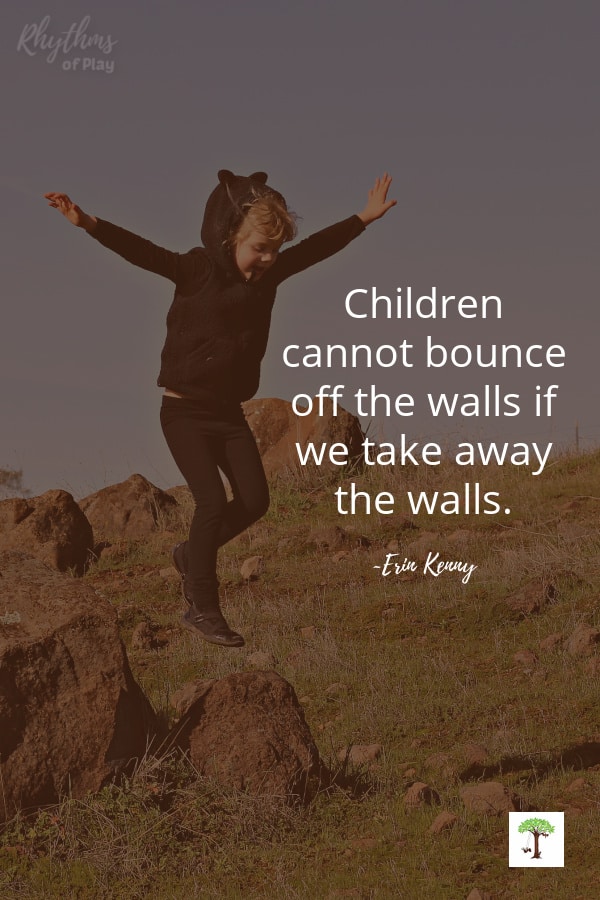
Since my youth, spending time outdoors has helped me reduce stress, improve my mood, support self-regulation, and more, and I know I’m not alone. A body of research is growing to support each of these claims and more. So, get children outside playing, learning, and, most importantly, having fun with this massive list of self-regulation ideas: Outdoor Learning Ideas and Nature Activities.
11. Keep Their Bodies Moving with Daily Exercise:
Like getting enough sleep and eating a healthy diet, moving the body daily is a crucial self-regulation strategy for kids. People get edgy and uncomfortable when their bodies don’t get enough exercise throughout the day. This can result in flared tempers, emotional dysregulation, and unnecessary angry outbursts.
Fortunately, daily movement and exercise make it easy to prevent these types of meltdowns. Do your best to get children outside moving every day. If time, space, or inclement weather are an issue, try yoga for kids! It’s an excellent way to help kids get the daily exercise they need, even in a small indoor space. Yoga is also another fantastic calming strategy for kids and adults.
Home & School Tools for Kids has a few fantastic resources to help children, from toddlers to teens, get the movement they need during the day. Use the visual routine charts for toddlers and preschoolers or the daily and weekly planners and checklists for school-aged kids to help them remember the elements of their daily rhythm and stay on task throughout the day, week, and month.
12. Read Children’s Books About Emotions, Anger Management, and Growth Mindset Books To Kids:
Reading certain children’s books, such as those on the book lists below, can help prevent temper tantrums in toddlers and preschoolers and encourage social-emotional learning in older kids and teens. Reading books about feelings to kids helps them understand their big emotions and learn to self-regulate, so they no longer become upset or lash out at the slightest provocation.
In my experience as a parent, teacher, and caregiver, reading kids’ books about feelings and emotions, as well as anger management books, can not only reduce how often children get upset but also lessen the intensity of their anger. Reading them with children can also help reduce how long they stay upset. When children understand their feelings and emotions, it can decrease the frequency and severity of tantrums and meltdowns as well as help them learn to self-regulate.
In other words, when you read these types of books to children, they get upset less often, and it takes them less time to move past their feelings of frustration. Read books to children that teach them to understand their feelings, manage their anger, and learn other important lessons to help them stay calm in stressful situations. In other words, “Make prevents before rescues.”
Children’s Books That Can Help Kids Learn Self-Regulation Skills:
- 15 Books To Help Kids Manage Anger
- Books To Help Kids Understand Their Feelings
- Books for Kids that Teach Important Life Lessons
13. Play Social Emotional Learning Games:
Another great way to make “prevents before rescues” is to play social-emotional learning games with kids from toddlers to teens. Just as reading books about feelings and emotions can help children learn to calm down and self-regulate when life gets tough. Playing social-emotional learning games can also help them learn to calm down and self-regulate.
Games that require children to control their reactions or use restraint can help children develop emotional regulation skills. There are several popular, well-known games that help children discipline their bodies and minds. That’s why they are played so often in early childhood classrooms.
Classic childhood games such as Freeze Tag, Duck, Duck, Goose, Mother May I, Red Light, Green Light, Hide-and-Seek, Musical Chairs, and more can help kids learn to self-regulate. Today, there are also games designed specifically for social-emotional learning. Have a look at this list of social-emotional development games to learn more.
14. Support and Encourage Their Efforts:
Growing up is challenging. Please give children the guidance, feedback, loving support, and encouragement they need to feel valued and understood as they learn to self-regulate, develop self-regulation skills, and grow into mature adults. No one gets it right from the beginning, encourage their efforts to support their development and growth.
15. Use Rewards, Positive Reinforcement, and Praise:
Please use positive, proactive language to encourage good behavior rather than pointing out bad behavior. Celebrate your child’s strengths and successes with rewards. Set up positive reinforcement systems to reward children for desired behavior. Children are more likely to repeat the behavior that caregivers reward, praise, or positively reinforce. When children demonstrate self-regulated behaviors, praise them verbally or offer another appropriate reward to reinforce the behavior.
For example, reward children for good behaviors such as flexibility or self-control, using both verbal and tangible rewards. This helpful technique improves the behavior of the child being rewarded and those watching by helping everyone know what’s expected. Using this method in front of other kids has the added benefit of increasing everyone’s desire to receive the reward for good behavior. It also makes the good behavior even more likely to be repeated in the future.
16. Be Consistent and Honor Your Word:
There is nothing more off-putting and upsetting to most children (and adults) than rules that are randomly enforced, a structure with permeable boundaries, and people who don’t mean what they say. Rules that are not enforced are rarely followed, and when you don’t honor your word, how do you expect your children to? Even adults throw tantrums when faced with unpredictable circumstances and people with no integrity.
If you want your children to stay calm and honor your word, and I’m pretty sure you do if you are reading this, it’s important to create clear, consistent boundaries. One way we can create consistency and clear expectations in a child’s life is by gently enforcing the rules when they’re broken. Not by looking the other way and pretending it didn’t happen. Most parents, teachers, and caregivers learn this lesson the hard way. I know I did as a high school swim coach, but at least I learned my lesson before my daughter was born. As the old adage goes, “Parenting is not for the faint of heart.”
Another way to create consistency is to be true to your word. Being true to your word means doing what you say you will. Children have much more respect for caregivers who have integrity. They also find it much easier to self-regulate when their parents, teachers, and caregivers mean what they say and say what they mean.
In other words, if you promise that you will take your kid to the park on Saturday morning, please do yourself a favor and follow through on that promise. Otherwise, children may not honor your word in the future. Or, they might begin to think that it’s no big deal to break their promises, and I’m pretty sure that’s not the result you’re after. Remember, monkey-watch, monkey-learn, monkey-see, monkey-do.
17. Encourage Kids to Practice Yoga:
Yoga is an ancient spiritual practice that can help kids (and adults) learn to self-regulate, among many other benefits. Not only can the postures, called asanas, help you calm down and find focus in moments of stress, but the practice of yoga itself leads one from self-regulation to self-realization with regular practice.
Just like in meditation, when you meet your capital “S” self on the yoga mat, there is nowhere to hide. As we practice, we can begin to see our upsets from a new perspective. This altered perspective helps us see ourselves more clearly. Becoming a witness to ourselves in this way can lead to a profound personal and spiritual transformation. Learn more about yoga for kids and check out this list of free kids’ yoga videos.

18. Teach Children to Meditate:
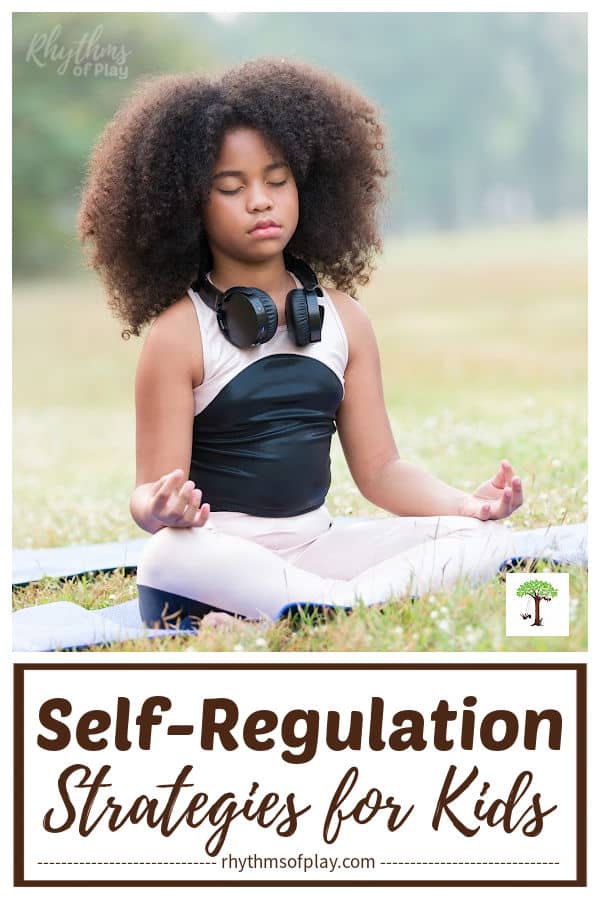
One of the goals of meditation, like yoga, is to calm and stabilize the mind. Both practices are excellent self-regulation strategies to help children stay calm in stressful moments, cope with big emotions, and adapt to challenging situations rather than react negatively to life events.
Although they differ in scope and practice, yoga and meditation ultimately lead to the same end: the realization of the Self. Meditation looks different for children of different ages. Some children can not sit still for that long, which is perfectly okay. Set an example by starting a meditation practice yourself!
“Children are natural imitators, gift them with a practice worthy of imitation.”
~Nell Regan Kartychok
How do you teach kids to meditate?
The most important thing you can do to help children learn to meditate is to create the habit by making it part of their daily rhythm or routine. It’s also helpful to explain that sitting for a moment to calm the mind can have many benefits, depending on your children’s ages. Please share stories and examples from your life and meditation practice, if you have any.
Get kids started with brief exercises like deep breathing and Big Belly Breaths. Learn how to do Big Belly Breaths at the bottom of THIS post. Finally, invite children to meditate for only a minute or two at first, if they can make it that long! Make it fun for children to settle down and sit calmly.
Start by asking them to sit tall but comfortably, close their eyes, and focus on their breath, slowly inhaling and exhaling through their nose. Some children have a hard time sitting for longer than a few seconds at first. That’s why it’s called a meditation practice. They will learn to sit longer and become calmer and more focused with practice. Encourage your children to practice daily; I promise they will improve!
Meditation Tools For Kids:
In our home, we use our tabletop and outdoor fairy gardens as meditation tools for children. My family even made one in a tree stump! Invite a child to sit for a few moments with their eyes open, while gazing upon the fairy garden, to calm and focus the mind. Give it a try!
Sensory bottles are another excellent self-regulation tool for kids. These simple sensory play toys can help calm children when they become anxious or overwhelmed. They are also an excellent tool for helping kids learn to meditate. Invite children to focus on the contents of a sensory bottle to clear the mind and calm mental chatter. Tell them, to watch the bottle…
“As the bottle clears, so does the mind.”
Nell Regan Kartychok.
Learn more about sensory bottles and how best to use them here: DIY Calm Down Sensory Bottles 101. Or, look at the list of DIY sensory bottle tutorials below:
- Rainstick Musical Sensory Bottle DIY
- Glittering Mermaid Tail Sensory Bottle
- Ringer Game Sensory Bottle Toy
- Slow Falling Hearts Sensory Bottle
- Windy Fall Leaves Sensory Bottle
- DIY Butterfly Sensory Bottle Calm Down Jar
- Nature-Inspired Sensory Bottles
- DIY Sea Shells Sensory Bottle Calm Down Jar
- Rainbow Galaxy Sensory Bottle
- Frozen-Inspired Snowstorm Sensory Bottle
- Sunburst Glitter Sensory Bottle
- Stars Sensory Bottle DIY
- Halloween Pumpkin Sensory Bottle
- Glow In The Dark Ghost Halloween Sensory Bottle
- DIY Glow In The Dark Rainbow Loom Band Sensory Bottle
19. Designate a Calm Down Area for Children to Cool Off and Reset:
Having a designated calm-down area or corner, reset spot, or time-out bench or chair is another essential self-regulation strategy for kids. Create a safe, comfortable place in the home or classroom that children can retreat to whenever they need a moment to calm down. If possible, create indoor and outdoor spaces, and allow the child to choose which calm-down area to use to reset during moments of distress.
It can be a simple seat, or you can fill the space with pillows, sensory play toys like modeling beeswax, sensory bottles (look at the list above), or fidget toys, stuffed animals, books about emotions and anger management, a weighted blanket, and anything other self-regulation tools or toys that help your children calm down in moments of upset. Make this space into a safe, positive place to calm down, not a place of punishment.
My Daughter’s Cozy Corner:
In our home, we use my daughter’s Cozy Corner as a calm-down area and a reading nook. I named it the Cozy Corner because I didn’t want it to sound like a jail or a punishment. Instead, I wanted it to sound like an appealing place to go get some space, because there is nothing wrong with needing a break.
Whenever my daughter has one of “those” moments, I calmly say, “It looks/sounds like you need to reset yourself. Would you like to go to your cozy corner or outside for a few minutes?” She usually doesn’t answer and instead stomps off to her calm-down corner or outside to cool off.
She’s learned not to put up a fight when I ask her to visit her Cozy Corner. Because when she does, I won’t argue with her or say anything in response except, “I hear you’re upset. Why don’t you take a moment to reset yourself,” or something similar. Once she goes either outside or to her Cozy Corner, I give her a few minutes to calm down before I calmly approach her. (I spend the time she’s in her corner calming myself down when needed.)
Before I do or say anything else, I validate her feelings. (Scroll up to read #13 for more information about validating feelings.) Once I’ve validated her feelings by saying something like, “I know you are upset because we can’t go to your friend’s house today.”
Then, without expressing my opinions or feelings or saying anything else (no matter how much I want to), I ask whether she would like to talk about it or if she would prefer to be alone for a while. At that point, I do as she asks, as calmly and collectedly as possible. However, I always follow up later if she wants to be alone.

20. Offer Calm Down Tools and Sensory Play Toys:
Another easy way to help children calm down when they become frustrated or upset is to give them calm-down tools and toys. Sensory play toys such as fidget spinners, sensory bottles, zen gardens, and other calming toys for kids are a great way to help them calm down whenever they are upset or overwhelmed. Once children are calm, most sensory toys make excellent tools for helping kids focus and learn to meditate. Below is a list of my favorite calm-down tools and calming toys.
DIY Calm Down Tools and Toys:
- DIY Sensory Bottles 101 – Here’s a post with everything you need to know about making and using calm-down sensory bottles, including a list of recipes you can use to make your own! Or, scroll up to see the list of DIY sensory bottle tutorials above.
- Winter Wonderland
- Fairy Garden
- Beach-Themed and Zen Table Top Fairy Garden Ideas
- DIY Waldorf Square Geometric Puzzle Blocks
- Tetris Puzzle Cube
Calm Down Toys and Tools You Can Buy:
If you click to purchase, Rhythms of Play will earn a small commission at no cost to you.
- Squeeze balls: try THESE or THESE
- Modeling beeswax
- Fidget spinner
- Fidget cube
- Metal fidget cube
- Simple wooden fidget cube
- Wooden twist cubes toy
- Pop-its
- Squeeze pop ball fidget toy
- Arm slinky
21. Put together a Calm-Down Box:
Once you have made or purchased a few calm-down toys from the lists above, create a calm-down box, bin, or shelf with a few of your children’s favorite calming toys inside or on top. Then place it near your calm-down area or someplace kids can easily access it whenever they need a little time to calm down or reset.
22. Help Children Develop Positive Self-Talk:
Developing positive self-talk is challenging with the rise of screen time and social media use. But fortunately, one of the easiest ways to help our children speak positively to and about themselves is by modeling it ourselves.
So, please be mindful of what you say to yourself in front of your children. Their growing sense of self-esteem is easily bruised, and they do not need to hear things like, “Ugh–I look fat in this,” or “I can’t do it.”
They will learn to speak negatively about themselves if all they hear is negativity. Monkey see–monkey does, monkey hears–monkey says. So do your best to keep your self-talk positive, become a verbal Jedi master, and I bet your children will learn to do the same.
And if you ever find yourself verbally abusing or shaming yourself or your children, do your best to immediately correct it with a positive statement or an apology if possible. We all make mistakes and fall; it’s how we get back up again that makes the difference in our children’s eyes.
Another great way to help kids develop positive self-talk is with positive affirmations, inspirational words, and phrases. Today, several children’s books are available to help kids develop positive self-talk. I have a few of our favorites listed below.
Books That Help Kids Develop Positive Self-Talk:
Use the growth mindset books for kids on the list below to help them develop positive self-talk. You might also enjoy this book list of children’s books that teach kids important life lessons.
- I Can Do Hard Things
- Positive Ninja
- Talk Yourself Up, Wonder Pup
- Believing In Me
- Find Your Happy
- Positive Me
- I Am: Positive Self-Talk for Kids
- When Things Get Tough: The Power of Positive Self-Talk (Stoicism For Kids)
- How To Get Unstuck From The Negative Muck: A Kid’s Guide To Getting Rid Of Negative Thinking
23. Limit Screen Time:
There are several reasons it’s better to keep kids away from excessive screen use (televisions, computers, tablets, and smartphones), even though their use is rising. The enhanced ability to self-regulate is only one of them.
In THIS research study, high-screen users were found to show significantly poorer emotion regulation, impaired capacity to finish tasks, lower curiosity, lower self-control, higher anxiety, and depression symptoms.
The results showed that the child’s screen time at age four was directly, positively, and significantly associated with dysregulation and negatively associated with mathematics and literacy grades at age eight.
In my experience as a parent and early childhood educator, watching violence on TV, playing video games, or sitting cooped up in front of a screen for hours never helps anyone keep their cool in times of stress. Instead, I have noticed, and I know I’m not alone, that increased screen use tends to exacerbate symptoms of stress and dysfunction at home and in the classroom.
How is screen time bad for kids?
A colleague I went to graduate school with, Nicholas Kardaras, wrote a book titled “Glow Kids” that examines how technology, more specifically, age-inappropriate screen tech, has profoundly affected the brains of an entire generation.
In it, he documents the growing mountain of clinical research that correlates screen time with disorders like ADHD, addiction, anxiety, depression, increased aggression, and even psychosis. And he wasn’t the first to document problems with technology and the growing minds of children.
In “Endangered Minds,” Dr. Jane M. Healy draws on neuropsychological research and analysis of educational practices to examine how television, video games, and other components of popular culture compromise our children’s ability to concentrate, absorb, and analyze information.
Healy has several more excellent books with similar information that I wholeheartedly recommend to any parent, teacher, or caregiver who wants to learn more about the detrimental effects of extended screen use and technology on children’s growing brains and what we can do instead.
So, do your best to help kids find other ways to entertain themselves for their social-emotional health, and yours! My daughter and I love making arts and crafts and playing outdoors instead of watching television. Give it a try!

24. Zones of Regulation:
The Zones of Regulation is a curriculum designed by Leah Kuypers to help students develop the skills to consciously regulate their actions, leading to increased control and problem-solving abilities. Using a cognitive-behavioral approach, the curriculum’s learning activities are designed to help students recognize when they are in different states called “zones,” each represented by a different color.
The Zones of Regulation curriculum is for anyone who works with students who struggle with self-regulation. This can include special education and general education teachers, occupational therapists, speech-language pathologists, psychologists, counselors, behaviorists, social workers, and parents. And there are posters and other tools you can use with the curriculum to help children learn to self-regulate.
25. Art Therapy:
The American Art Therapy Association promotes engaging in the arts to help decrease feelings of anger, depression, and anxiety. Often, we hold on to negative emotions such as fear and sadness that can cause stress and anxiety. However, research shows that art therapy can help us recognize these difficult, stuck emotions. Once we become aware of these challenging feelings, art therapy can help us work through them, process them, and finally integrate them.
Art therapy can also help parents, teachers, and other caregivers gain insight into a child’s thoughts and feelings through their drawings and artistic creations. Engaging in artistic endeavors has also been shown to enhance cognitive function, increase self-awareness, and help children (and adults) learn to regulate their emotions.
The National Endowment for the Arts found that arts programs help children develop social-emotional skills, including self-regulation, in early childhood. (source) Children who regularly participate in the arts show more sophisticated social skills such as sharing, empathy, and cooperation. They also show reduced anxiety, shyness, and aggressive behavior.
Studies also show that creating art can stimulate the release of the feel-good neurotransmitter, called dopamine. Increased dopamine levels are helpful when anxiety is high or depression brings you down. When dopamine is released, it stimulates pleasure receptors in our brains, making us feel happier. Encourage children to create arts and crafts to help them feel good during times of overwhelm or stress, learn to self-regulate, and boost emotional intelligence.
26. Enjoy Gratitude Activities, Crafts, and Games:
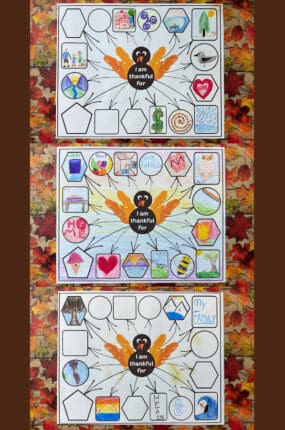
Believe it or not, grateful kids tend to be calm kids. When we feel thankful for what we have, it’s hard to feel upset about what we don’t have (or think we need to make us happy). Gratitude brings abundance. When we are grateful, we receive more of the things we are thankful for and thus live a more joyful and fulfilled life. So do yourself a favor. Invite children from toddlers to teens to try the fun gratitude activities, games, and books listed below.
Gratitude Activities, Crafts, Games, and Books:
- “I Am Grateful” Gratitude Journal Printable
- Printable Gratitude Journal Prompts
- Fun Gratitude Activities, Crafts, and Games for Kids
Calming Activities and Strategies to Help Children Learn to Self-Regulate:
When children know how to self-regulate, they can appropriately manage their emotional reactions to life events and challenges. Self-regulation difficulties are more common among younger children and children with LD, ADHD, Autism, etc.
A lack of self-regulation skills can result in social-emotional, behavioral, and academic challenges. Learning how to cope and adapt is a brain-based social-emotional skill that develops in children with practice.
Children who can self-regulate are more likely to experience success. Punishment and medication may decrease challenging behavior in the moment, but cannot teach children the necessary skills to manage stress and self-regulate over time.
Help children calm down when they feel upset, frustrated, angry, anxious, sad, fearful, or overwhelmed with this list of self-regulation strategies and social-emotional learning resources for kids.



Leave a Comment