
Learn everything there is to know about calm-down DIY sensory bottles!
DIY Sensory bottles are useful calming tools for anxious or overwhelmed children, kids with sensory needs and sensitivities, children needing help with self-regulation skills, and adults. They can also provide a way for children (and adults) of all ages to engage in portable, no-mess, “safe” sensory play.
Older children can begin to examine the inner workings of the homemade sensory bottle to learn basic science principles. At the same time, babies and toddlers can investigate small items that are not yet safe to touch, safely hidden inside a recycled plastic bottle or mason jar. You might also enjoy this list of DIY Sensory Bottles for every holiday and Season.
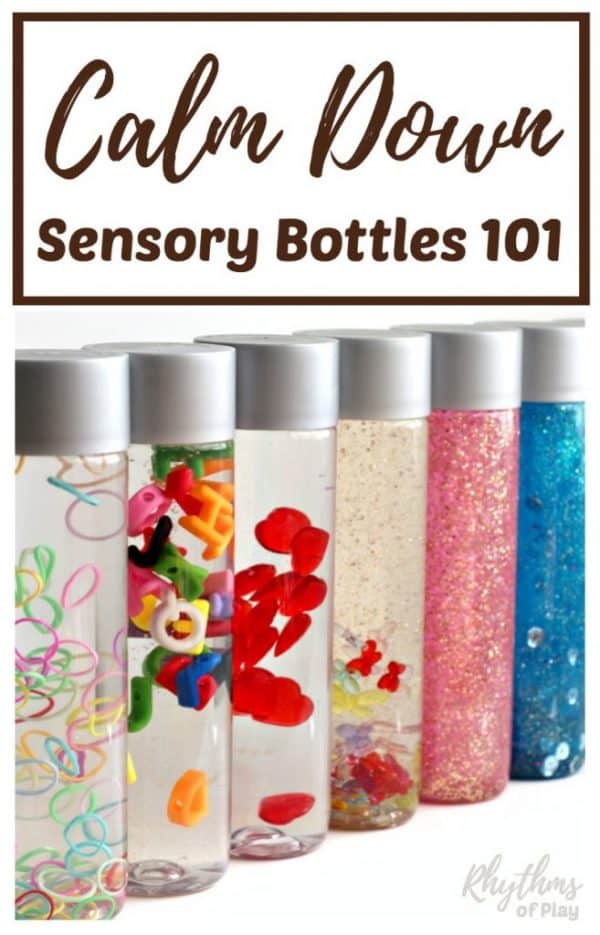
How to Make Sensory Bottles:
Making DIY sensory bottles involves a lot of science. The type of ingredients and amounts used will determine the sensory bottle’s properties, including how long it takes to settle. This is important if you will be using it as a timer.
You must make a few DIY sensory bottles before you have a vague idea of what you are doing. They are super simple to make. However, after you’ve made a few, it is easy to see how you could have made them better.
Make them with your children for a great science lesson. Several Sensory bottle DIY tutorials below include simple science lessons you can use if you make them with the kids.
Related: Books for Kids That Help Them Understand Their Feelings
Best Homemade Sensory Bottles: Popular DIY Sensory Bottle Recipes:
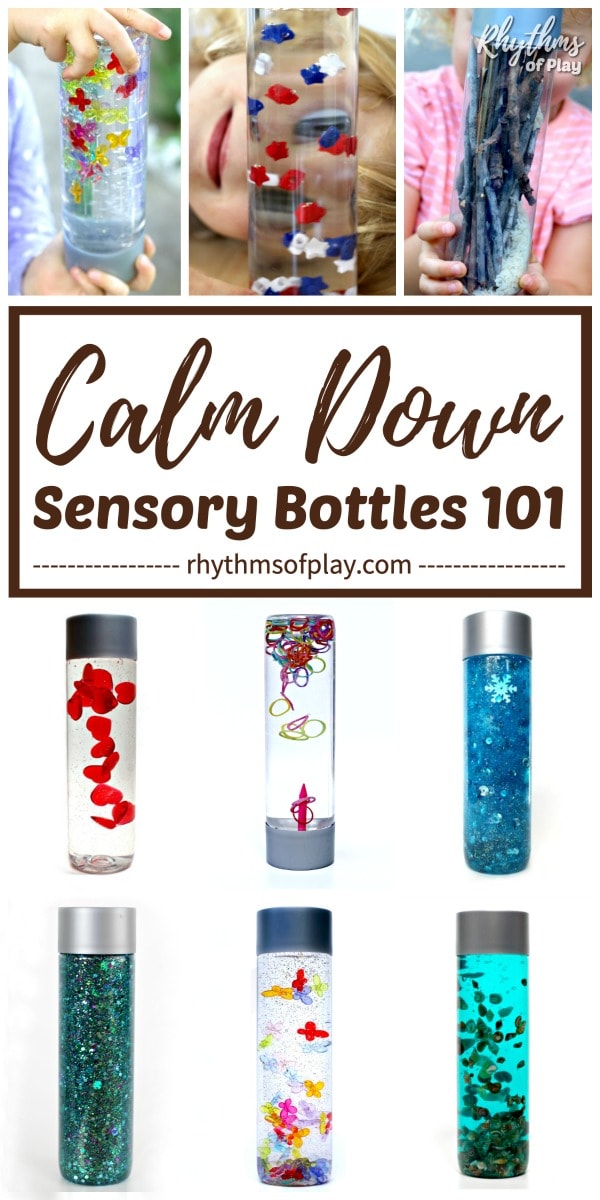
One of my most popular sensory bottles is our Frozen-Inspired Snowstorm DIY sensory bottle. Despite its popularity, many other sensory bottle DIYs below compete for the lead. Visit the tutorials for the DIY sensory bottles below to see the craft supply list, homemade sensory bottle recipe, and step-by-step instructions for each one:
- Rainstick Musical Sensory Bottle
- Glittering Mermaid Tail Sensory Bottle
- Slow Falling Hearts Sensory Bottle
- Butterfly Sensory Bottle
- Nature-Inspired Sensory Bottles
- Frozen Inspired Snowstorm Sensory Bottle
- Windy Fall Leaves Sensory Bottle
- Rainbow Galaxy Sensory Bottle
- DIY Ringer Game Sensory Bottle
- Glow in the Dark Ringer Game Sensory Bottle
- Sunburst Glitter Sensory Bottle Recipe
- Glow in the Dark Sensory Bottle
- Sea Shell Sensory Bottle
- Red, White, and Blue Stars Sensory Bottle
- Glowing Ghost Sensory Bottle
- Glow in the Dark Halloween Pumpkin Sensory Bottle
- Best Sensory Bottles for Every Holiday and Season
Related: DIY Projects for Do-it-Yourself Families
Homemade Sensory Bottle DIY Tips:
The tips below will help you make the best DIY sensory bottles:
1. Don’t fill your DIY sensory bottle up at first:
- You may want to add more of one of the ingredients you use to make it, so it’s best to wait a while before you fill the bottle up.
- For example, depending on the type of sensory bottle DIY, you may want to add more glitter or pieces to your discovery bottle.
2. Don’t glue the lid shut right away:
- You might discover that you still want to change your DIY sensory bottle mixture or solution. I know I have.
- Before you glue the lid on, play with your homemade sensory bottle to ensure you’re happy with the contents inside and how they move through the sensory bottle DIY.
- Decide if you want to add any more of the following items:
- Warm water, clear glue, glitter glue, liquid hand soap, dish soap, hair gel, corn syrup, baby oil, drops of food coloring, etc.
- Add more water if you want your sensory bottle DIY to move faster, and add clear liquid hand soap, glitter glue, or clear glue if you want it to move slower.
- Small toys, marbles, buttons, loom bands, pom poms, mini-erasers, alphabet beads, hearts, legos, water beads, sticks, rice, sand, sequins, etc.
- These contents help fill the bottle and provide interest.
- It’s best to determine if you want more or less of these items before gluing the bottle shut.
- Warm water, clear glue, glitter glue, liquid hand soap, dish soap, hair gel, corn syrup, baby oil, drops of food coloring, etc.
- Decide if you want to add any more of the following items:
- Once you are satisfied with the amount of liquid, glitter, and other items, you can top it off, shake it, glue the lid shut, and hand it over to your children.
- If, after playing with it for a few days, you find that you don’t want to give it up, make another one! It will be even easier to assemble the second time.
3. Take the air out of your homemade sensory bottle:
- Many calm-down bottles work and look a lot better when you take all the air out.
- However, oil and water sensory bottles, like this ocean sensory bottle, are fine with a little extra air because the air creates fun bubbles in the bottle to watch.
- Conversely, like our slow-falling hearts sensory bottle, viscous bottles with heavy pieces work and look best without air bubbles.
- DIY Glitter sensory bottles such as these mermaid tail sensory bottles also work and look much better when no bubbles or air are left in the bottle.
- Keep topping your sensory bottle off with more water, clear liquid hand soap, glitter glue, fine glitter, or clear glue while allowing the bubbles to rise to the top.
- If you want to change how fast it moves, add a little more clear glue, warm water, glitter, clear liquid hand soap, etc., to your sensory bottle DIY, depending on whether you want it to move faster or slower.
- Water will make it move faster, while clear glue, hand soap, and dish soap will slow it down.
- If you want to change how fast it moves, add a little more clear glue, warm water, glitter, clear liquid hand soap, etc., to your sensory bottle DIY, depending on whether you want it to move faster or slower.
- Once all the air has been removed, and you are happy with how it moves and the ingredients inside, you can close it up and glue it shut.
Related: Best Parenting Books
How to Use Calm Down Sensory Bottles:
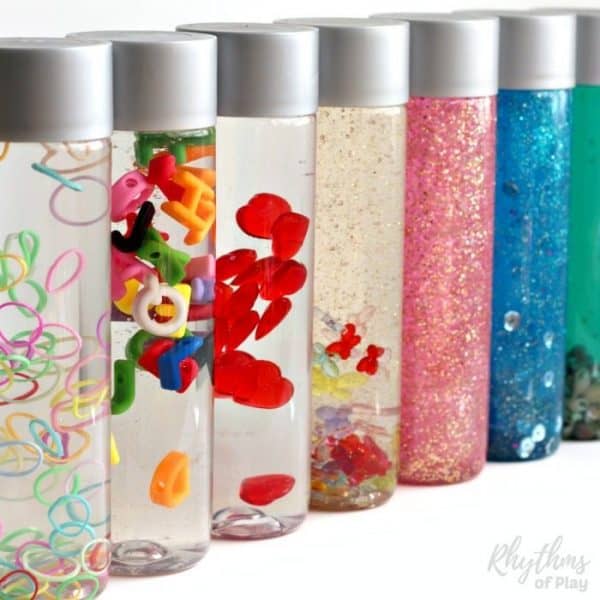
Sensory bottles have several helpful uses. Some of the uses for discovery jars will depend on the contents. For example, a rainstick sensory bottle can help children calm down, focus, and unwind as a sensory toy and can also be used as a musical instrument. Here are several general uses for a homemade sensory bottle:
1. Calm Down Tool or Toy:
- A DIY calm-down sensory bottle is often used as a calming tool to help calm an anxious child when their emotions become overwhelming.
- If you have a child with special needs and sensory sensitivities, such as Autism or ADHD, a DIY calm-down sensory bottle is a simple calming activity you can use at home or in the classroom.
- They work wonders for adults, too!
- I have a few DIY sensory bottles sitting on my desk to help me calm down, alleviate anxiety and focus, and help clear away writer’s block.
Related: Anger Management Books for Kids
2. Time-out Timer:
- A DIY calm-down jar can also be used as a timer for “time-outs.”
- I haven’t personally tried this method, but it sounds simple:
- The sensory bottle is shaken, and the child is told to watch the glitter.
- They can get up again when it settles—no muss, no fuss.
3. How to Use Sensory Bottles in a Calm-Down Corner:
- Instead of time-outs, create a calm-down corner with calming pillows, blankets, DIY sensory bottles, and books.
- Keep sensory bottles in a wine bottle rack in the calm-down corner on the floor or a simple shelf with books about emotions and other calm-down toys and tools such as fidgets, sensory pillows, or a weighted blanket.
- Encourage children to visit the calm-down corner whenever they need to “start fresh.”
- Getting them to retreat to their corner is not always easy, but it always works.
- If the child abuses the items in the corner, remove them until they show you they can use them appropriately.
- Teach kids that pillows are for hitting, throwing, and quieting angry screams, while books and sensory bottles are for viewing, not throwing.
- Please be aware that sensory bottles will break if thrown; if your child likes to throw things, put them in their calm-down corner as a reward when they have learned not to throw them.
Related: The Best Positive Discipline Books for Parents and Teachers
4. Develop and Improve Focus:
- Calm-down bottles are great for helping children and adults develop the ability to focus.
- Encourage children to watch the objects inside to help them focus on one thing at a time.
- Play with sensory bottles for longer and longer periods to improve their ability to focus for extended periods.
- This ringer game is an excellent tool for improving focus.
5. Improve Self-Regulation Skills:
- Calm-down jars are an excellent self-regulation strategy that can help children improve their ability to self-regulate.
6. Safe Way for Toddlers and Babies to Investigate Small Items:
- DIY sensory bottles provide a fantastic way for babies and toddlers to investigate small items that are not yet safe to touch, safely hidden inside a recycled plastic bottle or mason jar.
7. Meditation Tool:
- A sensory bottle DIY can also be used by a child (or an adult) learning to meditate.
- Watching the contents fall to the bottom is a fantastic way to clear the mind.
- Alternatively, they can help children and adults focus on something other than their thoughts.
- In other words, focusing on the motion of the contents or the objects in the discovery jar or sensory bottle can help children and adults calm down, focus their attention, and learn to meditate.
“As the bottle clears so does the mind.“
Nell Regan Kartychok (Creator and Author of Rhythms of Play)
Beyond Calm Down DIY Sensory Bottles: 5 More Self-Regulation Strategies for Kids:
Below, you can find more of our favorite self-regulation strategies to help keep the peace in your home or classroom. In this post, you can learn more about self-regulation and why it matters –> Self-Regulation Strategies for Kids.
1. Read Books and Play Games That Help Kids Understand Their Feelings and Emotions:
- Help children learn about feelings and emotions and how to self-regulate with books, games, and fairy tales:
- One of my favorite self-regulation strategies for children is reading books that help them understand their feelings and play social-emotional development games.
- Reading age-appropriate fairy tales out loud to kids is an excellent method to help children develop emotional self-understanding. Learn more about this technique in Fairy Tales for Kids.
Yoga Practice for Kids:
- I also recommend that kids learn basic self-regulation skills with a daily yoga practice.
- Learn how to start in Yoga for Kids.
- You may also enjoy this round-up of our favorite FREE yoga videos for kids!
Spend Time in Nature:
- We suffer from nature deficit disorder as a society.
- Studies have shown that time in nature can help us heal and promote health and happiness.
- The Japanese have named this practice forest bathing, while others call it nature bathing.
- Get outside and connect with the kids daily to help increase the peace in your home and build mental health.
- Look at this fun collection of outdoor nature activities for kids to learn about several outdoor activity ideas you can try.
Art Therapy:
- Another one of my favorite ways to help children and adults work through emotions and learn to self-regulate is through art therapy.
- This blog has several arts and crafts ideas you can try with your children.
The Power of Rhythm and Routine:
- I also like to keep our household calm and happy by following a simple daily routine with well-established household rhythms.
- Following a daily and weekly routine or rhythm can help your household run smoothly and keep emotional meltdowns at bay—mom and dad included!
- Click on the link to learn how to plan your daily routine and download our Free printable planner!
Homemade Sensory Bottles DIY Resources:
I have been having a lot of fun learning about and experimenting with all the 101 ways to make a calm-down jar with an empty water bottle. I’ve found a few awesome resources to share with you.
Below are some of the most influential articles on calm-down sensory bottles that I have found. These articles will help you better understand the use of sensory bottles and how to make them. They worked for me!
Related: Books that Help Teach Kids Important Life Lessons
Other Fantastic DIY Sensory Bottle Resources:
- Relax Bottle/Time Out Timer – My Crazy Blessed Life explains how to make and use sensory bottles as calm-down jars and timeout timers.
- 6 Ways to Make a Sensory Bottle—Katie from Preschool Inspirations created a fantastic resource for assembling and troubleshooting basic glitter calm-down bottles. I refer to this one a lot.
- Sensory Bottles: The What, Why, and How – Dayna from Lemon Lime Adventures is an amazing resource for all things sensory, and calm-down bottles are no exception.
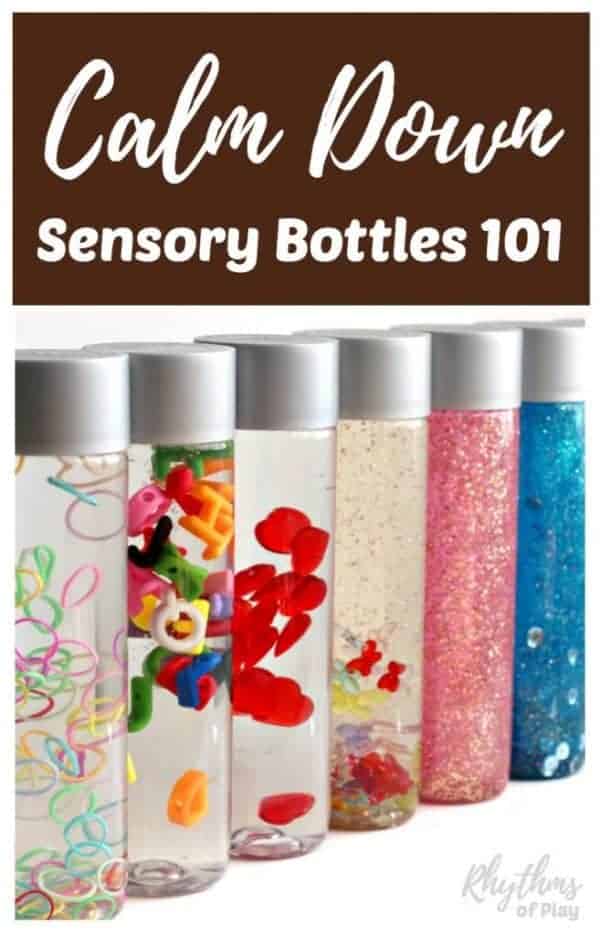
DIY Sensory Bottles for Kids:
Calm-down sensory bottles are used for portable, mess-free, “safe” sensory play. Discovery jars are also an excellent way to calm an anxious child.
An older child can examine the inner workings of the sensory bottle and the items placed inside, while a younger child can investigate items that are not yet safe for them to handle.
Make some for your kids today!
For even more sensory bottle DIY ideas, check out this collection of the best sensory bottles for every holiday and season!
Learn more about the author of this post about the hows and whys of sensory bottles, Nell Regan Kartychok, and Rhythms of Play HERE!
Fun Activities for Kids:
- How to Raise a Helper
- Self-Regulation Strategies for Kids: What Are They and Why Do They Matter?
- 8 Reasons I Allow My Child To Go Barefoot
- All Season Hand and Fingerprint Tree
- Kids’ Books That Teach Important Life Lessons
- Fingerprint Art Magnets
- Best FREE Yoga Videos for Kids
- Yoga for Kids: Tips for Getting Started


Where are the directions?
This post shares the in’s and out’s of making sensory bottles. You can find a few links to sensory bottles recipes in the middle of the page.
I used hair gel to slow mine down and it’s murky and won’t clear. Has this ever happened to you?
When I use hand soap or dishwashing soap the contents will be murky after the first good shake until the contents mix and settle. After that my bottles always stay clear. I have never tried hair gel to know how it reacts when mixed with water. My bottles usually clear within 24 hours. How long ago did you make it?
Hi I am trying to figure out what the different liquids do in the bottles. what is the difference between putting dish soap, corn syrup, glue, or conditioner in the bottles. what purpose or effect do they serve?
Good question Samantha. It’s about the weight of the objects that you are using, the viscosity of the liquid, and how you want the bottle to work. If you have heavy pieces and you want them to take longer to drop, use a thick or viscous fluid such as clear hand soap. If the pieces are light you may only need water. Most items will force you to find a balance of water to hand soap to make the pieces move the way you want them to move within the sensory bottle. Conditioner wouldn’t work because it’s too opaque. You want to use translucent (see-through) liquids so you can see the objects inside. I hope that helps!
Where do you get the bottles!
Good question Lori. I buy them at my local supermarket, but you can also find a link to purchase in all of my sensory bottle recipes.
what a great/fab ideaaa!! love this. i bookmarked this page for future ref. thanks for posting this. . : : ^..^< * : : .
I have some VOSS bottles and am excited to use them! How did you get the labels off? Thx!
Hi, Michelle! I use Goo Gone. You can find a link in all of my sensory bottle recipes. Others have told me that olive oil works. As someone that prefers green options I gave it a try, but it did not work for me 🙁
I simply perked the labels off. Very easy to do and no messy cleanup.
Should have read ‘peeled off the labels’
That’s right Rhonda. The directions for each sensory bottle recommend removing the label by peeling it off and then using Goo Gone, if necessary, to remove any sticky residue left behind. Very simple process. 🙂
I use Gatorade bottles. (All sizes work)
Yes, use whatever you have. I use what needs to be re-used and recycled 😉 My husband’s work has Voss water bottles available for visiting clients so he brings them home from the recycle bin for me to use 🙂
Hi can I use normal plastic bottles? Thanks
Most bottles from the recycle bin will work. You can also use mason jars if you prefer to use glass. 🙂
I really love this idea. I always have bottles on hand so these would be a perfect use for them.
So glad you like them. They are an excellent way to reuse bottles of all kinds depending on your preferences and needs.
Where did you find that little plastic alphabet??
I’m so sorry that I did not respond to your comment in a timely fashion Kacey. I found them on Amazon.
Hi! Do you by any chance know if the large size Voss water bottle has a larger opening or the same size opening as the standard size Voss water bottle? I bought a few things to put into a sensory bottle but they are slightly too big to fit through the opening. Thanks!
Hi Bailey!
That is a great question and I do not know the answer because I have never had the opportunity to see the lid off of one of the larger bottles. I have no idea if they are the same or not. Sorry! Let me know if you give it a try. 🙂
Good day, you have a very cool website!! Beautiful … Wonderful …
I’ve bookmarked your site and have subscribed also! I’m very satisfied with the numerous helpful sensory bottle DIY tips in this article, thanks for sharing it!
Hello! I’m so glad that you found the information in this sensory bottle post useful! You are very welcome!
My kids loved these ideas!!! =) thanks the pictures were really helpful!!!
I’m so glad that your children loved these sensory bottle ideas! I’m so glad that you found them helpful! 🙂
Thanks for making my day Maida! I’m so glad that you found our sensory bottle pictures helpful. 🙂
I am looking for the glow in the dark fish sensory bowl/bottle that people are posting. It links to your page, but I can’t find it! Help!
Hi Nicole!
I’m so sorry that you haven’t been able to find it and it is all my fault. I put it back into drafts to fix it, and hope to have it published again soon. Do you have any questions about it in the meantime?