
Because “anything can be anything” in a child’s world, it’s best to provide kids of all ages with natural open-ended play materials and toys that can fuel their imaginations and build their brains. Gather ideas from the list of natural materials for children’s play below!
Here’s a list of natural materials for open-ended loose-parts play that can provide the vehicle children need to build healthy, strong brains and creative imaginations. Since “anything can be anything” in a child’s world, it’s best to provide toddlers, preschoolers, and kindergarteners with natural play materials and open-ended toys that support their development. Kids don’t need expensive, fancy toys to develop their imaginations. Most of the natural resources on this list of open-ended materials are free! You might also enjoy this list of outdoor activities for kids.
Below is a list of natural materials for children’s play you can use at home, in the classroom, at summer camp, or in an outdoor educational program. This informative guide to natural play materials includes open-ended natural toy options for toddlers, preschoolers, kindergartners, and elementary school-aged children. It also explains the benefits of using natural materials in childcare and how to incorporate them into play. Tweens and teens also still enjoy playing with many of these materials, but they’re more likely to use them for nature crafts, art activities, nature study, science experiments, and DIY projects. First published on September 14, 2015, this informative guide to open-ended natural materials for children’s play is regularly updated to improve the content.
Best natural Open-Ended materials for Play:
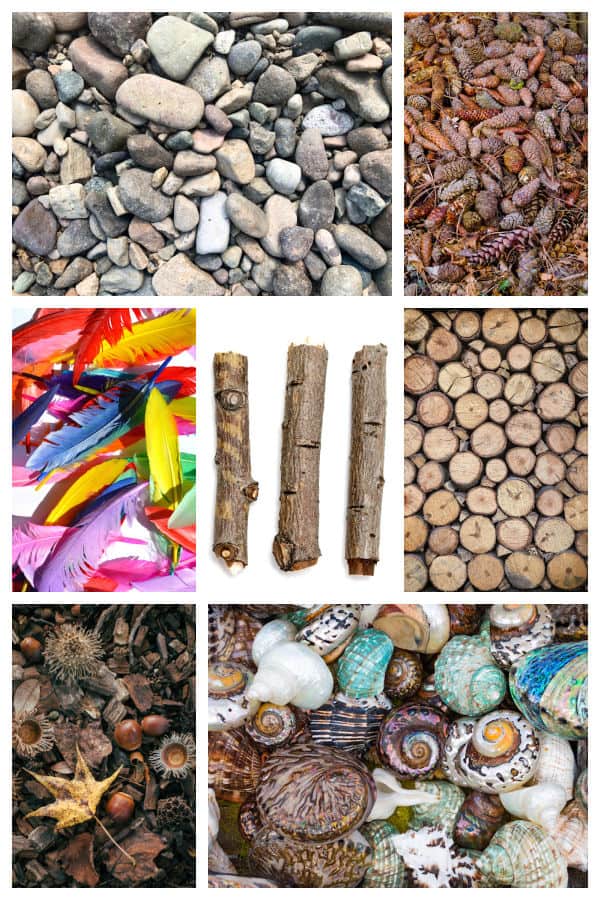
Authentic natural play materials are natural treasures and outdoor elements that have not been modified. They include sand, pebbles, stones, rocks, boulders, water, dirt, mud, twigs, sticks, driftwood, branches, bark, feathers, flowers, pinecones, pine needles, grasses, moss, leaves, vegetables, fruits, nuts, and seeds.
This informative guide starts by explaining the benefits of children playing with natural materials, beginning with why these open-ended materials are good for kids. Then it provides a list of natural materials that can be collected and used for play, along with a few creative, open-ended play activity ideas for each one. It concludes with a list of excellent open-ended toys for kids made from natural materials, such as DIY wooden blocks.
Children Learn Through Play: Provide Them with Materials That Help Them Understand Their World
Children learn about the world around them as they move and play. This is why it’s essential for parents, teachers, and caregivers to provide children with creative play environments and materials that allow them to discover the world at their own pace. The first stages of pretend play typically begin when a child is three, four, or five years old. Toddlers enter the imaginative play years when they begin trying on all the activities and roles they see happening around them.
As preschoolers pretend to be mommy, daddy, doctors, teachers, firemen, and cooks, they dramatically act out the world as they experience it. Young children will continue to play out or dramatize each new experience until they understand it. This is why toddlers and preschoolers will often repeat the same behaviors during play. They repeat the behavior to understand each action or role until they have learned enough about it to move on.
Benefits of Children Playing with Natural Materials:
Playing with natural materials benefits child development in several ways. Natural resources nurture creativity, encourage sensory exploration, and improve cognitive skills through open-ended, unstructured play. They can also help improve fine motor skills, encourage social interaction, and promote environmental stewardship.
When considering free play materials for toddlers, preschoolers, and kindergarteners, it is essential to remember that young children learn about their world through play. Natural materials are good for children because they can use them in unlimited ways. They are the best open-ended toys for the developing child because they can be imagined as anything. Unlike store-bought plastic toys that mimic real-world counterparts, natural items can provide preschoolers with toys they can use to learn through play in creative new ways.
1. Open-ended Natural Materials Inspire Creative Thinking and Enginuity:
Natural materials are “loose parts” that children can play with without any set rules. These types of open-ended toys can be used in multiple ways. It can be challenging for children to flex their creative muscles when their toys are designed for a specific purpose, because it limits their imagination. A plastic cell phone can really only be a cell phone in a child’s eyes, because it’s hard to imagine a plastic toy phone as anything but a phone.
In contrast, a large smooth shell can be a phone to talk on, money to buy something with, animals grazing on a farm, cars driving down the road, houses on the street, a musical instrument, food to eat, or anything else the child imagines it to be. This makes it essential to keep open-ended natural materials on the toy shelf for a young child’s creative development and intellectual growth. As Fred Rogers said,
“Play is often talked about as if it were a relief from serious learning. But for children play is serious learning. Play is really the work of childhood,”
Mister Rogers
Let Them Imagine, Pretend, Create, and Play!
Children will always be better off imagining that a large flat stone or a big wooden slice is a pizza rather than using a piece of plastic that looks like a pizza in their dramatic play. Why? Because a pretend pizza can only be a pretend pizza. Otherwise, it is pretty much useless! On the other hand, a big round piece of smooth, natural wood can be a pizza (shells and rocks make great toppings), a steering wheel, a plate, and so much more!
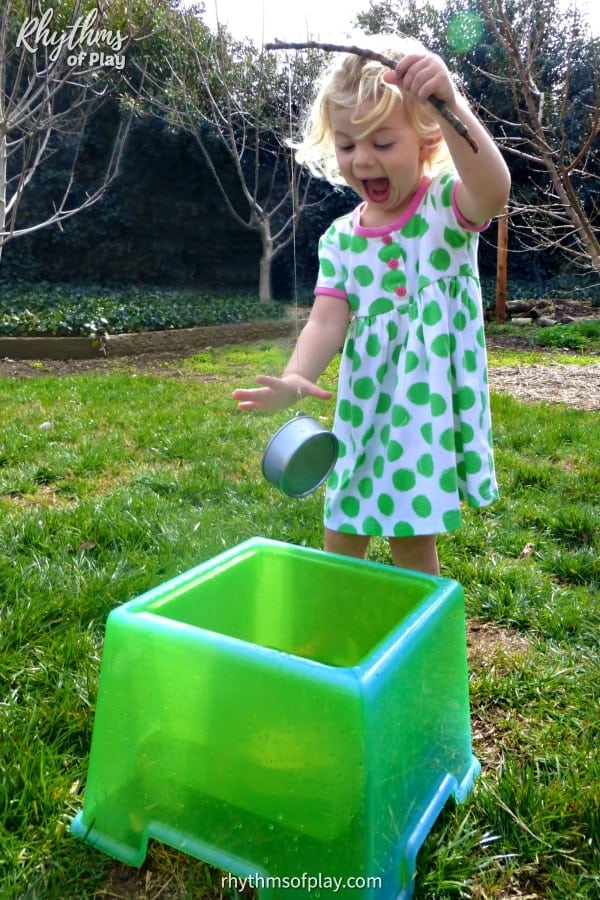
Since children must first use their imagination to turn natural world items into playthings, natural play materials can ignite a preschooler’s creativity the moment they start playing. For example, a stick is just a broken tree limb until a child imagines it as a magic wand, a sword, a spoon, or a fishing pole. Speaking of fishing poles, have you ever tried magnet fishing? You can see my daughter fishing with magnets in the photograph below.
2. Natural Play Materials Stimulate the Sensory System:
Another primary reason that items from nature make the best open-ended toys for kids is their ability to stimulate the senses and support sensory development. Children can explore different sensations, textures, sounds, and smells that toys made with synthetics cannot replicate. Using natural materials in pretend play provides the sensory stimulation your child’s developing body desperately needs to grow and thrive.
Natural materials and toys made out of them feel good to play with. They have texture, weight, smell, and a warmth or coolness to them that plastic toys just don’t have. Plastic toys cannot satisfy toddlers’ and preschoolers’ need for sensory stimulation as natural materials can. Kids can connect with the natural world in a much deeper way when they hold smooth stones, soft feathers, fragrant flowers, or crunchy leaves. It’s grounding, calming, and honestly kind of magical.
3. Strengthens Physical and Motor Skills:
Playing with natural, open-ended resources is like a workout disguised as fun. When kids carry sticks, scoop sand, stack rocks, or pour water, they’re engaging muscles and building strength without even realizing it.
Manipulating small items such as acorns, pebbles, and petals builds fine motor skills and hand-eye coordination as kids pinch, sort, stack, balance, and arrange them. These small actions may seem insignificant, but they help children develop hand control for activities like buttoning a coat, tying their shoes, hand-sewing, and writing.
Of course, outdoor nature play helps build large muscle skills. Climbing trees, scrambling over boulders, walking across fallen logs, and digging in the dirt help children improve coordination, balance, and confidence. It’s active, hands-on play that promotes strong, capable bodies.
4. Natural Open-ended Materials Assist With Learning, Problem Solving, and Skill Development At All Ages:
Activities like building with sticks, stacking stones, or creating worlds with leaves and mud, they’re constantly thinking, planning, and testing ideas. Children can also learn basic scientific concepts, such as sorting by size or color, or balancing a structure.
Because there is no single “right” way to play, their minds stay active and curious. Playing with natural materials invites creative problem-solving. A tower falls down, so they try again. A leaf boat won’t float, so they adjust it. This way, kids learn through trial and error, which helps them build patience, focus, and flexible thinking.
Open-ended resources also enhance creativity and imagination, which are a large part of intellectual growth. Children make connections, invent stories, and explore how things work, all while playing freely. These types of natural play materials also grow with your child.
A toddler might just collect acorns. While an older child might make acorn necklaces with them or create a whole woodland village full of acorn people. No batteries. No rules. Just the power of the imagination doing what it does best. Playing and creating.
Ensure Natural Materials are Clean and Safe Before Use and are Used Appropriately:
Please ensure that the natural materials you find are safe for toddlers and preschoolers before using them as toys. Materials gathered outdoors will also need to be thoroughly cleaned or disinfected before use. This will help ensure that there is no dirt, debris, bugs, toxins, or other contaminants on them.
I am currently writing an article on how to clean natural materials for children’s play. I will add a link to it here as soon as I post it. For now, visit this tutorial on DIY nature sensory bins for more information on cleaning natural materials to make them safe for children to handle.
Please do not give small natural items to babies or toddlers who are still mouthing objects, as these are a choking hazard. If it looks questionable, leave it outside where you found it if possible. “When in doubt, leave it out.” Please don’t take more than you need. Mother Nature appreciates it when we are not wasteful and only take what we will use.
Also, keep in mind that natural, open-ended materials are best for kids to play with when supervised. Please instruct toddlers, preschoolers, and kindergarteners not to abuse or misuse them. In our home, putting them in your mouth, stomping on them, throwing them at others, or otherwise misusing them is discouraged. When mishandled, please gently take the toys away from the child as calmly as possible, while saying, “It looks like you’re not willing to handle these correctly today. You can try again, another day.”
Please avoid letting children play with natural objects that are:
- moldy or slimy.
- covered in animal droppings.
- sharp or dangerously splintery.
- from poisonous or toxic plants (such as poison oak).
- smelly in a bad way.
- not clean or disinfected.
- too small for children to handle.
- should not be put in the mouth.
- misused or mishandled.
Open-ended Natural Materials for Children’s Play
Here’s a list of natural materials used in nature preschools, forest schools, outdoor classrooms, Waldorf and Montessori Education, and the Reggio Emilia approach to encourage open-ended, imaginative, or pretend play. Although many of these natural items can be purchased, I recommend going on nature hunts with your children to find as many as possible in your biome. Doing so will help you and your children deepen your connection to the natural world.
My daughter and I often collect and see several varieties of natural play materials during our daily nature walk. Sticks and stones are two of the most classic and best natural toys of all time, and so are water, sand, and dirt, but there are so many more open-ended natural materials that children can play with. Best of all, most of these natural play materials for children are available at little to no cost, if not FREE!
1. Water:
Water is a versatile natural play material for children, offering endless opportunities for play, exploration, and learning. Whether wading in a bath, splashing in a pool, running through sprinklers, pouring liquid from one container to another, or playing at a water table, children can engage their senses, refine motor skills, develop hand-eye coordination, and more.
Best of all, water activities, such as playing with bath toys, pouring activities, creating water mixtures, or experimenting with how objects float or sink, are not just fun. They make it easy to enhance children’s understanding of basic scientific concepts. These early learning experiences and simple activities can significantly improve their problem-solving abilities. Additionally, playing with water and other fluids encourages imaginative play and creative thinking, while its calming properties help children relax. All in all, water activities are beneficial to children’s cognitive, physical, and emotional development.
2. Sand:
Sand play educates and entertains children through hours of experimental or imaginative play. Playing with sand is not just fun. It can be a crucial part of a child’s learning and development. The abundance of sandboxes and sand toys for kids proves this. Sandboxes provide a contained space for children to engage in open-ended play, where they can dig, build, and create freely.
The texture of sand invites sensory exploration, allowing kids to dig, scoop, pour, and mold, which helps strengthen motor skills and hand-eye coordination. Children can also develop their creativity and spatial awareness skills by building sandcastles, creating patterns, or sifting sand through a sand toy.
Sand is also a fantastic natural material for imaginative play. Kids can pretend to be builders, explorers, or scientists and learn about cause and effect through manipulating sand. Beyond these cognitive and physical benefits, playing with sand offers a soothing sensory experience for young children, which can be comforting for those who feel overwhelmed or anxious.
Playing in a sandbox helps develop the sensory system, motor skills, and hand-eye coordination. Sand and water tables combine the properties of two natural play materials, allowing for more varied play experiences. Kids can explore how sand interacts with water, create different textures and effects, and experiment with concepts like mixing, pouring, and sculpting.
3. Dirt:
Dirt or soil may just be the most underrated play material of all time. Kids don’t need fancy toys to have a great day. Give them a patch of soil, a stick, and a few small shovels or scoops, and they’ll get right to work. Dirt invites digging, pouring, building, mixing, and imagining. One minute it’s a mountain, the next it’s cake batter in a mud bakery, whether you have a designated mud kitchen or not.
Dirt is open-ended in the best way. There’s no right answer and no finished product. Kids can make roads for toy trucks, plant pretend gardens, or create tiny worlds for bugs and fairies. Playing with soil supports creativity, problem-solving, and hands-on learning, all while kids happily get messy. It also provides a powerful sensory experience. Dirt can feel warm, cool, squishy, crumbly, gritty, or smooth depending on what it contains and where you are.
However, not all dirt is safe for play. The best dirt for kids to play with outdoors is garden or yard soil in a pesticide-free yard you trust. The safest dirt is in areas away from roads, parking lots, compost piles, and areas treated with weed killers or pesticides. It’s also best to avoid soil from areas where dogs, cats, or wildlife frequently roam, as there may be animal waste. Store-bought organic potting soil, free of added fertilizers or chemicals and labeled safe for gardens, is best for indoor play and sensory bins.
Mud:
Mixing dirt with water turns it into mud, which just might be one of the world’s first and most favorite sensory recipes. Children learn through touch, texture, play, and experimentation. Although it doesn’t look very exciting, dirt naturally provides all of that. I can remember making mud pies with my brothers and neighborhood friends as a child in vivid detail.
Best of all, playing with dirt helps children connect with the outdoors. It reminds kids of all ages that nature isn’t something you only look at; it’s something you can explore with your hands. A little mess can lead to big learning, big joy, and maybe a very dirty pair of pants. Worth it.
4. Acorns:
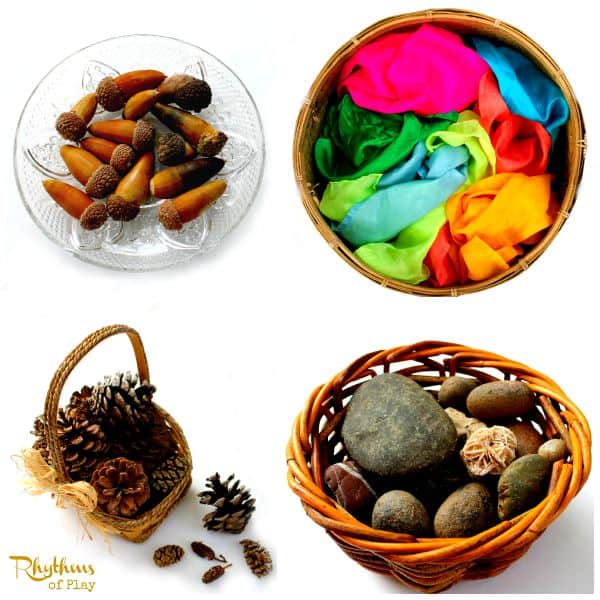
Acorns are a natural play material that preschoolers can use to imagine many things. With their charming caps and petite size, acorns are perfect for endless craft projects and imaginative play. Build adorable acorn people and create a whole acorn family with unique personalities. Challenge kids to design tiny acorn crafts to enhance their fine motor skills and creativity. My daughter also enjoys using them as food or bowls in her dollhouse. She also enjoys pretending acorns are pieces of money. We also like to make them into acorn necklaces and acorn marble ornaments.
An acorn can also be an animal or anything your children can imagine. Arrange acorns as game pieces for nature-inspired board games where little adventurers navigate through forest-themed challenges. Conduct acorn-rolling races down a small incline for guaranteed giggles and fun. As children discover the magic hidden within these cute little nuts, they’ll develop a profound appreciation for nature and its tiny treasures. So, gather a basket of acorns and let the play begin.
- Acorns – Natural acorns with caps.
5. Pinecones:
Pinecones also make a great natural play toy for kids. These adorable, spiky treasures offer endless opportunities for creative adventures. A young child can imagine a pine cone as many things: animals, bushes, phones, etc. Pinecones also make lovely sparkling evergreen trees in a Winter Wonderland Fairy Garden.
Encourage preschoolers and kindergarteners to play with pinecones in many creative ways. With pinecones, the possibilities are as vast as the forest itself. A pinecone can be a baby dragon, a pretend cupcake, or a tiny forest friend. These toys don’t tell kids what to do; they allow them to decide.
Pinecone activities and play ideas for kids:
- Craft colorful pinecone animals with pipe cleaners, googly eyes, and felt, bringing the woodland critters to life as a pinecone nature craft.
- Use pinecones as bowling pins and watch the giggles as kids roll balls to knock them down.
- Create sensory bins filled with pinecones, leaves, and other natural elements for tactile exploration.
- Paint and decorate pinecones to make charming decorations or seasonal ornaments.
- Or, challenge kids to a scavenger hunt to find the biggest, smallest, or most unique pinecone. Learn how to create a nature scavenger hunt for kids.
- There are several other ways to play and learn with pinecones. Look at this list of pinecone crafts and activities for even more ideas.
6. Pebbles, Rocks, Stones, and Gems:
Stones, rocks, and pebbles are some of the most classic natural toys for kids and offer a treasure trove of playful possibilities. A simple stone can be anything in a child’s mind. They can be painted or used as they are in several fun and practical ways, including stacking and skipping. Kids of all ages enjoy building rock towers in their backyard sandboxes like modern architects, testing balance and patience.
Colored floral stones and gemstones also make fantastic natural toys for dramatic play—they can be jewels, treasures, windows, rivers, pools, dragon tears, etc. However, please ensure these glass gems don’t contain cadmium if children will play with them. Cadmium sometimes appears as an iridescent coating, but it can also be invisible. It is extremely toxic and can pose a health hazard because it is closely related to lead.
Feel free to paint and decorate rocks to create colorful characters or inspirational paperweights for their desks. Painting rocks is fun for kids and adults of all ages, but remember that toys are best when they can be anything. Watch their imaginations soar as they create rock pet homes with miniature furniture and mossy gardens.
Stones are also an excellent learning tool. Invite kids to sort and classify rocks for a simple science lesson. Let little geologists discover different types of rocks, from smooth river pebbles to sparkly gemstones, igniting a passion for earth sciences. Organize a backyard rock hunt and turn it into a thrilling adventure as children seek hidden gems amidst the soil.
With rocks as their allies, kids can embark on endless quests, fostering a deeper connection with the natural world and a love for the wonders beneath our feet. So, let’s rock and roll into a world of geological fun!
7. Boulders:
Climbing is an excellent activity for physical, cognitive, and emotional development. Small, easy-to-climb boulders make a fantastic natural climbing gym for children’s play. Climbing, balancing, and navigating around boulders can enhance kids’ agility, coordination, and gross motor skills, which build strength and confidence. This makes climbing on boulders (bouldering or scrambling) an excellent outdoor activity for developing mental perseverance and resilience.
Bouldering is a valuable learning experience for kids of all ages. The challenge of maneuvering over and around boulders builds problem-solving skills and strengthens spatial awareness as kids assess and overcome obstacles. Additionally, the tactile experience of interacting with large, rugged rocks provides children with a grounding, calming sensory experience. For more information about bouldering with kids, click the link!
8. Flowers:
Flowers serve as a gentle reminder that sometimes the best toys are growing right outside your window. A handful of petals, a few blossoms, and some leaves can be transformed into almost anything in a child’s eyes. Flowers can inspire creative play in many ways. They encourage storytelling, make-believe, and the creation of imaginary worlds.
For example, dandelions can become fairy wands. A daisy chain can be turned into a crown for a forest queen. Stray flower petals can be used to make “petal soup” in a mud kitchen, jewels to sell in a backyard shop, or as “treasure” in a game of pirate ship. Flowers are also excellent materials for open-ended creativity. Kids can sort them by color, press them into homemade cards, make nature crafts, or create “potions” with petals and herbs.

9. Feathers:
Bird feathers are another natural, open-ended material that can ignite imaginative play. There are so many things a young child can do with a feather, especially during dress-up time, making mudpies, and building sandcastles. Children can put a feather in their hat, use it as a quill, pretend to fly like a bird, and so much more. Feathers can also be used to make various crafts and DIY projects. They can be made into whimsical feathered masks and headbands, crafted into feather mobiles or dream catchers, painted, and more.
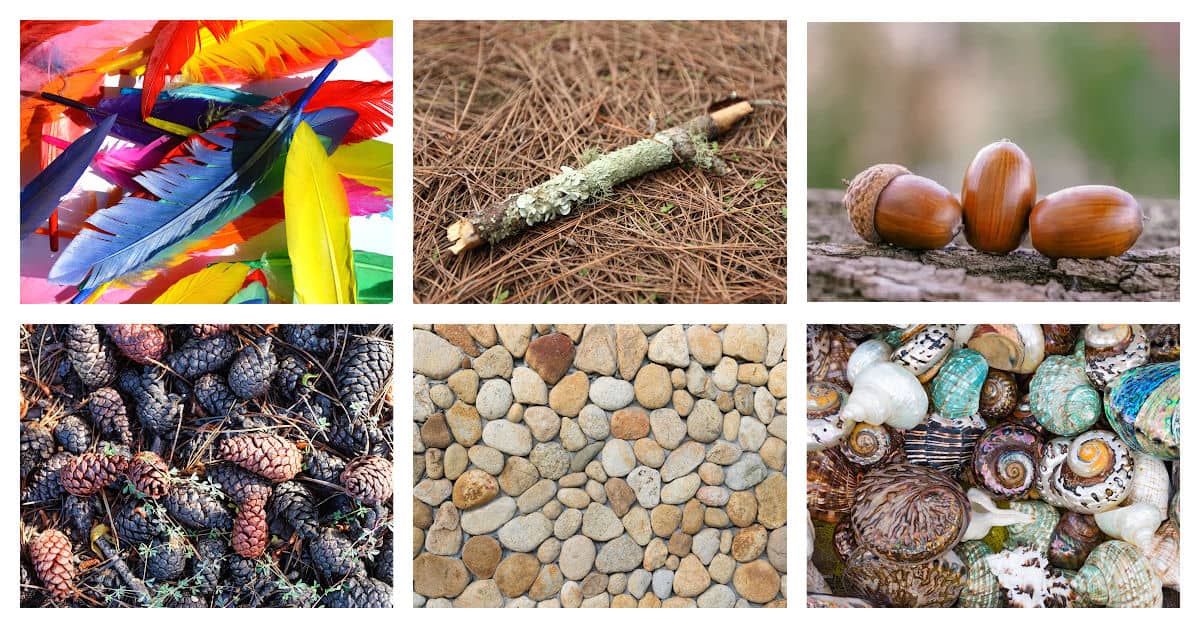
Organize a feather hunt in the park and watch children’s excitement as they discover and collect feathers of all shapes and sizes. Another fun idea is to encourage your little explorers to go birding to identify different bird species by their distinct feathers. This activity can spark an interest in ornithology. Here are a few different types of feathers that can be used as open-ended toys:
10. Sticks, Twigs, and Bare Branches:
Step into the fantastic world of nature’s playthings, where twigs, sticks, and bare branches become extraordinary toys for kids! These humble treasures offer a boundless realm of imaginative exploration. Kids can engage in endless role-playing adventures with these simple elements, becoming nature’s heroes.
I am constantly amazed by preschoolers’ creativity. They can imagine sticks or small logs to be so many things: A fishing pole, a sword, a flag, a broom, and, of course, you can use them to build almost anything, including a thankful tree or an Easter egg tree. Or turn sticks into magic wands to cast imaginary spells and unlock doors to enchanted kingdoms.
Look for twigs, sticks, and bare branches to add to your toy closet on a nature hunt in your neck of the woods. Organize a scavenger hunt for the most intriguing branches to spark wonder and appreciation for the great outdoors.
Encourage your little adventurers to become architects as they construct intricate stick forts and twig houses, fostering creativity and problem-solving skills. Watch as they create stick people with googly eyes and yarn hair, bringing their woodland friends to life. Embrace the charm of nature’s toys and embark on a whimsical journey through forests of imagination.
11. Shells:
Get ready for some beach-themed fun with shells. Large, smooth shells are fantastic natural toys for kids. Shells can be so many things. These little treasures from the sea offer a world of imagination and discovery. As mentioned previously, a shell can be a phone; shells can be money, food, animals, and so many more things in a child’s creative mind.
Encourage your little ones to create their mini-kingdoms by using shells in a fairy garden, as dollhouse furniture or miniature bowls for their toy animals. Stack them up like building blocks, construct sandy fortresses, or arrange them in artistic patterns for unique land art projects such as a mandala. Let their creative minds roam wild as they turn shells into pirates’ treasure or tiny boats to sail on imaginary oceans.
Shells can also teach kids about different marine species and ecosystems, sparking their interest in the natural world. So, the next time you’re at the beach, don’t forget to scoop up some shells and watch the endless fun unfold! It’s time to dive into a world of seashell enchantment! But please use caution. Some shells can be sharp, while others are too small for a child to play with, especially babies and toddlers who are still putting things in their mouths.
12. Leaves:
Leaves are among the easiest open-ended play materials you can find. They’re everywhere, free, and kids seem to instantly know what to do with them. A pile of leaves is never just a pile. It can be a bed for a gnome, a dragon’s nest, or a salad in a mud kitchen. Leaves invite children to create their own worlds, and that’s where the play begins.
Like most other natural materials, leaves are also wonderful for sensory play. Some are crisp and crunchy, while others are soft and flexible. Kids love to touch, toss, catch, sort, and watch them swirl in the wind. It’s simple, hands-on play that helps children slow down and observe the world around them.
They’re great for making crafts and learning, too. Kids can press leaves, make leaf rubbings with crayons, build a leaf mandala, or use them as paint stamps. They can sort them by color, shape, or size, or pretend they are money in a store. A single leaf can become a boat, a plate, a crown, or bear a secret message from a forest fairy hidden upon it. Most importantly, leaves remind kids that play doesn’t have to come in a box. Sometimes, the best toys are waiting right outside, right under your feet.
13. Corncobs:
Yes, you read that right: corncobs. Remove the kernels and dry them out before use. They can be fishing poles, logs on a pretend fire, toothbrushes, building supplies, tent poles, or anything else your child imagines.
Best Natural Toys for Open-Ended Imaginative Play:
The open-ended toy ideas below are made with natural materials that spark children’s joy and creativity. The list of natural play supplies above includes natural items that have not been modified from their original form. This list differs in that it contains natural materials that have been slightly modified to create open-ended toys for children. In other words, it is a list of kids’ toys made with natural materials.
Wooden blocks, silk scarves, and baskets are a few examples of these types of toys. Unlike plastic toys with predefined uses, these natural toys encourage children to invent games, stories, and scenarios. For example, wooden blocks can be transformed into anything from castles to vehicles, silk scarves into capes or baby slings for dolls, and baskets into bowls, helmets, and kitchen tools. And these are only a few examples of the many ways just those three items are played with. This makes them exceptional tools for imaginative play.
1. Building Blocks, Wood Pieces, and Natural Tree Blocks:
Building blocks, wood slices, and other cut pieces are delightful natural toys for kids of all ages. These natural treasures offer a plethora of playful possibilities. Invite children to use blocks and various shapes and sizes of wood to construct imaginative structures. Building with blocks encourages kids to develop fine motor skills and spatial awareness. Arrange blocks or wood slices as puzzle pieces for brain-teasing challenges that stimulate problem-solving abilities. Kids can explore their artistic flair and engineering prowess with wood as their canvas.
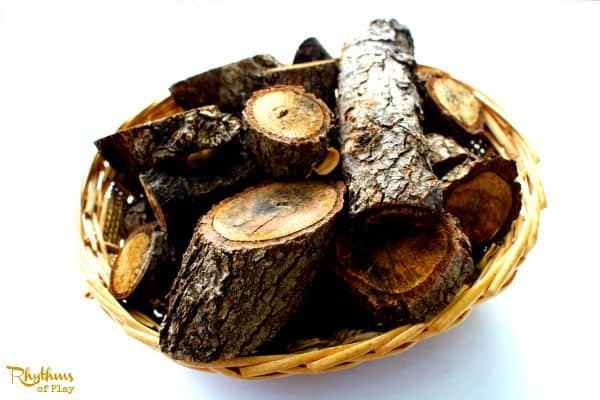
Natural wooden blocks are easily made by cutting small tree limbs into pieces. Natural wood pieces make excellent pretend-play toys for dramatic play. Preschoolers and kindergarteners can use them to build or become anything they desire. Turn wood slice blocks into DIY tic-tac-toe games for friendly competitions, or use them as bases for nature-inspired figurines on a nature table. The photograph below shows my daughter’s tree blocks. We keep them in a small basket inside and a large bin outside.
- Best Building Blocks for Kids
- Use small tree limbs and branches to make DIY Waldorf-inspired tree blocks. Learn how to make nature blocks–> HERE.
- Here’s a lovely set of Tree Blocks for sale on Amazon if you don’t want to make your own.
- Wood slices: slices of wood make fantastic plates, steering wheels, pizzas, pies, etc.
2. Silk Scarves (Play Silks):
Play silks are among the best things around for a toddler’s imaginative play. And they will grow with your children from babyhood through childhood and into the teen years. But please don’t be fooled by cheap imitation fabrics and play scarves.
Choose 100% silk play scarves to provide your child with the sensory stimulation their developing nervous system needs. Natural silk always makes the best accessory. Whether you use it to play peek-a-boo with the baby, as a cape for your little superhero, or as a gorgeous scarf. Nothing is more fashionable or better for your children and our planet than choosing 100% silk play scarves.
Playsilks are also great for dress-up play and can be draped on play stands and nature tables. Authentic silk play scarves also make excellent capes, baby blankets, carriers, and more! Make your own by purchasing silk by the yard, cutting it into 34- to 36-inch squares, and sewing up the edges. You can also buy play silks using the Amazon affiliate links below. (If you click to purchase, Rhythms of Play will earn a small commission at no extra cost.)
3. Sandbags and Bean Bags:
Sandbags are a fabulous natural play material for kids of all ages. They can be used for hand-toss games such as Hopscotch, Target Toss, Cornhole, and more. They can also be used for many other creative purposes, such as building and stacking. Sandbags also make simple, creative play toys, as they can be imagined as cars on a road, a phone to talk on, or put into a bag to be “groceries.”
- Cornhole beanbags are sandbags made for the game of cornhole, but they are also excellent toys for pretend play.
- Mini-toy bean bags are perfect for kids to develop throwing and catching skills, and so much more.
4. Boot or shoe laces:
Shoelaces aren’t exactly a natural material, but I couldn’t leave this fantastic resource off the list of toys for kids. Boot laces can be used as tow ropes, circles for simple games, the string for a fishing pole, and you name it.
Make sure you choose boot or shoe laces that are thick enough to untie easily. Little ones can get these all wound in knots, and thick ones are much easier to undo. You can also provide toddlers and preschoolers with finger-braided ropes or crochet lengths of yarn instead of laces to play with.
5. Baskets:
Baskets are another great toy for imaginative play. A basket can be a hat, a soup pot, a bowl for eating, or a place to keep treasure. You will likely also need sturdy baskets to hold the other open-ended natural materials discussed throughout this informative article. The dollar store has baskets, but my daughter and I discovered they were often too weak to last very long, so we needed to replace them. Today, we use baskets like these:
6. Play Stands:
Play stands are perfect for setting out baskets full of these natural materials for dramatic or imaginative pretend play. They are also beautiful hideaways for young children, with a silk scarf or cotton sheet draped over the top.
- Wood Playstand Playroom Set
- Or use a play tent with a small wooden shelf inside or nearby.
7. Silk Scapes:
Silk scapes are lovely for pretend play. They are larger than play silks and are often draped over play stands, chairs, headboards, bed canopies, and other surfaces to create forts and playhouses. Silk scapes make it easy to create a beautiful hideaway for young children. They can also be used for dress-up play.
8. Cotton sheets:
Cotton Sheets are great for building forts, boats, trains, and secret hideaways. A bunk bed with a sheet tucked under the top bed provides an enchanting place to hide, while a sheet draped over a chair, table, or sofa can be almost anything a child imagines: a boat, car, house, castle, or ghost. Any old cotton sheets can be used if you don’t have any, and thrift stores usually have plenty. If none of these options work, try the affiliate link below.
9. Cardboard Boxes:
Last, but certainly not least, is the classic cardboard box. A simple cardboard box is one of the most versatile materials for open-ended imaginative play. Anyone who has ever seen children playing with boxes instead of their new toys on Christmas morning can attest to this fact. Although manufactured, cardboard is made primarily from wood pulp, a renewable natural resource derived from trees.
The Magic of a Cardboard Box
Because it is plain, flexible, and easy to transform, a cardboard box is a fantastic open-ended play material for children. A cardboard box can become almost anything a child can imagine, from a boat to a boxcar to a gnome’s home. Unlike toys designed for a single purpose, a cardboard box does not dictate how it should be used.
A large box might become a spaceship one day, a pirate ship the next, and a cozy reading nook the day after. Smaller boxes can be transformed into dollhouses, castles, shops, puppet theaters, vehicles, animal habitats, or treasure chests. Children are free to invent their own stories, roles, and worlds.
Cardboard boxes spark creativity by providing a blank canvas for the imagination. Children can draw or paint on them, cut windows and doors, add other materials and embellishments, or combine several boxes to create something entirely new. This fosters problem-solving skills, critical thinking, and creative confidence as children experiment with their ideas and bring them to life.
Open-ended play with cardboard boxes also supports social and emotional development. When children build and play together, they practice communication, cooperation, negotiation, and teamwork. They learn to share ideas, solve problems, and co-create stories through dramatic play that can last for hours.
Cardboard boxes are also affordable and sustainable play materials. Reusing boxes that might otherwise be heading for the recycle bin gives them a second life. This activity helps children learn about resourcefulness, and helps them care for the earth, and become the environmental stewards of tomorrow. A simple cardboard box can provide hours of meaningful play without batteries, screens, or expensive accessories.
Natural Materials Make the Best Toys for Kids
Children need play spaces where anything can be anything to flex their creative muscles. They need play materials that are open-ended enough to meet their needs with each new imagining. Each of the natural materials for pretend play discussed above provides the perfect solution.
Include a selection of other simple toys with these natural materials to create an imagination-rich play space for children. Here are a few more excellent Open-ended Toys for Pretend Play.
This post is a part of the A to Z of Pretend Play blog hop. This helpful guide to natural open-ended toys is under “N” for Natural Materials. Please visit the article to see several more excellent open-ended activities for kids.
You might also enjoy this list of outdoor learning and nature activities for kids, or these nature craft ideas.




Leave a Comment