Depending on the children’s ages and the primary purpose, nature tables are excellent tools for connecting with the natural world, fostering curiosity and wonder, developing observational skills, supporting sensory learning, engaging in nature study, and exploring early science concepts.
A nature table is a small, designated space where seasonal items representing what’s happening in the natural world are displayed. They typically include natural objects such as leaves, flowers, rocks, and other treasures gathered outdoors. Thus, nature tables provide a place to showcase the changing seasons, spark curiosity about the natural world, foster a sense of wonder, develop observational skills, and promote sensory exploration and imaginative play.
They are typically set up indoors on a table, but you can also arrange them on a shelf or another suitable location. Regardless of where you put them, they serve as beautiful DIY decor for your home, school, or classroom. You might also enjoy using natural materials as open-ended toys.
Simple Natural Learning Centers for Young Children
Nature tables are natural learning centers that are common in Waldorf education. They are also used for homeschooling. Or by families and educators who want to foster a connection with nature and the rhythms of the year, helping children understand the cyclical nature of the environment and other early science concepts. Nature tables can also be a part of Montessori, Charlotte Mason, and Reggio Emilia Education. However, the table’s focus often differs slightly depending on the educational setting.
Bring The Outdoors In with a DIY Nature Table
A nature table in Waldorf education typically includes a small display or collection of natural items that reflect the current season. They are most often made for young children, such as preschoolers and kindergarteners. However, they can also provide a beautiful place for older children to explore a specific nature study concept or science topic of focus, in Montessori, Charlotte Mason, or Reggio Emilia Education. These latter types of nature displays can be made on a table, shelf, or even a wooden tray. Trays allow for easy relocation to a table for in-depth study when needed.
Because they often contain little nature treasures from the great outdoors, or provide a display that mirrors it. Creating a nature table is a simple nature activity for kids that helps them develop a deeper connection to and understanding of the natural world. They also offer a magical space for children to observe natural objects, engage in nature study, and learn basic natural science concepts. Discover the purpose of a nature table and learn how to make and use one in the classroom or at home in this informative guide.

Purpose of Nature Tables:
The primary purpose of a nature table or shelf is to create a space in the classroom or at home where children can connect with and learn about the natural world. As such, they are designed to encourage observation and a deeper appreciation of the great outdoors by providing a dedicated space to observe and celebrate nature.
Typically, nature tables reflect the current season. This helps children connect with the rhythms of nature and learn more about the natural world around them. The main idea is to allow preschoolers, kindergarteners, and young elementary school-aged children to connect with the natural objects and scenes on the nature table. This connection can foster an inner relationship with the items and rhythms of the natural world. It also helps them develop observational skills.
They can also be created with a specific theme or focus for older children. When designed this way, they can provide a dedicated space to learn about a plant or animal species, or an unfamiliar natural environment or biome. These latter types of nature tables make a fantastic complement to a themed unit study about a particular aspect of the natural world, such as rocks and minerals, trees, or the desert.
Thus, nature tables can help children at home or students in a classroom study the seasons of nature, specific nature study themes, or early science concepts. Nature tables can ignite curiosity and encourage children to ask questions and explore further. Depending on its design, the focus of the table, and the objects upon it, nature tables can also encourage sensory exploration and help children develop their imaginations. You can see a nature table for each of the four seasons: spring, summer, fall, and winter in the photo below.

Nature Table Supplies and Materials:
Following is a list of items you might find on a nature table. Not everything on the list below needs to be included. A nature table with a few key items is just as wonderful as one with several. Tailor it to the space, its focus, and the individuals who will enjoy it. Please start by collecting natural treasures outdoors. Then visit the Rhythms of Play Store to gather materials, including many of the recommended supplies listed below, for displaying on a nature table at home or in the classroom.
1. Cloth or background:
Pieces of fabric, such as cotton or silk square scarves, help create the mood on the table or hanging behind it. They can also assist with creating various scenes on the table, such as a blue or turquoise scrap of cotton or silk to make a pond, lake, river, or ocean, and green to create grass for a meadow or small hill. Small pieces of silks and cottons, such as Sarah’s playsilks, are commonly used for this purpose on a Waldorf nature table.
For example, you can use greens for spring, greens or yellows for summer, rich reds and oranges for autumn, purples and blues for winter. Alternatively, add fabric in a color that complements or contrasts with the table’s primary focus, such as green for a botany unit. Have a look through the photos to see examples of how to include fabric on a nature table. An example of a summer nature table with colorful cloths on the table and one hanging behind it appears in the photo below.

2. Natural objects:
Here’s a list of natural materials you can include on a nature table. Of course, choose those related to the season or the table’s theme, such as snowflakes in winter, flowers in spring, shells in summer, and gourds or pumpkins in fall. Please visit this DIY sensory bin tutorial to learn how to clean natural items before use on a nature table.
- Leaves
- Pinecones
- Rocks, minerals, or natural gemstones.
- Bird feathers
- Flowers
- Shells
- Nuts and seeds such as acorns or walnuts
- Sticks and twigs
- Gourds or pumpkins.
- Or any other natural treasures you’d like to include.
3. Baskets, bowls, trays, and bins:
Baskets, bowls, trays, and bins make a perfect place to store natural treasures gathered from the natural world, an orchard, or the garden. Choose containers made of wood, glass, or ceramic, or baskets woven from natural materials, to remain true to the table’s focus.
4. Seasonal symbols, decorations, or thematic elements:
Items that reflect the time of year (e.g., blossoms in spring, colored leaves in fall) or the theme of the nature table (e.g., flowers and parts of flowers for a Botany unit, or rocks and minerals for a Geology or Earth Science unit). One of my favorite seasonal elements to add is a seasonal tree that changes to reflect the seasons. Examples include the following:
- A spring or Easter tree decorated with eggs and other Easter ornaments.
- DIY Summer tree with green wool roving added to bare branches to create a crown of leaves.
- A thankful tree with preserved autumn leaves or marbled clay gratitude leaves.
- Winter tree examples in the photo below include a bare-branched tree decorated with dried orange slice ornaments (and other Christmas ornaments), or a wooden evergreen Christmas tree.
- Examples of seasonal trees you can make to display on a nature table are shown in the photo collage below:

5. Small figures and Dolls:
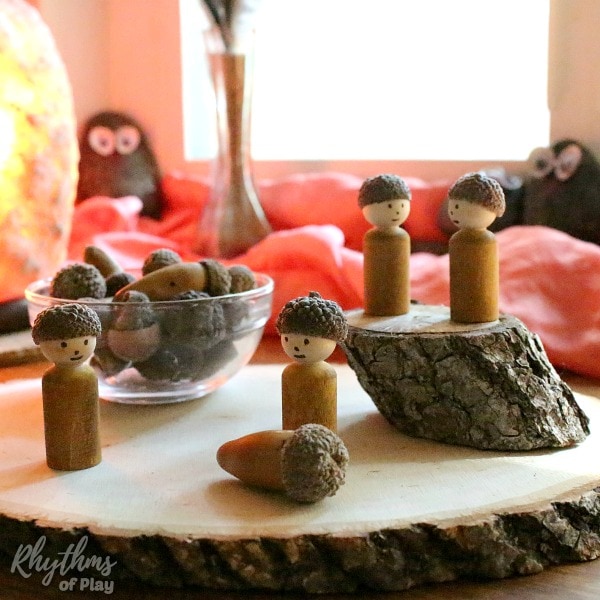
Handcrafted animals, gnomes, fairies, dolls, and figurines made from beeswax modeling bars, wood (such as peg dolls), felt, wool (hand-sewn or needle-felted), or other natural materials that match the season or the nature table’s focus. Please visit the Rhythms of Play Store for materials for several of these options, and look through the handmade figurine tutorials you can make below:
6. Art and Crafts:
Nature crafts and other arts and crafts that reflect the season or the nature table’s thematic focus look lovely on display on or near the table. A few collections of ideas with several DIY tutorials for creating seasonal arts and crafts are below:
- Arts and Crafts made with Natural Materials
- Flower Arts and Crafts
- Fall Nature Craft Ideas
- Autumn Art Projects and Painting Ideas
- Winter Art Projects and Painting Ideas
7. Wooden rounds and display stands:
Rustic unfinished wooden rounds and pieces of wood cut from small branches make an excellent display for figurines and other seasonal elements, as shown in the photo below. Small wooden picture stand card holders offer a simple yet elegant way to display seasonal postcards, poems, pictures, and miniature paintings. Larger seasonal paintings look lovely hanging near or behind nature tables in an artwork storage picture frame that is easy to change as the seasons change. Books can be propped up on a small wooden easel, leaned against a wall, or laid on the table.
8. Books or poems:
Children’s picture books and poems that match the seasonal theme or focus of the nature table. For example, I like to include seasonal books by Gerda Muller that match the current season on our nature table as the seasons change. Educational field guides and nature journals placed near the table are an appropriate addition for older children and students. Please visit the articles below for more nature books you can include for different seasons:
- Magical Spring Books for Children
- Best Fall Books and Autumn Stories for Kids
- Winter Solstice Books for Kids
- Please visit this list of Nature Study Supplies for Kids for several excellent field guides suitable for older children.
How to Make a Nature Table:
Bring the outdoors in with this DIY guide to nature tables. Use the simple step-by-step instructions below to make a nature table for your home or classroom:
1. Choose a location for the nature table:
Typically, a small table or shelf is used to set up a nature display area for children at home or students in a classroom. Start by selecting a small, accessible surface such as a table, shelf, or other suitable location to create a dedicated space for a nature table. Even a windowsill or small section of a shelf or table will work. Ideally, it should be positioned with natural light and at a child’s eye level to make it easy for children to access and help them learn more about the natural world.
2. Pick a seasonal theme or nature study concept:
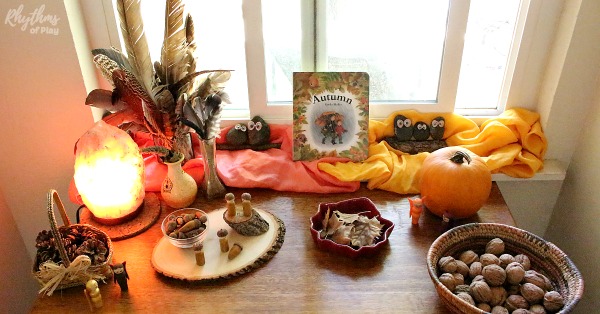
The nature table should be based on the current season for young children, such as toddlers, preschoolers, and kindergartners. For older elementary-aged children and up, you can create a nature table focused on a specific aspect of nature or a study topic (such as birds, trees, flowers, insects, or weather). Before decorating, choose a general theme for the table. A nature table with a fall theme is shown in the photo below.
3. Gather Natural Items:
Take a nature walk to collect items if needed. You can also use any treasures that reflect nature or the current season that you already possess. Please avoid disturbing wildlife and protected areas to gather natural treasures, and refrain from taking illegal items, such as picking wildflowers in state or national parks.
Invite children outside on a nature hunt to find items they’d like to put on the nature table or shelf. Make it a mindful family or class activity, or ask parents to help children find items to bring to the classroom as contributions.
Natural treasures such as pinecones, acorns, walnuts, fall leaves, sticks, stones, etc., are great additions to any fall nature table—especially those that reflect the season and the natural environment in which you live, or the nature study science concept or focus of the nature table.
Please ensure the natural objects are safe, clean, and ethically collected before displaying them. For more information about cleaning natural supplies for use on a nature table, visit Nature Sensory Bin Ideas.
4. Arrange items on the Nature Table or shelf:
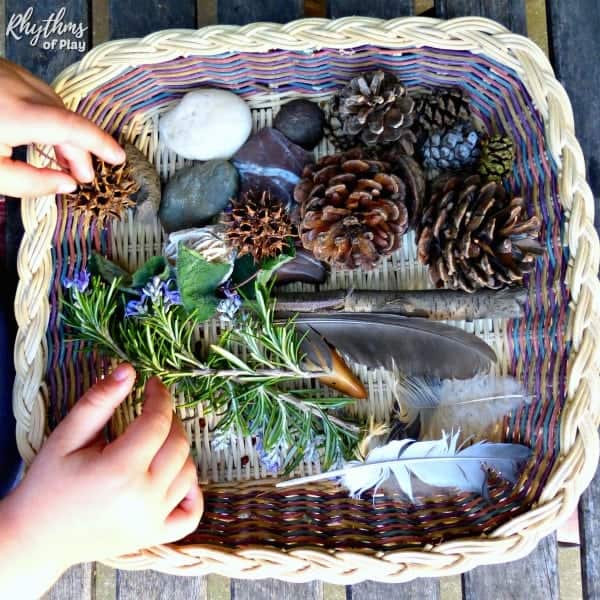
Layer one or more pieces of fabric, such as silk or cotton, as the base of the display. Then arrange items by size, type, shape, color, or theme. Place the natural treasures you find in baskets (as shown in the photo above), vases, trays, or display them directly on play silks draped upon the table to create a display that is as simple or elaborate as you like.
I recommend starting with just a few items or baskets filled with raw materials, adding and changing elements as the seasons progress. Gather a few things and get crafty with some of the treasures you find. Leave space to avoid a cluttered look and create a calm, meditative space where children can learn about the natural world.
5. Add artistic or handmade elements to the display:
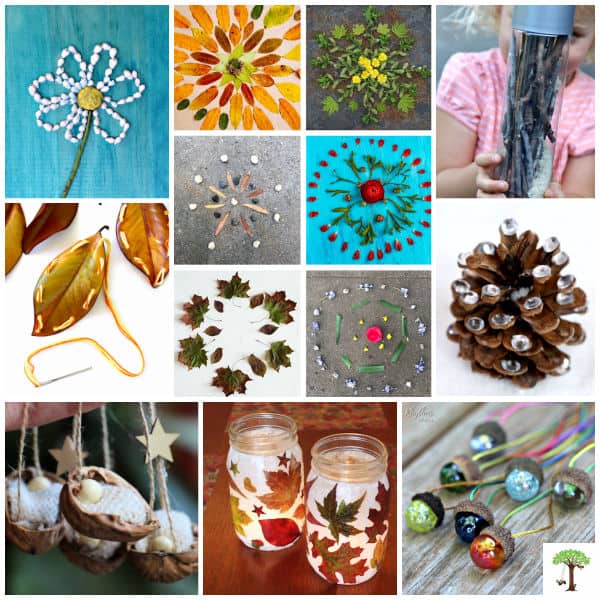
Include small seasonal crafts or figures. You can create these elements with kids, make nature crafts with the natural treasures you collect, or use store-bought items that fit your aesthetic. Please visit this list of Nature Arts and Crafts for ideas.
6. Include a book to match the season or theme of the nature table:
Add a book about the current season, such as a spring book for spring, an autumn book for fall, a book about birds for a bird study table, or flowers and trees for a botany unit. Field guides, educational flashcards, and nature journals also make a nice accompaniment on a themed nature study table or tray for older children or students. For ideas, please visit Nature Study Supplies and the posts below for more nature books you can include for different seasons:
- Magical Spring Books for Children
- Best Fall Books and Autumn Stories for Kids
- Winter Solstice Books for Kids
7. Change and rearrange the items on the table regularly:
Update the nature table regularly to reflect the time of year and changes occurring in the natural world. Refresh it with new natural treasures from nature walks as the season changes, or whenever your children (or students) discover new things that interest them in nature. In other words, make changing the table a part of your seasonal classroom traditions or family household rhythms.

Nature Table Ideas for Each Season:
Nurture a sense of care and reverence for the great outdoors with a nature table that changes with the seasons. For specific nature table ideas tailored for each season, please visit the informative step-by-step tutorials below:
- Fall Nature Table Ideas
- Winter Nature Table Ideas
- Spring Nature Table Ideas
- Summer Nature Table Ideas
How to Use a Nature Table at Home or in the Classroom:
A nature table is typically decorated with natural items representing nature, the season, or the nature-study concept in focus.
1. Use Nature Tables as a Learning Center, Aid, or Tool:
Nature tables provide an excellent space for connecting with classroom or homeschool lessons. For example, share the life cycle of a butterfly on a spring table. Or leaves from different trees on an autumn table. Nature tables are also perfect for storytelling. Waldorf kindergarten teachers often use this setting to bring folk tales and fairy tales to life. To do this, they use dolls and other props with the nature table as the backdrop for the story.
2. Change the Table to Reflect the Seasons or Topic of Study:
Nature tables often change and evolve as the seasons change. Start small and enjoy looking for and creating new things to put on it over the coming weeks and months. They can also help represent a specific nature study focus at home by homeschoolers or in the classroom with older students.
3. Encourage Exploration and Discovery:
Nature tables encourage observation and appreciation of the natural world. They can be for the eyes alone, or interactive tables for children to play with and enjoy. If the nature table is for children to touch and play with, it can be an excellent aid for sensory play. However, both types of nature table designs provide space for imaginative development and can serve as learning tools.
Either way, the main goal is to create a space where children can connect with and learn from the treasures on the table. Invite children to add things they find outside throughout the season. For older children, a nature table can be designed to promote learning and understanding of specific science topics, such as botany, zoology, or geology. Talk about each item on the table. Discuss where it came from, how it feels, and its meaning or purpose. You might also enjoy playing this DIY Nature Matching Game.
4. Make it a Part of Your Seasonal Rhythms:
Changing the nature table display at the start of a new season is a simple ritual you can incorporate into your classroom or household rhythms. It’s these types of family traditions that create meaning and help children feel in rhythm with the seasons.
Nature Tables for Kids: Learn, Play, and Create with the Seasons:
A nature table is a designated space, often indoors, where natural items are displayed. They are frequently used in various educational settings, such as Waldorf, Montessori, and Reggio Emilia classrooms, as well as by homeschoolers. Nature tables are typically created to reflect the current season.
Their primary purpose is to help young children connect with nature’s rhythms, foster curiosity and wonder, and learn more about their surroundings through observation and play. For older children, a nature table can be designed to facilitate learning and understanding of specific science topics, such as botany, zoology, geology, and more.
Create a nature table at home or in the classroom to transform a space into seasonal decor where kids of all ages can learn, play, and explore the seasons. No matter how you set one up, a nature table adds meaningful decor to any space.
Create one with the step-by-step tutorial above to encourage observation and nurture an appreciation of the natural world at home or school. You might also enjoy these outdoor activities for kids. Ideas include several seasonal scavenger hunt ideas. Or scroll through the nature activity ideas below:



Leave a Comment