Get children outside to explore (and learn) with these fun and educational nature scavenger hunt ideas!
Most nature scavenger hunts rely on printable checklists. But what if your child can’t read yet, or you’re at the beach, on a hike, or camping without a printer? This simple nature scavenger hunt uses real, locally sourced objects as clues rather than pictures or words. Although they can be useful, children don’t need a printable list of clues to check off to learn about their world.
In fact, they are usually better off without one. My brothers and I never had one in the 1970’s. We managed to learn a multitude of interesting things about our local environment and the land we lived on through exploration and discovery. Likewise, this approach lets children explore their world with all five senses.
It also nurtures the development of extrasensory abilities. As young children learn to recognize plants, rocks, seeds, leaves, feathers, and other natural treasures, they will learn to use far more than their eyes. After all, there is more to life than what meets the eye. For more nature activities, please visit these outdoor learning ideas for kids.
Nature Scavenger Hunt Inspired By Your Local Environment
Unlike printable scavenger hunts that use pictures or lists, this locally sourced, place-based nature scavenger hunt uses natural treasures gathered from the place where you’ll be exploring as clues. Every hunt is unique because every landscape is different from the next.
Create a multi-sensory scavenger hunt for your children or students that is adaptable to any environment, with the step-by-step instructions below. On this sensory hunt, children get to search for real leaves, pinecones, shells, feathers, flowers, stones, or seedpods they are likely to find, making the experience more meaningful, sensory-rich, and connected to the local environment.
What is a Nature Scavenger Hunt?
A nature scavenger hunt is an outdoor activity in which participants search for natural objects or signs in the environment. Instead of collecting random treasures, they look for specific clues such as leaves, acorns, feathers, flowers, rocks, bird songs, or animal tracks.
The main idea is to find specific clues based on a prepared list or a particular collection of natural treasures or observations to find and match. The clues may or may not be on a printable, and they can include objects like acorns, feathers, various types of leaves, or signs of wildlife, such as animal tracks or bird songs.
Nature scavenger hunts encourage observation, sensory exploration, and a deeper connection with the natural world. Some versions of this popular outdoor activity for kids focus on visual discovery. While others, such as the signs-of-the-seasons scavenger hunts for spring, summer, winter, and autumn by Rhythms of Play, incorporate all the senses, including touch, sound, and smell, to deepen sensory engagement with the environment.
Outdoor scavenger hunts can also be classified by color, shape, or type, in which one looks for heart-shaped treasures or natural items of a specific color or type. Such as a rainbow scavenger hunt where you hunt for natural items in each color of the rainbow: red, orange, yellow, green, blue, and purple. Or a red scavenger hunt where all items found must be the color red.
An outdoor scavenger hunt can also be locally sourced and place-based for an individual or a large group like the one explained here. Scavenger hunts like these are an engaging and educational activity for kids and adults of all ages to explore the great outdoors and learn more about the world around them.
Nature Scavenger Hunt for Kids Made with Local Clues
This hands-on sensory scavenger hunt is perfect for toddlers, preschoolers, kindergarteners, homeschoolers, classrooms, nature schools, and families seeking a more hands-on way to explore the outdoors. A locally sourced scavenger hunt celebrates what is naturally growing and living where you are.
A Child exploring a California beach won’t find maple leaves or acorns, just as a child hiking through a New England forest won’t discover seashells or driftwood. This encourages children to become familiar with their own ecosystem instead of searching for items from somewhere else they may not ever find.
It also helps them connect much more deeply with the land they walk upon and the forms of nature that inhabit that part of the world. Rather than feeling like they can’t find the clues on the printable scavenger hunt in front of them.
Create a Custom Place-Based Scavenger Hunt with Locally Sourced Clues
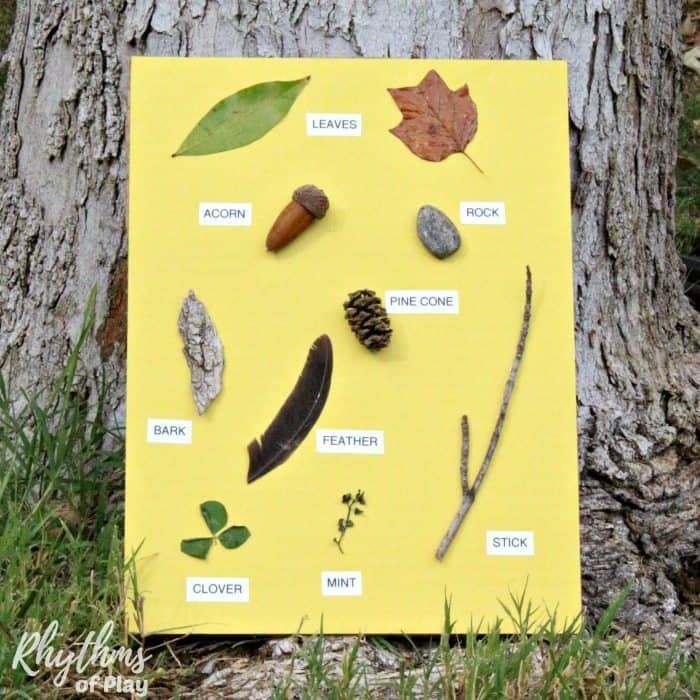
This outdoor activity guide will help you set up and make your own locally sourced nature scavenger hunt for children (and kids with special needs). Learn how to make a nature sensory card with clues on it (similar to the one shown in the photo below).

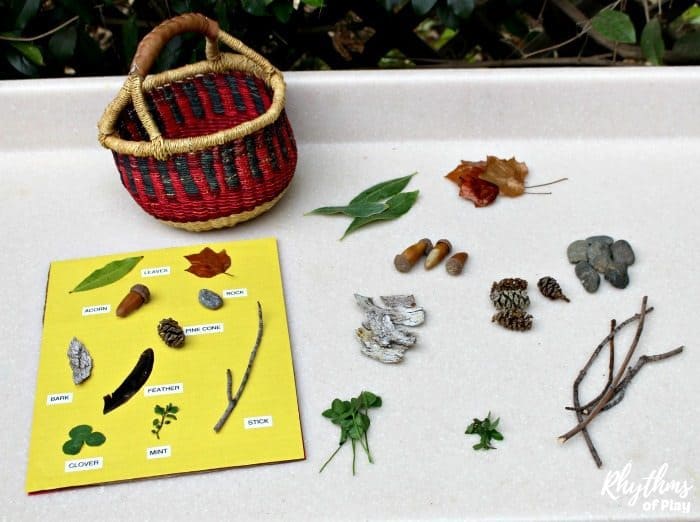
Alternatively, you can place the natural items in a container or on a table for children to take with them, or investigate before hunting for them. Discover alternative ways to set up a scavenger hunt without a printable, and find dozens of creative variations for every season and age with this DIY tutorial.
How (and Why) To Go On A Nature Scavenger Hunt without a Printable:
Printable scavenger hunts are fantastic, but they can be challenging for toddlers, preschoolers, kindergarteners, children with special needs, and other young children who are still learning to read. These children can struggle to identify the clues they need to collect in nature to complete the hunt. It’s not easy going on a nature hunt with a printable that’s hard to read, even if it has pictures.
A nature scavenger hunt that relies on locally sourced natural clues rather than printables offers a flexible, interactive, and immersive screen-free learning experience that can be tailored to a wide range of educational goals and learning styles. Using real items benefits children of all ages by stimulating the senses and providing additional learning opportunities. Scroll down to learn more about the hows and whys.
Why Use Real Nature Items Instead of a Printable?
This type of scavenger hunt invites children to search for real plants, stones, leaves, shells, feathers, and other natural treasures they are likely to find where they live or visit. Outdoor activities like this can encourage creativity, observation, and engagement with the natural world more than a printable ever could. Because every forest, beach, neighborhood, desert, meadow, mountain trail, and backyard is different, every locally sourced scavenger hunt is different, too.
A child exploring a rocky shoreline might search for shells, seaweed, driftwood, sea glass, and smooth pebbles. In contrast, a child walking through an oak woodland might look for acorns, pinecones, moss, mushrooms, and colorful leaves. By using materials gathered from the local environment, children become more familiar with the unique plants, animals, and natural features of their own community.
It also makes it easier to send kids on a scavenger hunt anywhere, at any time, such as at the beach, in the park, or on a camping trip. This hands-on approach works well for children who are too young to read or who learn best through touch and movement.
Toddlers and preschoolers can compare real objects that interest them. Instead of matching pictures on a page, they interact directly with the living world around them. Older children can identify species, notice seasonal changes, and ask deeper questions about the natural world, to follow their curiosity where it leads.
Instead of racing to complete a checklist, they compare shapes, colors, textures, scents, and patterns through deeper, more thorough investigation. They notice the rough bark of a tree, the smooth surface of a pebble, the delicate veins of a leaf, or the earthy smell of damp soil. These small discoveries often become the most memorable part of the adventure and provide the launchpad for real learning. Reflecting on their experience in a nature journal afterward is an excellent way to extend the learning even more.

Why Choose a Locally-Sourced Nature Scavenger Hunt?
This type of nature scavenger hunt is perfect for helping kids of all ages learn more about the world around them, naturally! Creating a hunt with real clues for children to find makes it easy for all children to participate. Even those who may not be able to read, such as toddlers, preschoolers, and kindergartners.
Purpose and Benefits Of a Locally Sourced Nature Scavenger Hunt:
Nature scavenger hunts serve multiple purposes. They encourage children and other participants to connect with the natural world in an active, hands-on way. By focusing attention on specific elements of nature, these hunts foster observation skills, curiosity, and an understanding of ecosystems and biodiversity. Using real natural items instead of a printable scavenger hunt helps children:
- Build observation skills by examining the natural world more closely.
- Engage all five senses, and then some, while exploring outdoors.
- Learn to identify local plants, trees, seeds, rocks, and wildlife.
- Develop a stronger connection to the land or ecosystem.
- Notice how nature changes from season to season.
- Strengthen memory by matching real objects rather than pictures.
- Practice sorting, comparing, and classifying natural materials.
- Enjoy an activity that works for both readers and prereaders.
- Create a scavenger hunt anywhere without a printer or special supplies.
- Discover that every outdoor adventure is unique.
They’re commonly used in educational settings, camps, or family outings as both a recreational and instructional tool. Beyond education, they offer opportunities to enjoy time outdoors, reduce stress, and foster teamwork through shared exploration and discovery. You might also enjoy keeping a nature notebook or journal.
Invite children on an outdoor scavenger hunt in your backyard, neighborhood, or out in nature:
Going on a nature scavenger hunt outdoors with kids is a great way to spend quality time connecting with your children and the natural world. It’s also a great way to help children learn more about flora, fauna, wildlife, and other natural treasures in their local area or biome. First published on October 10, 2015, this nature scavenger hunt post is regularly updated to improve the content.
Every Hunt is Different
One of the best things about this outdoor activity for kids is that no two scavenger hunts are ever exactly alike. The clues shift with the seasons, the weather, and the places you explore. Spring brings blossoms, buds, and bird nests. Conversely, fall offers colorful leaves, acorns, mushrooms, and seed pods.
A visit to the beach, a mountain trail, or even your own backyard can be a new adventure every day. Rather than searching for the same items each time, to the point of nausea, all lists look the same after a while. Children learn to appreciate what makes each place or environment unique. They begin to recognize familiar trees, notice returning birds, celebrate seasonal changes, and build a lasting relationship with the landscape they call home.
At Rhythms of Play, we believe the best classroom is often just outside the front door, or right out back. A locally sourced nature scavenger hunt helps children become curious observers, more thoughtful explorers, and lifelong caretakers of the places they know and love.
Outdoor scavenger hunts make it loads of fun to adventure, explore, burn off energy, and get much-needed exercise. You might also enjoy sending kids outside to look for natural items perfect for a sensory bin or basket. A few other nature hunt variations for kids are included at the bottom of this post.
Related: Top 10 Nature Study Supplies
Optional Nature Scavenger Hunt Supplies:
Use the optional supplies below, along with a few natural items (collected in step one below), to help children learn what to look for on an outdoor scavenger hunt. Please read through the step-by-step instructions below to make a more informed choice about whether or not you will use any of these optional materials:
- 9 X 11″ piece of cardboard:
- I cut a piece of cardboard from a box that I had saved in our upcycling bin.
- Alternatively, you can use a storage bin with or without dividers, place them in a small cardboard box (shoe boxes work well), or use a basket to collect nature samples for kids to find.
- You can also spread them out on a table, tarp, or picnic blanket to make it easy for children to investigate each item before sending them on a search.
- Construction paper (optional for the sensory card option)
- Glue (optional for sensory card option)
- Scissors (optional for sensory card option)
- Nature items collected from your backyard, neighborhood, local park, or out in nature.
- Conduct your nature scavenger hunt in the same place where you collect your natural items.
- A basket or bag for children to hold collected objects and items
Related: Search for Signs of Autumn Fall Nature Hunt
Related: Nature-Inspired Sensory Bottles
Step-by-Step Nature Scavenger Hunt Instructions:
Use the step-by-step instructions below to create a nature sensory hunt in your neck of the woods. Even older kids will enjoy this type of outdoor scavenger hunt. You might also enjoy this list of outdoor activities for kids.
This tutorial includes several alternative variations and creative learning ideas to extend this forest school nature study activity for kids. The steps below share how to set up a place-based, locally sourced nature scavenger hunt for kids of all ages:
1. Gather Nature Clues:
Collect an assortment of natural items from the area where you will hold your nature scavenger hunt. These treasures will serve as clues during the hunt:
- Look for five to ten items in your backyard, neighborhood, local park, at the beach, on a camping trip, or anywhere else out in nature that are abundant.
- A smaller number of natural items makes it easier for younger children, such as toddlers and preschoolers, to find them during the nature hunt.
- Choose one item that is hard to find as a bonus or a challenge clue.
- If your hunt is for older kids, teens, or adults, choose 2-3 harder-to-find items to make it more challenging.
Examples of nature treasures you can use as Clues:
- Acorns or acorn caps.
- Pinecone.
- Sticks or twigs.
- Tree bark.
- Leaves, such as a fern leaf, an oak leaf, or a maple leaf.
- Lichen.
- Moss.
- Bird feather.
- Shells.
- Mushrooms.
- Specific herbs such as mint or sage.
- Wild edibles, such as a Blackberry, Elderberry, or Miner’s lettuce.
- Local wildflowers (if legal to be picked).
- Rocks or small pebbles.
- Other local flora and fauna that can be collected without disturbing the environment or its inhabitants.
2. Choose one of the following options:
Make a nature Sensory Card, put natural treasures in a Container, or lay them out on a picnic table or blanket:
- Glue natural items onto cardboard to create a DIY sensory card filled with clues to look for. (Follow the directions below if you want to try this option.)
- Put the clues in a storage bin, basket, or another container with or without dividers. (Recycled containers like shoe boxes and egg cartons are fantastic for this purpose.)
- Spread the natural treasures for toddlers and preschoolers to find out on a table or picnic blanket.
How to Make a Nature Sensory Card for a Scavenger Hunt:
- Use a glue stick or pen to attach a piece of construction paper to a piece of cardboard cut to the same size. (I cut a piece of cardboard from a cereal box to use for this purpose. Large cracker boxes also work well.)
- Glue natural items (collected from the location where you will hold the nature scavenger hunt) onto the construction paper and allow them to dry.
- Label the natural treasures on the nature sensory card (optional; you can also ask children to name them).
- As you can see in the photograph below, I used a label maker for this purpose.
3. Set Up Your Hunt:
Give children instructions and supplies for the nature scavenger hunt. Show them the nature sensory card, a container, a table, or a blanket with the natural items, objects, and clues they need to find to complete the scavenger hunt. Explain that they need to find a match by identifying at least one item of each type.
Ensure that you conduct the nature scavenger hunt in the same area you collect the items. Instruct participants to find the natural objects that match the clues on the card, in the bin, or on the table. Consider a few of the following basic variations, or simply ask them to find the clues:
- Invite children to bring natural objects along on the hunt to refer to, or allow them to go hunting using only memory. (Optional memory activity variation.)
- Have the child collect a specific number of each item to practice counting. (Optional math activity variation.)
- Feel free to reward them by offering a prize for completing the activity or a bonus challenge. (Optional variation.)
Providing two or three activity options makes this approach easy for instructors and students to implement. I like to give our winning students and friends the reward of choosing the next activity we’ll do in appreciation for completing the scavenger hunt or bonus challenge.
4. Go Exploring:
- Invite toddlers and preschoolers outdoors to explore their world in search of the clues given for the hunt.
5. Match, Sort, and Discuss the Items That Children Collect:
- Encourage little learners to match the items they find to the items on the sensory card, in the container, or on the table, blanket, or tarp.
- Invite children to share anything they learned about what they found.
- Ask them questions about the natural treasures they collected to extend their learning.
5. More fun ways to extend this fun outdoor learning activity:
As a way to extend this fun nature learning activity, invite young learners to try any of the following options:
- After the nature hunt, place blindfolds on the children to see whether they can identify the items by touch. (Optional sensory activity variation.)
- Make a nature mandala or art collage using the items that they collect.
- You may also want to encourage students to create something unique with the objects they find.
- Challenge students to tell you something they learned about anything they found.
- Create a nature sensory bin or basket, or display the natural treasures you collect on a nature table.
- Make nature arts and crafts.
- Put some of the natural treasures you find into bins and add them to the toy shelf.
- Discover which natural treasures make the best toys in our post about natural toys for open-ended, imaginative play.
- Scroll down for a few more educational variations for this fun outdoor activity!
Related: Nature Arts and Crafts Printable Activity Pack
Fun and Educational Variations for This Nature Scavenger Hunt Idea:
- Memory-nature matching activity: Bring a nature sensory card or a container filled with objects to refer to during the hunt, or allow the child to go hunting using only memory. You might also enjoy this nature matching game.
- Math activity: Have the child collect a specific number of each item to practice counting.
- Sensory activity: After the nature hunt, place a blindfold on the children to see if they can identify the items by touch.
- Classifying activity: Hunt for textures, colors, shapes (such as heart shapes), sizes, and other elements.
- Printable variations: Use a nature scavenger hunt printable instead of a card with real items.
- Birding scavenger hunt activity: Go on one of the bird scavenger hunts described in this bird-watching post.
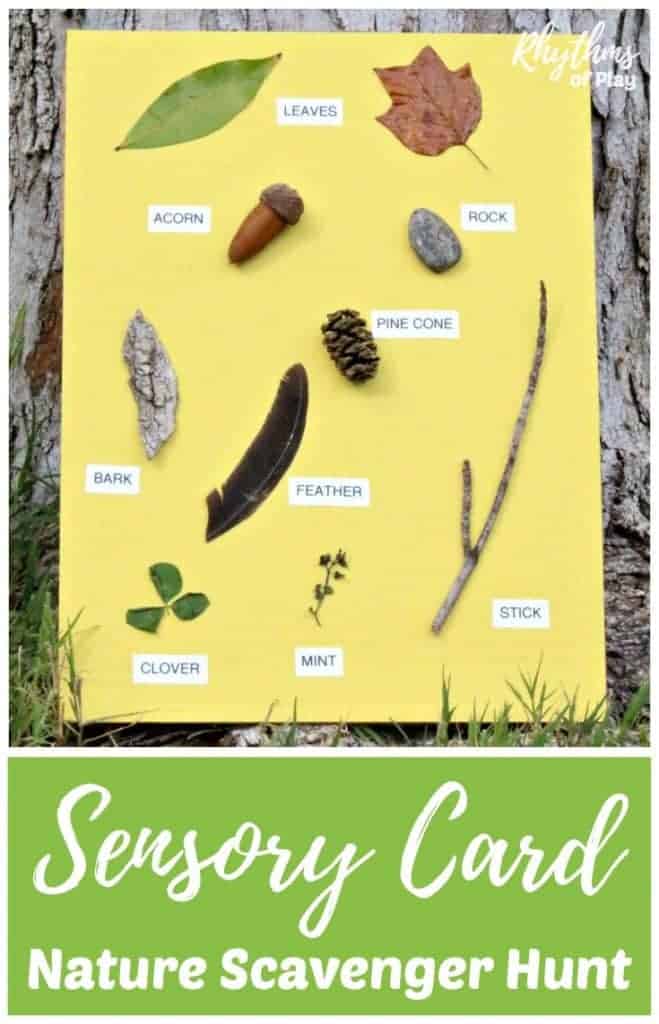
Fun Outdoor Scavenger Hunt Activity for Toddlers and Preschoolers
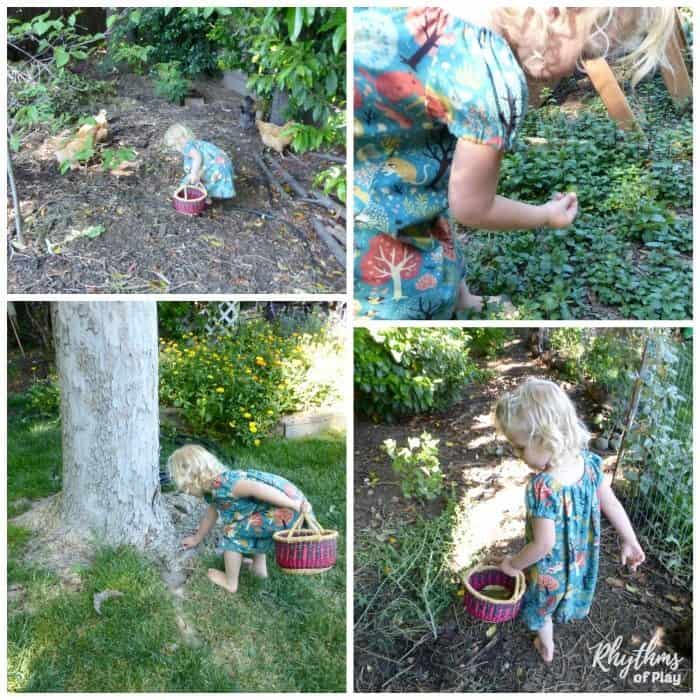
My toddler had so much fun playing with and looking at the card I gave her before running off to collect each item. However, I’m sure it would be just as much fun to put them in a bin, basket, or on a table.
Since we completed this first scavenger hunt in our backyard, it was nice to see her recognize some of the natural items I wanted her to collect and go right over to where she knew she could find them — awesome! I must be doing something right! You can see her collecting each item I glued onto the sensory card in the photograph below.
Next time we do this nature scavenger hunt, I will take her to a spot out in nature so she won’t know where some of the items are. This way, she will have to look for them rather than match them by recognizing and remembering them. 😉
Teachers and children who can use and benefit from a nature scavenger hunt without a printable list:
Here are some of the types of educators and learners who can particularly benefit from going on a nature scavenger hunt without a printable, as described above.
Teachers Who Can Benefit:
- Early Childhood Educators: Exploring nature directly can be more engaging and accessible than printables for younger children who can not yet read, such as toddlers, preschoolers, kindergarteners, and children with special needs. This nature activity supports hands-on learning and sensory exploration, which are crucial at this stage of development.
- Environmental and Outdoor Educators: These teachers can use a non-printable scavenger hunt to foster a deeper understanding of ecosystems, biodiversity, and conservation efforts by encouraging direct interaction with the natural items.
- Physical Education Teachers: A scavenger hunt can be an excellent way to incorporate physical activity into learning, encouraging students to explore, run, and navigate natural terrain without needing to hold onto a printed sheet.
- Special Education Teachers: Tailored scavenger hunts can provide a sensory-rich learning experience for students with special needs, offering customizable challenges that cater to individual abilities and learning styles.
- Art and Photography Teachers: Educators in the arts can use nature scavenger hunts to inspire creativity and observational skills, asking students to capture the beauty of their findings through drawings or photographs, rather than relying on pencils to check items off a list.
Children and Students Who Can Benefit:
- Pre-Readers: A nature scavenger hunt without a printable allows young children who have not yet learned to read to complete this activity.
- Kinesthetic Learners: Students who learn best through movement find this type of nature scavenger hunt especially rewarding because it allows them to engage physically with their learning environment.
- Visual Learners: These students can benefit from observing and identifying various elements in nature without the distraction of a printout, thereby enhancing their visual processing skills and attention to detail.
- Inquisitive Learners: Students naturally curious about the world around them will enjoy the discovery aspect of a scavenger hunt, which encourages them to ask questions and seek answers in their environment.
- Creative Thinkers: Students who excel in imaginative and abstract thinking will enjoy this nature hunt, which helps foster creativity.
- Students with Attention Deficits: An outdoor scavenger hunt can benefit students who struggle in traditional classroom settings by providing a stimulating, focus-enhancing activity that doesn’t require a printable.
Nature Scavenger Hunt Ideas for Kids:
A nature scavenger hunt that does not rely on a printable is a versatile educational tool that caters to a broad spectrum of teaching philosophies and learning needs. Sharing the natural items to look for with children before sending them on a hunt for them makes learning more enjoyable and can instill a lasting appreciation for the natural world.
Removing the constraints of a printed list can also encourage participants to engage more deeply with their surroundings, develop cognitive and physical skills, and experience the joy of discovery firsthand. This is why the scavenger hunt instructions above are invaluable for young children, children with special needs, nature schools, forest schools, outdoor education programs, and homeschoolers.
With that said, there is no right or wrong way to have a nature scavenger hunt. There is nothing wrong with using a printable. I make them and enjoy them too. The whole point is to get outside, connect, and have fun! Use any of these ideas or find the inspiration to do it your way. Happy nature hunting!
You may also like this list of outdoor nature activities for kids. Several more fun activities for kids are available HERE.
Please visit our About page to learn more about Rhythms of Play. For more information about this website and the author of this locally sourced outdoor scavenger hunt, please visit the home page for Rhythms of Play or my author page: Nell Regan Kartychok.
Best Outdoor Scavenger Hunt Ideas:
Use this list to enjoy several other types of nature scavenger hunts:
- Sensory Bin Nature Scavenger Hunt
- Search for Signs of Spring or Spring Scavenger Hunt with Printable
- Signs of Summer or Summer Scavenger Hunt with Printable
- Search for Signs of Autumn or Fall Scavenger Hunt with Printable
- Signs of Winter or Winter Scavenger Hunt with Printable
- Heart-Shape Outdoor Scavenger Hunt




Leave a Comment