
Help children learn to climb small boulders and scramble around on large rocks with this guide to bouldering with kids.
My daughter and I found a park in Santa Monica, CA, called Tongva Park. It has a kids’ playground complete with a splash pad and small boulders to climb right next to the rubberized ground, as you would find on a professional track.
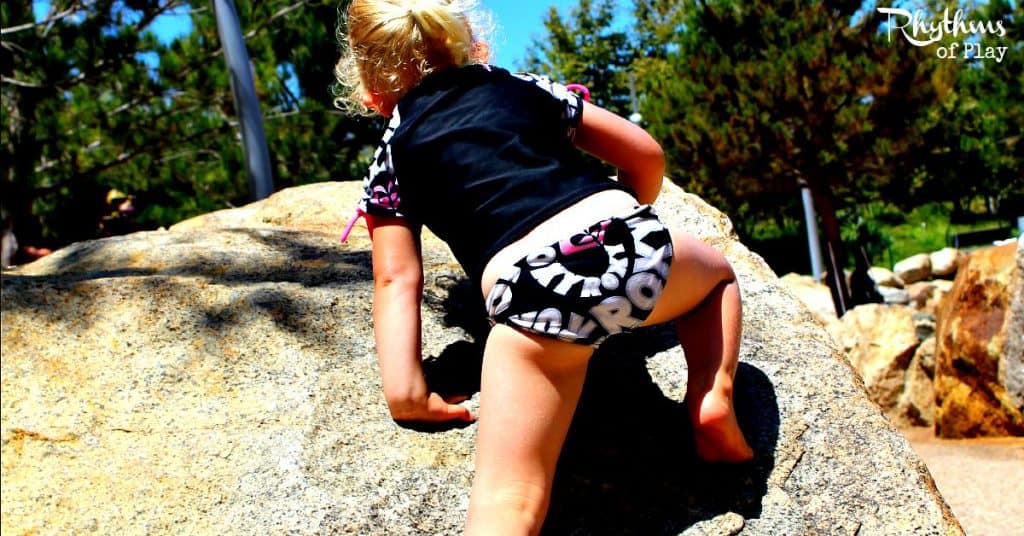
We were going to play at the park and enjoy the splash pad (hence the bathing suit and rash guard), but once she clambered onto the rocks, I knew it would keep her busy for quite a while.
This post is part of the Get Outside & Connect series. Click the link for more information.
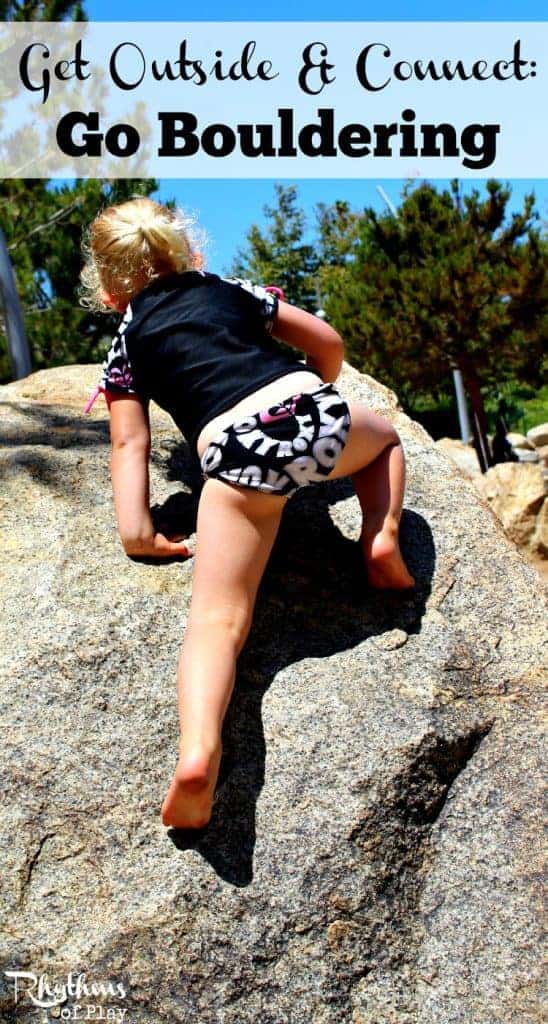
She ended up spending over an hour mastering the activity. She started off very carefully using her hands (at Mama’s suggestion) to stay safe and secure until she both grew more comfortable and got better and better at bouldering. It was fantastic to watch.

Look at her intense focus – you can see her self-confidence developing.
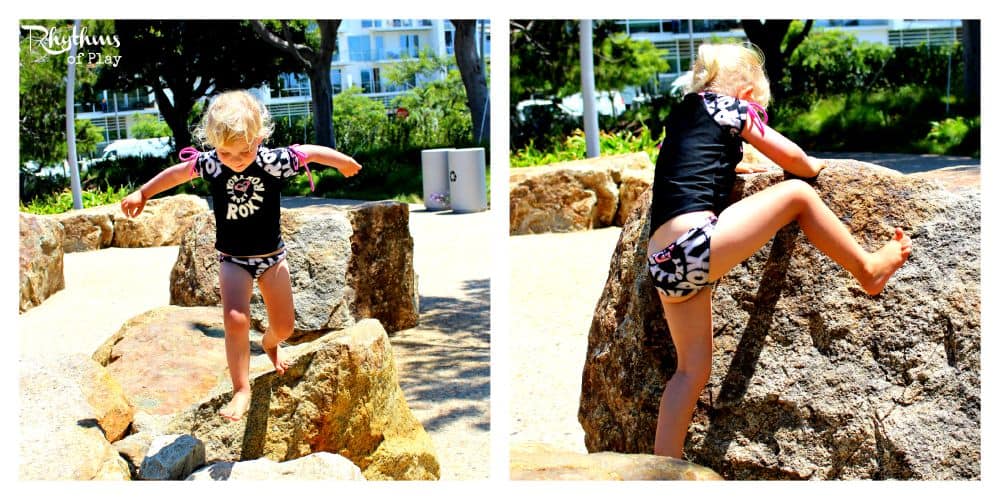
It wasn’t long before she was leaping and climbing like a champ.
What is Bouldering?
Bouldering is climbing without a rope on rocks. For adults and other experienced climbers, this usually means large rocks that average 4.5 meters in height. Crash pads are placed at the bottom of these large boulders, so climbers have a soft place to land if they fall.
I don’t recommend doing this with your kids unless you and they have experience. Instead, consider finding a beginner (baby boulder) option, as we saw. Some suggestions are in “How to Find Places to Go Bouldering” below.
Benefits of Bouldering:
Bouldering is a fantastic physical skill that helps develop strength, balance, flexibility, and self-esteem. See the following articles for much more information:
- How Rock Climbing Does Your Mind — And Body — Good by Abigail Wise on Huff Post Healthy Living
- 11 Awesome Benefits of Rock Climbing – And 1 very Important One from Transcend Your Limits
Get Outside & Connect Activity: Go Bouldering
This was the first time that my daughter attempted baby bouldering. I call it baby bouldering because the boulders were very small compared to what most would consider bouldering. However, she had lots of practice walking across fallen trees to develop her balance, so she was ready for this activity. She, in fact, chose it herself, which is usually an indication of readiness. Please ensure your children are ready and willing participants before offering this activity.
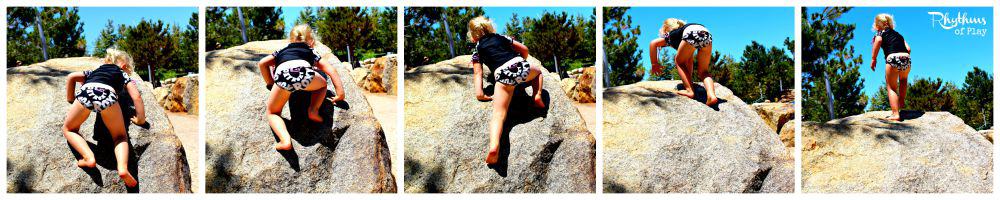
Look at my almost 3-year-old scrambler go! I have to admit I was a proud mama. 🙂
Even though the boulders were small, I ensured she was safe and felt comfortable knowing the ground below was rubberized. You can bring your own crash pads to an area to make everyone feel safer. Another option is to allow your child to practice while holding your hand or being supported by you in some way so that you both feel comfortable giving it a go.
Benefits of Risky Play
Bouldering can be dangerous, but there are many benefits to children who engage in risky play. That said, please don’t allow your children to do anything that you don’t feel comfortable allowing them to do or make them do anything that they are not comfortable with.
Taking risks in play is essential for children’s growth and development. Check out the following articles for more information on the benefits of risky play:
- Risky Play: Why Children Love It and Need It by Peter Gray, Ph.D on Psychology Today
- Outdoor Risky Play for All from Outdoor Learning in the Early Years
- The Benefits of Risky Play by Kenneth S Kutska, CPSI on Playground Professionals
- Risky Play Prepares Kids for Life by Adrian Voce on The Guardian
How to Find Places to Go Bouldering:
- Start by learning at an indoor rock gym before you take it outside. Ask about beginner local bouldering spots while there.
- Look for a modern green space park like we did at Tongva Park in Santa Monica, CA, with small boulders available for bouldering.
- Purchase a guidebook for the closest outdoor bouldering area.
- Go to rockclimbing.com, click “Routes,” and then look for beginner-level climbs.
Bouldering is a risky play activity that develops physical strength, flexibility, mental focus, and self-confidence. If you choose to engage in this activity, please take safety precautions, acquire and use the proper gear (especially if they want to try harder climbs), and ensure your children are ready and willing participants before trying this outdoor activity idea for kids. Click the link for a list with more outdoor activities and nature play ideas for kids.





This looks wonderful! It’s hard sometimes to find “safe” risky play, but I like how you pointed out that their choosing the activity is a sign they’re developmentally ready for it! We went to the Grand Canyon this summer, and there were tons of bouldering opportunities…it seemed like every time we sat down my kids found rocks to climb on!
Thanks Carla! After taking care of other peoples children for many years before I had my own I learned to follow the lead of every child. Kids will always “show” you where they are ready to go when they are ready to go there. As caregivers and parents we just have to learn to read the signs. You’re kids are obviously “ready” to go bouldering 🙂