Invite children to go on a scavenger hunt to gather natural materials to make a nature sensory bin, basket, or box.
A “nature sensory bin” is a bin, basket, box, tray, or other container filled with natural items and materials. One of the primary reasons for making a nature sensory basket is to help children develop a deeper connection to and understanding of the natural world. Creating a sensory bin or basket with natural treasures gathered on a nature scavenger hunt is a powerful way to engage children in hands-on, multisensory learning at home or in the classroom.
First, invite children to go on a nature scavenger hunt to collect natural treasures for sensory bins or baskets. As they explore these natural textures, shapes, colors, smells, and even tastes, they begin to notice various aspects of their environment and become more mindful of slight differences. This activity fosters a sense of curiosity and respect for the natural world. You might also enjoy these Outdoor Activities for Kids.
After gathering natural materials to explore in more depth, learn how to make a homemade nature sensory basket with the items you find in the great outdoors with the step-by-step DIY instructions below. This informative guide includes various nature sensory bin ideas and examples, as well as information about their uses and benefits. Scroll down to learn how to make a nature sensory bin and discover the benefits of sensory play for children of all ages.

What is a Nature Sensory Bin or Basket?
A nature sensory bin or nature sensory basket is a container filled with items from the natural world. A sensory basket filled with natural materials provides a hands-on, interactive activity for children, engaging their senses.
Typically, they are made in a shallow container, such as a bin or a basket, filled with natural items that children can see, touch, smell, and sometimes even hear or taste, such as crunchy leaves or walnuts. Homemade nature sensory bins are excellent for sensory exploration, improving fine motor skills, supporting themed nature study projects, fostering early science discoveries, and encouraging creativity.
They are most often made for young children, such as toddlers and preschoolers, for sensory play and discovery. However, older children can also benefit from their use, as they make fantastic educational tools. They are perfect for nature study and deeper scientific explorations of materials collected across different seasons and geographic locations and biomes.

A Safer Alternative to Nature Sensory Bin for Babies and Toddlers:
A fantastic alternative to traditional sensory bins is to create sensory bags or nature sensory bottles using items and natural materials you and your children find in nature. Nature sensory bottles are an excellent sensory play toy that allows babies and toddlers to explore natural items safely, without the risk of tasting toxic materials or choking on smaller objects. Sensory bottles can also be used as science tools and nature study aids for older children. They can also help children and adults of all ages calm down and learn to self-regulate.
Nature Sensory Basket Materials:
The only items required to make a nature sensory bin are a container and a collection of natural materials to explore. It can even be composed entirely of different types of rocks and minerals. The other suggestions below are optional additions that can be included if desired:
- A bin, tub, basket, shoebox, wooden tray, or other container for storing natural materials.
- Base material or filler:
- Dirt.
- Sand.
- Pebbles.
- Dried white rice, beans, lentils, or oats.
- A base material is optional for this type of sensory bin. Most of the sensory baskets in the photos do not include one to allow the collected natural items to take center stage.
- Natural objects: See the list below for materials you can include.
- Optional sensory play toys and educational nature study tools:
- A magnifying glass.
- Tweezers.
- Scoops.
- Measuring cups.
- Small rakes.
- Field guide (look at these nature study supplies for ideas).
- Nature study cards (ie, rocks and minerals, birds, or trees).
- Educational printables with more information about the bin’s contents.
- Nature journal or notebook for writing.
- Other nature study supplies and sensory play materials that help children explore the natural treasures in more depth.
- Optional naturally sourced thematic additions:
Examples of Treasures You Might Include in a Nature Sensory Bin:
- Sand,
- Dirt or soil
- Rocks, stones, pebbles
- Natural gemstones
- Bird feathers
- Shells
- Bare branches, sticks, twigs
- Driftwood
- Bark
- Fresh or preserved leaves
- Moss
- Fresh or dried flowers
- Fresh or dried herbs
- Cinnamon sticks
- Pine cones
- Nuts and seeds, such as acorns, walnuts, chestnuts, seed pods, sweetgum balls, and helicopter seeds.
- Fruits (Please remove fruits when they start to perish.)
- Vegetables (Please remove vegetables if they perish.)
Common Elements in a Nature Sensory Bin:
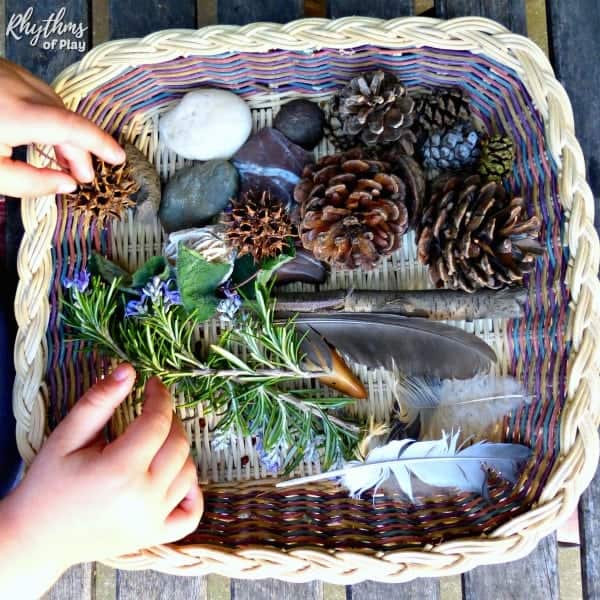
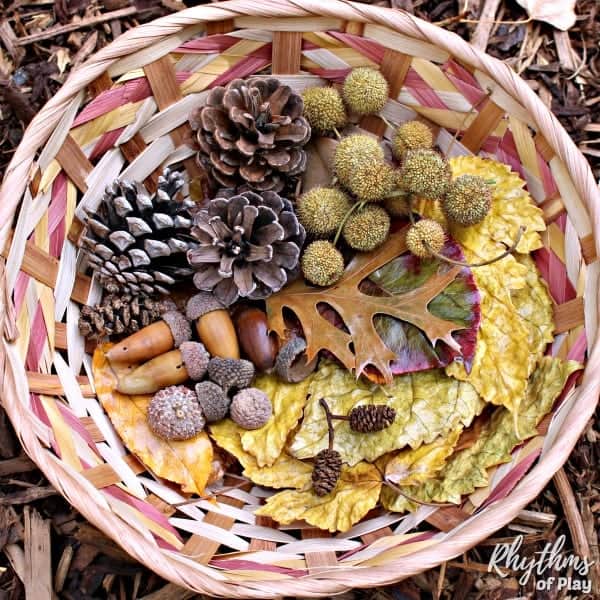
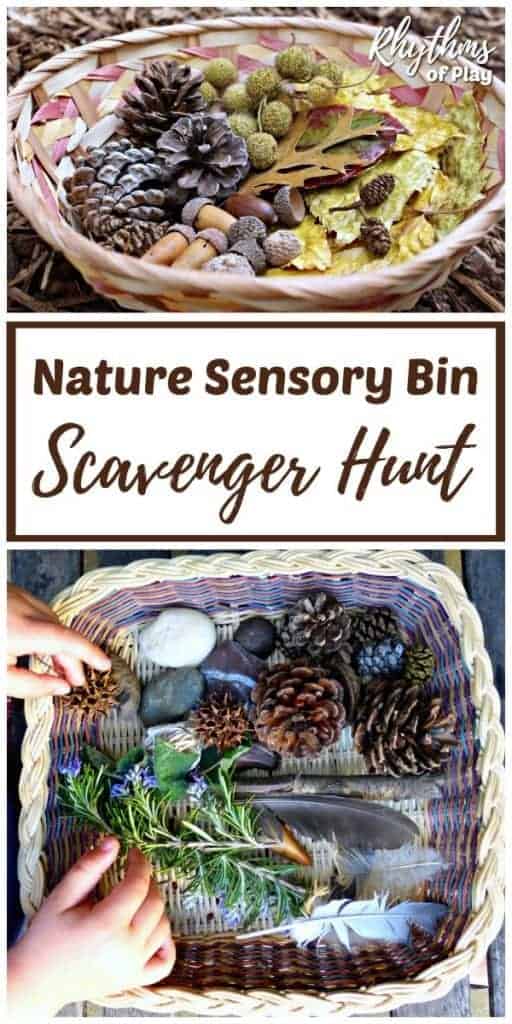
A nature sensory bin or basket can include a variety of natural treasures such as pinecones, acorns, feathers, rocks and stones, dried leaves, bark, shells, seed pods, bits of moss, herbs, or dried flowers, and more. The best part about nature sensory bins is that each one will be unique. The one you make will depend on the origin of the contents and the time of year you collect them. The basket full of natural materials below provides an example:
Examples of Nature Sensory Bin Contents:
A sensory bin made by someone who gathered natural treasures on a beach will look very different from one made in the desert or mountains. For example, a nature sensory bin with a beach theme might include sand, shells, dried seaweed, driftwood, smooth stones found along a rocky shore, a few scoops or rakes for play, and a magnifying glass.
In contrast, a forest-themed bin might include small sticks, pine needles, rocks, and bird feathers specific to the collection location, along with a field guide, magnifying glass, and a pair of tweezers for deeper exploration.
At the same time, a sensory bin gathered in the spring will likely look very different from one collected in the fall, as illustrated by the spring-themed sensory basket above and the autumn-themed sensory bin below.
Go on a Scavenger Hunt or Nature Walk to Collect Natural Materials for a Nature Sensory Bin or Nature Sensory Basket:
Get outside and spend time collecting natural treasures to make a nature sensory bin or basket with your children or students. This engaging sensory activity is perfect for toddlers and preschoolers at home, homeschoolers, forest schools, nature kindergartens, summer camp, and other outdoor educational settings.
The materials gathered outdoors for a nature sensory basket encourage children to observe the world more closely. They also provide a rich opportunity for tactile exploration, creative play, and early science learning. You can also use several types of gathered items as Natural Materials for Pretend Play.
Discover the wide variety of natural items waiting for you and your kids to explore right outside your door. You may not even need to leave your backyard (or schoolyard) to find natural treasures to include. Even city dwellers will be amazed at the number of items they can find once they start looking for treasures in their urban environment.
Alternatively, you can go on an adventure in a distant location to collect items specific to that environment or biome for a nature sensory bin, such as a desert. Exploring different types of outdoor areas and wild spaces will help you discover a greater variety of natural materials for making sensory baskets throughout the year. You can also use some of the gathered treasures to make beautiful Nature Arts and Crafts.
How to Make a Nature Sensory Bin, Basket, Box, or Tray: Step-By-Step Instructions:
Please read through the step-by-step DIY instructions below before assembling a nature sensory box, bin, basket, or tray so you understand the steps involved and can make a more informed choice about how you would like to design it.
1. Invite children or students on a nature walk or scavenger hunt to gather materials:
Nature scavenger hunts are a great way to get the kids outside, learning, and having fun. Invite your children to go on a scavenger hunt to find natural materials to make a nature sensory bin, box, or basket. Collecting items themselves on a nature walk or scavenger hunt adds an element of excitement and ownership. This process helps children learn to be observant as they search for unique natural objects to explore in greater depth.
Encourage them to look for natural materials with different colors, textures, sounds, and smells, such as colorful feathers, prickly seed pods, crunchy leaves, and fragrant flowers or herbs. This will encourage sensory exploration and stimulate as many senses as possible, thereby contributing to the development of the body’s sensory systems.
Gathering materials outdoors encourages children to observe the world more closely and become mindful of subtle differences. Creating a sensory bin with the natural items collected provides a rich opportunity for tactile exploration, creative play, and early science learning.
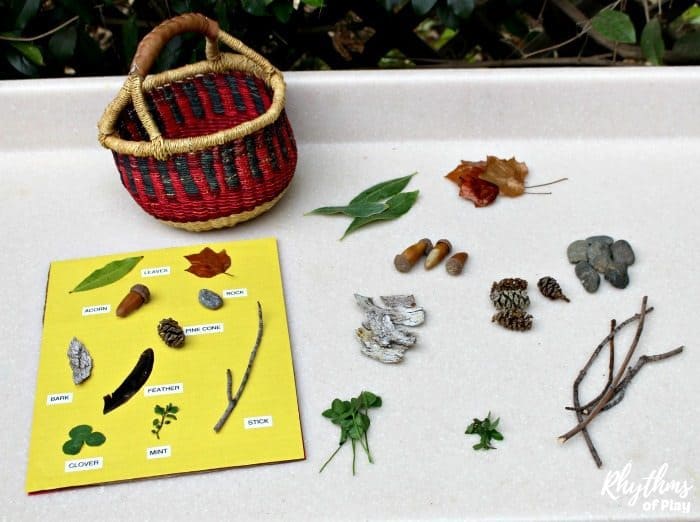
Going on a nature scavenger hunt to collect natural materials for a sensory bin can also encourage children to learn more about the region they live in. This nature activity can create a sense of discovery that will continue for the rest of their lives as they venture into new and different areas. You might also enjoy sending children on a Nature Scavenger Hunt outdoors to find specific types of clues made of natural materials, as shown in the photo below.
Related: The Best Rock Painting Ideas for Kids
2. Clean the natural materials you intend to use in a sensory bin:
Cleaning natural materials before using them in a sensory bin is essential for both safety and longevity. Items like pinecones, sticks, rocks, acorns, leaves, shells, and bird feathers can harbor dirt, insects, mold, bacteria, parasites, or other contaminants that might pose health risks to children. Since sensory bins are often touched, smelled, and sometimes even mouthed by curious little ones, it’s essential to make sure all materials are thoroughly cleaned and, when necessary, sanitized.
How to Clean Nature Sensory Bin Supplies:
Proper cleaning also helps extend the life of sensory materials. Dirt and moisture can lead to decomposition or attract pests, especially if the items are stored for later use. The cleaning method will depend on the type of natural material. Follow the general guidelines below:
- Fruits, vegetables, and herbs for a garden sensory bin can be cleaned the same way you would clean them to eat.
- Rocks and shells can be scrubbed with warm water and mild soap, then left to dry in the sun.
- Pinecones and acorns can be baked in the oven at a low temperature (around 200°F or 95°C) for 30–45 minutes to kill any bugs or mold spores.
- Leaves and flowers should be gently rinsed and dried thoroughly to prevent mildew.
- Wood pieces or sticks should be brushed clean and can be wiped with a diluted vinegar solution if extra disinfecting is desired.
- Bird feathers require special care when cleaning. Since feathers can carry bacteria or parasites, it’s important to disinfect them properly:
- Soak feathers in a solution of warm water and mild soap, gently swishing to remove dirt.
- After rinsing, you can further sanitize them by soaking them in a diluted solution of rubbing alcohol or hydrogen peroxide for a few minutes.
- Lay the feathers flat to dry on a clean towel, reshaping them if needed.
- Avoid heat sources that could damage their delicate structure.
- Make sure the feathers are completely dry before use to prevent mold.
3. Add a base material to the bin or box (optional):
Adding a base material to a nature sensory bin is optional for most. You will notice that several of the sensory baskets in the photographs don’t contain a base material. Nature study trays typically don’t include a base material either.
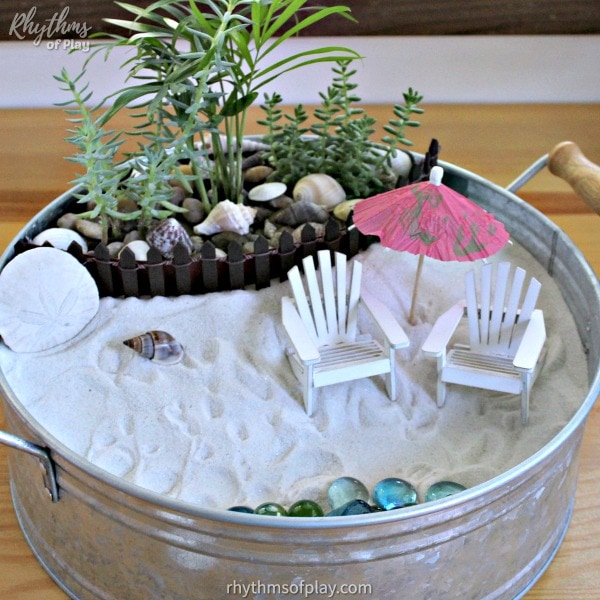
However, a sensory bin with a beach theme just wouldn’t be the same without adding sand to it first. I recommend using a plastic tub or metal container for the bin if you will be adding a messy base material, as shown in the photo below.
You can see an example of a beach fairy garden with sand as the base material, which doubles as a nature sensory bin in the photo below. There is a cup of mini zen garden rakes just out of frame that my daughter enjoys playing with in the sand as much as I do!
3. Put natural treasures into the bin, basket, box, tray, or alternative container:
Once you have gathered all your natural items and treasures, place them into a shallow bin, basket, box, or tray to play with and explore in more depth. I prefer using baskets, wooden trays, and recycled boxes (such as a shoe box) for this purpose because they are more natural and eco-friendly. However, plastic bins, tubs, or metal containers also work well, especially if you are including a messy base material in the step above.
Please don’t put anything into the sensory bin that is toxic or unsafe to handle. If toddlers will be handling the contents, avoid including anything unsafe to taste or that could become a choking hazard. In other words, if your child is likely to put things in their mouth, make sure you don’t include any toxic, small, or delicate items.
It’s also a good idea to remove anything that could be harmful to touch or taste from the sensory bin. When in doubt, leave it out. Alternatively, you can put anything in question in a DIY nature sensory bottle instead. Alternatively, consider waiting until your children are preschool age or mature enough to handle the contents safely before offering them a nature sensory bin to explore.
4. Include optional educational tools, sensory play toys, and other thematic additions if desired:
Feel free to include optional sensory-play toys and educational tools, such as a magnifying glass, scoops, tweezers, cups, small rakes, a field guide, or nature cards or printables with more information about the contents. You can also incorporate additional tools that allow children to delve deeper into the natural treasures or incorporate more sensory play activities. Several fantastic options are listed in the nature sensory bin supplies above.
You can also add naturally sourced or homemade thematic additions to the sensory play box, such as needle-felted, hand-sewn, or wooden animal, bird, or insect figurines, wooden blocks, etc. Natural additions are recommended over plastic toys because they enhance sensory experiences and align with the bin’s nature theme.
5. Invite children to play, learn, and explore the contents:
Once everything is added to the bin or basket, invite children to explore the contents and play with the materials to learn more about them. Explore the many uses and benefits of nature sensory bins in the sections that follow these step-by-step instructions.
6. If contents are abused, calmly take the bin away for another day:
If you ever notice a child of any age mishandling a sensory basket, calmly return the items to the bin, gently take it away from them, and hide it somewhere safe. As you are doing so, tell them in a neutral tone as calmly as possible, “It looks like you’re not ready to play with this today. I’m going to put it away so that you can try again another day.”

Nature Sensory Bin Uses:
Nature sensory baskets have a variety of uses. They are excellent toys for sensory development, open-ended free play, artistic inspiration, story creation, and imaginative play. Bins, baskets, boxes, or trays with natural items also make a fantastic nature study tool for learning basic science concepts. Elementary-aged children might also enjoy making a homemade nature journal.
They can be easily adapted for different seasons, locations, and nature-study themes, such as desert environments, forest life, ocean habitats, garden treasures, and more. These educational tools can be terrific for science activities involving sorting and classification, such as sorting objects by type, texture, or color. For instance, children can enjoy sorting and classifying rocks in a sensory bin or on a tray.
These sensory tools are also an ideal activity for calming children and helping them learn to focus. This makes them an excellent tool and self-regulation strategy for use at home or in the classroom.
Benefits of Nature Sensory boxes, bins, and baskets:
The benefits of creating and offering these sensory play tools are numerous. Creating and playing with them encourages outdoor learning and nature appreciation. Manipulating the contents promotes fine motor skill development as children learn to grasp and pinch small objects.
Nature sensory boxes, bins, and baskets can also support language development as kids describe what they see and feel. In addition, these simple tools can encourage critical thinking skills through sorting, comparing, and questioning.
Sensory bins also support emotional regulation and enhance the development of self-regulation skills. They offer a simple strategy for children to engage with soothing natural materials that can be grounding and calming, especially for children who are easily overwhelmed or overstimulated.
Thus, they provide a gateway to deeper sensory integration, inspire creativity, allow children of all ages to explore basic science concepts, and help develop ecological awareness in one engaging hands-on learning activity for kids, toddlers, and up.
The Many Benefits of Sensory Play:
Sensory play contributes in crucial ways to brain development. From birth, children have learned everything they know about the world through touch, taste, smell, sight, and hearing. Stimulating the senses in this way sends signals to children’s brains that help to strengthen neural pathways important for all types of learning. Think of it as “food for the brain.”
As children explore these sensory materials, they develop their sense of touch, which lays the foundation for learning other skills, such as identifying objects by touch and using the fine-motor muscles in their hands.
Treasures found in nature have many sensory attributes: warm or cool, rough or smooth, hard or soft, textured or slimy, fragrant or bland, etc. As children play with them, they learn more about them. Discovering and differentiating these characteristics is the first step in classification or sorting, which is an essential part of science learning and discovery for children preschool age and up.
The Natural Materials My Daughter Explored in Her First Nature Sensory Basket:
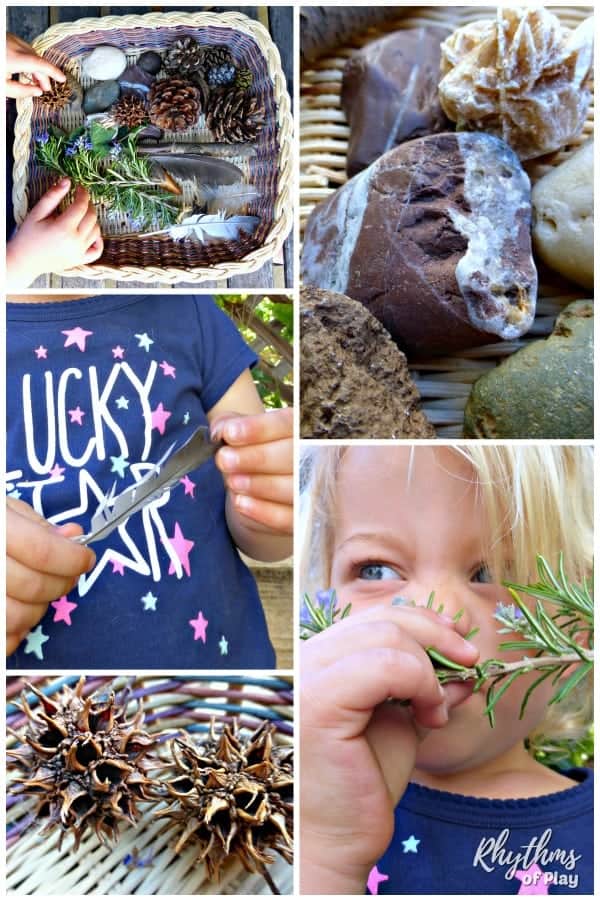
My daughter found several natural materials to put in her sensory bin in this photo. It includes pinecones, feathers, sticks, rocks, fresh herbs, prickly seed pods, acorns, walnuts, and almond shells. Notice the different textures and colors of some of the stones and other items she found.
My daughter had a strange fascination with the prickly seed pods from a Sweetgum tree when she gathered the natural materials for the sensory basket in the photo below. This was likely due to their tactile nature. You can see how rich a sensory experience these prickly balls provide. She also included fresh rosemary and mint to stimulate the sense of smell.
Related: Calm Down Sensory Bottles 101
Nature Sensory Bin Scavenger Hunt for Kids:
A nature sensory bin is a container or basket filled with natural items. The best part about natural sensory bins is that they’ll vary depending on the season, the nature scavenger hunt you choose, and the area you’re hunting in!
Create a nature sensory bin for each season with items found in nature from different areas, with the step-by-step instructions and tips included in this informative guide. Get outside to gather treasures to make a nature sensory basket today! Children and adults of all ages can also enjoy using the treasures you gather to make Nature Crafts.
You might also enjoy these outdoor learning and nature activities for kids, along with the other ideas below.
Learn more about Nell Regan Kartychok, author and photographer of how to make a nature sensory basket HERE, and Rhythms of Play HERE!
Outside Activities for Kids:
- Get Outside & Connect
- Birding for Kids and their Cargivers and Guides
- Collect and Paint Rocks
- Rock Balancing Stone Stacking Art
- 15 Reasons to Climb a Tree and Other Benefits of Risky Play
Nature Scavenger Hunt Ideas:
- Nature Scavenger Hunt: Send children of all ages on a nature scavenger hunt with this informative guide.
- Heart Shape Nature Scavenger Hunt: Have you ever been on a scavenger hunt for colors or shapes? My daughter and I love looking for hearts in nature. Check out the fantastic video we made of them all by visiting the post above.
- Birding Scavenger Hunts: Visit our bird-watching activities post for a few fun birding scavenger hunt ideas for kids.
- Seasonal Nature Scavenger Hunt Ideas: With these seasonal nature scavenger hunt ideas, invite your children to witness the transformation in nature as one season changes to the next:



Lovely activity! We get a lot of those prickly seed pods around here too but unfortunately I don’t know what they are either.
Thanks Linda!
Great ideas! I’m going to put a basket together for my little one as soon as the weather gets nice here.
Glad to hear it Nicole 🙂
Your seed pods look like they’re from an American sweetgum tree.
Thank you for knowing what they are and sharing with me Becky!
do you wash them? We have many birds (bird
Poop) around.
Great question Tish, It depends on what it is and where it is from, but yes, we wash or bake the items that we find before placing them in the sensory bin. Thank you for bringing that up. I will have to edit this article and update the information. Thank you!