
Attend a lantern walk celebration, or use this list of lantern walk traditions, rituals, and celebration ideas to organize a fall lantern walk festival.
A lantern walk is a beautiful way to celebrate the changing seasons, connect with your community, and bring light into the darkness. Children and adults carry glowing lanterns on a peaceful evening walk, often singing songs and sharing stories of kindness.
Many Waldorf schools and families celebrate Martinmas with a lantern walk on November 11. A lantern walk is also a lovely way to bring light into your Halloween or Samhain celebration. Or choose another autumn evening to share this light-filled tradition with your family, friends, or community.
My daughter, husband, and I once joined other families and teachers from Blue Oak Waldorf Public Charter School in the Chico Parade of Lights in Chico, California. We carried our homemade lanterns and sang the Lantern Song, “I’m Walking With My Lantern,” included in this helpful guide.
Use the lantern crafts, songs, and simple planning ideas below to organize your own celebration. Whether you walk through the backyard or follow a familiar neighborhood path, each little lantern reminds us to shine brightly and share our gifts with the world.
In This Guide
- Be the Light in the Darkness
- What Is a Lantern Walk?
- What Is Saint Martin’s Day?
- Light the Way to Winter
- How to Find a Lantern Walk Near You
- Fall Lantern Walk Traditions
- How to Plan a Lantern Walk with Kids
- Lantern Craft Ideas for Your Walk
- Traditional Lantern Songs for a Lantern Walk
- Lantern Walk FAQs
- Enjoy or Organize a Lantern Walk Festival
Be the Light in the Darkness on a Fall Lantern Walk
The Fall Lantern Walk tradition reminds us that we can bring light into the darkness. Each of us carries a unique spark—an inner light we can share through kindness, generosity, and the gifts we bring to the world. Enjoy this light-filled activity once, or make it a yearly family rhythm as the days grow shorter and the nights grow longer.
As we carry our glowing homemade lanterns into the evening and sing songs together, we celebrate hope, kindness, and the light within us. A lantern walk creates time and space for mindful reflection, sharing joy, and connecting with family, community, and the Earth’s rhythms. These simple gatherings honor the light we share and strengthen our bonds with one another.
What is a Lantern Walk?
A lantern walk brings people together to carry light into the gathering darkness as the sun’s light continues to wane in the days leading up to the Winter Solstice. Homemade lanterns glow like little stars as children and adults walk slowly, sing songs, and savor the evening’s quiet beauty.
For many Waldorf communities, this seasonal celebration reminds us that warmth and light also come from our hearts, homes, and the kindness we share. Each lantern becomes a simple image of the light within us—and the difference we can make when we share it with others.
An annual lantern walk usually includes storytelling, singing, live music, and other seasonal activities, along with refreshments. The soft glow of lanterns and the joyful singing of children and adults in attendance create a magical atmosphere.
What is Saint Martin’s Day?
Saint Martin’s Day, also called Martinmas, is celebrated on November 11 in honor of Saint Martin of Tours. He is remembered for his generosity, especially the traditional story of sharing his cloak with a man suffering in the cold. His story invites us to bring warmth and kindness to those in need.
In Germany, celebrations include children carrying homemade lanterns and singing songs in processions honoring St. Martin. Some communities also reenact the sharing of his cloak, keeping this act of generosity at the heart of the celebration. Learn more about these St. Martin traditions in Germany from the German Commission for UNESCO (in German).
Light the Way to Winter with a Fall Lantern Walk:
In Waldorf education, seasonal festivals help children connect with nature’s cycles and establish rhythms that strengthen their bonds with the natural world. A fall lantern walk offers a gentle way to notice the changing season as autumn moves toward the Winter Solstice.
Carrying a little light into the evening gives children a meaningful picture of the warmth and kindness they can share through the darker days. Families can carry this seasonal rhythm into December with a separate light-filled tradition, such as walking an Advent spiral or making a stone spiral at home.
Celebrating The Festival of Martinmas with Children:
Sharing a story is a lovely way to bring Martinmas’s meaning to life for children. In Waldorf celebrations, the story of St. Martin’s cloak offers a simple picture of generosity—seeing someone in need and sharing what we have.
Storytelling and metaphor invite children to connect with these ideas through their imaginations. Share the story below as part of your lantern walk celebration, and let its warmth inspire small acts of kindness in your family’s everyday life.
The Story of St. Martin:
According to tradition, Martin was a young soldier when he encountered a poorly clothed man at the gates of Amiens on a bitterly cold winter day. Seeing the man shivering, Martin drew his sword, cut his cloak in two, and shared half with him as a gesture of kindness, keeping the other half to cover himself.
Later that night, Martin had a dream in which a familiar man appeared wearing the piece of his cape that Martin had given to the poor beggar. Martin recognized the light of the Divine looking back at him, wearing the other half of his cloak. The figure is identified as Christ in the written account by Sulpicius Severus.
In other versions I have heard, St. Martin sees an angel in his dream or finds his cloak miraculously restored to wholeness when he wakes the following day. For me, the story reminds me to embody kindness and share our light with those in need. Another lovely version of St. Martin’s story is on pages 23-28 of a book titled “The Festival of Stones.”
You can also share Chapter 7, “A Festival of Lanterns,” and Chapter 8, “Saint Martin’s Light,” with children as a part of your Martinmas celebration in the same book mentioned above. Alternatively, you can share another meaningful tale of compassion, warmth, or the miracle of kindness. Let the story you choose reflect the beliefs and values you wish to share with your students, family, or community on your lantern walk.
Waldorf Martinmas Lantern Walk Festival:
Steiner Schools, Waldorf homeschools, and other nature-based communities worldwide often celebrate Martinmas with a fall lantern walk. Children and adults gather with handmade lanterns, share a story, and sing as their little lights shine into the evening.
A quiet, unhurried walk offers space for wonder and meditative reverence. Glowing lanterns shine like little stars, inviting us to notice the warmth within our hearts, homes, and communities. For our family, this is also a celebration of the Divine light that connects us.
Through stories, songs, and simple acts of generosity, the celebration invites children to explore kindness in ways they can understand and practice.
How to Find a Lantern Walk Near You
Check local Waldorf schools, nature-based programs, parks, and community event calendars for upcoming lantern walks. Try searching for “Martinmas lantern walk” or “family lantern walk” followed by your town or region.
Before attending, confirm whether visitors are welcome, whether registration is required, and what to bring. Some school celebrations are reserved for enrolled families.
If you find a lantern walk to join, use the lantern crafts, songs, and preparation tips below to get ready, following any guidance from the organizer.
If you don’t find a gathering nearby, or you’d rather do your own thing, use the planning ideas below to begin a light-filled tradition in autumn’s waning light with your family, friends, or community.
Traditions Associated with Fall Lantern Walk Festivals
Each community brings its own meaning and customs to a lantern walk. Choose the traditions and activities that suit your family or gathering:
- Making homemade paper lanterns or mason jar luminaries. (Lantern craft ideas are included below.)
- Sharing a fairy tale, story, or folktale about kindness, generosity, or finding the light within, such as the story of St. Martin’s cloak discussed above.
- Carrying glowing lanterns into the evening as daylight fades.
- Singing traditional lantern songs or another favorite melody that celebrates light and joy.
- Following a lantern bearer who leads the procession. Some St. Martin celebrations feature a rider on horseback representing the saint.
- Singing for neighbors along a planned route, with participating households welcoming the gathering.
- Finishing with warm refreshments or gathering around a bonfire, where permitted and appropriate.
How to Plan a Lantern Walk with Kids
You don’t need a large festival or a light parade to enjoy a lantern walk. A few glowing lanterns, a familiar path, and a song are enough to begin a meaningful family tradition.
1. Choose a Date and a Familiar Route
Choose an evening when you can slow down and enjoy time together. Gather shortly before sunset so everyone can settle in before your lanterns begin to glow.
Plan a short, familiar route through your neighborhood, a park open at dusk, or your backyard. Choose an accessible path that suits everyone. For young children, a short, small loop may be all you need. Walk the route beforehand to check for uneven ground, road crossings, and other obstacles.
For a community gathering, share the meeting place, start time, route, and expected finish time with participants.
2. Make or Gather Your Lanterns
Make a lantern for yourself and, if you wish, one for a friend or neighbor. Reuse a lantern from a previous year, borrow one, or carry a flashlight if that is all you have. Several lantern craft ideas, such as these gorgeous fall leaf lanterns, are included below.
Battery-operated candles and fairy lights are simple options for children’s lanterns. Let little ones practice carrying their lanterns before the walk, and check that the handles are secure.
3. Learn One or Two Lantern Songs
Choose a song you enjoy from the options later in this guide or the printable lantern walk song sheet. Then, practice singing it together in the days leading up to your walk.
You don’t need to memorize every verse or learn every melody. A familiar refrain is enough to help children join in. You can also pause along the way to listen to the evening sounds and enjoy a few quiet moments together.
4. Gather and Share a Story
Begin with a short story about kindness, generosity, or bringing light to the world. The traditional story of St. Martin’s cloak is often told at Martinmas celebrations.
You can also choose another meaningful story that reflects your family’s beliefs and values. Invite children to think about a simple act of kindness they could share with someone else.
5. Carry Your Light into the Evening
Turn on your lanterns and begin walking slowly together. Sing your favorite lantern songs, follow the glowing lights, and notice how the familiar world changes as daylight fades.
Let the walk be gentle and unhurried. A short trip around the garden or block can be just as meaningful as a longer procession through the neighborhood.
For a group walk, have an adult lead the way and another stay at the back. Keep children close to their adult companions.
6. Return for Warmth and Connection
Finish with a warm drink, a simple snack, or a shared meal. Soup and bread, warm cider, or another family favorite can make a lovely ending.
Place the lanterns nearby and enjoy their glow as you gather. You might invite everyone to share something they noticed or to name one way they can bring warmth and kindness to another person.
A Simple Lantern Walk Schedule
Here’s a gentle rhythm you can follow for your lantern walk if desired:
- 10 minutes: Gather, check lanterns, and share a short story.
- 10–20 minutes: Walk slowly, sing, and enjoy the evening.
- 10–15 minutes: Return for refreshments and time together.
Shorten or extend the celebration to suit your children, route, and weather.
What to Bring
- A lantern with a battery-powered candle or fairy lights.
- Warm layers and shoes suitable for the route.
- A backup flashlight for the accompanying adults.
- Any supplies needed for refreshments.
- A charged phone for the adults organizing the walk.
Lantern Walk Tips for Families
Choose lightweight lanterns that children can carry comfortably. An adult can carry a heavier glass lantern, while younger children use a lightweight paper lantern with a battery-operated light.
Use enclosed battery compartments and keep loose batteries out of reach of young children. Light paper lanterns with battery-operated lights.
Check the weather and the evening access rules for your chosen location. If rain or wind changes your plans, enjoy a short indoor procession or gather under cover with your glowing lanterns.
Offer a shorter route or a seated lantern circle for anyone who wants to participate without walking the full distance.
Lantern Craft Ideas:
Making lanterns together is a lovely way to prepare for the celebration. Children can choose colors, collect fallen leaves, and watch their handmade creations glow. Choose a project that fits your time and the hands that will carry it, and let decorated lanterns dry completely before use.
Make lanterns from folded paper, papier-mâché, or mason jars. Decorate them with leaves, stars, or hearts to create a little light that is uniquely yours. Battery-operated candles or fairy lights add a lovely glow — even a plain jar can sparkle. Use battery-operated lights in paper lanterns, secure the handle, and have an adult carry heavier glass jars with an attached handle.
Carved lanterns have a place in autumn traditions, too. The National Museum of Ireland documents candle-lit turnip lanterns used at Halloween; pumpkin jack-o’-lanterns developed later in America. Explore carved lanterns and other seasonal customs in my Samhain celebration guide.
Try one of the lantern crafts below, or reuse or borrow a lantern, or carry a flashlight. For extra seasonal fun, make autumn leaf crowns for children to wear on the walk.
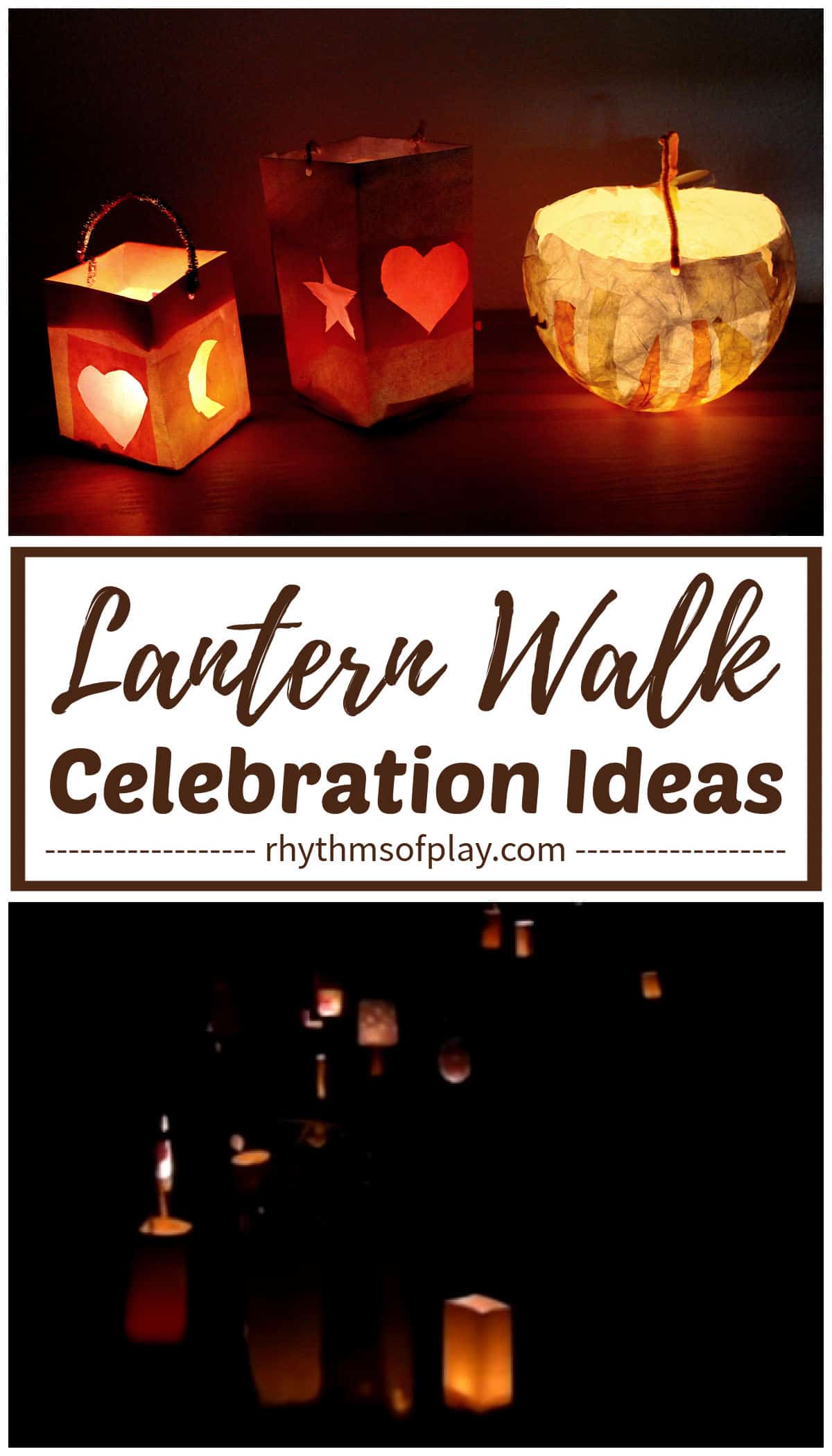
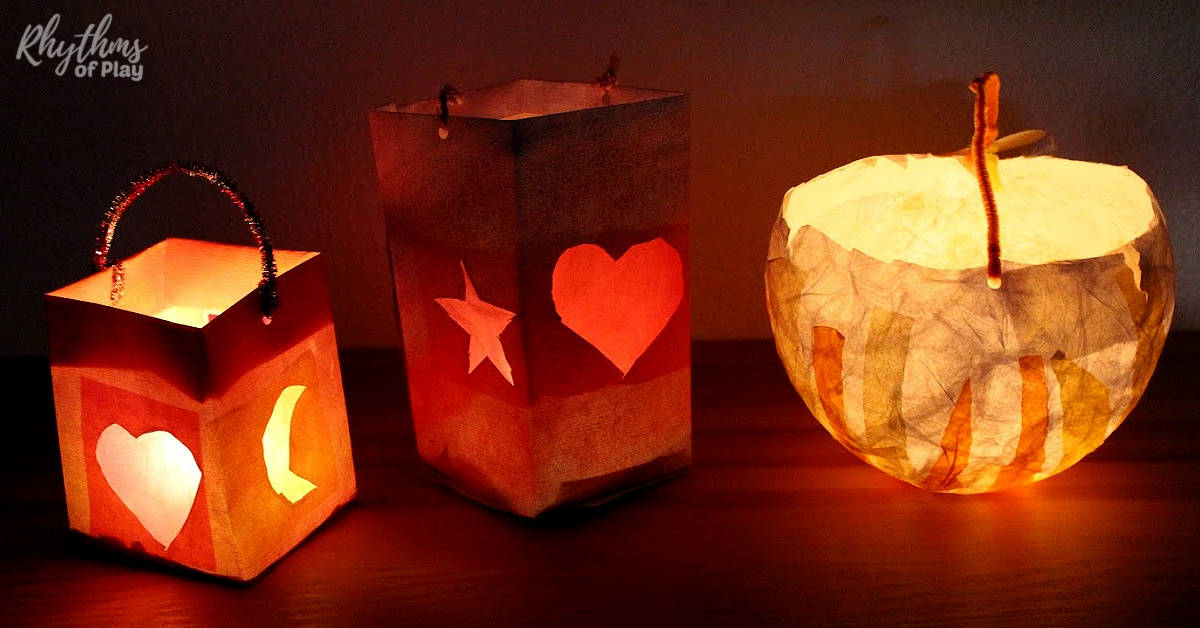
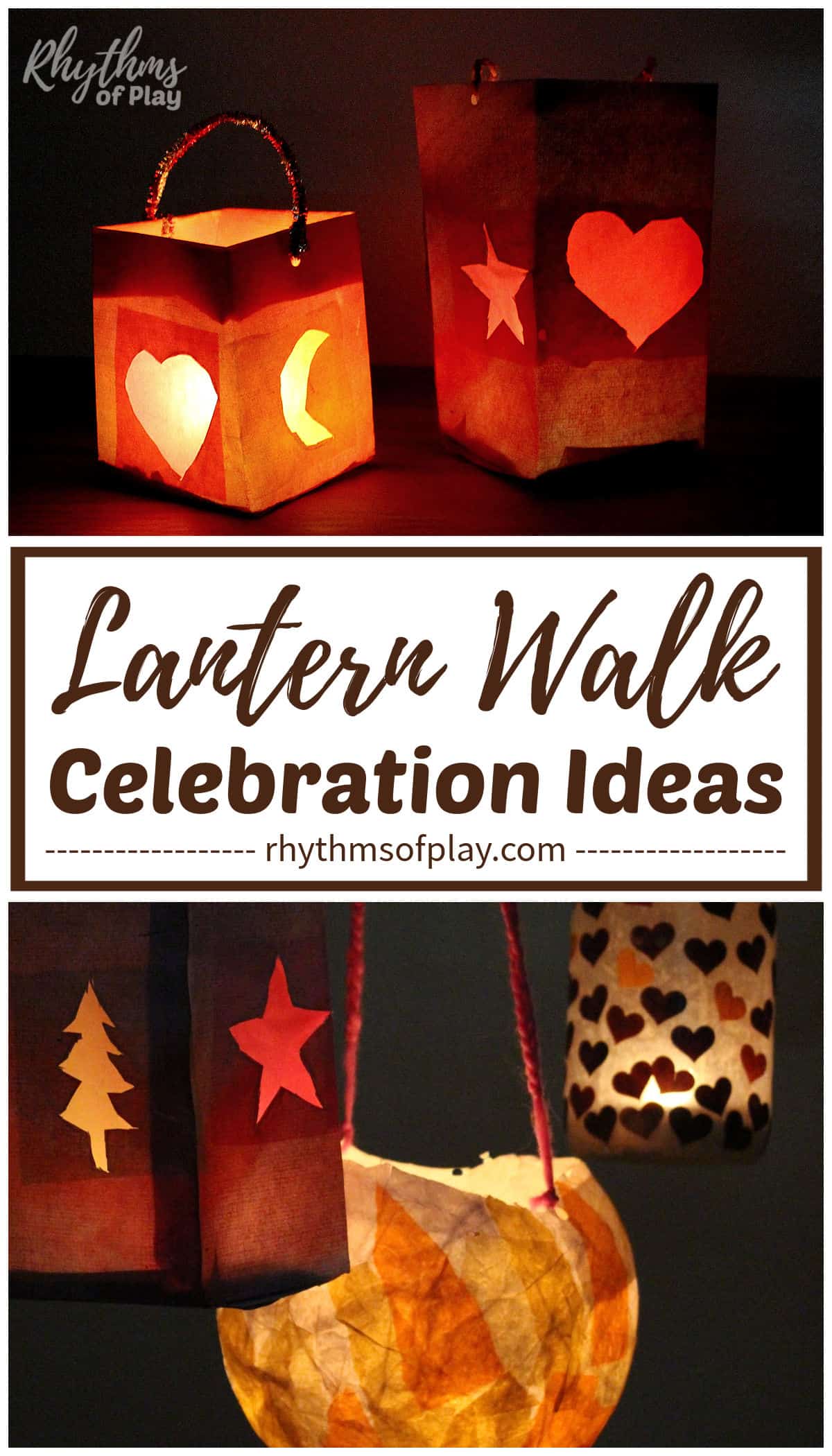
Over the years, my daughter and I have made several lovely luminaries for lantern walks, including the lantern crafts linked above. She also made beautiful lanterns with her Waldorf teachers in kindergarten and early elementary school. Today, we homeschool and continue to enjoy this light-filled tradition together. These handmade lanterns glow so beautifully on a cold autumn night. The photograph below shows a few of my daughter’s creations.
How to Make Lanterns for a Lantern Walk
We learned to turn wet-on-wet watercolor paintings into glowing paper lanterns with help from my daughter’s Waldorf teachers and a few great books, as shown in the photo above. Cut-out shapes covered with colorful kite paper create little windows for the light to shine through. (You can also use kite paper to make window stars to add a splash of color to your windows when autumn’s colors fade in winter.)
Explore the tutorials and recommended books below to choose a DIY lantern project for your celebration:
Easy Mason Jar Lanterns:
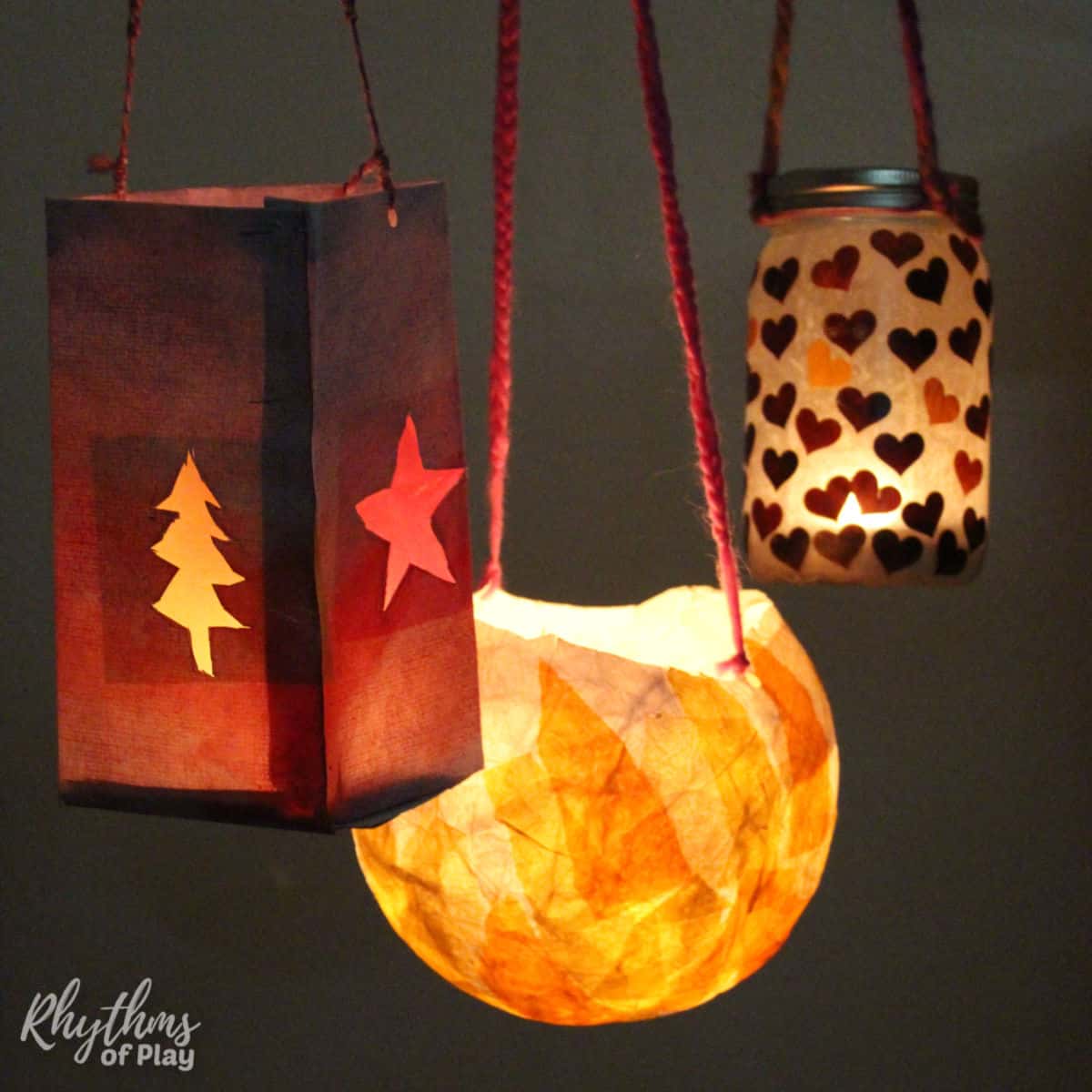
For a simple lantern, place battery-operated fairy lights inside a clean mason jar and add a secure handle. Or decorate the jar with white tissue paper, then add fallen leaves or small colorful squares of tissue paper using the tutorials below.
Try these nature-inspired and colorful lantern crafts:
- Fall leaf lanterns: Decorate a jar with real leaves and tissue paper. (The step-by-step instructions include a helpful video tutorial.)
- Heart leaf lanterns: Add heart-shaped leaves for a lantern that celebrates love and kindness. Alternatively, use colorful tissue paper cut into heart shapes, stars, or squares in place of leaves to make a rainbow-colored tissue paper lantern.
- Tissue paper jar lanterns: Create a colorful glow with torn tissue paper.
Glass lanterns can be heavy for little hands. Choose a lighter option or have an adult carry the jar. You might also enjoy making Turkey Leaf Lanterns for your Thanksgiving celebrations!
Simple DIY Folded Paper Lanterns:
Folded paper lanterns are a beautiful way to turn colorful paper or a child’s watercolor painting into a glowing little light. Follow along with the video tutorial below to make one for your lantern walk.
There are many other ways to make a paper lantern. Out of respect for the authors’ work, I’ve chosen not to reproduce the other paper lantern tutorials included in the following resources. Instead, explore a few other lantern craft tutorials of different types and designs in these books:
- A Child’s Seasonal Treasury
- All Year Round
- Earthways
- The Children’s Year
- Festivals, Family, and Food
Choose a design that suits your child’s age and abilities, help with folding and cutting as needed, and use a flameless tea light inside the finished lantern.
DIY Balloon Lanterns:
Balloon lanterns use layers of tissue paper or papier-mâché to create a rounded lantern shape. They are a lovely option when you have time to make the lanterns over several days and let them dry thoroughly. Learn how to make balloon lantern crafts with the following step-by-step tutorials:
- Colorful Balloon Lanterns: Learn how to make paper mache lanterns with a balloon and colorful tissue paper with this video tutorial by a Waldorf kindergarten teacher.
- Balloon Lantern with Leaves: Try this gorgeous handmade balloon lantern made with toilet paper and natural leaves. You can also use white tissue paper for gifts instead of toilet paper to make these lanterns.
Best Lights for Outdoor Lanterns:
Battery-operated candles and fairy lights bring a gentle glow to lanterns without an open flame. Use them in paper lanterns and children’s handmade luminaries. Flameless candles offer a candle-like flicker, while fairy lights create a little cluster of sparkling stars.
Some lantern walk traditions include real candles, but hot flames and wax require extra care. In lanterns designed for real candles, a layer of sand can catch melted wax and make cleanup easier, though it does not eliminate the fire risk.
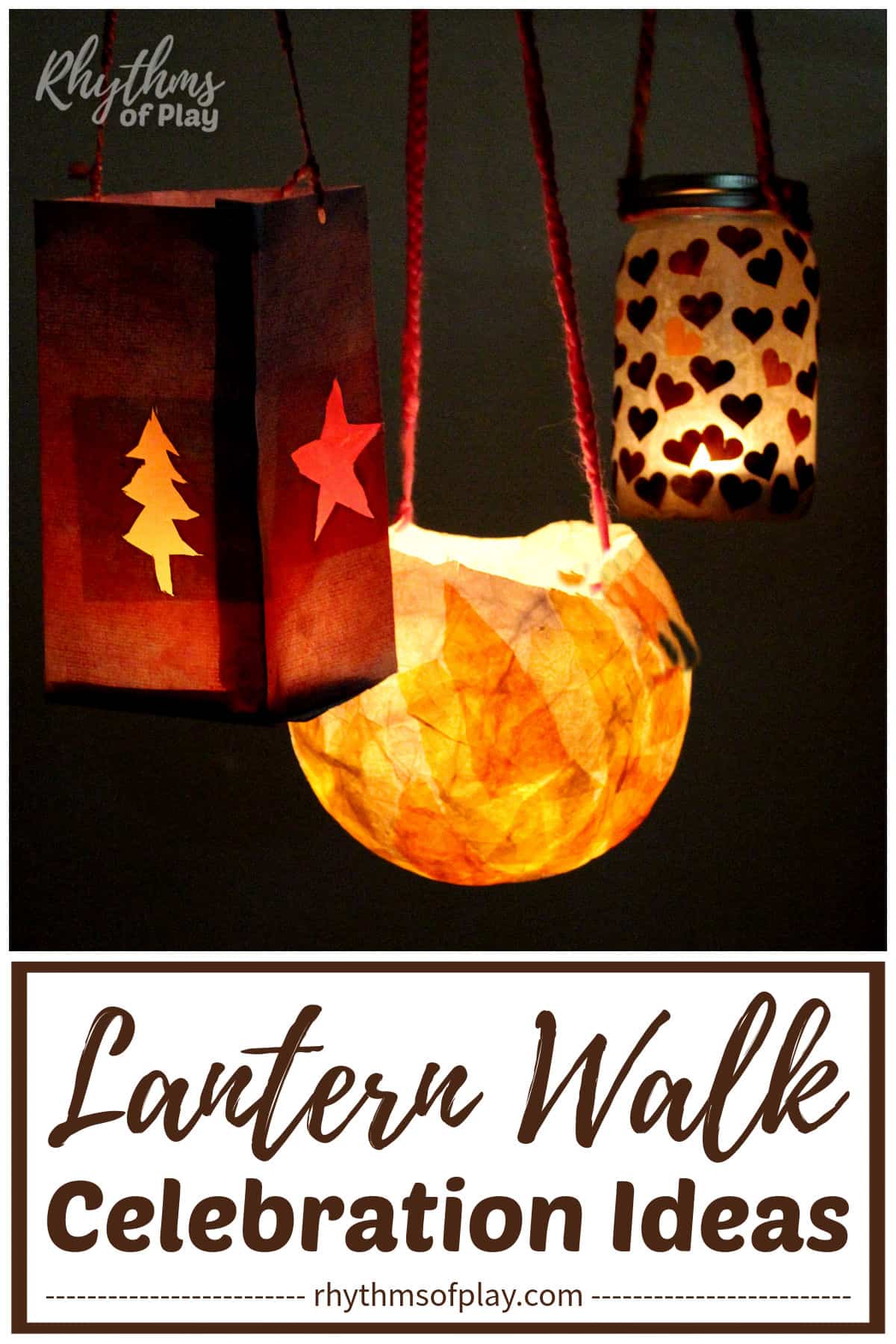
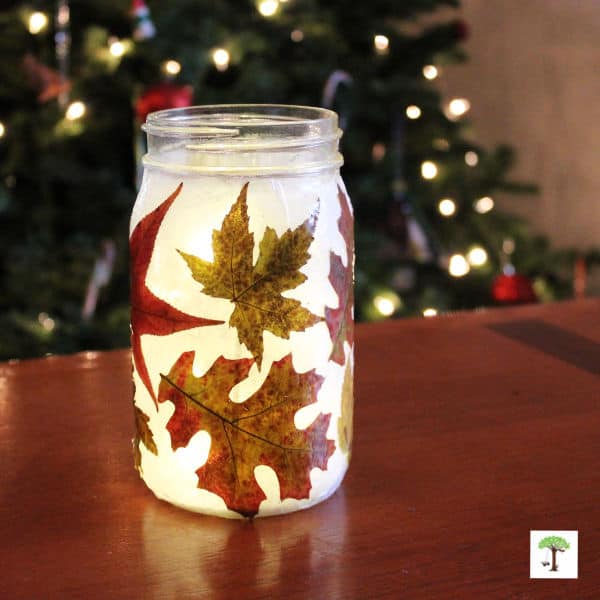
Because we live in a wildfire-affected area and enjoy taking our lanterns into nature, we often choose battery-operated fairy lights. They look especially lovely in mason jars, like the fall leaf lantern pictured below.
If you wish, hang your lantern from a sturdy stick so you can carry it out in front of you as you walk. Secure the handle to keep it from slipping, and choose a short stick and lightweight lantern that your child can manage comfortably.
Check that lights and handles are secure before your walk, and have an adult carry heavier glass lanterns. Tissue-paper decorations add beauty and can help hold the glass together when accidents happen, but it will still break if dropped.
What We’ve Learned from Making Lanterns
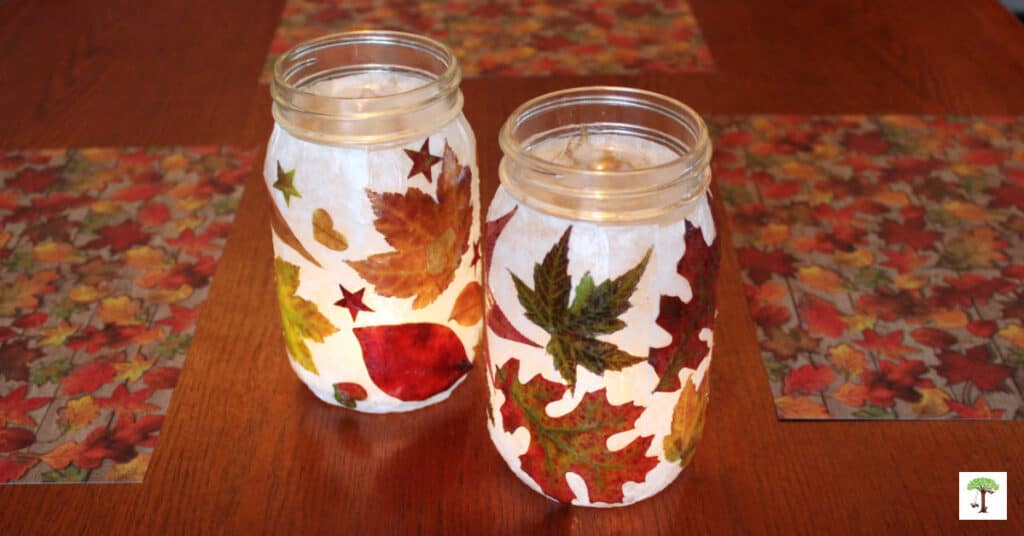
When my daughter was younger, she found folded paper lanterns and papier-mâché balloon lanterns easiest to carry. Today, she enjoys making and carrying mason jar lanterns like the one shown in the photo below, with whole leaves and leaves cut into stars and hearts. Mine is pictured next to it on the right.
We usually make our lanterns a few days to a few weeks before our walk, giving them plenty of time to dry and letting us check that the handles are securely fastened before heading out.
Traditional Lantern Songs for a Lantern Walk:
Lantern songs bring warmth, joy, and a gentle rhythm to the evening. Below, you’ll find written lyrics and links to video and audio recordings to help you learn the melodies, along with a printable song sheet to bring on your walk.
Songs to Learn Before Your Walk
Choose one or two lantern songs that you and your children enjoy. Sing them together while making your lanterns or during quiet moments before your celebration. You don’t need to memorize every verse—a familiar refrain helps everyone join in and adds a gentle rhythm to your walk.
You may hear slightly different words or melodies in recordings of the same song. Choose the version you know and love, or discover a new favorite. Let your voice bring warmth, joy, and merriment to the festivities!
Would you like to bring the lyrics along? Find the printable Traditional Lantern Walk Songs sheet to keep your favorite verses handy.
I Go With My Little Lantern
A seasonal song for a lantern parade where participants sing about their glowing lanterns matching the stars in the night sky. To illustrate how much the simple lyrics for these songs can differ, I share several alternate titles and versions of this classic Waldorf-inspired lantern walk song below.
I Go with My Little Lantern
I go with my little lantern,
my lantern is going with me.
In heaven the stars are shining,
on earth shines my lantern for me,
My light shines bright,
so dark the night,
so bright our light,
lantern shine!
La bim a la bim a la bim.
Listen to this song sung by “I Go with My Little Lantern; by Star in the Apple Stories on YouTube.
I Go With My Bright Little Lantern
I go with my bright little lantern,
my lantern is going with me.
In heaven the stars are shining,
on earth shines my lantern with me,
The light grows dim,
as we go in,
la bimba la bamba la bim.
The light grows dim,
as we go in,
la bimba la bamba la bim.
Listen to “I Go with My Bright Little Lantern,” sung by Cincinnati Waldorf School Community Singers.
I Go With My Lantern

I go with my lantern,
my lantern is going with me.
In heaven the stars are shining,
on Earth shines my lantern with me.
The sun has set,
the people sing,
Lantern shine.
La bimba la bimba la boom.

You can listen to this slightly different version, "I Go With My Lantern," sung by Ceilidh-Jo Rowe on YouTube.

I Walk with My little Lantern

I walk with my little lantern
my lantern myself and I.
Above the stars are shining,
down here were stars to the sky.
The new moon shines,
the cat meows,
Hey hey hey,
la boma la booma la bay.
Hey hey hey,
la boma la booma la bay.

Listen to this version of this traditional song, "I Walk with my Little Lantern" sung by Lorraine Nelson Wolf on YouTube.

Finally, here is one last version of this classic Waldorf-inspired Martinmas lantern song:

I'm Walking With My Lantern

I’m walking with my lantern,
my lantern walks with me
Above the stars are shining bright,
down here on Earth shine we.
The cock does crow, the cat meows,
la bimmel, la bammel, la boom.
My light goes out, we’re going home,
la bimmel, la bammel, la boom.

I’m walking with my lantern,
my lantern walks with me
Above the stars are shining bright,
down here on Earth shine we.
So shine your light through the still dark night,
la bimmel, la bammel, la boom.
My light goes out, we’re going home,
la bimmel, la bammel, la boom.
Glimmer, Lantern, Glimmer
This lantern verse is a short, repetitive, and cozy chant that helps young children focus and stay calm during evening walks.
Glimmer, Lantern, Glimmer (or Shimmer, Lantern, Shimmer):

Glimmer, lantern, glimmer (or Shimmer, lantern, shimmer)
Little stars a-shimmer (or Little stars a-glimmer)
Over meadow, moor and dale
Flitter, flutter, elfin veil
Pee-wit, pee-wit, tikka-tikka-tik
Rucoo, rucoo.
Glimmer, lantern, glimmer
Little stars a-shimmer
Over rock and stock and stone
Wandering, skipping, little gnome
Pee-wit, pee-wit, tikka-tikka-tik
Rucoo, rucoo.
Listen to “Glimmer Lantern Glimmer” by singers at the Saltwater Waldorf School on YouTube.
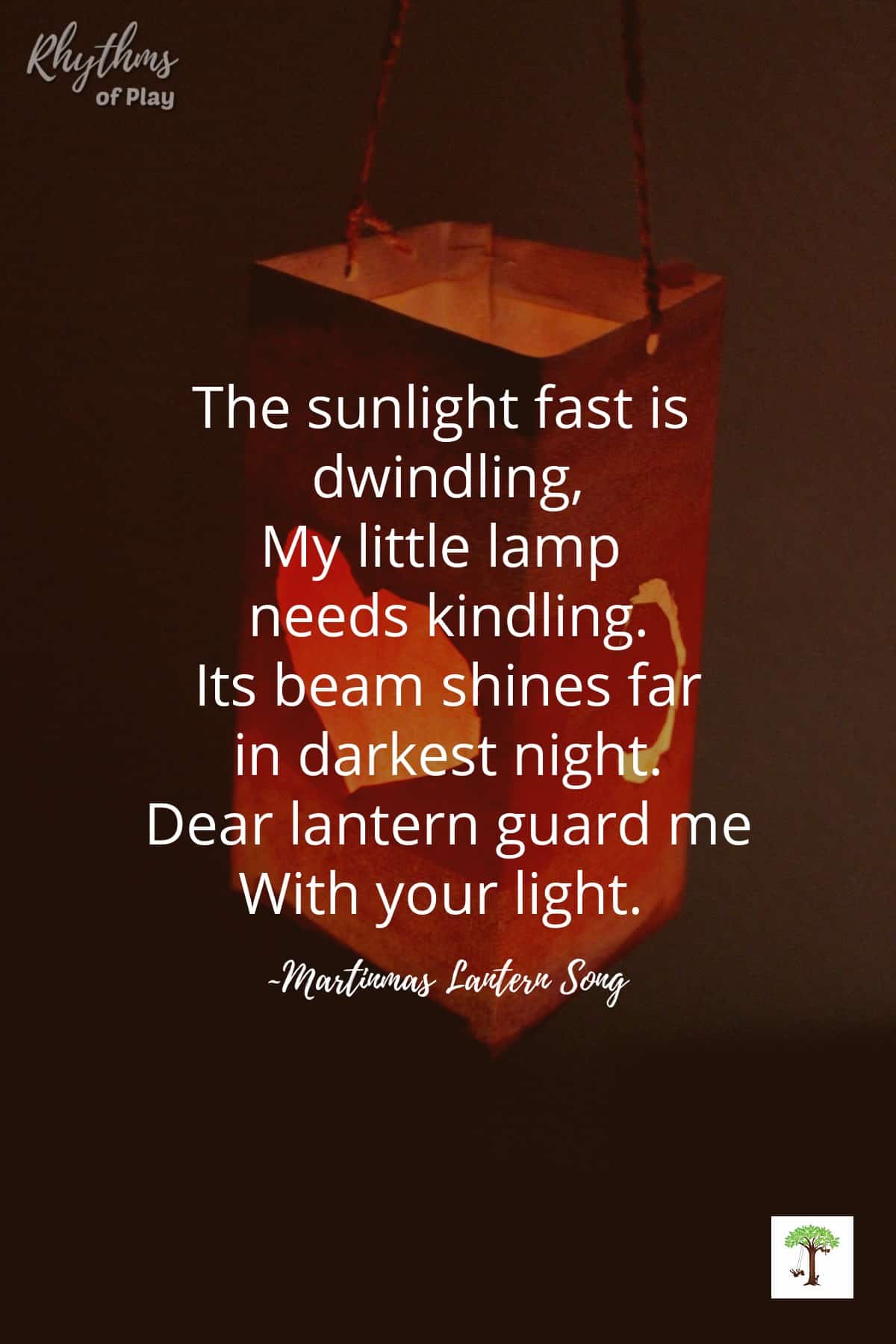
The Lantern Song
A reflective seasonal song that acknowledges the shorter days and longer nights in late fall.
The Lantern Song Verse:

The sunlight fast is dwindling,
My little lamp needs kindling.
Its beam shines far
in darkest night.
Dear lantern guard me
With your light.
Listen to the “Lantern Song” by the Cincinnati Waldorf School Community Singers.
High and Blue the Sky
An alternative song to choose from on a lantern parade.
High and Blue the Sky

High and blue the sky,
trees are very tall;
wild geese flying seem so small.
See, on silent wings
in flocks they go
never parting from a single row.

We go through the land,
like a wild gees band;
brothers/sisters in one flight are we.

Clear and dark the night,
stars are very bright;
lanterns shining seem so small
See, in single file we walk along,
singing joyfully our lantern song.

We go through the land,
like a wild gees band:
brothers/sisters of one light are we.
You can hear “High and Blue the Sky” on YouTube sung by Lorraine Nelson Wolf.
As the examples above show, recordings of the same song can have different words or melodies. Choose the version you know and love, or discover a new favorite.
For more melodies, listen to this collection of nine Waldorf Martinmas lantern walk songs or explore the Cincinnati Waldorf School’s song recordings.
No need to learn them all—let the singing bring warmth, joy, and a gentle rhythm to your light walk.
You can purchase a printable with the lyrics for each of these traditional lantern songs for just $0.97 in the Rhythms of Play Learning Center: Lantern Walk Songs Printable.
Related: Music for Kids that Won’t Drive You Nuts!
Lantern Walk FAQs
Have a few more questions before heading out with your lantern? These answers explore the meaning behind the tradition and offer a little extra guidance for your celebration.
When Do You Celebrate a Lantern Walk?
Martinmas falls on November 11, and many Waldorf lantern walks take place on or near that date, but they don’t have to be tied to it. Families can also choose another evening that works for them.
In the Northern Hemisphere, autumn’s shorter days make it a lovely season for watching lanterns glow at dusk. Choose a time and place that reflect the rhythms of nature where you live, such as during May in the Southern Hemisphere.
What Is the Origin of the Lantern Walk?
Many fall lantern walks draw on European St. Martin’s Day traditions, in which children carry lanterns and sing songs around November 11. These celebrations honor Saint Martin of Tours and the generosity remembered in the story of his shared cloak.
Today, many Waldorf schools and families celebrate Martinmas with a lantern walk, carrying light into the darker season as a reminder to share warmth and kindness with others. Learn more about Martinmas and lantern walks in Waldorf schools.
Does a Lantern Walk Have to Be Religious?
No, it can be a secular celebration of light. Your family lantern walk can focus on kindness, seasonal changes, and spending time together. If you attend an organized Martinmas celebration, ask the host what stories and traditions they’ll include.
Do We Need to Make Homemade Lanterns?
No. Making lanterns can be part of the fun, but you can reuse or borrow a lantern, carry a battery-powered light, or bring a flashlight.
Can Toddlers Join a Lantern Walk?
Keep the route short and choose a lightweight lantern with a securely enclosed battery-operated light. An accompanying adult can help carry it. A backyard walk or a stroller-friendly route may be a comfortable place to begin.
What if it Rains?
Choose another evening, gather under cover, or enjoy a short indoor lantern procession. Keep paper lanterns dry and use lights appropriate for the conditions.
What does a lantern symbolize?
The shining light of a lantern can symbolize many things, such as blessings or “the light” in life. Lanterns represent the light that guides the way, dispels darkness, and shows the path forward. Spiritually, the light of a lantern can also symbolize life’s inner light or the spark of life within that we all share as ONE.
In some cultures, such as Chinese culture, people believe lanterns ward off evil spirits and bring good fortune and luck. Lanterns symbolize hope and safety for those seeking freedom, and they help people celebrate important events such as weddings, births, memorials, holidays, and other special occasions.
Is a Fall Lantern Walk the Same as the Chinese Lantern Festival?
No. Both celebrations feature glowing lanterns, but they follow different cultural traditions and occur at different times of year. A fall lantern walk is typically a Waldorf festival held on or near Martinmas that emphasizes kindness and carrying light into the darker season.
The Chinese Lantern Festival takes place on the fifteenth day of the first month of the traditional Chinese calendar and marks the end of Lunar New Year celebrations. Traditions include carrying or displaying lanterns and enjoying sweet rice balls called tangyuan. Learn more from the Smithsonian’s National Museum of Asian Art.
Enjoy or Organize a Lantern Walk Festival
A lantern walk offers a little space to slow down, connect with nature’s rhythms, and enjoy the warmth of being together. These events typically occur in the fall, when the days grow shorter, and lanterns serve both practical and symbolic purposes. They not only provide light on darker evenings, but also give everyone a chance to honor the beauty of the changing season.
Celebrate the light, connect with nature’s rhythms, and strengthen community bonds on a lantern walk this fall. Whether you gather with a few loved ones or join a larger celebration, each little lantern reminds us of the kindness we can share.
Find a lantern walk near you, or use the celebration ideas gathered here to create a lantern walk festival at home, at school, or in your community this Autumn. Make a lantern, learn a song, and step into the evening with the people you love. May the light you carry continue to shine through small acts of kindness in the days ahead.
For more ways to enjoy the season, explore these fall activities complete with a free printable bucket list.
Please visit our About page to learn more about Rhythms of Play. For more information about this website and the author and photographer of these Traditional Lantern Walk Celebration Ideas, visit the Rhythms of Play home page or the author page, Nell Regan Kartychok.






Leave a Comment