

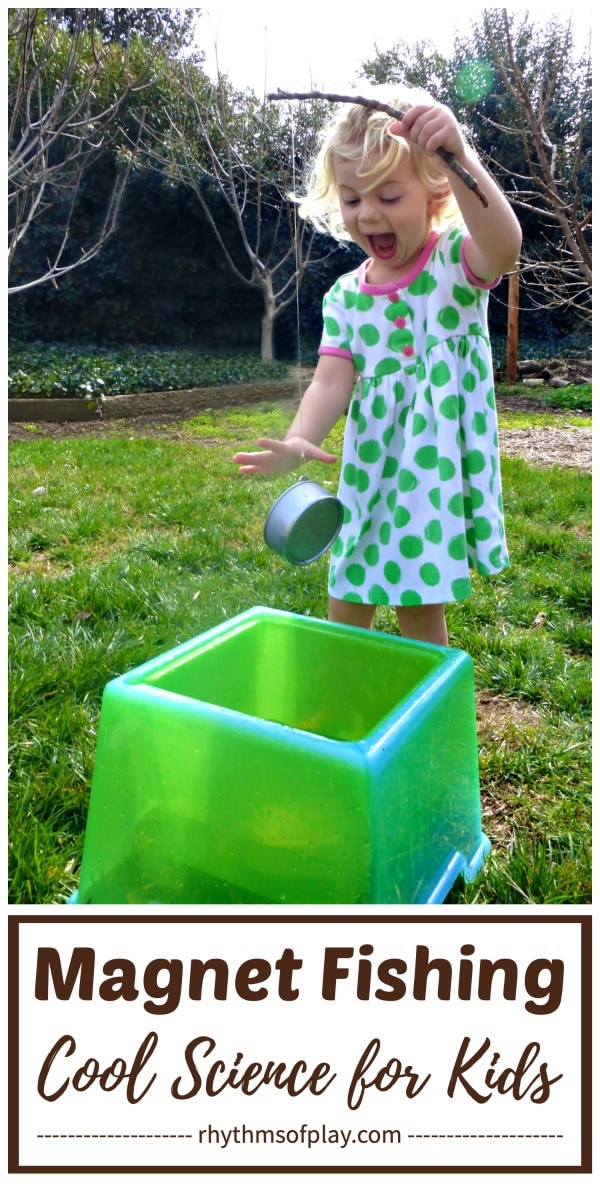
This magnet fishing game is a fun science activity for kids that works indoors or outdoors and offers educational benefits for children of all ages.
Fishing with a magnet is a hands-on, low-cost science activity that offers a fun and engaging learning experience for children of all ages. In this activity, children use a magnet attached to a string to “fish” for objects indoors or outdoors. Magnet fishing introduces young learners to fundamental scientific principles, including magnetism and material properties, while developing skills such as observation, experimentation, and classification. You might also enjoy this Human Sundial science experiment for kids.
This informative guide teaches how to create a fishing game using a magnet for children to play and experiment with, and explains the primary benefits and learning objectives of this simple science activity. Make it simple for toddlers and preschoolers, or create more advanced magnet fishing challenges for older children, such as timed fishing, tally charts, or object weights. Older children and those more experienced with magnet fishing can take this activity outside in rivers, lakes, and oceans with longer ropes and stronger magnets.
On this larger scale, magnet fishing is similar to metal detecting, with a twist. It involves finding metal objects or hidden treasures in bodies of water using powerful magnets and a long rope. However, some areas restrict it, make it illegal, or require permits, and some items fall under specific laws. So, check local regulations to understand ordinances and potential hazards before trying this outdoor treasure-hunting activity. Scroll down to learn more about magnet fishing with kids.
Related: Art & Science: Experiment with Watercolor Resist
Magnetic Fishing Game: Cool Science for Kids!
Fishing with magnets using either a magnetic fishing kit made for kids or a homemade fishing rod with a magnet is an entertaining way to teach children basic scientific ideas through play. In this fun activity, kids “fish” for magnetic objects such as paper clips, washers, or small metal toys in a water bin, sandbox, or even on the floor.
This often leads children to test non-metallic objects, which in turn sparks further exploration and learning. Whether indoors or outdoors, this activity sparks curiosity and offers several opportunities for hands-on learning. Learn more about the many educational benefits of this science activity for kids below. Alternatively, scroll down for step-by-step instructions on how to make a DIY fishing pole with a magnet, or use a magnetic fishing kit to explore magnetism with the tips included in this informative guide.
Educational Benefits of Magnet Fishing:
One of the primary educational benefits of magnet fishing is its direct engagement with magnetism. They can observe firsthand how magnets attract certain metals, and not others, helping them understand the difference between magnetic and non-magnetic materials. As children experiment with which objects stick to the magnet and which do not, they begin to understand how magnets attract certain materials, mainly those containing iron or steel.
This simple science activity lets children explore magnet strength and different magnet types by testing how many items or how much weight they can lift, or how far away they can attract an object. These experiments naturally lead to questions, predictions, and explanations, which in turn help them develop core elements of scientific thinking.
These kinds of tactile learning experiences reinforce classroom or homeschool learning and encourage inquiry-based thinking. As they play, children can hypothesize which items the magnet will attract, test their ideas, and reflect on the outcomes, mirroring the scientific method. Sorting and classifying their “catches” into magnetic and non-magnetic groups promotes critical thinking and reinforces early categorization skills often practiced in science and math.
Fishing with magnets also encourages problem-solving and improves fine motor skills as children maneuver their magnetic fishing rods to catch specific items. This activity builds hand-eye coordination and persistence. Magnet fishing is also an excellent way to integrate learning across different subjects and combine science with literacy (labeling items), math (counting or graphing catches), and even art (decorating their fishing rods or the objects to fish for).
Magnet fishing for Kids:
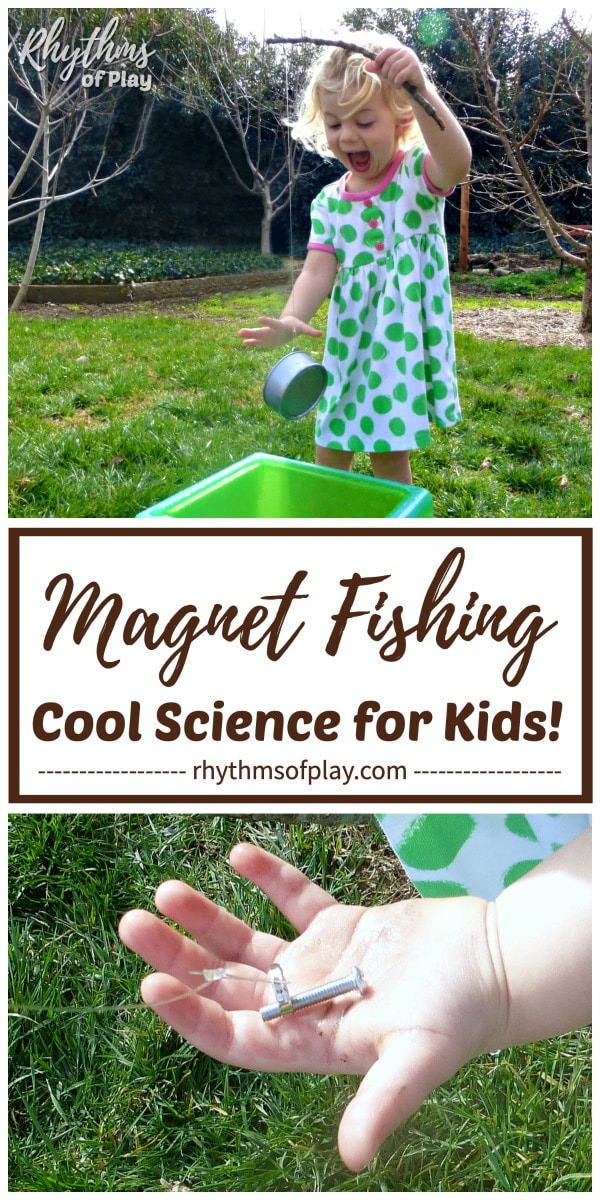
Fishing with a magnet is an activity I fondly remember doing in buckets and bathtubs with my brothers as a child. We spent hours trying to catch things and testing what was magnetic and what wasn’t. Imagine my surprise when my daughter started doing the same thing on her own!
The photos included in this tutorial show the first time I tried this magnet fishing game with my daughter. At first, she was thoroughly amused by magnetic fishing for washers, nuts, and bolts. Then she began doing the same things my brothers and I did as kids.
She started running around our yard, asking if she could throw all sorts of other stuff into the bucket. After starting with the magnetic objects I put in the bin, she wanted to experiment and test for magnetism, just like my brothers and I did as children. So, of course, I followed her lead and joined in on the fun.
Soon after, she and I began throwing everything we could find outside, or that I could think of to grab from the house, into her bucket to test for magnetism. We had such a great time magnet fishing, testing what was and wasn’t magnetic, that I felt like a kid again. Science doesn’t get much more fun than this! For another fun science activity, try Rock Balancing.
Related: Rainbow Rainy Day Art
Magnet Fishing Supplies:
Here’s what you need to enjoy this magnet activity for kids:
Something to Fish With:
Start by making a fishing pole with a magnet, or purchasing a magnetic fishing set with a magnetic fishing pole you can use for this activity. I recommend making your own with the supplies below. If you choose this option, gather your preferred materials from the list below and follow the step-by-step DIY instructions in the tutorial to assemble it. You will need a combination of the following options:
- A stick, small branch, pole, 24 by 1/2 inch wooden dowel rod, or another type of rod you can use to make a simple DIY fishing pole.
- Ceramic ferrite round disc magnets with a hole. (Please note: Most neodymium magnets, especially those with a lifting eyebolt, are too powerful for this activity and are therefore not recommended.)
- String to tie the magnet to the stick or pole (Choose one of the following options):
- Monofilament fishing line
- Baker’s twine
- String to tie the magnet to and “fish” for magnetic objects.
- Crimping pliers (optional for attaching a crimp tube or bead to hold the magnet in place on the string instead of tying it).
Objects to “Fish” For:
A collection of magnetic and non-magnetic things that children or students can test to determine if they are or are not magnetic. For a magnetic fishing activity, try small items that contain iron or steel. Try any of the following options:
- Paper clips
- Paper clips
- Large metal washers
- Steel nuts and bolts
- Steel screws
- Metal bottle caps
- Binder clips
- Safety pins
- Bobby pins
- Steel key rings
- Metal jar lids
- Tin-can lids with smooth, safe edges
- Steel cookie cutters
- Metal measuring spoons
- Steel wool pieces tucked inside a sealed container
- Small metal bells
- Jingle bells
- Metal curtain rings
- Steel chains
- Metal toy cars with magnetic parts
Start with a few magnetic items. Then encourage children to find and test other objects for magnetism. Invite children to predict which objects the magnet will pick up, then test their predictions, or allow them to make these discoveries as they go. Try plastic lids, wooden blocks, corks, pom-poms, shells, rocks, sticks, aluminum foil, and plastic toys.
Safety note: Keep sharp, rusty, or very small metal objects out of reach of young children. Large washers, oversized paper clips, and homemade fish with securely enclosed metal pieces are better choices for preschoolers. Always supervise magnetic play, especially around children who may put objects or magnets in their mouths.
Other Magnetic Items You Can Use for Educational Fishing Activities
- Craft sticks with a paper clip attached
- Cardboard fish with a paper clip attached
- Felt fish with a washer sewn or securely glued inside
- Laminated pictures with a paper clip attached
- Number, letter, shape, or sight-word cards with paper clips attached
A Designated Fishing Area:
Finally, you will need something to put magnetic objects to “fish” for (choose one of the following options):
- A bucket
- Wading pool
- Bathtub
- Large plastic bin
- Water table
- Sink
- Sandbox
- Or another container you can fill with or without water (or play sand) and magnetic objects.
- Alternatively, you can place objects on the floor or ground to fish for. Fishing in water or hunting for treasure in sand can be more enjoyable for older kids, but it’s not a requirement for this science activity.
Related: Shadow Science Art for Kids
Magnetic Fishing Sets:
Alternatively, you can buy a pre-made fishing set if you prefer not to make a homemade DIY magnetic fishing pole for this science activity. Wooden magnetic fishing games are designed to be used without water and typically include a fishing pond or tray.
They typically feature magnetic fish in different colors, numbers, and letters, allowing children to explore magnetism and build basic literacy and math skills as they play.
That said, they are usually made out of plastic and other low-quality, cheap materials, so I recommend making your own the easy, old-fashioned way, with a magnet like my brothers and I did as kids. The step-by-step instructions for this magnet science activity include directions for making a fishing pole with an attached magnet for magnet fishing.
Real Fishing Pole without a Hook:
The final option is tying a magnet onto a real fishing pole without a hook, but this choice is not recommended for toddlers, preschoolers, and kindergartners. Fishing reels can be complicated and extremely hard for little ones with no fishing experience to use properly. They can also be easily messed up or broken.
However, if you are a fishing family with a collection of fishing poles ready for your children to use, and you have a magnet attached instead of a fishing hook, go for it. Show your kids how to use the reel with a magnet before you take them out fishing for real. You might also enjoy these Outside Activities for Kids.
How to Fish with a Magnet:
If you are using a magnetic fishing set, keep a few other magnetic and non-magnetic items nearby for children to test magnetism.
1. Purchase or make a magnetic fishing rod:
- Use the step-by-step instructions below to make a DIY fishing rod with a magnet attached to fish for magnetic items.
- Choose a technique from the directions below, depending on the supplies you have.
- Alternatively, you can use a ready-made magnetic fishing rod included in a magnetic fishing set
 .
.
 .
.How to Make a Fishing Rod with a Magnet:
- Cut a piece of string or monofilament fishing line that is at least 3-5 feet long (or longer), depending on the children’s height and the depth of the container they will use to fish for magnets.
- Tie a ferrite ceramic magnet with a hole in the middle to one end of the string. Alternatively, use a pair of crimping pliers and the crimp tubes (beads) included with the fishing line to attach the magnet to the monofilament string using the directions below:
- Place a crimp bead on one end of the fishing line.
- Loop the string through the hole in the magnet below the crimp bead.
- Fold the string back and feed it through the crimp bead again so the magnet dangles from the loop created.
- Squeeze the crimping pliers around the crimp bead to secure the fishing line loop and magnet.
- Then, tie the other end of the string or fishing line to a small branch, stick, or wooden dowel rod. Alternatively, drill a hole in the end of the stick, thread a crimp bead onto the line, string the monofilament line through the hole in the stick and into the crimp bead, and finally crimp the bead to secure it in place. (See how to crimp beads in this DIY wind chime tutorial.)
 with a hole in the middle to one end of the string. Alternatively, use a pair of crimping pliers and the crimp tubes (beads) included with the fishing line to attach the magnet to the monofilament string using the directions below:
2. Create Designated Fishing Area or Pond:
You can use several things to create a designated fishing area or pond for this magnet fishing activity. Try any of the following options:
- Fill a large bucket, wading pool, sink, bathtub, or another container, half full of water or sand.
- Use a large empty container.
- Put the objects on the floor or ground.
- Hide them in a sandbox that is already filled with sand.
 , wading pool
 , sink, bathtub, or another container, half full of water or sand.
 As you can see in the photographs, I put water inside a green plastic storage footstool for kids with a lid that my daughter’s (late) grandpa found for her at IKEA. This item, or a similar one, may or may not still be available.
3. Place Magnetic Objects (Fish) in Designated Fishing Area:
Put magnetic objects in the bucket, bathtub, pool, magnetic fishing set pond, hide them in a sandbox, or spread them out on the floor:
- Place paper clips, steel washers, nuts, or bolts (or anything else magnetic you have at home or in your classroom) in the water or hide them in the sand. (You can also use magnetic fish from a fishing set, but make sure they’re safe to put in water or sand before you do.)
- Alternatively, you can spread them out on the ground or floor.
- Start with magnetic items first; later, you can invite them to try other items to test for magnetism.
Please note: Wooden fish are not designed to be submerged in water. Put them in sand or the tray provided with the magnetic fishing game.
4. Invite Children to Try Magnet Fishing:
- Invite children to fish for magnetic items with the magnetic fishing pole.
- Allow them to play and learn about magnetism.
- Follow your child wherever they go in their learning, and most importantly, have fun!
- The main idea is to allow children to experience success and discover the magic of magnetism on their own.
- Remember, children learn best when they are given time and space to discover and explore on their own.
- Use the magnet fishing science tips below:
5. Encourage Children to Test Other Items:
- Give young children such as toddlers, preschoolers, kindergarteners, and elementary-aged students time to wonder, question, and test.
- Test items that are not magnetic later in the game, but do your best to encourage your children or students to come up with this idea independently.
- Children learn best when they can explore what interests them most. Allow them to follow their curiosity and see where it leads.
- A good old-fashioned homemade magnetic fishing pole and magnetic household items tend to lend themselves more to experimenting than magnetic fishing toys do, but use what you like!
Magnetic Fishing Science Activity For Kids:
After a few successful attempts with magnetic items that I had placed in the bucket, my daughter soon ran off to test everything she could find in our backyard, just like my brothers and I did as children. I did not ask her to do this. Instead, she got curious and tested other items on her own. That’s hands-on learning through play in action.
Of course, this let me do the same. Once she started looking for other things, I quickly ran into the house to find more items for her to test for magnetism. In other words, once your children begin to test different items for magnetism, feel free to help them find magnetic and non-magnetic items to experiment with. Who knew learning through play could be so much fun! You might also enjoy these Rainbow Science Activities for Kids.
Fishing with Magnets for Kids:
My daughter fished with a classic homemade magnetic fishing pole with a neodymium magnet, just like my brothers and I did as kids. The only difference was that when I was a kid, we used ceramic magnets, but these newer neodymium magnets are much stronger.
They can easily pick up things my brothers and I could never pick up, even with several magnets. Neodymium magnets make magnetic fishing much easier than I remember; that’s for sure! As I relived my childhood, I started my daughter off with three magnets tied to her stick. I quickly learned that neodymium magnets were too strong to use more than one at a time. They are so strong that it’s hard for young children to pull magnetic objects off them.
It also illustrates why it is best not to use a rare-earth magnet with a lifting eyebolt attached. These neodymium magnets are much too powerful for this simple science activity. It’s no wonder magnet fishing with a long rope and a big, strong neodymium magnet with a lifting eyebolt has become a treasure hunting rage!
However, magnet fishing may be restricted, illegal, or require permits in some areas, and specific laws may regulate some items you find. So check local regulations to understand ordinances and potential hazards before trying this outdoor treasure-hunting activity.
So, I untied the magnets and remade the magnetic fishing pole with only one small rare-earth magnet. That’s why I recommend starting with a ceramic ferrite magnet, as the supplies and step-by-step directions suggest. Later, you can try a small donut-shaped neodymium magnet for even more science-learning fun. You can also try Sorting and Classifying Rocks for an easy geology lesson for kids.
Photographs of My Daughter’s Magnetic Testing Experiments with a DIY Fishing Pole with a Magnet Attached:
Check out the fun my daughter had fishing with magnets for magnetic and non-magnetic objects in the photos below. My brothers are gonna be so jealous!
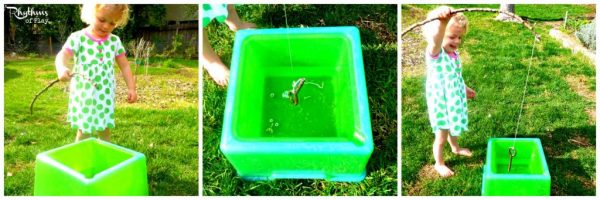
Got it! Look how strong these magnets are!
That was all it took to spark her curiosity and get her moving.
She quickly ran off and found the dog’s Kong to throw in the bucket.
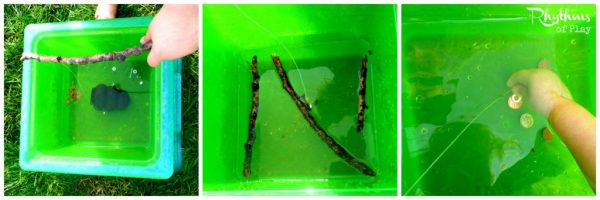
Nope, you can’t catch a rubber dog toy with magnets.
Next, she threw in some sticks. Nope, those didn’t work either.
How about change? Nope.
How about silverware? Yes!
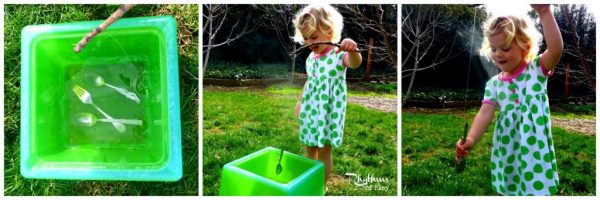
I love these neodymium magnets. They are crazy strong!
“How about my sandbox toys, Mom?” My daughter asked excitedly. I have to be honest. I didn’t think they’d work. These magnets are so strong that they made it easy to find the little bit of metal in the axles of these toys!
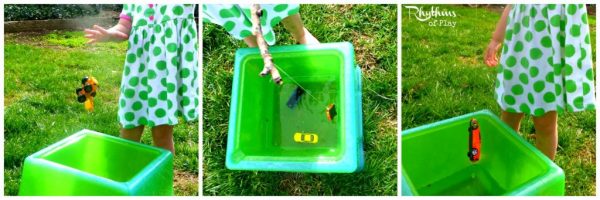
How about cars?
Yep, these magnets could easily find the metal in the wheels and magnetize them.
Then Mom got a funny idea that was a real winner. Look who caught a can of tuna fish!
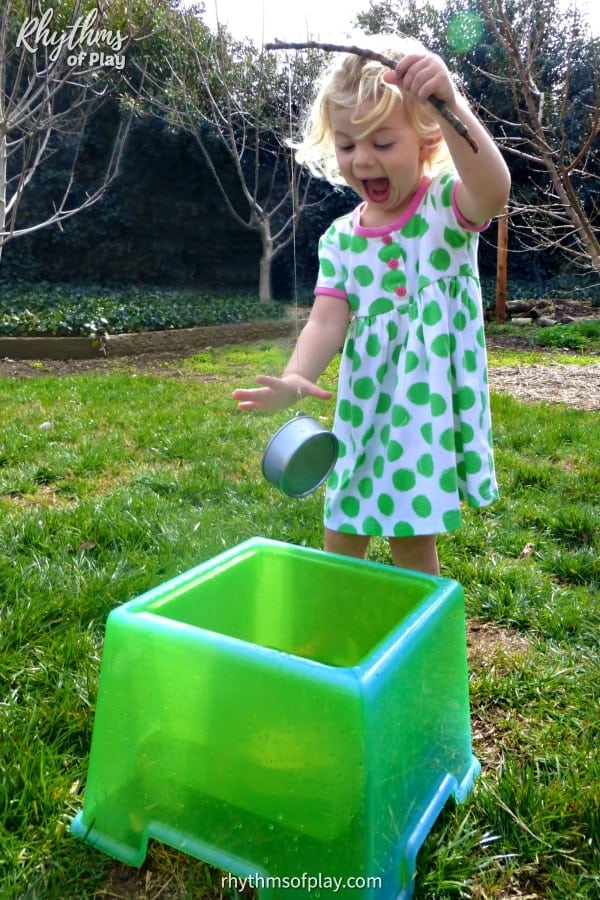
Related: Best Rock Painting Ideas
Magnet Fishing Science Activity for Kids:
Overall, magnetic fishing offers a hands-on, low-cost, and highly engaging method for children to learn about magnetism and materials while developing broader skills like observation, experimentation, and classification. Magnet fishing can help children:
- Question and experiment.
- Develop core elements of scientific thinking.
- Understand and explain basic magnetic properties.
- Distinguish between different types of materials.
- Improve fine motor skills and hand-eye coordination.
- Develop problem-solving skills.
- Encourage inquiry-based thinking.
- Improve observation, prediction, and analytical skills.
- Promote critical thinking and reinforce early categorization skills.
- Integrate learning across different subjects by combining science with literacy, math, and even art.
Whether you use a store-bought kit or a homemade version, this activity turns learning basic scientific concepts into a fun and memorable experience. I’ll never forget the fun I had with my brothers as a child, or with my daughter as a parent and homeschool teacher.
This makes magnet fishing a fun, educational activity for kids and a great treasure-hunting experience for the whole family or classroom. This is especially true when you use strong magnets with a long rope in larger bodies of water. If you want to explore the latter type of magnet fishing, visit this guide to magnet fishing HERE.
Try fishing with magnets with your children today! For more fun outdoor learning activities, visit these outdoor activities for kids.
You may also enjoy rock balancing, but please stack rocks with care if you choose this idea. Another fun outdoor activity is this human sundial science experiment.
Please visit our About page to learn more about Rhythms of Play. For more information about this website and the author and photographer of this hands-on magnet science activity for kids, please visit the Rhythms of Play home page or the author page, Nell Regan Kartychok.
If You Like Magnetic Fishing for Kids, you may also Enjoy These Science Activities for Kids:
- Shadow Art Outdoor Science for Kids
- Sorting and Classifying Rocks: Geology for Kids
- Rainbow Rainy Day Art: STEAM Activity
- Art & Science: Experiment with Watercolor Resist






Great idea! I can’t wait for summer to come so we can fish all day long :). My boys will love it!
It really is great fun! The weather has been nice where we live so my daughter has asked to fish every day since I introduced it to her — Enjoy!
This looks like a fabulous way to spend a day. Thanks so much for the post and idea. 🙂
Awesome idea. I’m going to do this as soon as all our snow is melted!
I’m sure you will enjoy it 🙂
This looks like so much fun! Thanks for sharing at the #outdoorplayparty!
Glad you liked it!
Fun idea1 I can see your daughter loved it too!
Thanks! Yes… she loved it so much she fished for days on end afterwards 🙂
This is something really special & smart. Thanks for sharing your superb idea. Great thinking. Thanks.
Thank you Nancy! I’m so glad that you found it useful! I hope that your children enjoy it!
It’s just full of fun. Anyway, great idea. Brilliant & smart thinking. Thanks a lot for your time.
Thank you, Lara! I’m so glad you like this magnet fishing science learning activity for kids. Children love fishing with magnets!
Have fun!