
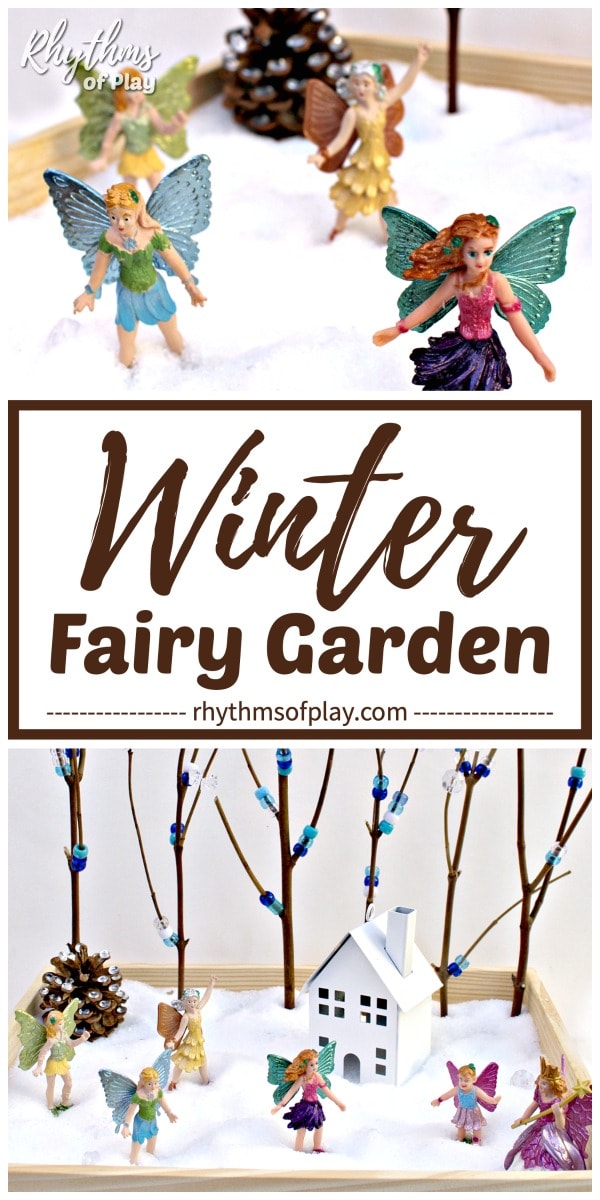
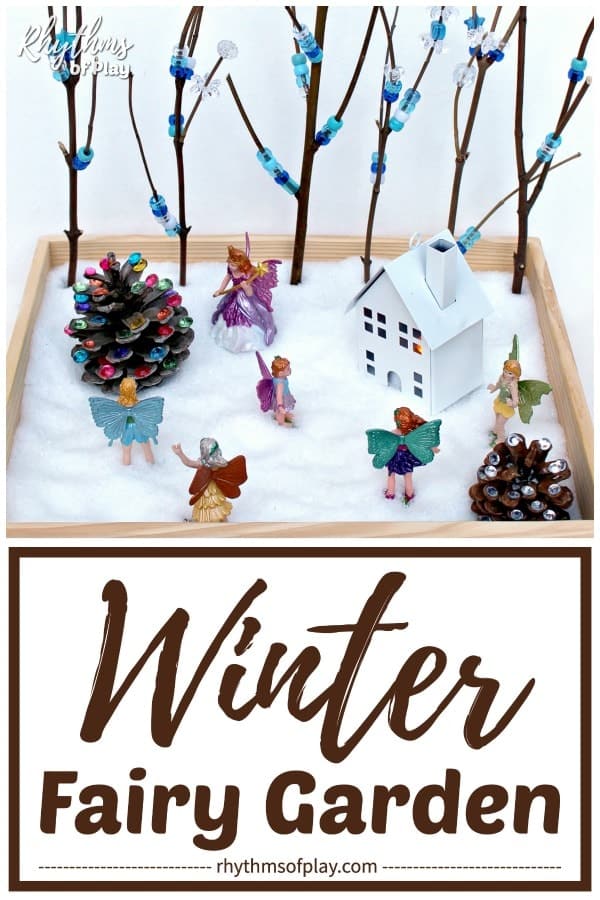
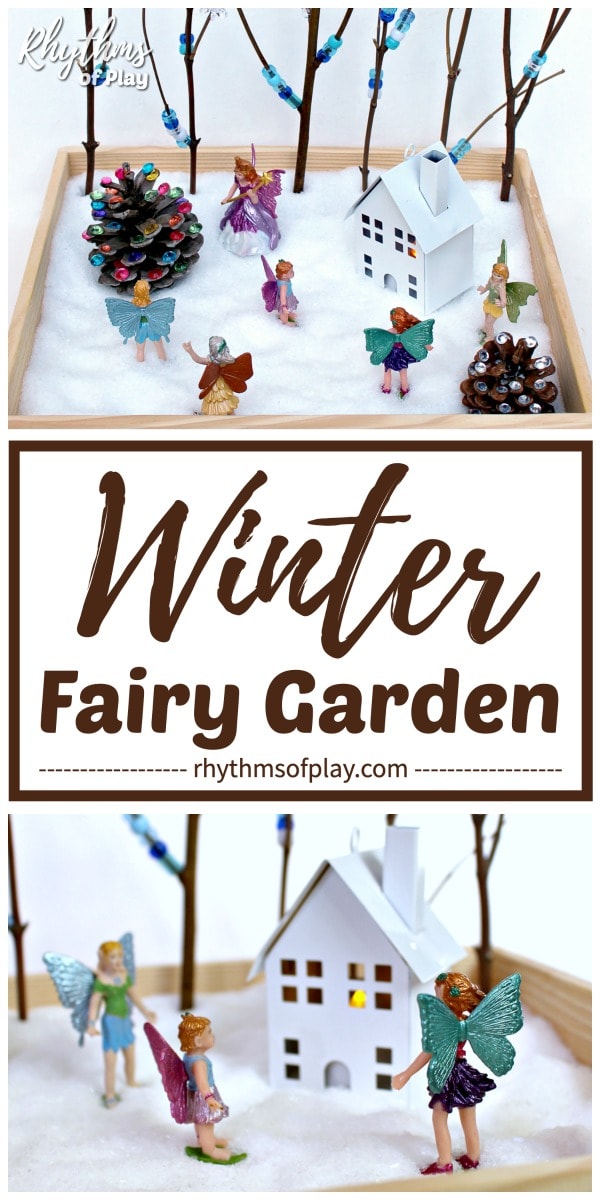
Make a DIY winter fairy garden with the step-by-step instructions below, and invite children to engage in small-world imaginative play in this frozen winter wonderland. Pretend play allows children and adults to flex their creative muscles and develop their imaginations.
This DIY winter fairy garden small world can provide hours of unlimited imaginary play for a young child, and is just as enjoyable for adults. Like most DIY fairy gardens, the instructions for this frozen winter wonderland include elements that help children develop fine motor skills, stimulate the senses, improve literacy, build an active imagination, and provide a safe place for kids and adults of all ages to calm down and learn to self-regulate.
Also, like most fairy gardens, this winter wonderland small world makes a lovely addition to your DIY home and garden decor. But unlike most fairy garden ideas, this fairy winter wonderland does not contain live plants or soil. Instead, this winter-themed small world or miniature play garden features twig winter trees and is filled with sparkling white play sand and Epsom salt snow! Alternatively, you can use one of the other filler options or make a beach fairy garden for a summer-themed tabletop small world instead!
First published on December 3, 2015, this DIY winter mini garden tutorial is regularly updated to improve the content and keep it current. Scroll down to learn more about this magical winter play garden and how to make your own, including a few important safety tips for parents and teachers. You might also enjoy this list of open-ended toys for toddlers, preschoolers, and kindergarteners.
Fairy Garden Winter Wonderland Small World Play
While some forms of imaginative play are larger than life, fairy gardens like this winter wonderland small world offer a gorgeous miniaturized version. Often used for enjoyment, relaxation, and play, this winter small world can provide hours of entertainment along with several educational and mental health benefits for both the growing child and the maturing adult. You might also enjoy this list of winter art projects and painting ideas for kids.
What is a small world?
A “Small World” is a beautifully crafted scene that encapsulates a tiny, self-contained landscape. Much like a fairy garden, small worlds are often created with different figurines or seasonal elements, such as the winter wonderland shown in the photographs, and are meticulously designed to create enchanting, imaginative landscapes on a small scale.
Dollhouses are probably one of the most classic and well-known forms of small-world imaginary play. Like a dollhouse, this small winter world, filled with winter fairies and other whimsical seasonal elements, provides a means for the imagination and senses to flourish. Our daughter spends hours playing with her tabletop fairy garden on cold, dark winter days, chittering and chatting with her fairy friends.
Best of all, a winter fairy garden or small world can include several different elements in addition to or instead of the fairies shown in the photographs. Woodland animals are another lovely option that most boys and girls enjoy. Have a look at the DIY winter fairy garden craft supplies below for several more excellent ideas.
What is the difference between a Small World and a Fairy Garden?
One of the biggest differences between a fairy garden and a small world is that most fairy gardens contain soil and live plants, while most small-world DIY projects do not. Fairy gardens are often made as artistic DIY projects, using materials such as soil, rocks, plants, figurines, miniature accessories, and other seasonal elements to bring these tiny microcosms to life.
This small-world winter wonderland contains several of these elements, but it doesn’t include any real soil or plants. However, like a fairy garden, most small worlds can serve as a means of self-expression, artistic endeavor, or therapeutic benefit.
Commonly used for decorative purposes, pretend or dramatic imaginative play, or as a meditative place one can relax or gaze upon for inspiration. Both fairy gardens and small worlds, such as the winter wonderland you can make with this DIY tutorial, can transport us to a magical realm where creativity can flourish, and one can momentarily escape the demands of the everyday world.
Because most fairy gardens also allow for small-world imaginative play, both fairy gardens and small worlds offer an imaginative element to them. Even if they are never to be touched. Believe it or not, the imagination can best be developed without the use of the hands, physical play, or even the use of one’s sight.
All definitions aside, my daughter and I think the whimsical pony bead winter trees and fairies included in this winter wonderland small world make it just as appropriate to call it a winter fairy garden. If you are interested in learning more about DIY fairy gardens that include live plants and soil, look at THIS step-by-step tutorial to learn how to make a fairy garden using all sorts of various containers, beautiful fairy accessories, and other types of miniature figurines.
How is this Fairy Garden Different from Most DIY Miniature Gardens?
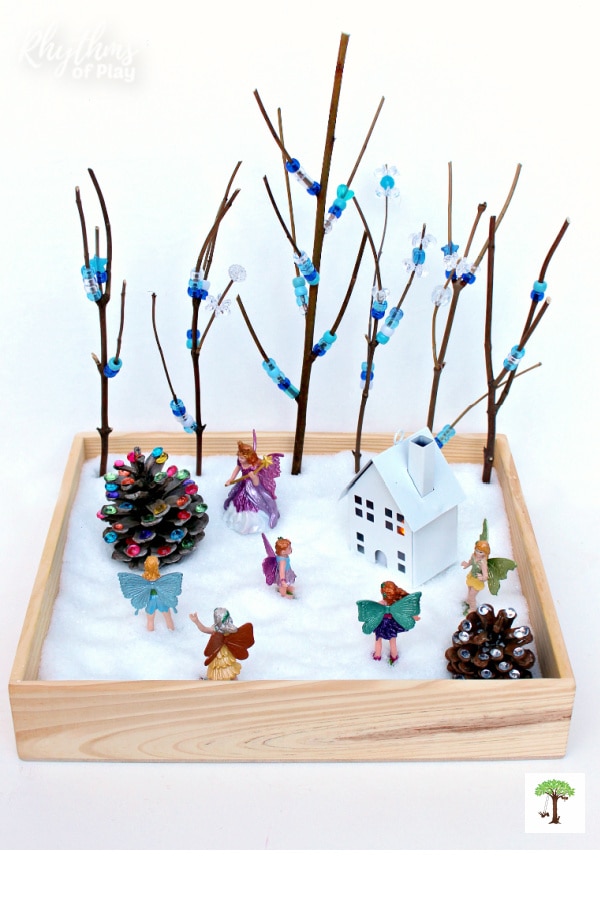
Like most fairy gardens, this winter small world includes sensory play elements and fine motor activities, and can enhance literacy skills. However, unlike most miniature gardens, this winter fairy garden does not require live plants or soil. Instead, invite children to decorate the winter trees with pony beads to look like icy branches, and play with sparkling white play sand or Epsom Salt snow! Alternatively, you can choose one of the other fillers recommended in the supplies, such as play sand or rice, as the sensory play material for the snow.
Epsom salts have an outstanding sensory quality. They can be used for various sensory play toys and activities, such as this winter wonderland fairy garden, but precautions must be taken to ensure their safety. Especially if toddlers, preschoolers, and other young children who are still mouthing objects, or children with special needs, will be playing with them. Please read the list of safety tips below the step-by-step instructions to learn more about kids playing with Epsom Salts.
How to Make a Winter Fairy Garden or Small World
Making a winter fairy garden for small-world sensory play or adding it to your winter DIY home decor is a delightful project for kids and adults alike. Creating a winter fairy garden or winter wonderland can be a fun and creative project to add a touch of magic to a children’s playroom, classroom, or another play space or location during the winter season, such as atop a winter nature table.
Best of all, you can adjust the materials and decorations according to your preferences, or the age of those who will enjoy playing with these whimsical winter creations. For example, if you use white play sand instead of Epsom salt. Another example is not including small parts if young children under three will play with it. Gather the winter fairy garden craft supplies from the materials list below, and follow the step-by-step DIY tutorial below to make one:
Winter Fairy Garden Imaginative Play Supplies:
Please read the step-by-step instructions in the next section before choosing from the recommended options below, so you can make a more informed decision about the optional supplies and materials you will use for your winter sensory play garden.
- Wooden Tray:
- I used a tray from a wooden play-dough tools set, similar to the one included with the wooden clay tools set HERE.
- A wooden serving tray or a small to large reusable container also works for this purpose.
- Choose one of the following sensory play fillers:
- Epsom Salts.
- Table salt.
- Sparkling white play sand.
- White rice.
- Cotton balls.
- Torn, cut, or shredded white paper
- Scraps of white fabric or felt.
- Choose one of the following to stabilize the twig trees (optional):
- Floral foam
- Old playdough that’s drying out and getting tough to work with.
- Twigs and/or small branches (optional – use them to make pony bead trees if desired.)
- Hand pruning or garden shears (Use these to trim optional twig trees)
- Pony beads (optional, for twig trees and adding a bit of color to the snow if desired):
- My daughter decorated the trees in the photographs with mixed blue pony beads
- Fairy toys or other winter figurines. (Buy or DIY at least one of the following winter characters and figurines):
- Fairy figurines
- Woodland animal figurines and toys
- Disney’s Frozen characters and figurines
- DIY Winter Fairy Toys: Use wooden peg dolls to make these simple fairy crafts.
- Clay snowman crafts: Make snowman crafts with this DIY tutorial, but don’t add an ornament hanger, so you can use them as snowman figurines in the play snow.
- Rhinestone pinecones (optional):
- Make sparkling pinecone crafts look like small winter trees and bushes in a DIY winter fairy garden.
- Alternatively, paint pine cones with a little white acrylic paint to make them look like snow has fallen on them.
- You can also put undecorated pine cones into the winter small world and use them as-is.
- A little house (Buy or DIY one of these optional elements):
- Small House ceramic tealight candle holder
- Medium metal white house votive candle fairy lantern,
- Ceramic townhouse
- Small resin winter cottage snow houses fairy garden accessories
- Painted rock fairy houses
- Candles (optional, if displaying table top garden as DIY winter home decor):
- Flameless candles
- Beeswax tealight candles
Related: Best Winter Art Projects for Kids
Fairy Winter Wonderland Fairy Garden Small World DIY Step-by-Step Instructions
Most fairy gardens and small worlds look detailed and complex. However, they are surprisingly easy to put together. This fairy winter wonderland is no exception. My daughter and I made this cute little winter fairy garden in less than 20 minutes on a rainy winter day. It also makes a great winter activity for a snowy day. You might also enjoy these Beach Fairy Garden Ideas, perfect for spring and summer.
Several different toys or figurines can be used with this winter wonderland small world in addition to the fairy toys shown in the photographs, including woodland animals or Frozen movie figurines! You can also choose between different types of sensory materials to create the snow. Follow the detailed step-by-step instructions below:
1. Gather twigs or small bare branches (optional):
- Collect twigs and/or small branches if you want to include twig trees in your winter sensory play garden.
- Find bare branches and twigs that have limbs small enough in diameter to decorate with pony beads.
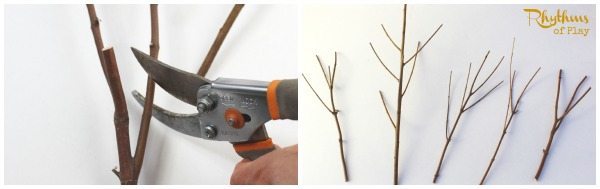
2. Trim bare branches to look like small winter trees (optional):
- Use pruning shears to trim twigs and bare branches to look like small winter trees, as shown in the photograph below.
Related: Natural Materials for Pretend Play
3. Trim floral foam or mold old playdough (optional):
- There are a few ways to help the twig trees stand up in the winter wonderland fairy garden. Choose one of the optional methods below if you’d like to add twig trees to your garden. Otherwise, proceed to the next step.
- Trim blocks of floral foam to fit along the bottom back of the tray or a corner.
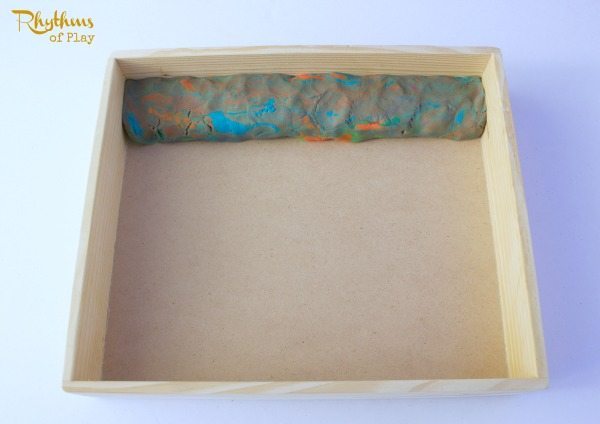
- Alternatively, roll 2-4 cups of old playdough into a giant fat worm the length of the wooden tray, as shown in the photographs.
- In other words, either mold dried-up playdough or floral foam into the back of the tray lengthwise, as shown in the photograph below. Or fit a triangle-shaped block of foam or Play-Doh into a corner.
Related: Tree Stump Fairy Garden
4. Plant twig trees in the playdough or floral foam (optional):
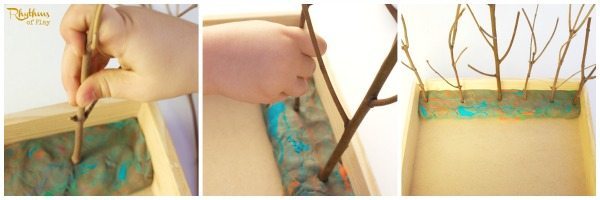
- Invite children to place twigs or trees by hand directly into the floral foam or playdough.
- Press them straight down to the bottom of the tray so they stand upright as shown in the photo tutorial below.
- This is an excellent craft activity for developing hand-eye coordination.
5. Add the sensory play filler material of choice to the wooden tray:
- As mentioned in the supplies, you can use several different types of sensory play materials to fill the tray: Epsom salts, table salt, white play sand, white rice, cotton balls, white fabric scraps, torn, cut, or shredded paper, and more.
- Epsom salts are shown in the winter fairy garden in the photographs, but each of these fillers is an excellent ingredient for sensory play.
- Please read the information about using Epsom salts as a sensory play toy. You can find these sensory play tips for kids below this step-by-step project tutorial if you are curious to learn more.
- My daughter loved the Epsom Salts in this winter fairy garden so much that I caught her playing with her feet in the tray!
6. Invite children to decorate the twig winter trees with pony beads (optional):
- Children can continue this fun activity once the winter fairy garden is complete. In other words, once decorated, show children how to take the pony beads off the twig trees. Then, invite toddlers, preschoolers, and kindergarteners to decorate them again and again, to help develop their hand-eye coordination and fine motor skills.
- I keep a small bowl of mixed blue, white, and translucent clear pony beads near our small fairy winter wonderland for my daughter to decorate the trees. You can see her placing pony beads on the winter trees in the photo below.
- The pony beads often end up in the snow, where they look just as lovely as sparkling pops of color here and there.
- They also add bulk and texture to the Epsom salt or sand when you run your hands through it.
- Please note: Pony Beads are not recommended for children under three years of age to play with.
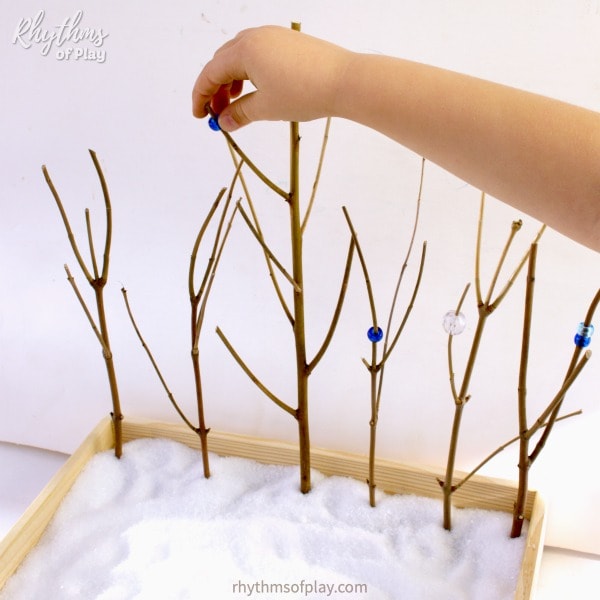
7. Create a winter wonderland fairy garden scene with winter figurines and characters of your choice:
- Add winter characters, figurines, and winter elements of your choice to the winter play garden.
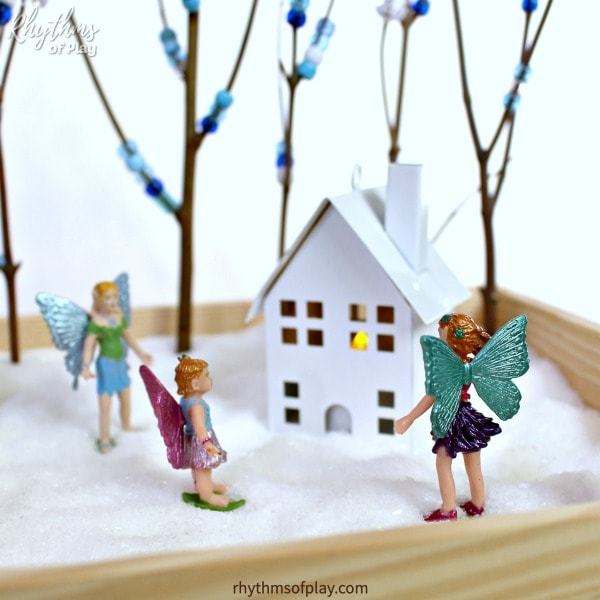
- Place fairy toys, woodland animals, Frozen movie figurines, homemade snowman crafts, rhinestone pinecones, a fairy house, or any other winter-themed figures and figures into the fairy winter wonderland small world as shown in the photograph below.
- Put a flameless tea candle into the fairy house when children will not be playing with it, if desired.
- Or make fairy house crafts to include in your DIY winter fairy garden.
- A few other winter fairy garden figurines and accessory suggestions are in the craft supply section above.
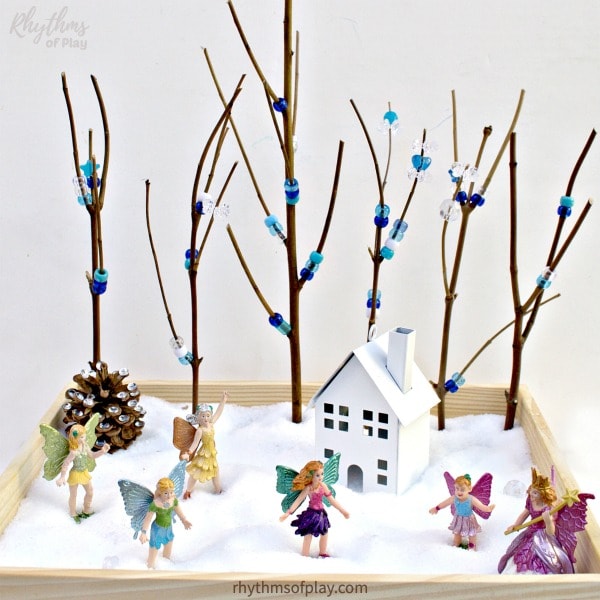
8. Invite children to play with the winter fairy garden small world:
- This small-world fairy winter wonderland is fun to put together and provides hours of pretend play.
- Playing with it is an excellent way for children to develop fine motor, sensory, and literacy skills.
- Unlike most DIY fairy gardens, this winter wonderland small world does not require live plants or soil.
- Instead, invite children to decorate winter trees with pony beads and play in the sparkling white play sand or Epsom salt snow!
- Make a winter-themed small world with your child that includes their favorite winter toys for even more fun!
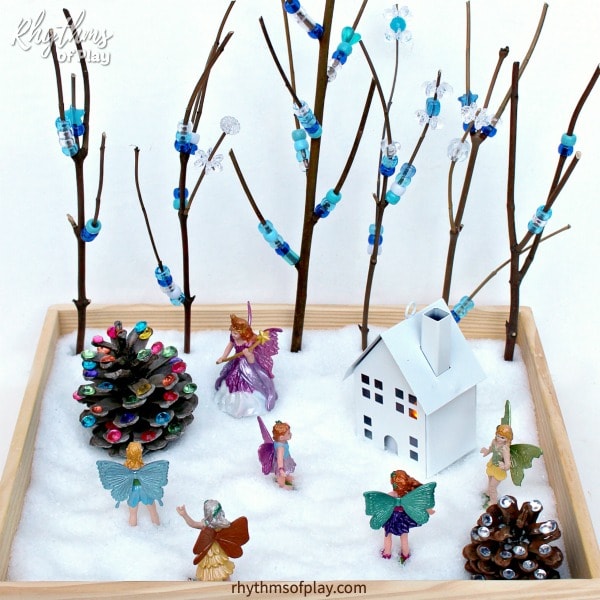
DIY Small World Imaginative and Sensory Activities for Kids:
A table-top winter wonderland fairy garden is more than just a whimsical craft and DIY project. When the garden is complete, place it in a high-traffic area of the home or classroom, where there is usually supervision, so kids will want to return to it repeatedly. As kids scoop, place, and move tiny pieces around during play, they develop strong fingers and steady hands.
Having a small-world winter wonderland on display invites children to slow down and play. The magic isn’t in how it looks, but in how it encourages children to wonder, imagine, and play in their own way. As children interact with snowy, ice-covered trees, fairy friends, woodland animals, clay snowmen, or Frozen figurines, their imaginations expand with the sounds of dramatic play.
Add elements and pieces to it as desired, and change the seasons whenever you like. Adding different types of materials to the play garden, such as sand, salt, rice, Epsom salts, shredded paper, or cotton balls, transforms it into an immersive sensory experience. Simply switch out ingredients to change it up if desired. Use this tutorial to learn how to make a tabletop beach fairy garden. You can make it in the same tray or container, or use a different one.
This type of small-world play meets kids where they are. It’s open-ended, calming, and creative. Best of all, there’s no right or wrong way to play. Some days, this miniature tabletop garden invites a quiet sensory exploration. Other days, it turns into an imaginative play scene. Both are equally valuable for children’s social, emotional, and mental growth and development. You might also enjoy learning about natural materials that can be used as open-ended toys.
The Day I Caught My Daughter with Her Feet in the Sensory Play Garden:
My daughter enjoys playing with Epsom Salts so much that I caught her with her bare feet in the winter fairy garden, not once but several times. From nearby, I kept a watchful eye on her playing when she carefully put the tray on the floor. I silently wondered what she was doing when, all of a sudden, to my surprise, she put her bare feet right into it.
I did my best to stifle a small giggle as she slowly and gently moved her feet around in it. After all, I didn’t want to embarrass her or make her feel like she had done anything wrong. I really wanted to get my camera so I could post it to show you, but I didn’t dare move. Since she was very careful in her movements, and I understand the benefits of barefoot sensory play, I allowed her to continue without disturbing her. Or letting her know that I was watching. However, it was a pretty funny sight. Thankfully, she didn’t make too much of a mess! I hope your children or students enjoy playing with this sensory garden as much as my daughter does!
Are Epsom Salts Safe for Children to Play with?
Epsom salts are generally considered safe for sensory play toys and activities when used in moderation. Alternatively, table salt, bright white play sand, white rice, fabric scraps, cotton balls, or torn, cut, or shredded paper, and other similar materials can be used to make this sensory play toy. No matter what ingredient you use, it’s best to supervise children during sensory play activities. It’s also vital to keep a few other safety considerations in mind.
Please take a moment to review the remaining safety tips below before offering this winter sensory play activity with Epsom Salts to toddlers, preschoolers, kindergartners, or elementary-aged children. Follow the safety recommendations below. (Or, use the sparkling white play sand instead of Epsom Salts to make the snow for this winter wonderland fairy garden.)
- Allergies and Sensitivities: It’s rare, but some individuals may be sensitive or allergic to Epsom salts. Before using them in sensory play, it’s a good idea to perform a patch test on a small area of skin to check for adverse reactions.
- Ingestion Risk: Epsom salts should not be ingested by children, as they can have a laxative effect when taken orally. It is not dangerous to consume them in small amounts. They are not toxic unless taken in excess. However, kids should be prevented from putting them in their mouths during sensory play. Epsom salts contain an active compound called magnesium sulfate, which is commonly used as a laxative.
- Eye Contact: Avoid getting Epsom salts in the eyes, as they can irritate the eyes. If contact occurs, rinse the eyes with water immediately. They are dry, so this doesn’t usually pose a problem unless someone throws them around aggressively.
- You may want to consider having children wear safety glasses when playing with them if their play is particularly vigorous.
- Cleanup: After sensory play, thoroughly clean and remove any residual Epsom salts from children’s hands and bodies to prevent accidental ingestion or contact with eyes.
Fairy Garden Ideas:
Winter Activities:
- Winter Solstice Celebration Ideas
- Best Winter Art Projects for Kids
- Winter Bucket List of Fun Activities
- Stone Advent Spiral
DIY Toys for Kids:
- Rainbow Colored Wooden Blocks
- DIY Waldorf Square
- Rainbow Peg Dolls
- Best Building Blocks for Kids
- Calm Down Sensory Bottles 1o1
- DIY Ringer Game



Hi there! Is there another option for the ‘snow’ other than Epsom salts? I run a class for 3-year-olds and I am not sure it is safe to leave this out and about in the home. Please let me know!
Thanks so much,
Amna
Great question!
Epson salts are often used as a magnesium supplement or laxative, so it’s safe to consume–but not in excess. If you think any children will eat it, I wouldn’t leave it out where they can access it and would recommend that you put it away when not under an adult’s supervision.
Another option for snow would be salt, but that might be just as problematic for young children.