
Please be aware of the risks involved in balancing rocks and stacking stones. Piles of rocks can harm the environment, cause erosion, and endanger wildlife, including threatened species. Although these rock activities are prohibited or illegal in many areas, safer alternatives are available.
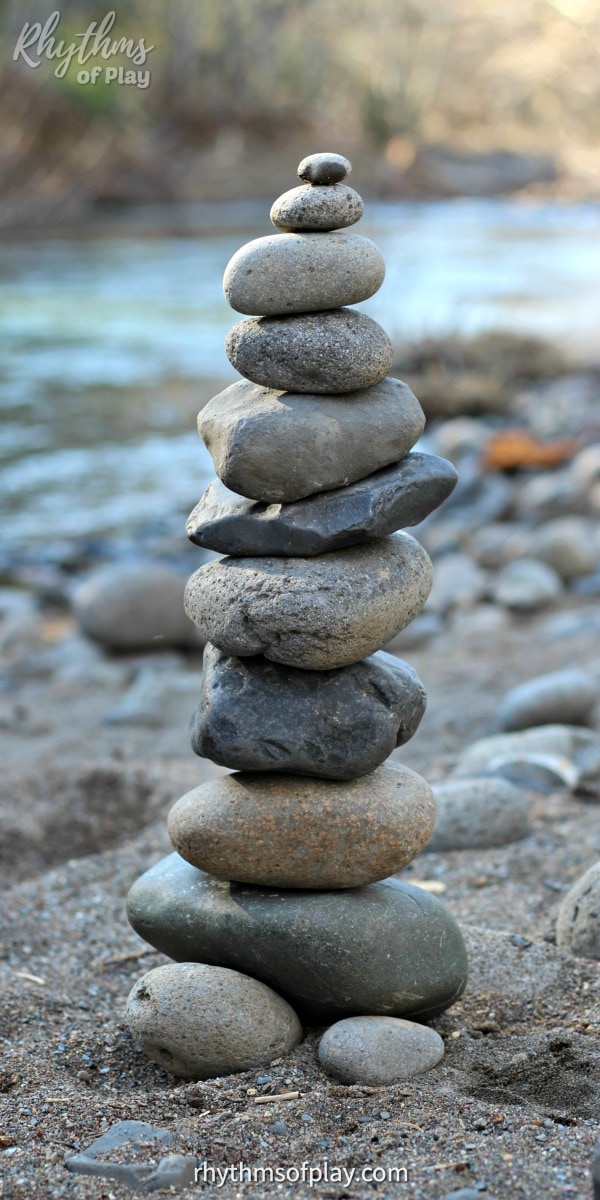
Rock balancing, also known as stone stacking, stone building, stone balancing, and stacking stones, is the art of balancing or stacking rocks without the use of adhesives or supports. It involves carefully placing stones on top of each other, often in seemingly impossible positions, using only gravity and tactile sensitivity to create beautiful land art sculptures or stone cairns.
These balancing rock piles, also known as stone or rock cairns, are a type of stone sculpture or land art. Evidence of cairn-building and rock-balancing art pre-dates the bible and can be found all over the world. Stacking stones is an ancient method of marking a trail or a burial site, but today, people often build them as a form of natural art. Unfortunately, this practice has detrimental effects on the natural world and environment and is discouraged, if not illegal, in many areas. Read on to learn more. You might also enjoy reading about the art and science of skipping stones.
The Problem with Balancing Rocks: Stacking Stones Can Be Harmful to the Environment
While practitioners view rock balancing as a form of mindfulness or even spiritual expression that requires focus, patience, and an intuitive sense of physics, from minimalist single-stone arrangements to complex sculptures with multiple rocks interlocked as arches or towers, rock balancing can be a meaningful way to connect with the natural world. However, there are several issues with this outdoor activity.
Despite its artistic appeal, rock stacking is increasingly discouraged or outright banned in many natural areas, particularly within protected lands such as natural parks or wilderness preserves. One of the main reasons for this is environmental disturbance. Although stacked stones look stunning, environmentalists and conservationists warn that moving rocks or stacking piles of rock in the wrong place can unintentionally cause erosion and damage fragile ecosystems.
For example, falling piles of rocks can damage the homes of insects, reptiles, aquatic creatures, and harm small animals, as well as many other types of wildlife. Please carefully dismantle any balanced stone structures you make in the wild before leaving. Or, better yet, keep your artistic rock cairn creations and gravity-defying arches in your back or front yard–thank you!
First published on March 1, 2017, this post is regularly updated to enhance its content and provide current information on stone balancing. Please scroll down to learn more about stacking stones and the reasons this activity is harmful to wildlife and the environment, as well as a few modern-day alternatives to stacking them in nature. Another rock activity you can try is Sorting and Classifying Rocks.
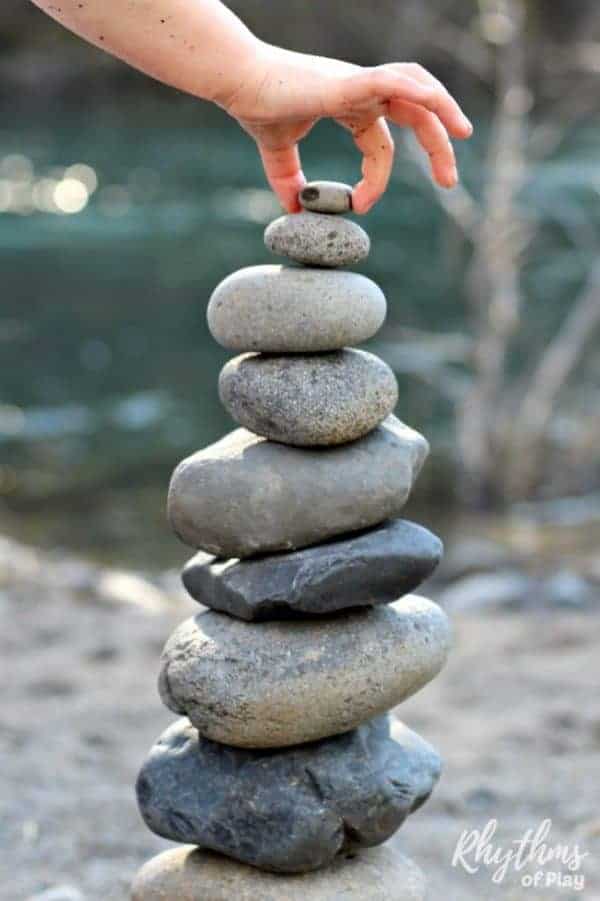
What does a pile of stacked rocks symbolize or mean?
The art of balancing stones has origins across several cultures. Rocks were stacked and placed on top of each other to create stone cairns for different reasons by many native and indigenous people over time. In modern times, many people stack stones to relax, relieve stress, meditate, create, play, and learn. However, please be aware of the numerous dangers associated with this rock activity. Scroll down to learn more.
Related: 20 Ways to Play Outside in the Rain
What is a Cairn?
“Cairn” is a Gaelic term meaning “heap of stones.” Wikipedia describes a cairn as a stack or pile of stones, often in a conical form. (source) Therefore, a stone cairn is a human-made pile of balancing stones stacked on top of each other.
What does a cairn symbolize?
Stone cairns have been created for many reasons over the years. They are used for navigation, marking trails, gravesites, caches of food supplies, and other important geological features. Rock cairns are also constructed for ceremonial purposes. One of the most ancient known uses for these rock piles was to measure the sun for solstice and equinox celebrations.
Indigenous people also built stone cairns to mark landmarks, trails, or memorials. However, modern-day stacks of stones and rock piles left carelessly behind are considered by many to be a dangerous form of graffiti. Today, creating these stone structures is often viewed as vandalism by many conservationists, national and state park officials, park rangers, and nature lovers.
Equally disheartening is the destruction or dismantling of long-standing carin landmarks created for navigation in the past, such as the historical Bates Cairns landmarks. Please scroll down to learn several compelling reasons why you shouldn’t build rock stacks in the wild and other natural areas, or dismantle those that are there.
Please don’t stack rocks in Nature or Dismantle Landmarks:
Rock balancing, also known as stone stacking, should not be encouraged in many natural locations and wilderness areas. Stacking stones can disrupt the ecosystem and natural habitats, leading to environmental erosion and the extinction of native plants, aquatic macroinvertebrates, small mammals, and other endangered species.
Many people, such as John Hourston and several other environmentalists, want to see nature and other public lands in their undisturbed state and consider modern stone stacks to be graffiti, as well as the building of rock cairns in the wild, to be a form of vandalism. “People are doing it with no education of the environment, so they don’t know what site they’re in – whether the site has any wildlife significance or historical significance,” John Hourston told BBC NEWS.
Is Rock Stacking Vandalism? Is Balancing Stones Graffiti or Art?
John Hourston, the founder of the small environmental organization called the Blue Planet Society, and many others believe that stone staking is a terrible trend with devastating consequences that must be stopped. Hourston first noticed the problem after visiting remote beaches in Orkney, Scotland, and warned others of the detrimental effects of building rock cairns. “Almost every beach we visited in Orkney was spoiled by people leaving their mark and taking a photo for social media. It’s a worrying trend. It ruins the scenery and the environment.” (Blue Planet Society Twitter Post)
Stone Stacking is Discouraged, Banned, and Illegal in Many Natural Areas:
Stone stacking is discouraged (if not yet illegal) in national parks and many other countries and regions in the world, so please beware. In fact, these stone structures pose a significant problem in Acadia National Park, Zion National Park, Scotland, Aruba, and many other natural areas and parks.
On the island of Aruba, the art of balancing rocks and stacking stones is discouraged, and there have been numerous attempts to ban the activity entirely. In the United States, the National Park Service, its park rangers, and other volunteers strictly prohibit hikers and park visitors from disturbing or relocating any rocks or other natural features within national parks or backcountry areas.
Every park, nature reserve, and wild space has different rules about Cairns and whether or not you can build your own to mark trails. It’s best to check the park’s website or call the park ranger’s office to learn more about the rules before you go. For example, as previously mentioned, it’s against state park rules in Acadia National Park to stack stones randomly or to add to, alter, or dismantle the Bates Cairns.
Stacks of Stones Can Harm Ecosystems, Disrupt Natural Habitats, and Cause Erosion:
Moving stones, or leaving balanced rocks behind, can pose a threat to the natural environment. Overturning stones in streambeds and rivers can kill fish eggs or disturb insect larvae that form the base of the food chain. On land, rocks often shelter lichens, moss, and tiny organisms that depend on undisturbed microhabitats.
Stacking stones can disrupt the ecosystem and lead to environmental erosion and degradation of natural habitats in several other devastating ways. Leaving piles of rocks in natural areas endangers crucial wildlife habitats and leads to the extinction of native plants, macroinvertebrates, small mammals, and other endangered wildlife species, including insects, salamanders, and aquatic invertebrates. Stacking rocks can also endanger critical wildlife habitats of aquatic macroinvertebrates in freshwater ecosystems in specific areas of the river (and other waterways) and be detrimental to overall water quality.
Moreover, popular rock-stacking sites often face erosion and overuse, especially when large groups gather rocks and clear areas to build sculptures. When considering this activity, please respect the natural environment and be mindful of the habitats of endangered animals, as well as the health of local stream ecosystems. It’s not natural to have an entire area full of rock piles and stone stacks everywhere. Many people who visit these natural locations don’t want to see this type of vandalism or graffiti when they head out on hikes in the natural world, regardless of how beautiful they may be.
Please Leave Trail Markers, Landmarks, and Ancient or Sacred Sites As They Are:
Please leave rocks in the place where you find them so they can continue to serve as directional landmarks. In many wilderness areas and parks across the world, official cairns act as navigation markers on unmarked or confusing trails. The unauthorized building or dismantling of rock cairns creates a problem for hikers who rely on these rock piles as landmarks. Unauthorized stacks of stones and displaced or destroyed rock cairns can mislead hikers. When visitors create stacks that look like official signs or destroy official trail markers, they risk guiding hikers off course, leading to confusion, accidents, or rescues.
For example, the Bates Cairns at Acadia National Park in Maine serve as directional guides for visitors. They also add historical interest to the hiking trails. A Bates Cairn is a specific type of unique stone stack originally constructed by Waldron Bates as trail markers in Acadia National Park. Unfortunately, some people unknowingly add to or dismantle this famous landmark. Consequently, park rangers are responsible for removing unauthorized cairns and rebuilding landmarks to maintain trail safety and keep hikers on the correct path in Acadia National Park, as well as in other parks and various wilderness areas.
Thus, tampering with navigational markers, such as the Bates cairns, or building your own rock piles on, around, or anywhere else in parks and wild spaces, can cause harm to nature, people who rely on them, and history in Acadia National Park and many other locations. It’s also crucial to leave rocks and stones in ancient or sacred sites as they lie. Please don’t move or disturb structures in these settings in any way, for any reason.
Leave No Trace:
Please follow Leave No Trace principles by leaving rocks in the place you find them. Rock balancing causes greater human impact, which can be easily prevented. Nature lovers and conservationists argue that while these structures might seem harmless or temporary, they contribute to the trend of altering wild places for human enjoyment. The essence of the “Leave No Trace” philosophy is to enjoy natural landscapes without changing or altering them.
Even when a rock formation breaks apart naturally, the landscape can be harmed, sometimes permanently. Therefore, artists and hikers need to be aware of local rules and environmental sensitivity. When done responsibly and in suitable settings, rock balancing can be a beautiful way to interact with nature. However, in protected or fragile areas, it is best to practice restraint and exercise respect when guiding creative impulses.
My family thinks that stacking stones in the backyard is a much better idea than stacking them out in the wild. If you choose to balance rocks in a natural setting, such as on a beach or creek shore, as we occasionally do on visits to our favorite locations that are already disturbed by excessive human activity, please select rocks that are not located in sensitive habitats. Carefully dismantle any stone sculptures before leaving the area. Thank you for your awareness and for honoring the adage, “Leave no trace.” You might also enjoy Caring for the Earth: Green Living Tips to Share with Children.
Choosing the Right Location for Balancing Rocks:
A stable foundation is essential. The surface beneath your sculpture must support its weight and resist movement caused by wind, water, or vibrations. Look for flat, even ground, such as bedrock, compacted soil or sand, or larger stable stones. It’s also best to conduct this STEAM activity in a location that does not endanger any small creatures or damage the environment in any way. Please be aware and stack stones with care. Avoid staking rocks near delicate ecosystems, such as those found near tidepools or river or creek beds where fish spawn or other small creatures inhabit.
Building stone cairns upon the shores of beaches, rivers, and creeks, where there are plenty of smooth stones, is common but not always advised or welcomed. Disturbing the ecosystem by moving rocks or leaving mounds of stones behind can be hazardous to the natural landscape and its inhabitants. For this reason, many people and conservation groups consider it a form of graffiti and vandalism. Please heed the warnings of scientists and conservationists and consider the suggestions discussed throughout this informative article.
Best Places to Stack Rocks:
One of the best places to engage in this rock activity is to keep a bucket of river rocks near the sandbox or a sand and water table, as an open invitation for preschoolers, kindergarteners, and elementary-aged children to balance stones. Building rock stacks in the backyard or schoolyard, rather than in the natural landscape, is much better for native plants, small mammals, and the environment. Besides, children of all ages can make all kinds of fun structures with them just as easily as they can in the wild.
Today, you can also protect natural habitats by stacking rocks with specially designed building blocks indoors! As you will notice in the rock stacking supplies in the next section, there are several types of rock building block toys for kids (and adults) that make rock balancing and stacking stones even safer for everyone to enjoy. These simple toys make rock balancing an easy STEAM activity that children and adults can enjoy at home or in school anytime.
Rock Balancing Supplies and Tools:
- It’s best to use a variety of rocks and stones in different shapes, sizes, weights, and textures to create stacks and balanced stone structures. A few options follow:
- River rocks.
- Beach stones.
- Pile of small boulders.
- Set of rock balancing building blocks (scroll down to the next section for several more creative options you can use).
- Different sizes of flat rocks.
- A suitable space or location to create stone sculptures without harming the surrounding ecosystem or natural inhabitants, such as a sandbox in your backyard or on a school playground.
- Usually, you only need your hands, but some practitioners use some of the following tools:
- Brushes to clear sand or dust for a better grip.
- Wedges, such as small rocks or twigs, for stabilization.
- Water to clean rocks and slippery surfaces.
Stone Stacking Blocks:
Here’s a great way to stack stones in a safe manner that won’t harm the environment or the natural landscape. The rock balancing craze, along with the numerous problems associated with balancing rocks in natural environments, has led to the creation of stone stacking blocks for children. Wood balancing stones and stone stacking blocks are a fun alternative for children (and adults) to hone their rock-balancing skills without disrupting natural habitats or endangering animals and other endangered creatures in the wild.
Rock Balancing Blocks for Kids and Adults:
Here are a few natural stacking toy options perfect for rock stacking and balancing activities:
- Panda Brothers Natural Wooden Balancing Stones
- Wooden Stacking Rocks Building Blocks
- Eco-Stacking Toy Rocks made of Pine Wood
- Multi-Colored Extra-Large Wooden Sorting and Stacking Toys
- Wooden Toy Stacking Rocks
How to Balance Stones and Rocks:
Stacking stones to build cairns or balancing rocks in various formations requires a combination of physical skill, patience, and an understanding of natural forces, such as gravity, center of mass, and friction. Stone stackers should have a sufficient supply of rocks in various sizes, shapes, and weights nearby to create balanced stone sculptures before they begin. Please avoid lifting large or heavy rocks alone, refrain from moving rocks in ancient or sacred sites, and leave cairns and other historical landmarks undisturbed when attempting this activity. The step-by-step instructions below will guide you through creating rock stacks, building cairns, and creatively balancing stones:
1. Start with a solid Foundation:
- To stack stones and balance rock piles, it is crucial to start with a solid foundation.
- Begin with a firm base such as a large stone, boulder, stump, or compacted soil or sand.
- Place the first rock on the selected base to begin building the stack or balanced stone structure.
2. Selecting Stones or Stacking Blocks:
- Size and weight: Larger and heavier stones help create a sturdy base, while smaller, lighter rocks are better for upper sections or wedging in between rocks to provide support.
- Shape: Flatter stones are easier to stack, while irregularly shaped stones can be more challenging to balance.
- Texture: Rough stones provide more grip, making them easier to balance than smooth slippery ones.
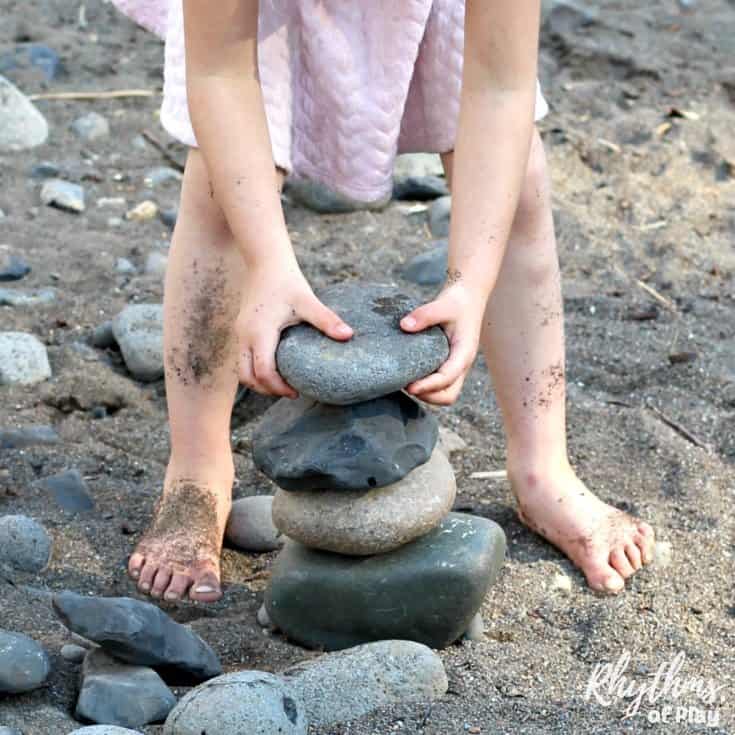
3. Building a Stone Stack or Cairn:
- Cains are usually pyramid-shaped or conical. Follow the steps below to create this type of stone structure:
- Start with a wide, flat base stone, as shown in the photo below.
- Gradually add stones, each slightly smaller than the one below it.
- Ensure each layer is stable before adding the next.
- Use small pebbles as wedges to stabilize uneven rocks.
- Cap the top with a pointed or decorative stone for aesthetic appeal (optional).
- Please don’t build stacks where a collapse could harm someone.
4. Balancing Rocks to Create Artistic Sculptures:
Another fun way to stack rocks is to try to counterbalance them to create arches and other stone structures that defy gravity. To make these kinds of structures, follow the steps below:
- These types of rock sculptures defy gravity and often seem to be balancing in impossible ways. There are a few ways to balance these types of stone structures:
- Counterbalance: Two or more rocks support each other in place.
- Point balance: A rock resting on a tiny contact point.
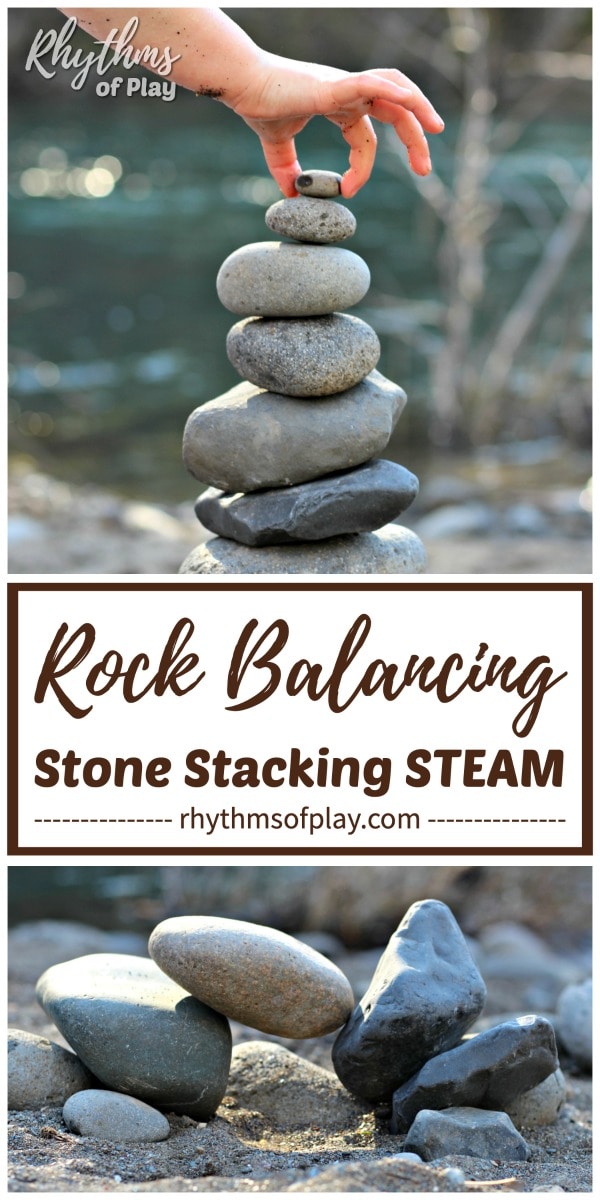
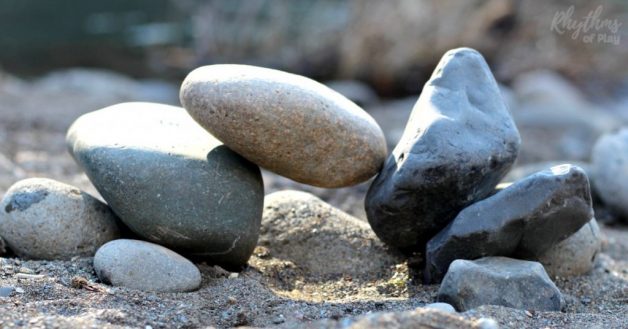
- Arch or Bridge balance: Multiple stones lean into each other to create an arch or bridge-like structure. (You can see an arch my daughter made in the photo below.)
- Feel the stone’s weight and its center of balance by gently rocking it in your hands.
- Test placement with small micro-adjustments to find where it “locks into place.”
- Find contact points. Even a tiny point of contact can stabilize a rock.
- Try using three points of contact, like a tripod, as a rule of thumb.
- Stack intuitively by letting gravity and the feel of the stones guide you, rather than symmetry.
- Take your time with this type of rock building activity. Some balances may take a few minutes, while others will take hours.
- Focus on your breathing and be patient with yourself if you attempt these types of structures.
- Be aware of your surroundings and environmental conditions. Wind or vibration can easily cause these delicate sculptures to collapse.
Related: Outdoor Activities for Kids
Building Balanced Stone Sculptures that Defy Gravity
As you gain experience and mastery, you can try more complex rock balancing by placing multiple stones into gravity-defying rock sculptures. However, please refrain from stacking stones in the wild. Instead, try balancing rocks in the safety of your own backyard, or on a school playground, where they can be easily dismantled before you leave.
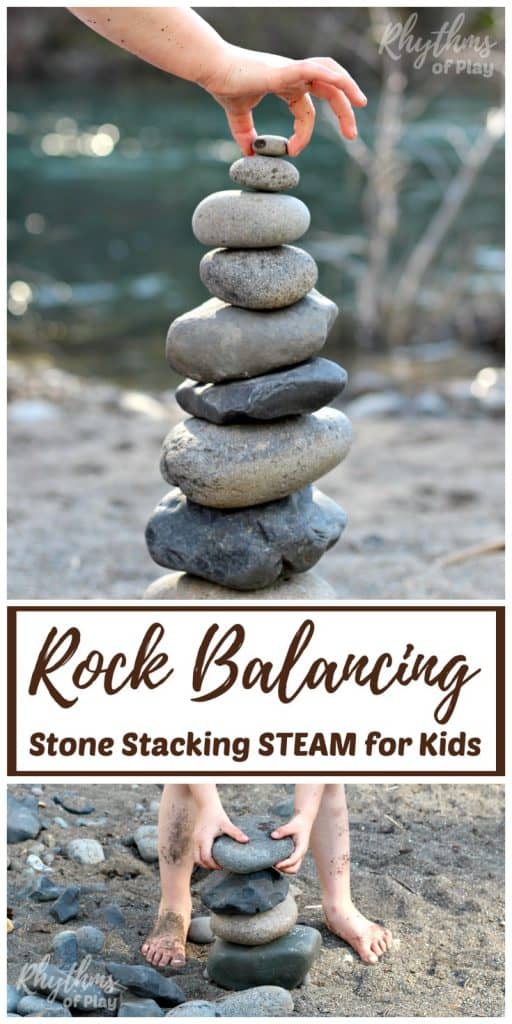
Encourage children to try building arches and other rock sculptures, like those found on the rock balancing artist Michal Grab’s website, Gravity Glue. Balancing rocks in this way creates a more advanced engineering challenge for kids and adults. The photo above shows a simple stone arch that my daughter made. Not bad for her first attempt!
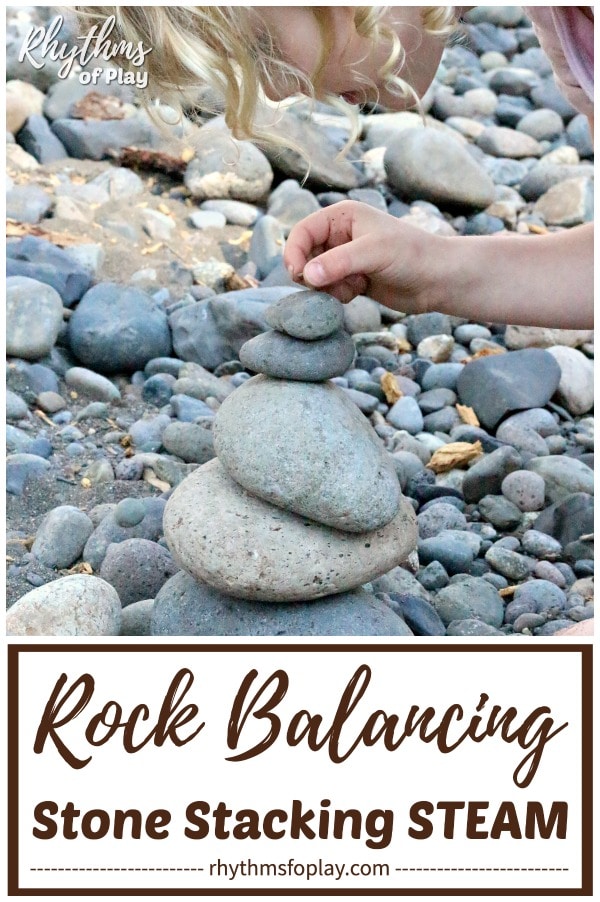
Stacking rocks helps children and adults improve their ability to focus and assists with the development of patience. As you continue to gain experience and master stacking stones and the stacking of rocks, you can try more complex forms of rock balancing. Place multiple rocks on top of each other to create gravity-defying stone sculptures.
Related: Best Flower Art Projects
The Art of Stacking Stones to Create Balanced Rock Art:
Here’s an easy way to begin stone balancing. Using the directions above, show your kids how to balance one rock on top of the other. Then stack them into a larger human-made pile of stones that are balanced upon the earth. While you build the stone cairn, notice how the difficulty changes as several rocks are placed upon one another.
Next, invite children to stack stones of different shapes and sizes. Demonstrate how to balance and stack them one on top of the other, and then allow the kids to give it a go. Allow your children to watch you and figure it out on their own. Feel free to offer hints and guides when needed, or sit back and enjoy watching them figure it out on their own. Children will eventually learn through trial and error that they must begin with a strong foundation. They will also learn about gravity and how to build using the power of learning through play.
Related: How to Skip Rocks: The Art and Science of Stone Skipping
Stacking Stones: A STEAM Rock Activity for Kids
Creating stacked stone art is a great STEAM activity for kids. Stacking stones requires children to defy gravity and develop their engineering skills to create balanced stone sculptures. Balancing rocks on top of each other also helps children develop hand-eye coordination. It takes a steady hand to be able to stack rocks higher and higher!
STEAM activities are STEM (Science, Technology, Engineering, and Math) activities that include an artistic component. Adding art to STEM activities provides children with the opportunity to use their imagination and develop their creativity.
Not all children love science and math; however, adding art into the mix can help bring academics to life. For example, stone stacking is a STEAM activity because it combines counting, the science of gravity, basic engineering, and the art of architecture to make learning more fun!
Ready for the good news? You don’t have to teach your children anything other than to invite them to try stacking rocks. Feel free to ask simple questions to help your children learn, or sit back to allow space for them to learn and discover independently. One of the best things we can do as parents and educators is to enable our children to uncover the answers to their own questions. When we can encourage children to search for solutions to the questions they pose, the learning opportunities are endless!
Related: Human Sundial Shadow Science Experiment
Balancing Rocks as a Meditative Activity:
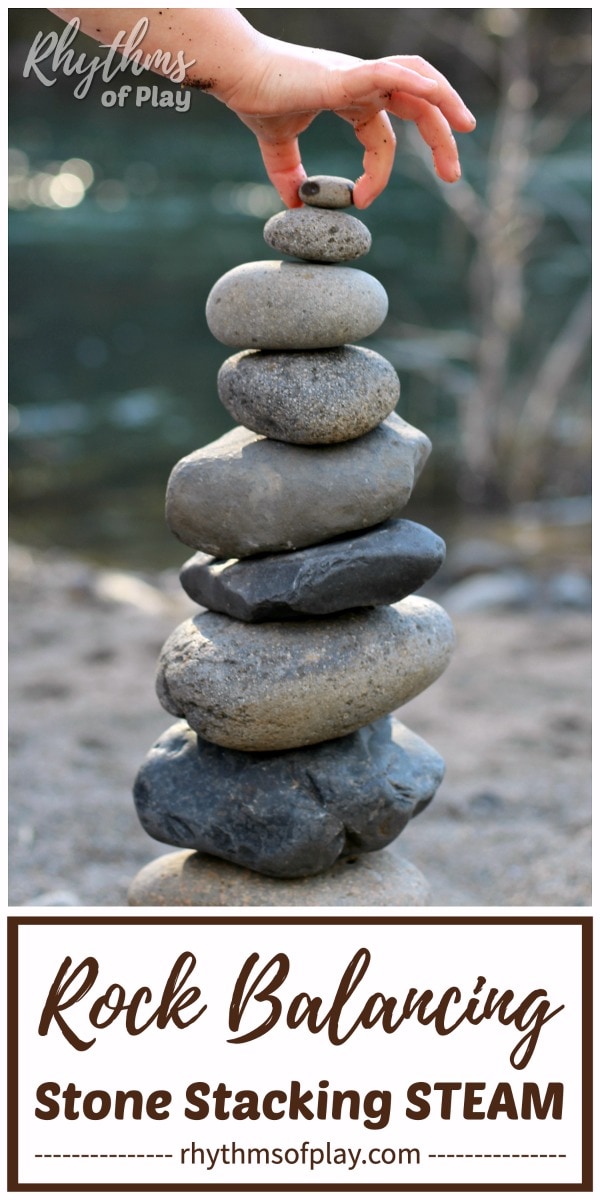
A few rock-balancing artists create stone sculptures as a form of meditation. This art form emphasizes patience, presence, and harmony with the natural world. As you practice stacking stones by balancing rocks on each other, allow yourself to enter into communion with the flow of nature and the natural world surrounding you.
Today, Buddhists, yogis, and stone-stacking artists around the world practice rock balancing as a meditative art form, much like Tibetan monks create sand mandalas. Michael Grab is a well-known rock-balancing artist who began balancing rocks via a “happy accident” in 2008. He describes balancing stones as a meditative art with spiritual meaning. He writes,
I quickly noticed the therapeutic/transformative effects that balancing and working with nature had on myself and others; in an artistic sense, but also nurturing something uniquely human, inspiring a sense of magic and peace, luring awareness out of the mind and into the moment — ultimately cultivating a meditative presence. (source)
Related: Fun and Educational Shadow Activities
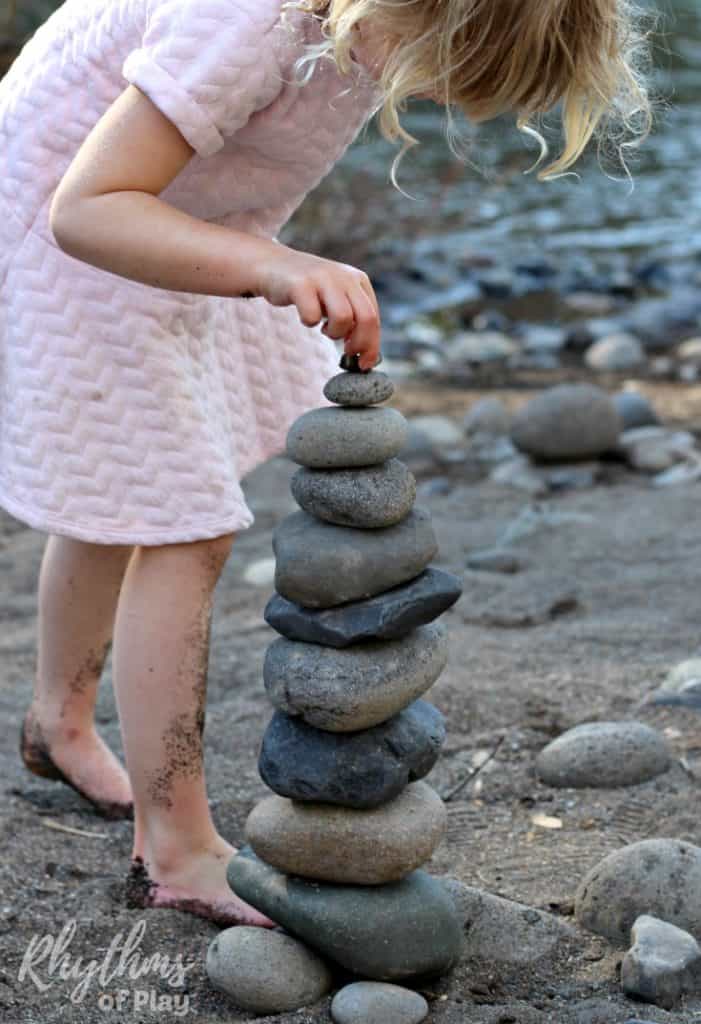
Rock Balancing Activity for Kids or Adults:
Rock balancing is the art of stacking stones on top of one another to create land art without the use of adhesives or any other means of support. Balancing rocks, also known as stone stacking, is a calming art form for many; however, stacking stones can harm fragile ecosystems. Please show respect for the natural world when attempting this rock activity.
To keep natural habitats and the environment safe from the damaging effects of this rock activity, please practice balancing rocks in the safety of your own yard. Invite children to balance and stack rocks of different sizes in various positions to help them improve their ability to focus and create stone sculptures as part of a fun STEAM challenge and activity for kids.
Please supervise children and refrain from building stacks that could potentially collapse and harm someone. Explore this collection of outdoor activities for kids to discover even more fun, hands-on learning experiences.
Learn more about Nell Regan Kartychok, author and photographer of this informative rock balancing article HERE, and Rhythms of Play HERE!
Fun Rock Activities for Kids:
- Sorting and Classifying Rocks
- How to Paint Rocks
- Fairy House Painted Rocks
- Stone and Shell Owl Craft
- How to Skip Rocks: The Art and Science of Stone Skipping
Educational STEAM Activities for Kids:
Another fun outdoor STEAM activity for kids is Shadow Art. You may also like Sorting and Classifying Rocks. Or, explore the STEAM ideas below:
- Rainbow Rainy Day Art Kids STEAM
- Shadow Art Outdoor STEAM for Kids
- Rainbow Science STEAM Activities for Kids
- Flying Kites with Kids





I hope you teach children to dismantle the rock pilings once they are done.
Regards
Yes, we do 🙂
No! Rock stacking in our National Parks, local parks, and nature areas is the newest form of graffiti! Cairns have no place in these areas. No one goes to these areas to see, what you call, “art”. The only art you go to the those places to see is the wonders of God, Mother Nature. or whatever you call it. This should NOT BE ENCOURAGED!!
Yes, Camille, I have written about this concern in the article. Did you take the time to read through it before you decided to get angry about it? You might want to take the time to respond to what I have written instead. I’m always open to an INFORMED debate. Thank you!
Some beautiful photos. I’ve seen a rock artist before with my kids and they were fascinated. I think it gives them a great appreciation of nature around them and how it can be used. It can lead to some great discussions about how rocks are formed too.
I agree. My daughter has always been interested in rocks. They never fail to entertain and teach!
After reading your text and clearly revealed intent, I’m SURE I want at least a back-and-forth via email with you.
Last summer I started stacking rocks at a well-traveled site within the largest of Ohio’s municipal parks.
While enacting the `performance art’ part of rock stacking children saw and sometimes stopped and participated as per their first amendment rights to freedom of eXpression
At one point in time there were perhaps 6 to 8 children all stacking in close proximity to ME stacking … monkey see, monkey do … and lovin’ it.
I’ve got some pics I’m willing to send as email attachments.
While looking at your pics, I found myself AWARE that there are few things I could bring to your attention which your pics reveal you seem un(der)aware and I’m willing to share
Piaget’s stages of development might enter into which concepts can be introduced to those with concrete operations as a development stage, etc.
I incidentally was introduced to beam analysis in a course in my Mech Tech program.
There are precepts and concepts known to mechanical engineers and civil engineers which can be introduced to children AS children which might be serve as foundational during later educational opportunities.
I look forward to sharing some pics and exchanging an email or two.
Warmest Regards,
Gene Sullivan
Hello Gene,
Thank you for expressing your thoughts. So much of what children do in their formative years can have positive benefits well into adulthood. You are welcome to write me at nell @ rhythmsofplay .com. I’d love to see some pictures!
Rock stacking is actually bad for nature, as the animals that call the rock home underneath get squished. In some streams there are endangered salamanders that are being squished due to the popularity of this art. Rock stacking is best not to be taught.
Yes, Wes, it is true that there are many dangers and laws when it comes to balancing rocks, and if you read the article in its entirety you would know that I discuss a few of the problems and give alternative recommendations. There are many rock stacking toys made today that make it easy to stack rocks safely–give them a try!
A hitherto undiscovered variable force, other than gravity, must be balancing the impossible arrangements of stacked stones.
Boghos L. Artinian
Very wise Boghos, thank you!
Stack all the res u lik hy because you can
Hello DaVe, would you care to elaborate on your comment? I’m not sure what you are trying to say.