
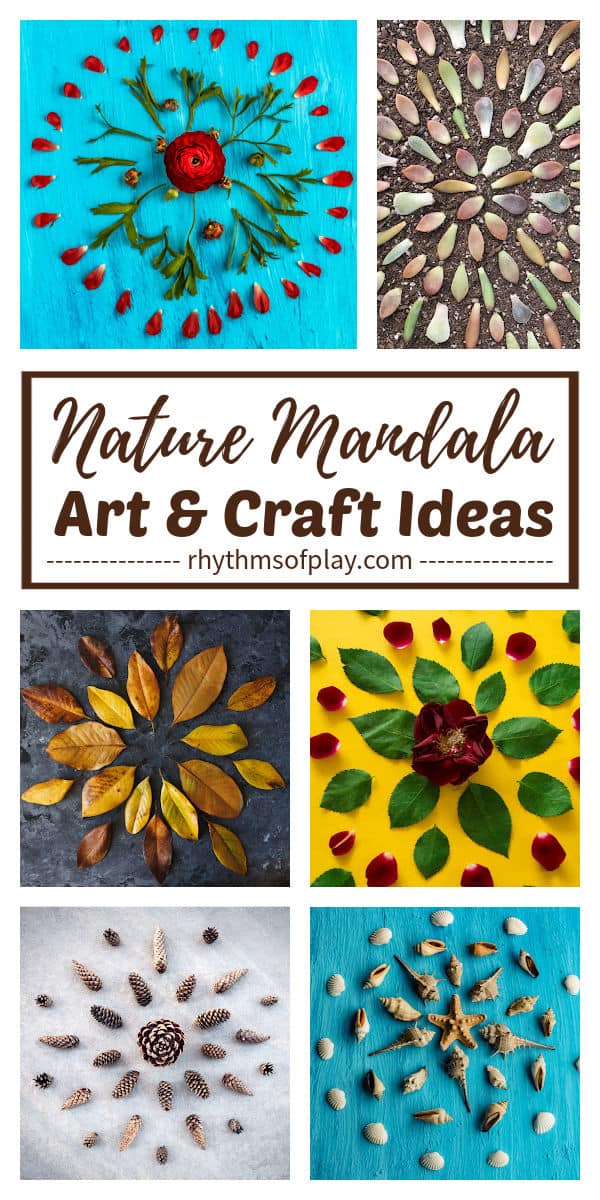
Making a nature mandala is a craft, an educational STEAM activity, and a transformational spiritual practice that can benefit psycho-emotional health through a fun, easy process art activity. Who knew crafting mandalas could offer so many benefits for kids and adults?
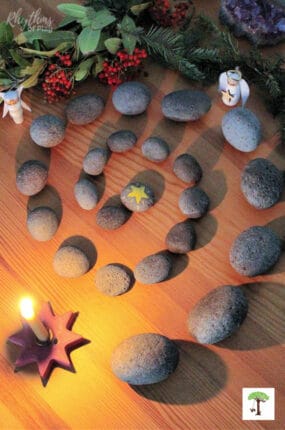
What is a nature mandala? A nature mandala is made with treasures found in the natural world. Crafting intricate mandalas is a fantastic therapeutic, spiritual, and educational process art activity for kids and adults of all ages. Not only is making a nature mandala an excellent way for children and adults to explore basic geometry, science, artistic expression, and mindfulness, but it can also help them learn more about nature and engage with the great outdoors in one fun outdoor activity! You might also enjoy this list of nature crafts and art project ideas.
MAKING MANDALAS WITH NATURAL MATERIALS
Making nature mandala crafts provides a fantastic way for kids and adults to connect with nature and the universe surrounding us. Crafting with nature helps us connect with nature’s seasonal cycles and the natural rhythms of life. For example, the natural materials available for making a mandala vary from region to region and season to season, depending on the biome and climate where you create them. So, building them at different times throughout the year will provide several opportunities for children and adults of all ages to learn something new.
Creating mandalas can also help children explore basic math, science, and engineering concepts as they create a symmetrical work of art. This makes crafting nature mandalas a great outdoor STEAM activity for kids and adults. As a bonus, using natural materials to create these gorgeous, complex masterpieces only enhances their sensory and educational benefits.
The step-by-step project tutorial below first covers several FAQs (Frequently Asked Questions) about mandalas and how to craft them. Next, it teaches you how to make a nature mandala step by step and shares several natural arts and crafts ideas you can try in mandala shapes. First published June 6, 2023, this post about nature mandalas is regularly updated and republished to improve the content. Please scroll down to learn more about mandalas, read the step-by-step instructions for making nature mandalas, and explore the many benefits of creating them. You might also enjoy making nature sensory bottles and jars.
Natural Mandala Patterns in Nature:
Mandala patterns are prevalent in the natural world, showcasing the innate geometric harmony found in various organisms and natural phenomena. For example, the spiral shells of mollusks like the nautilus exhibit perfect logarithmic spirals reminiscent of classic mandala designs.
Likewise, spiderwebs display the innate creative nature of our eight-legged, symmetrical friends in the form of a perfect mandala. At the same time, other bugs are just as naturally crafty in their many varied mandala-like creations.
The radiating petals of a flower are often mandala-like in shape. Sunflowers display radial symmetry in their arrangement of seeds (as shown in the photograph below), echoing the circular motifs seen in mandalas. With this simple craft tutorial, you can even use shells to make a sunflower with a similar radial shape.
Snowflakes, with their hexagonal symmetry and intricate crystalline structure, also mirror these intricate patterns often found in mandala art. Additionally, tree rings, the concentric rings of tree growth, and the circular ripples on the surface of a pond when disturbed by a pebble or a skipped stone also demonstrate how mandala-like patterns emerge organically in the environment.
As you can see and begin to imagine, the examples, like mandala art itself, are endless. Discovering these concentric patterns in nature illustrates that mandalas are not just artistic constructs but reflections of the fundamental geometric principles that underlie the beauty of the natural world.
Making Mandala Arts and Crafts with Natural Treasures:
Creating mandalas with natural treasures is a creative process that connects art with nature. Each element chosen contributes to the mandala’s overall symmetry and symbolism, reflecting themes of balance and harmony in the natural world.
Thus, the beauty of mandalas made with natural treasures poignantly reminds us of the profound interconnectedness between the environment and ourselves. Artists of all ages can actively participate in this process by creating mandalas, fostering a sense of unity with the earth and a deeper appreciation of nature’s beauty.
What does mandala mean?
In Sanskrit, mandala means “circle,” “circle of life,” or “container of essence.” Mandalas typically consist of a circular structure of symmetrical patterns, symbols, or bright colors organized around a central point. In other words, they are constructed from geometric patterns with a circular shape centered on a central axis. However, mandalas are not always made in the shape of a perfect circle. Mandala arts and crafts can also have repeating patterns that form square or rectangular-like shapes.
How Do You Make a Mandala?
A mandala is a circular art form with symmetrical patterns created around a central axis. They can, therefore, be made in several creative ways using various materials. However, mandalas are often constructed with colored sand, stones, shells, leaves, sticks, and flowers. One example is the sand mandalas Tibetan monks created in ancient Tibet and still make today. Another is the mandala art sketched or colored in a coloring book.
You can also make nature mandala crafts using natural materials collected outdoors, such as leaves, flowers, rocks, sticks, shells, feathers, and acorns. Below are detailed instructions sharing the steps in making a natural mandala. Scroll past the remaining FAQs to see the step-by-step directions.
What is the Purpose of a Mandala?
Mandalas can be made with various materials, including natural treasures, and are often used in spiritual practices such as Buddhism. Artists typically start by selecting a central point and arranging the materials in intricate, concentric circles or radial patterns. This process allows for artistic expression, fosters mindfulness, and deepens appreciation for nature’s textures, colors, and shapes. It also allows each artist to go on a spiritual journey inward.
Mandalas are generally circular artworks with repeating patterns. Constructing a mandala with these repeating patterns takes the artist on a spiritual journey. Making mandalas is believed to help transform an ordinary mind into an enlightened one. Their construction is not only meant to help us develop mindfulness but can also remind us of the impermanence of life and our sacred rhythmic connection to all things.
The mandala’s symmetrical, circular design and impermanent nature remind us that everything is connected and in constant motion. It is a non-permanent symbol that shows us that cyclical rhythms come round and round again, and change is the only constant in life.
For this reason, it is best to create intricate natural mandalas while focusing on the creation process rather than the product. Abandoning artwork is a great way to practice non-attachment. Crafting a mandala in nature is a process art activity and a therapeutic, spiritual practice that can benefit psychological health. Scroll past the step-by-step instructions to learn more about the benefits of making mandalas.
How to Make a Nature Mandala Step-by-Step Instructions
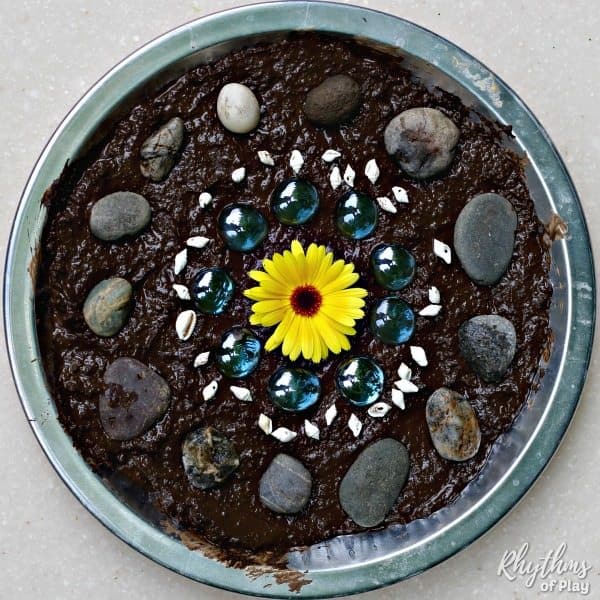
Invite children, from toddlers to teens, to use natural materials to create a nature mandala by following the instructions below. Or, try making a mud pie mandala!
1. Collect and sort an assortment of natural materials:
- To create a nature mandala, invite each artist to collect natural materials in the backyard, at a park, or in the natural world.
- Unless there is a stash of natural treasures nearby that you can use to make nature mandala crafts.
- Choose one type of material, such as rocks or leaves, or a variety of natural materials to work with.
- Because mandalas are made with repeating patterns of similar or alternating shapes, colors, and sizes, gathering multiples of the natural materials you find is best.
- You can create contrast with different colors, shapes, sizes, or material types.
- Collect items with a basket or bag.
- Once collected, sort natural materials into a muffin tin, a hardware bead organizer, or other recycled containers that will help divide and organize them before constructing a nature mandala.
Nature Mandala Art and Craft Supplies:
Examples of items you can use to craft a nature mandala include but are not limited to the following:
- Stones, rocks, and pebbles
- Flower petals and flowers with or without stems
- Fall leaves or fresh green leaves
- Twigs, sticks, and small bare branches
- Grasses and weeds
- Seashells
- Pinecones and pine needles
- Acorns, walnut shells, seeds, and other nuts
- Mud or different colors of soil or sand
- Bark from trees
- Feathers
- Colored sand
- Crystals and gemstones
- And more!
If you’d like to craft a permanent mandala on a wooden board, art canvas, or another surface, you may also need the following optional craft supplies:
- White glue, hot glue, or an adhesive (please follow the manufacturer’s directions).
- Wooden board, white or colored cardstock, etc.
- Acrylic or liquid watercolor paint (to color the wooden board before gluing natural objects such as shells to it.
- This Handprint Art tutorial includes a video showing how to use liquid watercolors to dye wooden canvases while keeping the wood grain visible.
2. Determine a spot or surface to make a nature mandala:
- Once you have a nice collection of natural items to work with, such as flowers, leaves, shells, acorns, or rocks, find a peaceful workplace in a natural area to make a nature mandala.
- Make nature mandalas outdoors to reap the most significant educational and therapeutic benefits. But please do not harm any creatures or the natural landscape when you make them outside.
- Or put natural treasures in a basket and take them home to craft a mandala.
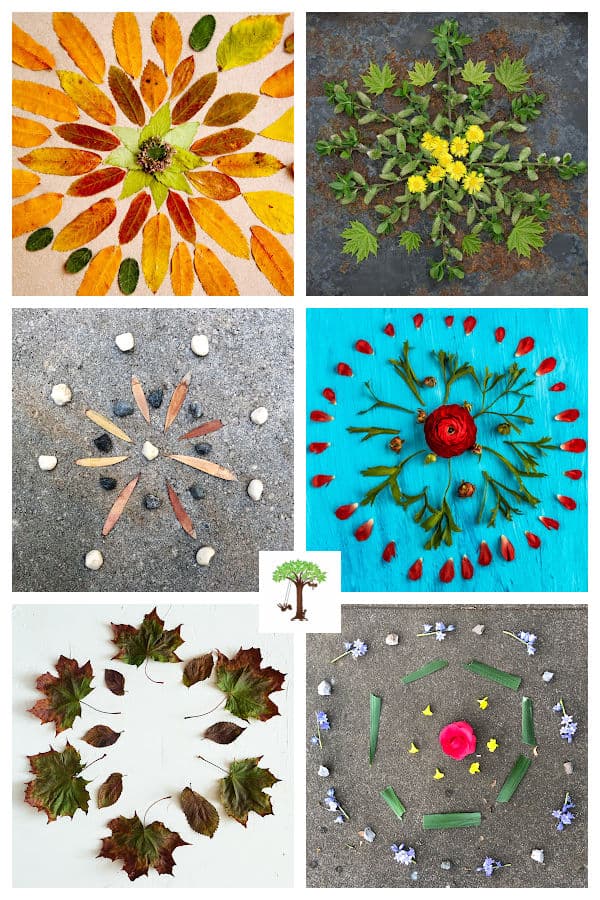
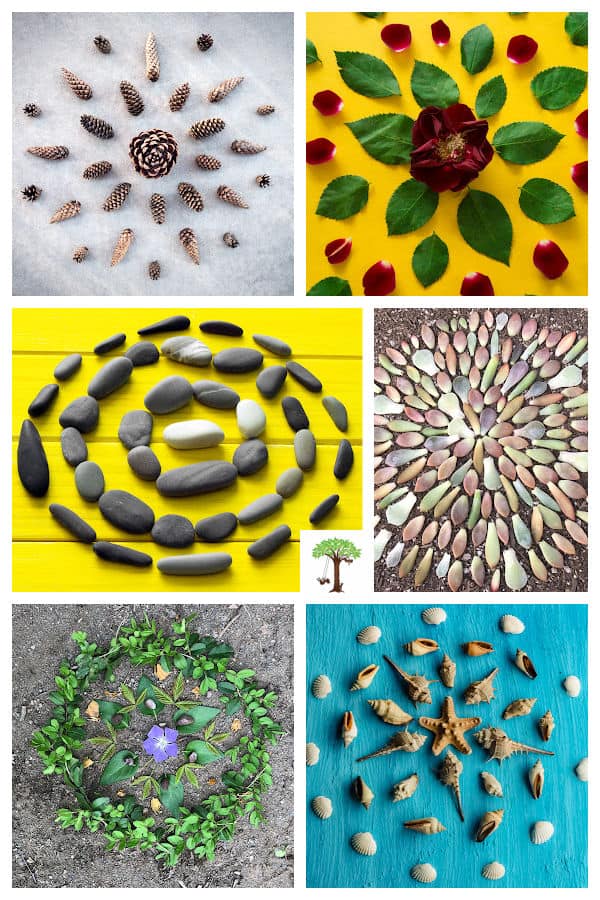
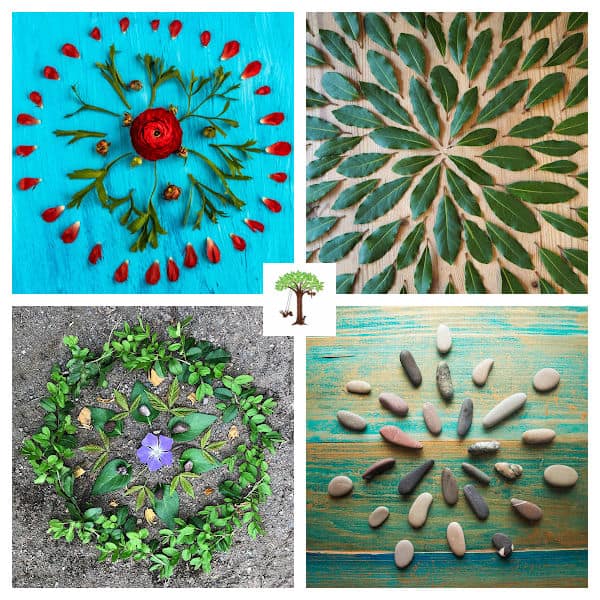
- As you can see in the photographs, mandalas also look gorgeous when made on a wooden board or canvas painted with acrylic paint or liquid watercolors, or a piece of colored cardstock in a complementary or contrasting color.
- A few outdoor ideas include making nature mandalas on the ground, on a tree stump, on a grassy knoll, on a river or creek shore, on a sandy beach, or in your backyard.
- When we collect natural items from the yard around our house and backyard, my daughter and I like to make them on stepping stones, the sidewalk, the table in the backyard, the driveway, and the patio.
3. Start the nature mandala craft:
- Start your mandala by putting a natural item in the middle of the workspace, leaving a small area blank to work around, or creating a center array of items that looks pleasing to the eye.
- If you are crafting a permanent mandala on a wooden board (or another surface), use white glue, hot glue, or an adhesive to attach the natural items to the surface, starting in the center as you place each item into the pattern.
- In other words, place a natural item (or collection of items) in the center of your mandala to create a central axis point, then construct the first layer of your mandala around the item you put in the center using various natural materials (with or without gluing it to the surface you are making it on).
- Either create circular patterns in layers around the central axis, or intricate lines radiating outward from the mandala’s center, like flower petals.
- Please do not glue the center item or an entire mandala onto a natural surface outdoors.
- A fence, table, or other inanimate item on your property would be an appropriate place outdoors to glue a mandala of pebbles or shells, but not a boulder or tree stump in the wild. Thank you for keeping nature in its most natural and impermanent state.
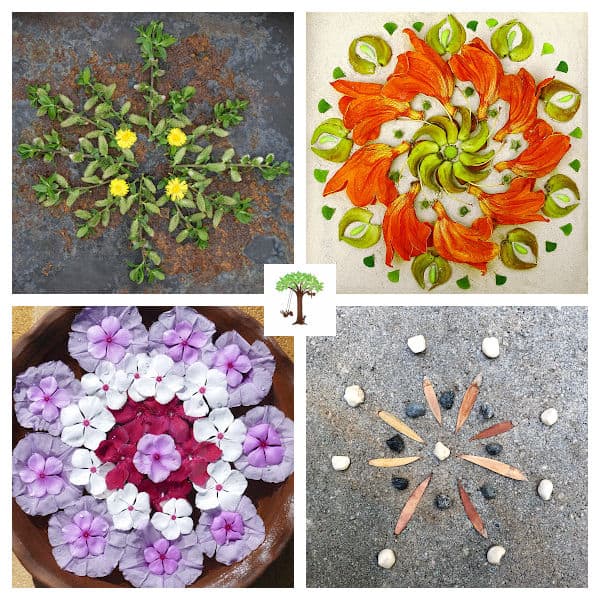
- Look at the photos of mandalas above and below for examples and ideas to start your nature mandala.
4. Continue building the mandala by adding natural items to it:
- Next, place any other items collected near the center, then continue moving outward to create a circular layer.
- As the photographs show, you can create patterns and shapes with the collected natural items to add to the mandala.
- Use natural items in different colors to create contrast, and place the objects in various positions to form circles, rings, and other shapes and repeating patterns.
- Keep adding bits of this and that in whatever pattern suits your fancy until you’ve created a mandala design you like.
- Continue adding to the mandala, creating a pattern from the center outward until the mandala feels complete.
- Look at the photo tutorial below for an example of a nature mandala my daughter made outside on the ground with flowers, various leaves, and pebbles.
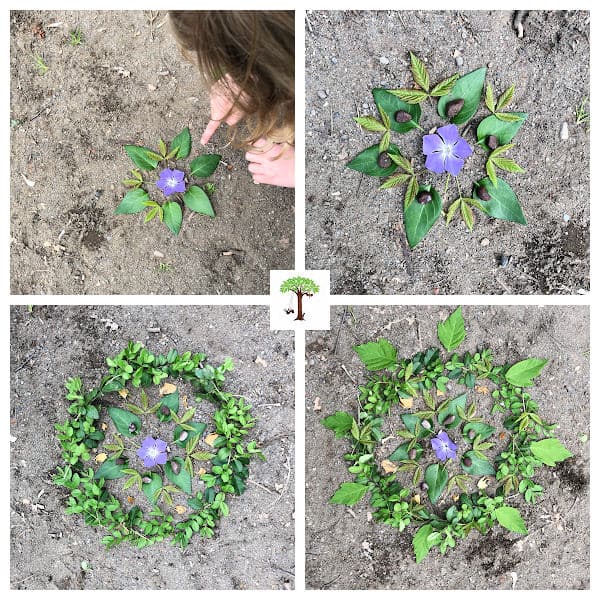
Making Mandalas with Children: Nature Mandala Process Art Activity for Kids
Invite children to make mandala art on the ground outside, where you find the supplies as shown in the photograph above, or collect materials on a nature walk and use them to craft a mandala at home or in the classroom.
We recommend making them outdoors and leaving them as they lie for others to enjoy. Like the Tibetan mandalas created by monks, mandalas are most often temporary or impermanent art forms. Learning that nothing is permanent and allowing for change can benefit children and adults alike. But please do not damage the natural ecology or harm any of Mother Nature’s many varied creatures.
Even though it’s best to make nature mandalas outside, it can also be fun to glue certain types of mandalas to a painted wooden canvas or piece of cardstock in a complementary or contrasting color, as shown in some photographs. If you choose this option, we recommend using non-perishable items such as shells, pebbles, rocks, small pinecones, acorn caps, and walnut shells*.
Preserved leaves and flowers can also be used to make a mandala, but the colors will likely fade over time. I recommend preserving the leaves or flowers with a coat of Mod Podge or white glue mixed with water over the entire flower or leaf mandala, as well as the cardstock or wooden board it is attached to. Use a foam brush to apply it so you don’t ruin your paintbrush.
Another fun mandala craft idea is to make a flower suncatcher craft in the shape of a mandala. Or, create a mud pie mandala, as shown in the photo below!
What can you use to make a Nature Mandala?
As the instructions above mention, you can use various natural treasures to create nature mandalas. We recommend adding a pop of color to mandalas to make them stand out. However, it is also fun to make them with neutral earth tones. A few of our favorite nature mandala craft supplies are listed below:
- Flower petals and flowers with or without stems.
- Stones, rocks, and pebbles.
- Fall leaves or fresh green leaves.
- Pine needles and pine cones.
- Acorns, walnut shells, seeds, seed pods, and other nuts.
- Twigs, sticks, and small bare branches.
- Weeds and blades of grass.
- Shells of various varieties and shapes, including freshwater and saltwater shells.
- Tree bark.
- Crystals and semiprecious stones such as gemstones.
- Mud or different soil or sand colors.
- And more!
Benefits of Making Mandalas and Mandala Art:
Mandala-making has several educational, social-emotional, and spiritual benefits for developing children and full-grown adults. Creating a nature mandala profoundly illustrates the macrocosm within a microcosm. Each mandala symbol encapsulates the vastness of the universe in a smaller-scale pattern within its intricate design.
In other words, mandalas crafted from natural materials such as petals, stones, seashells, and leaves can serve as a cosmic diagram, reflecting the cosmic order and interconnectedness of the broader universe. Each mandala’s central point symbolizes the unity and wholeness of existence, while its concentric circles and radial symmetry echo the celestial bodies and cosmic forces shaping the cosmos.
By creating and contemplating these mandalas, individuals can perceive the grandeur of the universe mirrored in the most minor details of nature. This practice invites a deeper understanding of the profound interplay between the microcosm of elements found on Earth and the macrocosm of galaxies surrounding it.
As such, it reinforces the idea that patterns seen in smaller forms, such as these mandalas, reflect the harmony and order inherent in the cosmos at large. Scroll down to read about the educational benefits of making nature mandala arts and crafts. For more fun nature activities, here’s a list of craft and art ideas that use natural materials.
Educational Benefits of Making Mandala Crafts:
Making nature mandalas is educational for many reasons. Crafting mandalas with nature’s many varied treasures allows children and adults of all ages to connect with nature’s seasonal cycles, the natural rhythms of life, and so much more.
Nature mandala crafts can help children explore basic concepts in math, science, and engineering. This makes crafting mandalas of all kinds a fantastic STEAM project for kids (and adults). The natural geometric shapes of mandalas incorporate elements of science and math as children work on engineering them into beautiful pieces of artwork.
Making mandalas also offers an opportunity to invite children of all ages to learn more about seasonal changes and the biome or region where they live, or those they travel to and visit. In other words, crafting nature mandalas with items collected outdoors can help toddlers, preschoolers, kindergarteners, kids, and teens learn more about nature, the natural landscape they inhabit and how it changes throughout the year, and the natural items available in different parts of the world.
For example, a mandala craft made with natural materials on the beach in Hawaii will likely differ significantly from one made on the shore of the Mississippi, in the wilds of Africa, in New York City, or in the woods of England. The same applies to Nature Sensory Bottles.
Crafting nature mandalas each season is also a fun way for kids to learn about the rhythmic seasonal changes that occur during the “Wheel of the Year” as one season changes to the next. Because the natural items available each season change.
A fun way to do this is to make a nature mandala for each solar quarter-day festival. In other words, make one for the summer solstice, the fall equinox, the winter solstice, and the spring equinox. Feel free to take pictures of them and record your observations about the mandala art you craft each season in a homemade nature journal.
Psychological (Social-Emotional) and Spiritual Benefits of Crafting Nature Mandalas:
Crafting nature mandalas is an excellent self-regulation activity for kids and adults of all ages because it’s a great way to pause, refocus, and connect, especially when made in the natural world.
Making mandalas in nature is also therapeutic. Creating process art is a form of therapy in its own right, as is spending time outdoors. Making a nature mandala multiplies these spiritual and psychological benefits by inviting us to reflect on the stillness within our hearts as we work outward from the center.
Mandala Making as a Lesson in Non-Attachment:
Making mandala crafts can also help us develop mindfulness and remind us of life’s impermanence. Crafting mandalas allows us to practice non-attachment, especially when we make them outdoors with perishable natural items.
Crafting nature mandalas can help us find peace in the symmetry of the universe and solace in the discomfort of impermanence. Like the sand mandalas made by Tibetan monks, nature mandala crafts demonstrate the impermanence of life in real time because they can’t be kept for long, if at all.
Unless, of course, you glue shells or pebbles to a wooden canvas. While the idea is fun, and the outcome is beautiful, it defeats one of the primary purposes of making mandala art. Which is non-attachment to the process, the outcome, or the product.
When we create mandala arts and crafts rather than make a product to demonstrate impermanence and non-attachment, this activity can help transform an ordinary mind into an enlightened one. Making mandalas is designed to help us come to terms with the transitory nature of life, both in our daily lives and as reflected in the world at large.
Coming to this realization can help one develop mindfulness, non-attachment, and a greater connection to all that is. When we are more connected to spirit and the natural world and less attached to things and more stuff, everyone, including the planet itself, can benefit in multiple ways.
Nature Mandala Crafts for Kids and Adults:
Crafting nature mandalas has many educational, social-emotional, and spiritual benefits for children and adults of all ages. This fun process art activity can become an authentic spiritual practice when made in nature with natural materials.
For more arts and crafts ideas, check out this list of nature crafts and art activities you can make with natural materials. You might also enjoy this list of outdoor learning and nature activities for kids.
Learn more about the author of this post about nature mandala crafts, Nell Regan Kartychok, and Rhythms of Play HERE!



I have found lots of inspiration from your site! Unfortunately it’s almost unusable due to the amount of ads on every page. I want you to be paid for your work, but holy cow. I think this space could really take off if it were less overwhelming with ads.
I’m so glad that you have found the information on my website useful, and I hear you Jenni. I only find them overwhelming on mobile devices. If you have a desktop or laptop my site is much more user friendly and easier to navigate. However, my team is running tests right now to cut them down to only the most effective and useful to readers. Sorry you had one of the more unfortunate experiences. I will let them know about what you have said in the hopes that they will make it better. Happy crafting!