
Learn to compost at home to support the cycle of life and help grow a greener world, one food scrap at a time.
Composting is the natural process of recycling organic material, such as leaves and food scraps, into a rich soil amendment called compost. This easy guide to backyard composting will show you how to compost at home. Follow the step-by-step instructions below to turn your food scraps and other compostable materials into compost. Composting at home can help reduce waste, lower methane emissions, enrich your garden soil, and more! You might also enjoy How to Make a Fairy Garden.
Composting At Home: Composting Basics for Beginners
Related: How to Plant Sunflowers with Kids
What is Composting?
Composting is the natural process of recycling organic material, such as leaves and food scraps, into a rich soil amendment, or humus, known as compost. When you compost at home, you help convert organic materials into compost that becomes rich soil, rather than adding to growing landfills. Composting consists of the natural breakdown of these organic materials by various microorganisms.
What is Compost?
Compost is a valuable organic fertilizer that can be added to the soil to help plants grow. Making compost is called composting. Because compost is such a healthy, nutrient-rich soil, it appears black. Its rich, dark color is why compost humus is often called “black gold” by many gardeners and farmers.
Related: How to Plant Organic Flowers
How is Compost Made?
Compost is created when three basic materials are present: greens, browns, and water. Green materials provide nitrogen, brown materials provide carbon, and water provides moisture to help break it down. The secret to a healthy compost pile is balancing brown, carbon-based ingredients with green, nitrogen-based ones.
In other words, when a combination of yard debris (browns) and kitchen scraps (greens) is layered in a moist environment (water) suitable for decomposition, you can create compost at home!
Related: Organic Gardening with Kids: How to Plant Tomatoes
What is Compostable?
All organic matter is compostable. This fact does not mean it must be grown organically to be compostable — lol! All it means is that it needs to be organic rather than inorganic. However, there are some organic items that you’ll probably want to keep out of your compost.
For example, we keep large woody cuttings and branches out of our compost. Likewise, we don’t put unbleached paper in our compost. Although these items are compostable, they take too long to break down, so it’s best to keep them out of the home compost bin.
We like to turn our compost pile often, so we remove items that take too long to break down. This is our personal preference, but please feel free to make your own choice.
I recommend keeping meat and dairy out of your compost pile. Although these items will break down, they will attract critters and unwanted pests—again, a nuisance you won’t want to deal with—trust me!
Green Nitrogen-Rich Compostable Materials List:
- all fruit and vegetable spoils & scraps, including peels and rinds (only add organically grown peels and rinds–conventionally grown produce can have pesticides on the peels you don’t want in your compost.)
- stale bread products, grains & beans
- manure (cow, horse, chicken, rabbit, or pig)
- leaves
- prunings, cuttings (without pesticides)
- flowers
- grass clippings
- houseplants
Brown Carbon-Rich Compostable Materials List:
- eggshells (neutral)
- straw
- leaves
- coffee grounds and unbleached coffee filters
- tea bags
- dryer lint (don’t add to compost if you use fabric softeners or dryer sheets)
- shredded newspaper
- cardboard
- clean sawdust
- bark
- pine needles
- unbleached paper
- woodchips
- corn stalks
- chopped up brush
Organic Materials Not Recommended for Composting:
- dairy
- meat/fish/poultry scraps
- large woody cuttings and branches
- diseased or insect-ridden plants.
- dog/cat feces
- grease
- oil
- fats
- wood ash
- weed seeds
Related: How to Plant a Tree
Benefits of Composting:
It is essential to teach children about the circle of life and how to complete it by tending to it. The future of our planet and food sources depends on it. Humans and animals are responsible for facilitating the breakdown of food for plants. Completing this cycle is one of the reasons human beings exist on this planet.
When organic items go in the trash, it breaks the cycle—everything on earth benefits when the cycle is completed through activities such as composting. Not only are you no longer breaking the circle, but you are also enhancing it by combining ingredients with other components to encourage their breakdown and support the growth of beneficial bacteria and fungi.
Did you know that composting can remove over 500 pounds of organic matter from your household waste annually?! Are you ready for even better news? Making compost at home can help reduce waste by shrinking our landfills and reducing greenhouse gas emissions!
Benefits of Home Composting:
- Help reduce each household’s carbon footprint.
- Encourage the breakdown of organic materials and complete the circle of life.
- Reduce the need for chemical fertilizers.
- Enhance the production of beneficial bacteria and fungi in the garden.
- Enrich soil and help reduce disease and pests.
- This leads to a cleaner environment and a healthy lawn and garden.
- Help reduce methane emissions and the size of our landfills.
Related: Caring for the Earth: 12 Ways to Help Kids Get It
Backyard Composting at Home:
This easy guide to composting at home teaches you how to turn your food scraps and other compostable materials into compost. Adding compost to your yard or garden will help your plants grow bigger and better. The organic matter in compost helps soil retain nutrients and water, benefiting your plants while reducing the risk of pollution.
Make composting a part of your daily routine with this helpful composting guide. Even if you don’t have a garden, you can still compost to help close the circle. The most challenging part of composting is getting started.
Related: How to Raise a Helper
How to Compost at Home:
Composting at home is a simple process with suitable materials and a little know-how. The basic steps of backyard composting are listed below and expanded in the following sections.
- Collect food scraps in a countertop compost pail or under-the-sink bucket.
- Empty the compost pail or bucket into the compost bin outside.
- Layer in brown organic materials: mix straw or leaves with the food scraps, then place them in the compost bin.
- Turn and use homemade compost in your garden every spring.
Collect Food Scraps:
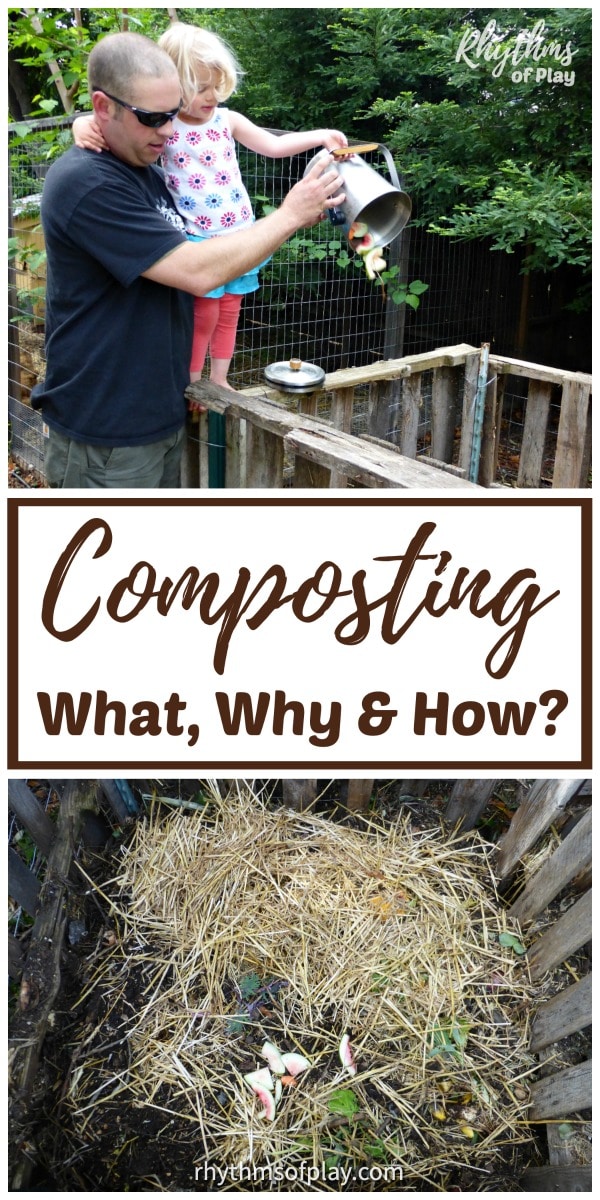
Collect food scraps and other compostable organic materials in a countertop compost bin or bowl. My family puts our kitchen scraps in a Stainless Steel Compost Bin. It looks lovely on our kitchen counter next to the sink, and it has charcoal discs in it to eliminate foul odors.
A few friends and family like to use buckets with lids under their sinks as compost bins, but they can get quite stinky! Use the method you like best. You might also enjoy Organic Gardening with Kids: How to Plant Tomatoes.
Find a Spot for the Compost Heap:
The hardest part about composting at home is getting started. However, once you find a spot to put it, you may find that you overcome the inertia of composting. Choose a convenient place for your compost pile.
You are more likely to use a nearby, easily accessible compost pile. A level, dry, shady spot on the bare earth is ideal. Easy access to a water supply is also desirable. Do not build compost piles against wooden buildings or trees because the wood will eventually decay.
To start your compost heap, lay down a layer of straw or leaves. Straw and leaves will help your compost bin drain and stay aerated. Your compost pile must be large enough to hold heat but small enough for proper aeration. The pile should be about 3 feet wide, 3 feet long, and 3 feet tall (1 cubic yard). Compost piles larger than five feet wide or five feet tall are not recommended because they are too difficult to aerate. You also want to ensure enough room to work around the pile. Also, ensure there is space to move around it.
Which should you use, a compost pile or a compost bin?
Many people don’t use a compost bin. They have a designated pile they use as a compost heap. Unless required by local ordinances, containers are not necessary for successful composting. If you choose to have a compost bin, many options are available for making or purchasing one, as listed below.
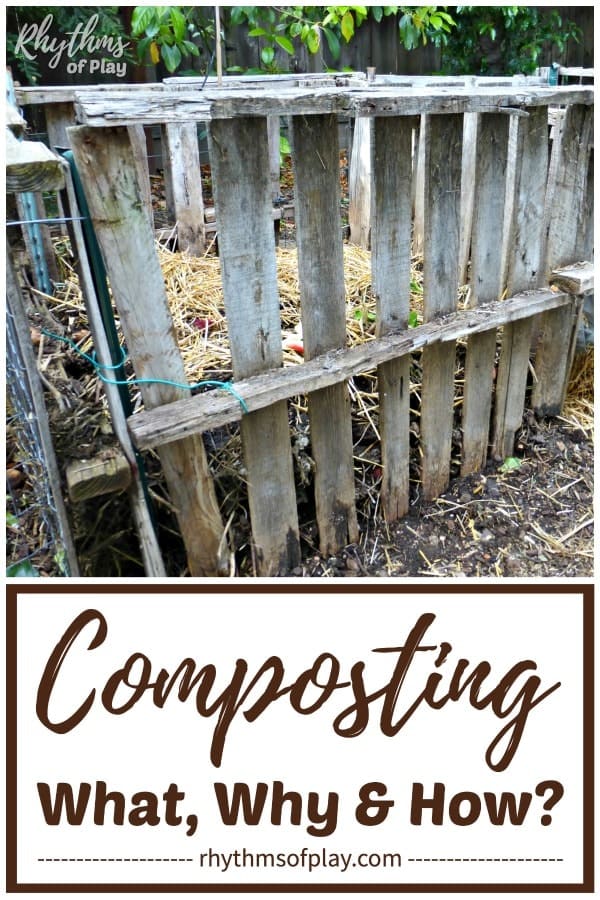
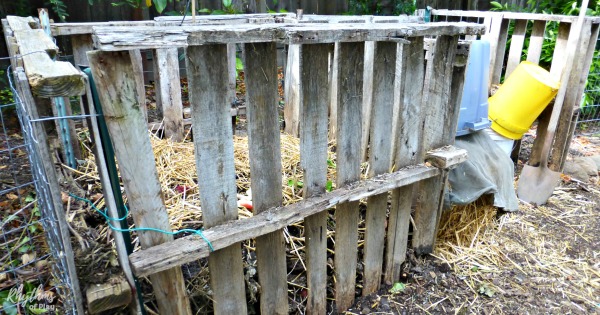
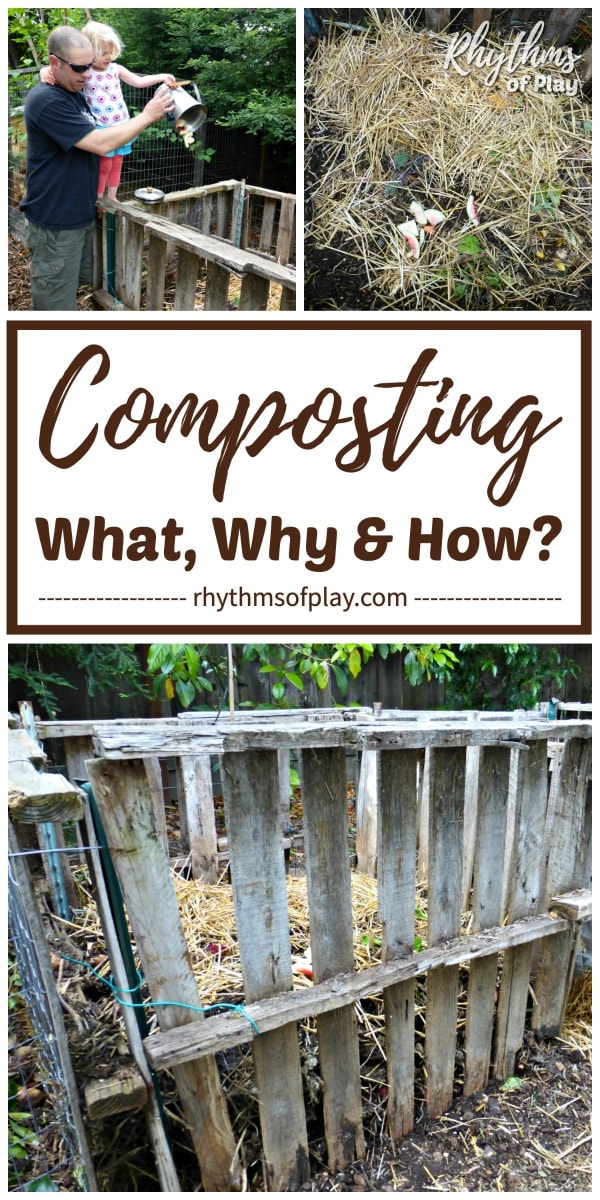
We constructed our compost bin out of pallets, T-posts, and wire. It may not be pretty, but it works well for our needs. It has been used for over five years and is holding up fine. Eventually, the pallets will decay enough to be replaced, but that day has not come yet.
Our compost bin is designed with two bays. We only keep a front pallet on the current compost pile’s side, while we use the other side for composting tools and gardening supplies. It’s also a good idea to have your composting supplies near your compost. For example, we like to keep a pitchfork,  a shovel
 , a few gardening bins, and a straw inside the storage bay of our compost bin, as you can see in the photograph below.
DIY Compost Bins:
Below are directions to a few awesome compost bins. Click on the creator of each DIY Compost bin to see the full tutorial.
- How to Build a DIY Compost Bin {+Free Plans} | Practically Functional
- 4 Compost Bins You Can Build in One Day (Video) | Tree Hugger
- How to Build a Tumbling Composter [great for small yards and apartments.] | WikiHow
Best Compost Bins to Buy:
Check out the excellent pre-made compost bin options below:


Dump Countertop Pail into Compost Bin Daily:
Creating the habit of taking out your compost pail every night makes composting as easy as taking out the trash, and you will feel much better about where you put it. Make it a habit to empty your countertop compost pail or under-the-sink compost every night after dinner, unless you have a large family and must empty your compost bin after every meal!
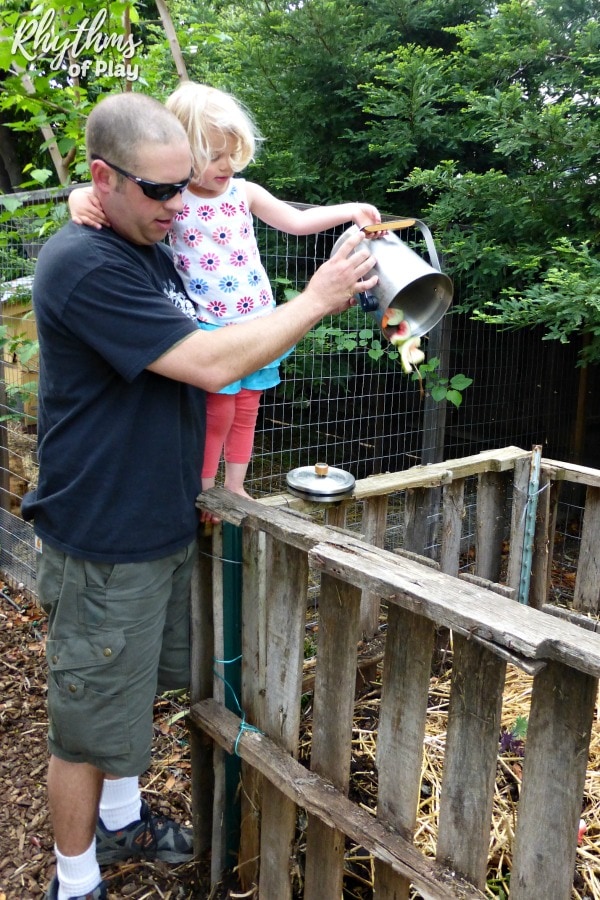
My husband and daughter take out our compost pail together every evening after dinner while I do the dishes. It is an established part of their daily rhythm. They also take out our recycling and the table scraps we have collected for our chickens as a part of their after-dinner chores.
Because most of our waste goes into our recycle bin, compost, and chicken bowl, we only have to empty our trash once a week–and that’s only because it’s trash day! So there is barely anything ever in it!!
In addition to composting and recycling, we have also cut down on the amount of packaged products we consume and instead have favored locally grown and produced food and materials. For more green living tips, hop on over to read Caring for Earth: Simple Ways to Slow Climate Change.
Layer in Organic Materials:
The secret to a healthy compost pile is maintaining a working balance between carbon and nitrogen. This balance requires a proper combination of green and brown organic materials in the compost bin. Remember, compost is created when three primary materials are present: browns, greens, and water. Green materials provide nitrogen, brown materials provide carbon, and water provides moisture to help it all break down.
Refer to the compostable materials list above to remind yourself which compostable items are considered “brown” and “green.” The idea is to maintain a good balance of browns and greens for carbon, nitrogen, and moisture. Then, add manure to speed up the process and activate the compost pile. When you have a balanced mix of browns and greens in your compost bin, you will create compost at home!
Add Thin Layers of Leaves, Straw, and Grass Clippings
Add thin layers of leaves, straw, grass clippings, or yard debris. Thick layers in the compost bin can reduce moisture and aeration, slowing composting. Instead, do your best to add equal amounts of browns and greens to your compost bin. Then, when you add kitchen scraps, bury them under the top layer of compost in the bin and add a handful of leaves or straw for good measure. This is an excellent reason to keep a shovel or garden pitchfork
 nearby.
Also, remember that organic materials decompose at different rates. For the best results, chop large materials into smaller pieces before adding them to your compost pile. Then, dig into the center of your compost pile and mix them like you add table scraps. Most green compostable items are water-based, while browns are usually dry. So, it’s best to ensure your compost stays nice and moist. In other words, if your compost bin is too dry, add a little water to moisten it.
Related: How to Grow a Sunflower House
How to Activate Compost:
Add chicken manure or another activator to speed up decomposition and composting, and to activate the compost pile. Common compost activators include manure, comfrey leaves, and grass clippings.
Cover compost:
To cover your compost pile, keep a thin layer of straw or leaves on top. This will help retain the heat and moisture necessary for compost production. You can also cover your compost with a tarp if desired. Once a compost pile is established, mix new materials rather than layers. Turning the compost pile is key to aerating the composting materials and completing the process.
Related: How to Make and Keep a Nature Journal
How to Turn and Use Compost:
Dig into your compost pile and mix it every few weeks with a pitchfork or shovel. This aerates the pile and adds oxygen to the mix, allowing the proper breakdown of ingredients.
As mentioned above, our compost bin has two bays. We have a front pallet only on the side where the current compost pile is. We keep straw, a pitchfork, a shovel, and gardening bins inside the bay without the compost, and switch them out when we turn it. In other words, when we turn our compost into garden compost, we remove the pallet in front of the compost pile and everything from the storage side.
Because the top of the compost pile is less decomposed than the bottom and is not ready to use yet, after we take our tools out, we shovel the top into the other side or bay of the compost bin to start our new compost pile. Then we shovel the top layers to the other side until we reach the black humus, or compost, at the bottom of the compost pile.
Using Black Gold: Add Homemade Compost To Your Garden or Houseplants:
Next, we shovel the black humus or compost into a wheelbarrow or garden cart
 to use in the garden. You can mix the compost into the soil before planting, or spread it on the soil’s surface in your garden or around houseplants to add valuable nutrients. When you water, the nutrients seep into your plants’ soil and roots.
Finally, we reattached the front pallet to the compost bin, placed straw on top, and put all storage items in the empty bay where the old compost pile had been. We will continue to turn and use compost every six to twelve months, repeating as needed. Nothing is better than fresh black gold in the garden to help your spring plantings!
Related: Books That Teach Kids Important Life Lessons
Composting at Home with Kids
Completing the circle is a nightly habit for my husband and daughter. It is an established part of their daily rhythm. After dinner, I do the dishes while they take out the recycling and all our food scraps and spoils from the day.
Use the power of habit to help your family establish a new composting routine. Read Caring for Earth: 12 Ways to Reduce Climate Change for more green living tips!
Learn more about Nell Regan Kartychok, author and photographer of this informative guide to composting at home HERE, and Rhythms of Play HERE!




This is really neat. We aren’t allowed to do this where we live right now, but I’m pinning for when we move!
I totally get it. I know that some homeowners associations have rules. Glad you are pinning for later 🙂
I live where it is cold and snowy about 6 months out of the year. How does that work for composting? Would it still work for us?
That is a brilliant question, Heather. A question that I wish that I knew more of the answers for!
I’m sure that you can compost where it snows, but I’m not sure about all of the details… because I have never composted where it snows.
Air temperature affects the speed of decomposition so the composting process will slow way down when temperatures drop. However, microbes responsible for the breakdown of organic matter can remain active in the compost pile.
The important thing is to make sure that your pile retains heat or stays warm enough, and that it does not get too wet. Cover it with a tarp and ask your local nursery for any tips they have.
I hope that helps, happy composting!!
Nell