
Learn how to make a winter nature table at home or in the classroom with this simple step-by-step tutorial.
Creating a winter nature table is a simple way to bring the season’s magic indoors. For parents, teachers, and caregivers of young children, it offers a hands-on opportunity to spark curiosity, nurture the imagination, and promote peaceful reflection during the colder months.
A winter nature table is more than just a decoration. It’s a living, changing space that helps children explore seasonal shifts, connect with nature, and improve their observation skills. Whether you’re homeschooling, teaching in a classroom, or simply enriching your home environment, the helpful tutorial below, along with this guide to nature tables, will cover everything you need to know.
What is a Winter Nature Table?
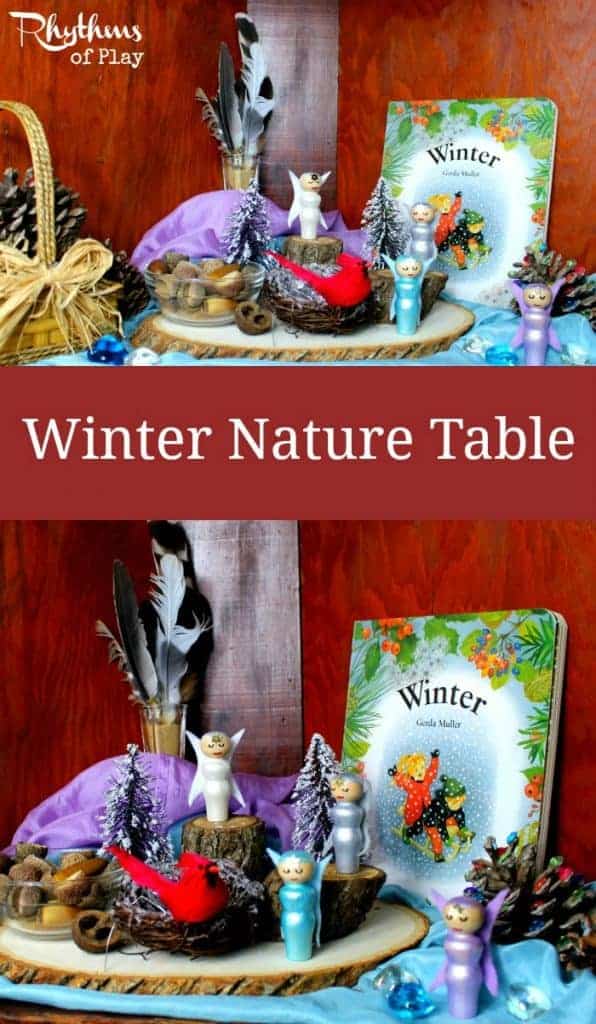
A winter nature table is a small, dedicated space, most often a shelf or a low table, where seasonal treasures are put on display for everyone in the home or classroom to enjoy. Nature tables are common in Waldorf and Montessori education. The primary purpose of a nature table is nurture a young child’s sense of wonder and reflect the beauty of the season. Learn more about them in Nature Tables Explained.
How to Make a Winter Nature Table
There are many ways to design a nature table that reflects winter. The space available, your interests and values, where you live, your children’s ages, and your mood will all influence the winter nature table you create.
Creating a nature table is a great way to get children outside exploring nature and learning about everything under the sun (literally). Have fun going on walks in the neighborhood, local hikes, or backyard adventures, collecting items for your winter nature table or shelf.
There is so much more going on than the simple collecting and admiring of these objects. The experience of exploring the items on the winter nature table is deeply immersive. It opens a space for understanding that no other type of learning seems to reach.
Children get excited about learning when they are allowed to look for natural items that interest them and are then given the opportunity to explore them in more depth. The sparkle in a child’s eye once they declare that they are going to bring something home, or to the classroom, for the nature table is quite magical.
Related: Fun Ways to Celebrate the Winter Solstice.
Typical Elements on a Winter Nature Table:
- A fabric reflecting the season’s colors covers the table or is hung on the wall behind it.
- An evergreen or bare-branched tree with or without stars and other winter-themed ornaments.
- Evergreen boughs.
- Pinecones.
- Acorns.
- Winter animals and figurines that are made with beeswax, wood, felt, and other natural materials.
- Handmade winter crafts and decorations.
Related: Spring Nature Table Ideas
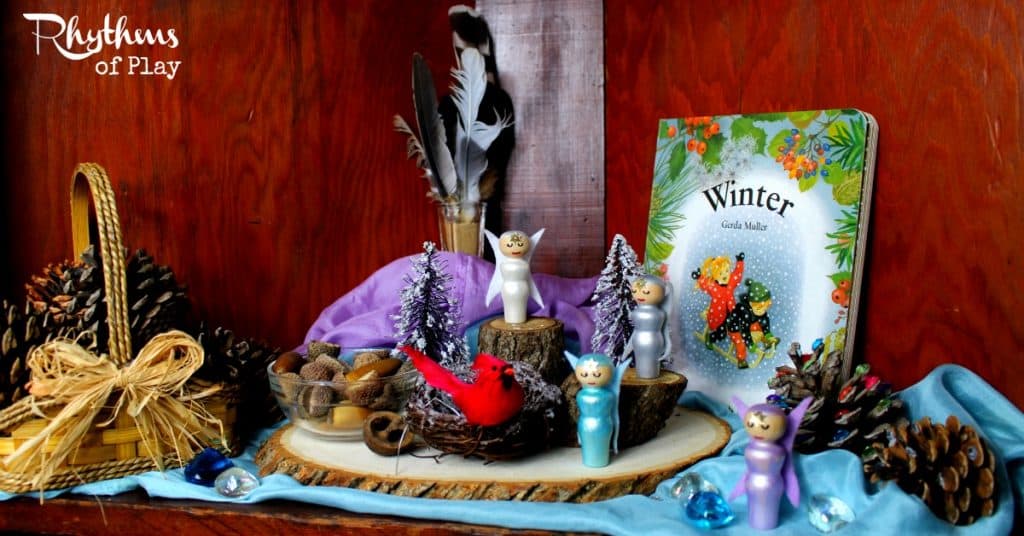
Winter Nature Table Supplies In the Photo Above:
Here are the elements on the winter nature table in the photo above:
- Playsilks in Sky Blue and Lavender are draped over the shelf to reflect the season’s coolness.
- Winter Board Book by Gerda Müller. Muller has a book for all seasons, and I rotate them throughout the year’s rhythm.
- A small glass bud vase with bird feathers, which my daughter collected.
- Small pieces of wood, my husband cut from a fallen oak branch in our backyard, are sitting on a slightly larger Basswood Round.
- Acorns in a small glass ramekin are also on the Basswood Round.
- DIY winter fairy peg dolls standing on the real wood blocks.
- Pine cones that my daughter collected on our daily walks. You can use any natural materials found in your area at this time of year.
- DIY Rhinestone Pinecone craft.
- Tiny snowy alpine trees.
- Small hand-woven bird nest with moss and a Cardinal figurine.
DIY Winter Nature Tables:
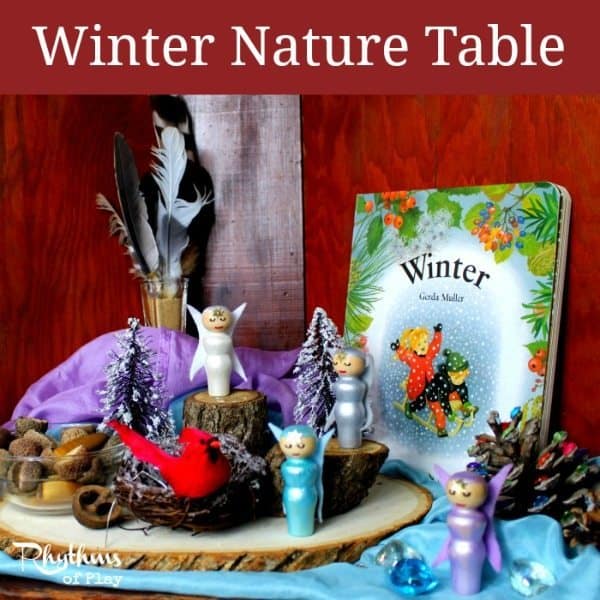
A winter nature table is more than just a seasonal display; it’s a doorway to the wonders of nature. This simple nature activity encourages children to slow down, observe, and connect with the items on the table.
Use the simple DIY tips in this informative guide to create a winter nature table at home or in the classroom. You can be as minimal or as extravagant as you please. There are no limits other than the limits of your own imagination.
Nature tables can help maintain a gentle rhythm during the winter months. As the winter unfolds, add items to the table that reflect the subtle shifts occurring in the natural world around you. As spring arrives, slowly add spring-themed items that reflect the season. Then, transform it into a spring nature table sometime around the spring equinox.
Continue to switch out the seasonal items on the table or shelf throughout the year as the seasons change. Learn more about these nature-based learning centers in Nature Tables Explained.




Leave a Comment