
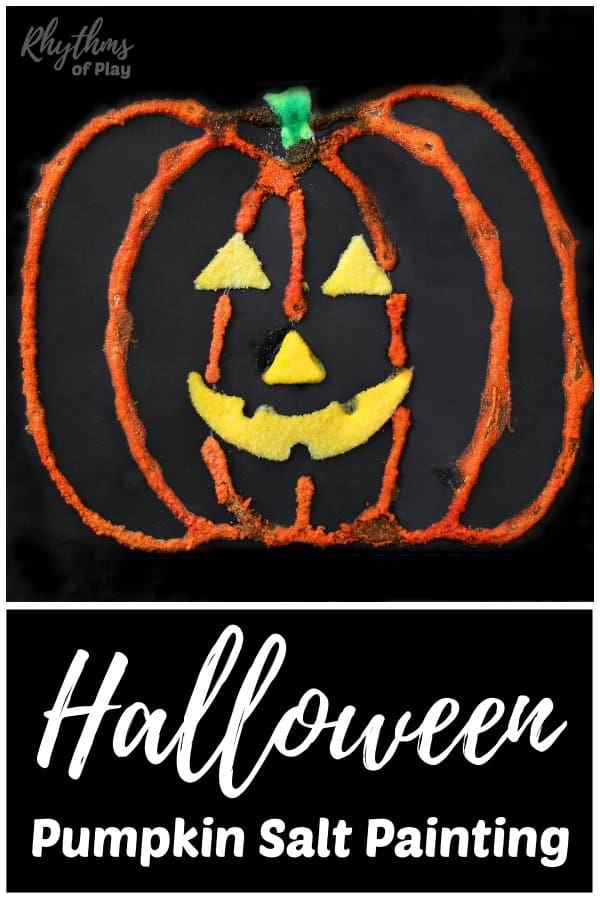
Create Halloween pumpkin salt art with or without a jack-o’-lantern face. Draw your own design with the included instructions, or use the printable pumpkin outlines to get started!
Create colorful Halloween pumpkin art with glue, salt, and watercolors! This easy salt-painting project adds raised texture and dimension to pumpkin designs. Paint a classic pumpkin or add a friendly or spooky jack-o’-lantern face to make it your own.
With inexpensive, easy-to-find supplies and no painting experience needed, this fall craft is fun for kids and adults to enjoy together. Squeezing glue and adding color with a paintbrush or pipette helps children practice fine motor skills and hand-eye coordination. Toddlers and preschoolers will need hands-on help, while older children and teens can usually work with minimal guidance.
Follow the step-by-step tutorial below, and choose from two printable pumpkin outlines or draw your own. For more seasonal inspiration, explore these Halloween Art Projects for kids and adults.
Halloween Pumpkin Art Project for Kids and Adults:
Celebrate Halloween with a fun pumpkin art project you can make together. Raised salt painting adds texture and dimension to pumpkin designs, while watercolor adds bright color that spreads and blends along the salty lines. The unexpected color combinations make each finished pumpkin unique.
Create a classic orange pumpkin, experiment with a rainbow of colors, or add a friendly or spooky jack-o’-lantern face. This flexible activity works well for family craft time, classroom art lessons, and gatherings with children and adults. Adapt the supplies and level of help to each artist.
Younger children may enjoy adding color to a glue-and-salt design an adult prepared beforehand, while older children, teens, and adults can draw and paint their own pumpkins. Offer paintbrushes or pipettes so everyone can explore how the color spreads.
For another watercolor pumpkin project, try Harvest Pumpkin Art, or explore these other creative fall painting ideas for kids and adults.
What is Salt Painting?
Raised salt painting is a watercolor technique that uses white glue, table salt, and paint to create colorful designs with raised texture. Draw with glue on sturdy cardstock, sprinkle salt over the wet lines, and gently shake off the excess before adding watercolor.
Lightly touch a paintbrush loaded with watercolor to the salt, or add a small drop with a pipette. Watch the color travel along the salty lines and blend where colors meet to make each painting unique.
Pumpkin Salt Painting Craft Supplies:
- Optional: Jack-o’-Lantern Pumpkin Templates (paid download), or draw your own using the instructions below.
- Black or white cardstock: Choose sturdy cardstock to support the glue, salt, and paint.
- Pencil: Use a white colored pencil on black cardstock or a graphite or orange pencil on white cardstock.
- White school glue: A squeeze bottle makes tracing easier.
- Table salt

- Watercolor paint: Liquid watercolors or a solid watercolor palette.
- Paintbrush or pipette: Use a paintbrush with either type of watercolor paint, or a pipette with liquid watercolors.
- Cup of water: For wetting palette paints and rinsing your brush if needed.
- Rimmed baking tray: Recommended to catch excess salt and contain drips.
- Clean, dry container with a lid (optional): Save leftover craft salt for another project. A washed yogurt or cottage cheese container works well; label it “craft salt” and keep it separate from food salt.

Halloween Pumpkin Salt Painting Project Video Tutorial:
Watch the video below to see how to add glue, sprinkle salt, and apply watercolor, then follow the written instructions.
As you can see in the video tutorial above, my daughter painted her Halloween pumpkin art on our DIY outdoor art table and mud kitchen. Click the link to learn how to make one for your yard or patio!
Halloween Pumpkin Salt Art: Step-by-Step Craft Directions
Create a textured watercolor pumpkin on white or black cardstock, with or without a jack-o’-lantern face. Before you begin, gather your supplies and read through the steps below. Watch the video above to see the technique in action, then use a paintbrush or pipette to bring your design to life.
For more inspiration, explore the additional salt painting projects after the instructions.
1. Draw a Halloween pumpkin outline onto White or black cardstock
- Lightly draw a large pumpkin on black cardstock with a white pencil, or on white cardstock with a graphite or orange pencil.
- Use sturdy cardstock to help support the glue, salt, and watercolor paint; construction paper can buckle or tear when wet.
- Leave your pumpkin plain, or add a friendly or spooky jack-o’-lantern face.
- Offer drawing help as needed. An adult can draw the outline for younger children, while older children may prefer to create their own design.
- Follow the step-by-step drawing instructions below the pumpkin drawing I created for my toddler to learn how to draw a pumpkin for this salt painting project.
Prefer to skip the drawing? Purchase our Jack-o’-Lantern Pumpkin Templates for two ready-to-print designs, or follow the drawing instructions below to create your own.
Prefer a pumpkin without a face? Explore our Fall Pumpkin Templates, including plain pumpkins and harvest designs with curling vines and leaves.
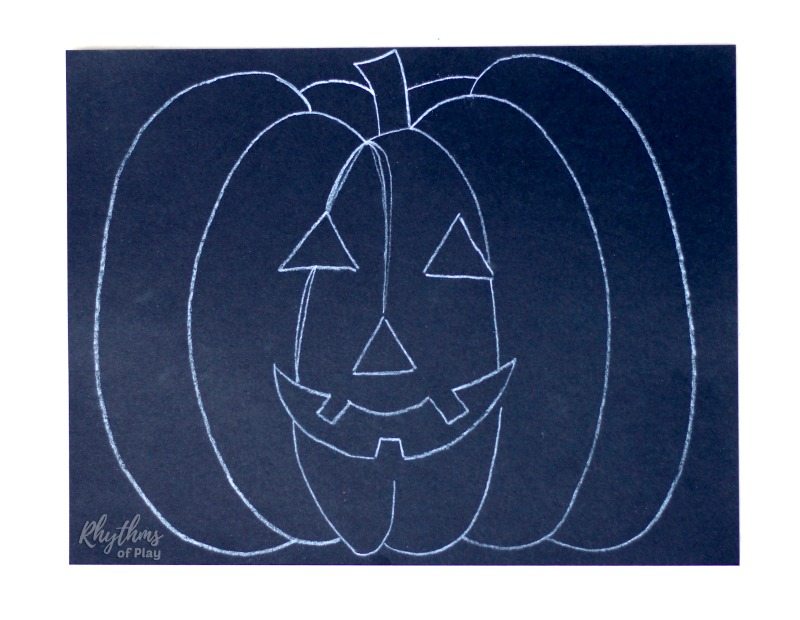
How to Draw a Pumpkin Outline for this Halloween Craft
Keep your pumpkin drawing simple, and leave enough space between the lines to trace them with glue. Your sketch doesn’t need to be perfect—the glue and salt will cover the pencil lines.
Use a white colored pencil on black cardstock or a regular or orange pencil on white cardstock. Follow the pumpkin drawing pictured below as a guide:
- Add a face, if you’d like. Draw eyes and a mouth near the center of the paper, leaving plenty of room around them for the pumpkin. Skip this step for a plain pumpkin.
- Draw the pumpkin’s sections. Sketch tall, curved C shapes and backward C shapes around the face to form the pumpkin’s ridges. Stop each line where it meets an eye or mouth so it doesn’t cross through the facial features.
- Shape the outer edges. Make the outer curves taller than the middle curves, as shown in the photo below. Join the top and bottom sections to complete the pumpkin’s outline.
- Add a stem and finishing details. Draw a short stem at the top, then add a few curved ridge lines behind it to give your pumpkin depth.
2. Trace the pumpkin drawing with white glue
- Squeeze white school glue along the pumpkin’s outline and curved ridge lines, keeping the glue lines even.
- If you added a jack-o’-lantern face, trace the edges of the eyes and mouth with glue, or fill in those shapes completely. The example my daughter and I created in the photos shown uses filled-in eyes and a mouth.
- Help younger children squeeze and guide the glue bottle as needed, or trace the design for them.
- Keep the glue wet. Move straight to the next step so the salt will stick.
Tip: Leave small gaps between the pumpkin, facial features, and stem if you want to keep their colors separate. Watercolor can travel between touching salt-covered glue lines, causing colors to blend, as they did in my daughter’s harvest pumpkin salt painting. Let the lines connect wherever you’d like the colors to mix.
3. Sprinkle table salt over the wet glue
- Place the cardstock on a rimmed baking tray to catch excess salt and keep your work surface tidy.
- Sprinkle ordinary table salt generously over the pumpkin design, covering all the wet glue, including the stem and any facial features.
- Continue to the painting step while the glue is still wet.
4. Gently shake off the excess salt
- Carefully lift and tilt the cardstock over the baking tray, letting loose salt fall away. Gently shake the paper if needed, without touching the salt-covered glue.
- For this project, move straight to painting while the glue is still wet. There’s no need to let the salted design dry first.
- Watch the Halloween salt painting video above these instructions to see this step in action.
Tip: Pour excess salt from the tray into a labeled container and save it for another craft, like this heart salt painting. Keep this craft salt separate from salt used for food.
5. Paint the pumpkin salt art with watercolors
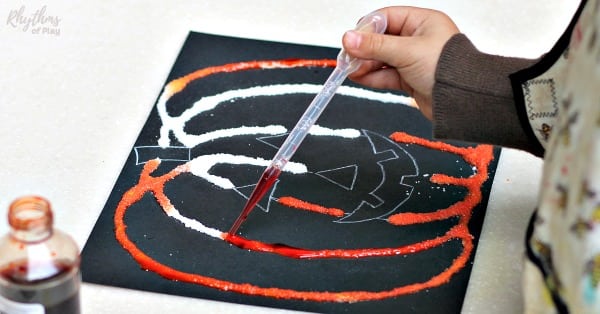
- Add color gently. Load a paintbrush with liquid watercolor and lightly touch it to the salt, or use a pipette to add one small drop at a time, as my daughter demonstrates in the photo above. Watch the color spread along the salt-covered glue lines. Avoid brushing back and forth or adding large amounts of paint, which can disturb or flood the design.
- Using a watercolor palette? Add water to the paint until you can pick up plenty of color with a paintbrush. Keep a cup of clean water nearby to rinse the brush between colors.
- Paint the pumpkin first. Add orange—or any colors you choose—to the outline and ridges, then carefully paint the jack-o’-lantern face, if you included one. Use small amounts of paint near the facial features to help keep their colors distinct.
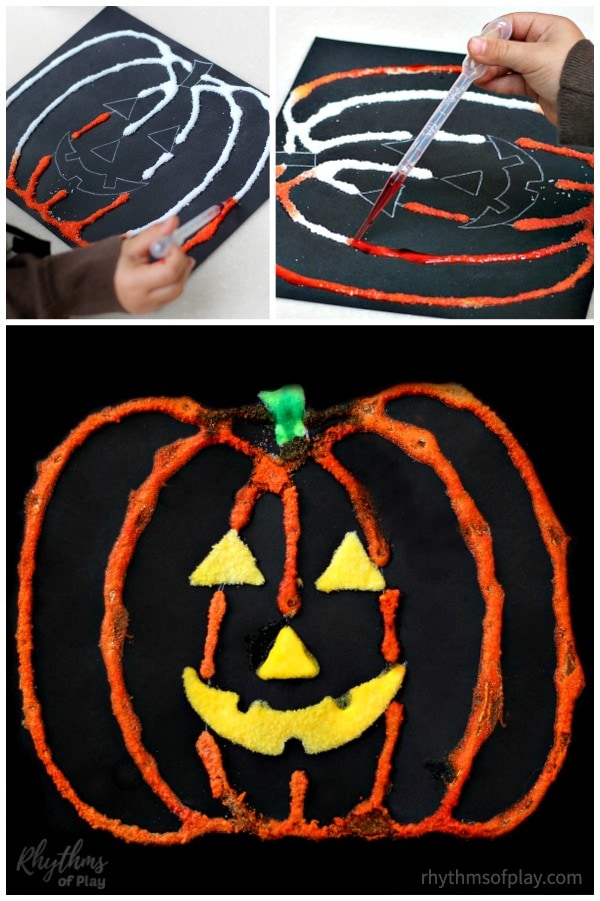
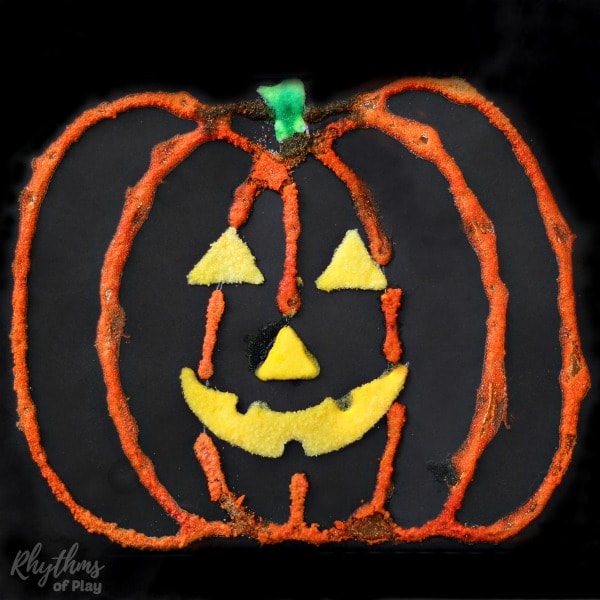
- Finish with the stem. Apply green sparingly, especially where the stem meets the pumpkin. In the example pictured, you can see where the green and orange paints blended to create a dark patch at the top.
Tip: Colors can spread between touching, salt-covered glue lines, no matter which area you paint first. Gaps between the pumpkin, face, and stem help keep colors separate. If colors do mingle, enjoy the unexpected blends as part of your pumpkin’s unique design.
6. Let Your Pumpkin Salt Painting Dry
Leave the finished pumpkin artwork flat on the tray until the glue and paint are completely dry. Drying time will vary depending on how much glue and watercolor you use.
Handle the dried artwork gently when displaying it. The raised salt lines are delicate, and some loose salt may shed.
Halloween Pumpkin Salt Painting Tips for Toddlers and Preschoolers
For younger children, try completing the pumpkin in stages. My daughter was a toddler when we made this project. As shown in the photos, she painted the pumpkin orange first, and we let it dry before adding the face and stem. This breaks the activity into smaller, more manageable steps.
Start by tracing only the pumpkin outline and ridges with glue. Sprinkle on salt, gently shake off the excess, and invite your child to add watercolor while the glue is wet. Let this painted section dry flat.
Next, add fresh glue and salt to the jack-o’-lantern face, shake off the excess, and paint it. Repeat for the stem, then let the completed artwork dry. Help with the glue bottle, salt, and paint as needed. Squeezing glue and using a paintbrush or pipette help build fine motor skills and hand-eye coordination.
The orange pumpkin and yellow facial features stayed separate because their glue-and-salt lines did not touch. Working in stages can make color placement easier, while gaps between sections help keep colors from spreading.
Choose the approach that works best for your child, and leave room for experimentation. A plain pumpkin, an unexpected color combination, or a few blended colors can all be part of the fun. Even a spooky surprise can become a “beautiful oops,” like my daughter’s harvest pumpkin watercolor painting.
Additional Salt Painting Projects:
For more salt painting ideas that use the same watercolor painting techniques, check out these other fun salt art projects for kids:
- Harvest Pumpkin Art Project
- Heart Art Salt Painting
- Rainbow Shamrock Art Salt Painting
- Saint Patrick’s Day Raised Salt Shamrock Art Project
Related: Fall Leaves Watercolor Art
Make Your Own Halloween Pumpkin Salt Art
With a few simple supplies and just minutes of setup, this Halloween pumpkin salt painting is a fun art project for kids and adults to enjoy together. Create a classic pumpkin or a playful jack-o’-lantern, and watch the watercolors spread across the raised salt design. Leave room for unexpected blends—each pumpkin will have its own personality!
More Fun Halloween Ideas for Kids:
For more Halloween fun, check out these glowing pumpkin and ghost calm-down sensory bottle DIYs. Each one makes a fantastic calm-down DIY Halloween toy and decoration, perfect for kids who get a little anxious and overwhelmed by all the friendly frights on Halloween night.
You may also like this incredible collection of Halloween art projects that kids love! It’s filled with fun Halloween art projects you can try with kids at home or in the classroom. And don’t forget to check out our fall bucket list of fun fall activities for the best autumn ever!
Learn more about Nell Regan Kartychok, author, photographer, and creator of this original pumpkin art activity HERE, and Rhythms of Play HERE!
More Seasonal and Halloween Ideas:
- Pumpkin Patch Field Trip Ideas (Includes our favorite pumpkin books!)
- Top 10 DIY Halloween Lanterns
- Tissue Paper Ghost Craft
- 13 Healthy Treats and Fun Alternatives for Halloween
- Top 10 Fall Nature Crafts (Contains pumpkin carving and other Jack O’ Lantern ideas)
- Spider Egg Sac Decoration
- Giant Stick Spider Web Halloween Decoration
- Spider Craft for Kids





I do not understand what you mean about not letting the glue and salt touch. Is there one line or two? Also does the paint go on the glue or just the salt?
I’m sorry I did not make it clear Sharon. The glue and salt have to touch, just make sure the orange lines of the pumpkin do not touch the lines that will be green or yellow if you do not want the colors to run. You will paint the salt AND the glue. You will need to pour salt on the glue, shake off the excess, and then paint the salt that is now stuck to the glue. I hope that makes sense.
Yes that makes sense. Thanks for responding back. It looks like a cute project for my grandson!!
You’re welcom Sharon! I’m sure your grandson will love this project, my daughter sure did! I just published another post today with a similar process that will help it make more sense. You can find it here: https://rhythmsofplay.com/harvest-pumpkin-watercolor-art-project/
This is great! It’s crazy how the paint flows into the salt glue.
I’m so glad that you enjoyed this pumpkin art project, Ben. I’m always amazed by how much liquid watercolor paint the salt and glue lines can absorb when creating a salt painting. Salt paintings are always fun to make!