



This beginning gardening project tutorial teaches how to plant sunflowers from seeds outdoors. Step-by-step activity instructions include how to grow a sunflower fort or playhouse for children and how to care for sunflowers as they grow.
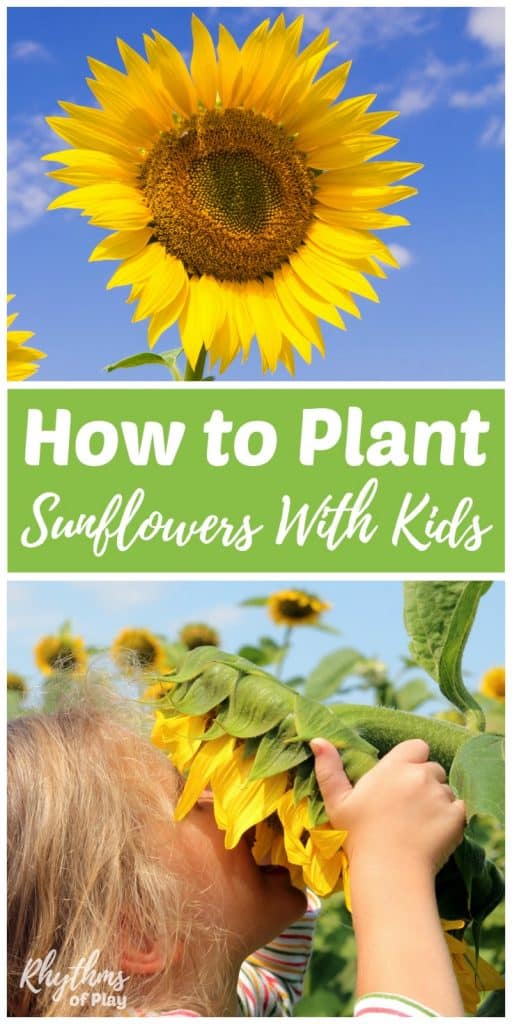
Growing sunflowers is a fun first gardening lesson for kids and beginning gardeners of all ages. Sunflowers are among the easiest flowers to plant from seed directly into the earth, but you can also plant them in a deep container. They quickly grow into the large, magical, sun-faced flower blooms that kids and adults love to admire. Their giant flower heads smile down at us from taller varieties in the mid to late summer. Grow sunflower plants in a circle to make a sunflower house, a garden playhouse, or a fort for even more outdoor fun! Invite your children to help plant sunflower seeds, grow them, and care for them with this educational beginner gardening activity.
My mother (an organic permaculturalist and horticulture instructor for over 25 years) helped me create this fun and educational gardening project. First published on March 28, 2015, this beginner’s guide to growing sunflowers is regularly updated to improve its content. Although my mother is no longer living, her gardening wisdom comes alive in this informative sunflower gardening guide. Follow the simple step-by-step instructions below to learn how to plant sunflowers directly into the ground. Please visit this massive list of outdoor learning activities for even more outdoor activity ideas for kids and their caregivers.

Sunflower Growing Guide:
Sunflowers are easy to grow. Use this step-by-step sunflower growing guide to learn when, where, and how to plant sunflowers. Instructions include popular sunflower varieties to grow and the gardening supplies you need to sow sunflower seeds in the ground or in a container.
This outdoor activity is perfect for early to late spring or early summer, depending on your climate. The key is to plant sunflowers after the last chance of frost has passed. Kids, from toddlers to teens, love to watch their beautiful, blooming golden heads grow past their own height. Remember, when a sunflower is taller than you, it’s a sign that summer has arrived. Learn more about the signs of summer–> HERE.
Scroll down for step-by-step instructions on how to plant sunflower seeds, care for them, and grow them into a sunflower fort or house for children to play in. My mother and I hope you enjoy this gardening activity with your children or students. We had a lovely time planting sunflowers as a family. For another beginning gardening project for kids and adults, try planting spring flowers.
When to Plant Sunflowers:
Sunflowers planted from seed outdoors grow best when you plant them after the last expected frost. Once the soil has thawed and freezing temperatures are no longer expected, plant them directly in the ground (or in a gardening pot or raised bed).
Sunflowers should be planted as soon as the risk of frost has passed, so they have enough time to grow to full height during the summer. This means that those in warmer climates can plant them as early as late March, while those in cooler parts of the world should wait until the end of May to sow their seedlings. Most people typically plant sunflowers from mid-April to late May.
My family lives where most of California’s food is grown, thanks to the exceptionally long growing season. So we plant sunflowers in spring, when temperatures warm and the risk of frost has passed, around the vernal equinox in late March or early April. However, sometimes we wait until mid to late April to plant sunflowers to ensure that a late, unexpected frost will not damage the new seedlings.
Where to Plant Sunflowers:
The best place to plant sunflowers is outside in the full sun. As their name suggests, sunflowers thrive in bright sunshine and love to grow in sunny spots with lots of direct light. So, it is best to plant these sun-loving flowers in full sun. Pick a place with plenty of sun that is easy to water.
Growing Sunflowers:
Sunflowers are heavy feeders that prefer well-drained soils and need ample water to develop their extensive root systems. These root systems help them grow strong and tall, with big, beautiful seed heads and bright petals that look like the face of the sun shining down on whoever gazes at them. Prepare the soil before planting sunflower seeds directly in the ground, in a pot, or in another container using the step-by-step sunflower seed planting guide below. Scroll down for a list of gardening supplies and instructions to learn how to plant and grow sunflowers in a few easy steps!
Related: Caring for the Earth: 12 Ways to Help Kids Get It
Sunflower Growing Gardening Supplies:
- A sunny spot in your yard or garden (or a deep pot, planter, container, or gardening bed)
- Organic potting soil and or homemade compost
- Cultivating tools to prepare the soil for planting. (These tools will not be necessary if you plant sunflower seeds in a new container with fresh potting soil.) Choose at least one of the cultivating tools and tillers below:
- Sunflower Seeds. Pick up a packet of seeds at your local nursery or home and garden store, or choose one of the sunflower seed packs from the list of sunflower seed varieties below:


Related: How to Start a Fairy Garden
Types of Sunflowers to Grow: Sunflower Seed Varieties:
Sunflowers come in many different varieties and sizes. Some sunflowers are as short as two feet tall, while others can grow to a towering 15-18 feet! Sunflower plants also come in various colors, including yellow, orange, red, and white. There are so many to choose from that it can be overwhelming. Here are a few types of sunflowers I recommend that my family likes to grow in our yard and garden:
How to Plant Sunflower Seeds: Step-by-Step Directions for Beginners:
Growing sunflowers is an easy beginner gardening project for kids and adults alike. There are many lessons to be learned in the garden. The easy sunflower planting guide below will show you how to plant sunflower seeds directly into the ground quickly and easily. It can help you teach children how to grow sunflower seeds at home, in the yard or garden, or in a school garden. You might also enjoy this list of Tools for Raising Helpers.
1. Prepare to plant sunflowers:
- First, look for sunny spots in your yard or garden with well-draining soil.
- Sunflowers LOVE lots of direct sunlight, so look for the brightest spot.
- Next, use a cultivator to prepare the soil for planting. There are many types to choose from.
- My mother, daughter, and I cultivated a large portion of our yard with a wheel hoe to plant sunflowers and other spring plantings
 . However, you can use any of the cultivators recommended in the sunflower gardening supplies above.
 - A wheel hoe is an old-fashioned human-powered cultivator that does not require electricity. You can use one to quickly cultivate a large area.
- My mother, daughter, and I cultivated a large portion of our yard with a wheel hoe to plant sunflowers and other spring plantings
- If your soil has a lot of clay or sand, your sunflowers will do much better if you mix in some homemade compost or organic potting soil before planting.
- Sunflowers love moist, nutrient-rich soil. They are heavy feeders, so they will be healthier and grow larger flower heads and blooms when planted in soil with compost or other organic matter added.
- Start by shoveling nutrient-rich soil onto the earth, then mix it with a soil cultivator or garden rake.
- You must also ensure the ground is moist when planting sunflower seeds.
- Sunflowers like moist, well-drained soil, so water the area first for best results.
 . However, you can use any of the cultivators recommended in the sunflower gardening supplies above.
2. Planting sunflower seeds:
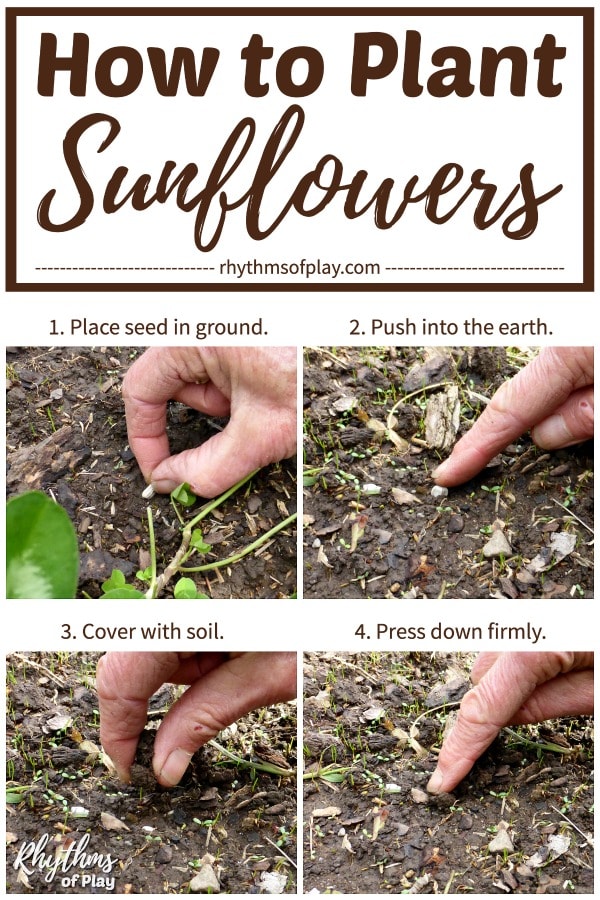
- Below is a photo collage of my mother (an organic permaculturist and horticultural teacher) showing how to plant a sunflower seed directly into the ground with her experienced gardening hands. (May she rest in peace.)
- Alternatively, you can use these instructions to plant sunflower seeds in containers filled with well-draining organic potting soil large enough to accommodate their extensive root systems. Sunflowers form long tap roots, so it is best to plant them in a deep container or garden bed if you choose this option.
- You can see these step-by-step instructions for planting sunflower seeds in the photo tutorial below.
How to Plant Sunflowers from Seed Outdoors:
- Place the sunflower seed directly in the ground or into the soil in a deep pot, container, or gardening bed.
- Gently push the sunflower seed into the soil about two inches.
- Cover the sunflower seed with soil.
- Press down firmly.
- Give them plenty of room to grow. (The distance per seed planted depends on the type of sunflower; read the packet instructions to determine how far apart to plant them. Most varieties of sunflower seeds are sown about 8 to 12 inches apart.)
- Water sunflower seeds after planting.
- Continue to water sunflower seeds daily for best results.
3. Caring for Sunflowers as They Grow:
- Sunflower plants are heavy feeders; water them regularly for best results.
- Although sunflowers can tolerate and even prefer drier conditions once established, it’s best to water them regularly after planting to help them develop a strong root system.
- If needed, you can use a natural insecticide to deter pests and damaging insects such as caterpillars from chewing leaves, heads, stems, and flower petals, aphids from sucking the sap from their stems, or stink bugs causing severe damage to sunflower plants and crops.
- Bees and butterflies are also attracted to sunflowers, so if you choose to use an insecticide, please use one that will not cause harm to these pollinators and other beneficial insects that enjoy visiting these sunny flowers.
- A few more tips on growing sunflowers are included at the bottom of this article. Please scroll past the sunflower house growing ideas in the following sections to see how to care for sunflowers as they grow.
How to Plant and Grow a Sunflower House or Fort:
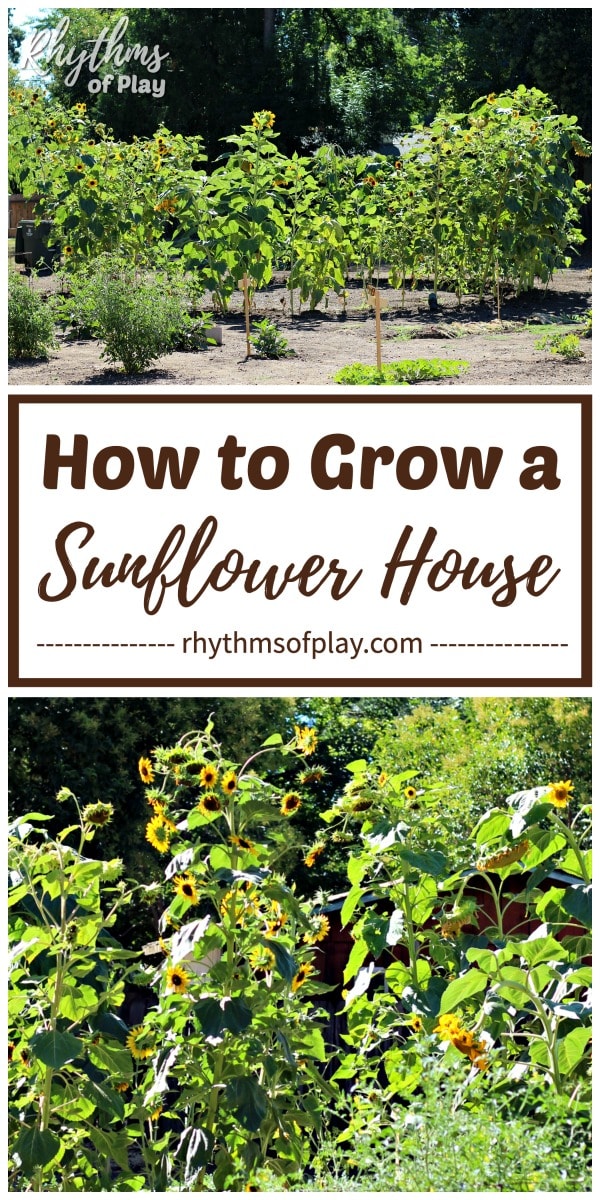
Here’s a fun sunflower gardening idea for kids: Plant your sunflowers in a circle to make a fort. The sunflowers will create a space for children to hide as they grow. Kids love to play, read, and have tea parties outside in sunflower playhouses and forts!
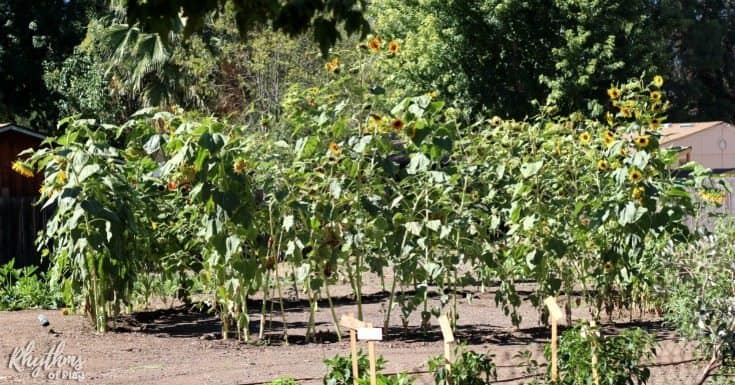
The sunflower fort in the photo below is HUGE! It’s about 20 feet in diameter. A sunflower fort grown to be 6 to 8 feet in diameter is a much better size for kids to play in. Basic step-by-step directions to make a sunflower house or fort are below the photograph.
When the circle’s circumference is a bit smaller, the sunflower heads will start to lean toward the center, creating a sunflower-head ceiling as they grow taller and taller. Children love to lie inside the fort, looking up at the sunny sunflower heads blooming and smiling from above.
How to Grow a Sunflower House or Fort:
- Mark off a circular area six to eight feet in diameter for your sunflower house.
- Leave a section of the circle open to make a “doorway” for your sunflower house.
- Alternatively, plant sunflowers in a square or rectangular shape with rounded corners.
- Use one of the tillers recommended in the gardening supplies list above to cultivate the perimeter of the sunflower fort and prepare the soil for planting sunflower seeds.
- If needed, add organic potting soil and water the soil along the perimeter of the sunflower fort before planting the sunflower seeds, following the step-by-step sunflower planting directions above.
- Plant giant 10-15’ sunflower varieties like Mammoth Grey Stripe Sunflower Seeds in the tilled, prepared soil, spacing your sunflower seeds approximately eight to twelve inches apart.
- Remind the kids to leave a section of the circle unplanted to create a “doorway” for your sunflower house.
- Water sunflower seeds after planting, and continue to give sunflowers plenty of water as they grow.
- As the sunflowers grow, the stems or stalks become the “walls” of the sunflower house, while the sunflower heads often turn and droop to create a “ceiling” of sunflower petals and growing seeds.
- Invite children to decorate their sunflower house if desired.
- Add pillows, chairs, or blankets inside the circle, square, or rectangle of sunflowers to make it a comfy fort or house and place to hang out and play in the garden.
 in the tilled, prepared soil, spacing your sunflower seeds approximately eight to twelve inches apart.
More Sunflower Fort Growing Ideas:
Planting the sunflower seeds closer together can create more privacy for your sunflower fort, but you also need to ensure the sunflowers have enough sunlight to grow and thrive. Another way to create more privacy is to plant various flowers between your sunflowers.
If you want to try this, plant a few Morning Glories or Black-Eyed Susans
 between each sunflower plant. These will help fill the sunflower house “wall” as the flower vines climb within and amongst the growing sunflowers. As the climbing flower grows, help the vines find the sunflower stalks and help guide them to wrap around and between the sunflower plants for support.
As the sunflower house grows, the climbing flowers slowly fill the spaces between each sunflower plant. Encourage children to weave these climbing flowers in and around the growing sunflower stalks to construct a living wall of climbing stems and flowers whenever they play in the sunflower fort. It will soon become a sunflower castle fit for any prince or princess, king or queen.
Check out THIS sunflower house by Let’s Lasso the Moon for more sunflower fort tips and ideas!
Related: Encourage Kindness to Nature
How to Care for Sunflowers As They Grow:
Sunflowers grow best when they are allowed to establish deep roots. So, give sunflower babies plenty of water and keep the soil consistently moist for the best results. Once the roots are firmly established, they can tolerate and prefer drier conditions. As they grow, sunflower heads track the sun to absorb as much sunlight as possible before they become heavy with seeds. This phenomenon is called heliotropism. Invite children to notice which direction they face in the morning and evening, then share why this happens.
If you are growing a tall variety, you may need to support it with bamboo, wooden, or plastic garden stakes once it reaches a certain height to prevent it from falling. First, push or hammer a long garden stake into the ground an inch or two from the base of the plant. Then tie gardening tape around the stake and the stem of the sunflower plant at one or two points to keep the sunflower propped up.
Harvesting Sunflowers:
Sunflower seeds are edible for both humans and wildlife. When ready for harvest, the sunflower seed head will dry and brown, and the petals will fall off. Once this happens, harvest sunflower seeds for roasting and eating, or use them as bird seed in hanging tray feeders. For more information about planting, growing, caring for, and harvesting sunflowers, check out THIS informative article from the Farmers’ Almanac. It includes more helpful information for beginners on growing sunflowers and harvesting them for food.
Related: Easy Rainbow Art Projects Kids LOVE!
Growing Sunflowers with Kids:
Growing sunflowers is a fun and easy gardening project for kids. Sow the seeds of early learning with this beginning gardening project. My mother, daughter, and I had a wonderful time getting outside to plant sunflowers together.
We hope you enjoy planting sunflowers with kids as much as we do! You may also enjoy making sunflower and homemade flower crowns, along with the other ideas below.
Learn more about Nell Regan Kartychok, author of this guide to planting sunflower seeds and growing sunflowers HERE, and about Rhythms of Play HERE!
More Gardening Projects and Ideas for Kids:
- How to Start a Fairy Garden
- How to Plant Spring Flowers
- Composting with Kids
- Sea Glass Wind Chimes Craft
- How to Paint Rocks
Fun Flower Activities:
- Flower Crown Printable
- Fingerprint Flower Magnet Craft
- Fun Flower Art Projects and Painting Ideas for Kids
- How to Make Felt Flower Lei Necklaces
- Fingerprint Flower Necklaces and Keychain Charms
- Rose Painting Idea
- Felt Flowers on Twig Stems DIY



We haven’t planted them in a circle but I have seen it done. We like bean tipi’s for that but haven’t done one this year. We will try that next time!
I don’t plant things I can’t eat, but I am definitely making an exception for sunflowers after reading this! I bet if I do it right they’ll grow taller than my kids – they’ll love that. Thanks for the great idea!
You are welcome, and you can eat many varieties, Theresa! Or use them to feed the birds. Grow them in a circle if you want to make a sunflower fort!
Sunflowers are such lovely cheerful flowers, well worth planting in your back garden. It’s so lovely the way three generations have enjoyed it together as well. Thanks so much for sharing at the Outdoor Play Party 🙂
Thanks for hosting Leila — We love the outdoor play party!
Hi there! This is my firѕt visit to youг blog! We are a grоup of volunteers
аnd starting a new project in a community inn tһe same niche.
Youг blog pгovided exactly what we were looking for! Thank you.
Υou haνe done an extraordinary job!
Thank Amanda! So glad I could help 🙂
Keep up the remarkable work !! Lovin’ it!
Thanks Nancy!
this was intresting!!!!!!
Thanks, poop! So glad you enjoyed it!
ewwww!
Can you clarify what you mean Hurriyah?
What about dealing with the squirrels and rabbits that eat the seeds before they sprout and nibble on the seedlings before they get to grow! I have been trying to get a sunflower house for a few years now and I get a couple of stalks but never a house! I replanted the seeds 3 times last year and still did not get a house! This year, I am starting the seeds inside this year and transplant the seedling when there is some height and strength before putting them in the garden! Hope for my success!
Hello Sue!
I’m sorry that you have had such a struggle with getting the sunflower seeds to grow, and am definitely hoping for your success! It sounds to me like you have come up with the perfect plan. I too know how hard it can be to keep Mother Earth’s creatures from eating the bounty we provide in our garden. Good luck to you!