
The May Day traditions below include ancient and modern celebration ideas, from commemorating spring at the onset of summer to celebrating the labor rights movement. Learn about some of the most popular May Day traditions from different countries and cultures below.
Celebrate May Day with both ancient and modern traditions. May Day celebrations vary across many regions around the world, depending on the time period and cultural context. Originating in ancient agricultural festivals like Beltain (or Beltaine) and 19th-century labor movements, the traditional ways to celebrate May Day are as diverse as the reasons for celebrating this ancient holiday.
For example, some of the most common May Day traditions include lighting fires to bless and protect livestock or land, dancing around the maypole to celebrate fertility in spring, gathering flowers to decorate your home to bring in May’s blessings, and rallying in the streets for better working conditions in modern times. Others enjoy simple spring activities commonly enjoyed by people in the Northern Hemisphere at this time of year.
May Day Celebrations in Ancient and Modern Times
In the Northern Hemisphere, May Day is commonly celebrated on May 1, or on May Day Eve, to commemorate the full return of spring and the beginning of summer. Also known as Beltane (or Lei Day in Hawaii), May Day celebrations honor the freshly sprouting seeds and the beautiful landscape between the spring equinox and the summer solstice. It’s a spring holiday rich in tradition and rooted in agriculture, celebrated by people for thousands of years in accordance with their cultural traditions.
In contrast, people in the Southern Hemisphere typically celebrate May 1 as International Workers’ Day. Traditional spring-themed May Day celebrations don’t align with the natural world in mid-autumn in this part of the world, so many people celebrate the labor movement at this time of the year. Overall, May Day represents a blend of cultural, historical, and seasonal traditions, ranging from springtime festivals to labor rights activism, depending on the context and region. First published in April 2022, this list of fun things to do on May Day is regularly updated and republished to improve the content. Read on to learn more about this multifaceted holiday.
What is May Day?
May 1st, commonly called May Day, features various traditions, from ancient spring celebrations to modern labor movements. In ancient times and many parts of the world still today, May Day is traditionally a celebration of spring, welcoming the season of light and the coming summer in the Northern Hemisphere. On the first of May, colorful, fragrant flowers bloom everywhere. The sun is shining, the birds are singing, and life is fresh and filled with new hope.
Like several other holidays that occur throughout the changing seasons within the Wheel of the Year, many of the ancient May Day traditions still celebrated today began in the early days of agriculture. The similarity of these May Day celebrations around the globe is a testament to our shared human experience worldwide and deep connection to nature across cultures, time, and space, regardless of religion or race.
The Many Ways to Celebrate May Day:
Also known as Lei Day in Hawaii, May Day is an ancient Gaelic cross-quarter-day fire festival, or midpoint sabbat, called Beltane (or Beltaine) in many Northern European countries, that falls between the spring equinox and the summer solstice in the Northern Hemisphere within the Wheel of the Year.
In this context, May Day has ancient roots as a “fire festival” where people lit bonfires to celebrate fertility, the renewal of life, and the beginning of the growing season. These festivals often involve rituals, ceremonies, and customs to ensure a successful harvest and fertility for crops, livestock, and people. In ancient times, and in some communities still today, it was a time to celebrate the good fortune that the increased sunlight and warmer weather would bring, including fresh crops.
For example, historically, May Day marks the beginning of summer when cattle and other livestock are driven out to their summer pastures. On May Day Eve, they would light fires to perform various rituals to welcome the season of light and bless and protect the livestock and the land.
What is Beltane (Beltaine)?
Beltane is an ancient Gaelic fire festival, mentioned above, celebrated on May 1st. It is one of the four Gaelic cross-quarter seasonal fire festivals, along with Samhain, Imbolc, and Lughnasadh. Beltaine marks the start of summer in the Northern Hemisphere in late spring. As mentioned above, it occurs halfway between the spring equinox and the summer solstice.
The name “Beltane” originates from the Old Irish words “Bel” (meaning “bright” or “lucky”) and “taine” (meaning “fire”). Beltane was historically a significant event in Celtic cultures, marking the transition from the darker half of the year to the lighter half and bringing good luck.
Like a few other May Day traditions around the world, Beltane celebrates the sun, fertility, growth, and the fresh blossoming of spring. It’s a time to celebrate the Earth’s abundance and the assurance of warmer months ahead. The land is fertile, food is becoming abundant, and the days are longer and warmer.
Celebrating Beltane (Beltaine):
Traditionally, young adults dressed in white with floral wreaths in their hair celebrate with a Maypole dance. People would also light bonfires to symbolize the sun’s strength, power, and ability to nurture the land and all beings on Earth. Bonfires are lit, and rituals are performed to protect and bless crops, livestock, their homes, and ensure fertility. For example, cattle were decorated with flowers and driven between ritual Beltane bonfires in a spring tradition to purify and protect them. People would also leap over the flames to bring luck and good fortune and promote fertility. They also performed various handfasting ceremonies on the first of May.
In modern times, Beltaine is still celebrated by various individuals and groups. Celebrations often include traditional Beltaine rituals, such as feasting, singing, and dancing; community gatherings around a bonfire; decorating with flowers; and other seasonal festivities that honor the Earth’s fertility, springtime, and the coming summer. Like many other May Day festivals and celebrations across Europe and other areas in the Northern Hemisphere, it’s a time to connect with nature, celebrate life, and welcome the warmer months ahead.
May Day Celebration Ideas:
As discussed above, many people around the world celebrate May Day, Lei Day, and Beltane on May 1. These joyful springtime celebrations each have unique cultural practices and festive traditions. Today, many people still celebrate May Day to welcome spring’s arrival with festive traditions, such as dancing around the Maypole, crowning a May Queen, gathering flowers, delivering May Day baskets, and lighting bonfires.
However, these traditional May Day celebrations happen primarily in the Northern Hemisphere. On May 1, the Northern Hemisphere experiences the height of spring in anticipation of the warmer summer months ahead. Conversely, the Southern Hemisphere experiences autumn and the cooler temperatures and climate associated with mid-fall.
Because May Day celebrations don’t align with conditions in the Southern Hemisphere, some countries south of the equator celebrate May 1 as International Workers’ Day, another May Day tradition explained in the ideas below. Use the ideas below to celebrate May Day, Lei Day, and Beltane in any way that holds meaning and significance for you.
The May Day celebration ideas include things you can do alone and with kids (or students), family, friends, or community. Alternatively, you can celebrate International Workers’ Day by participating in labor movement events (or focusing on workers’ rights) on May 1st. There are several May Day traditions and fun ways to celebrate the climax of spring to choose from below.
22 May Day Traditions from Around the World to Help You Celebrate Spring, Beltane, or International Workers Day:
May Day is celebrated in several ways, from honoring the arrival of summer at the peak of spring to the labor movement. In many parts of the world, it signifies the start of summer and features ancient customs passed down through the generations. Internationally, May 1 also serves as a day to acknowledge the achievements of the labor movement and continue advocating for workers’ rights.
Some of the most common May Day traditions include dancing around the maypole, crowning a May Queen (and occasionally a King), gifting May Day baskets (filled with flowers, candies, and other treats), and celebrating the peak of spring as summer approaches.
May Day is also a day that many people around the world celebrate labor rights and social justice. Whether you enjoy these or other May Day traditions like making flower leis or prefer something more low-key, such as decorating your home with flowers, there’s no wrong way to celebrate May Day.
Here are 21 May Day celebration ideas and instructions you can use to celebrate solo or with others. The list includes several more fun things to do for May Day that children and adults alike can enjoy. Discover fun ways to celebrate May Day with kids, family, or your community with the ideas from around the world below. You might also enjoy this list of fun spring activities for kids and adults.
1. Wash your Face and Hands in the Morning Dew:
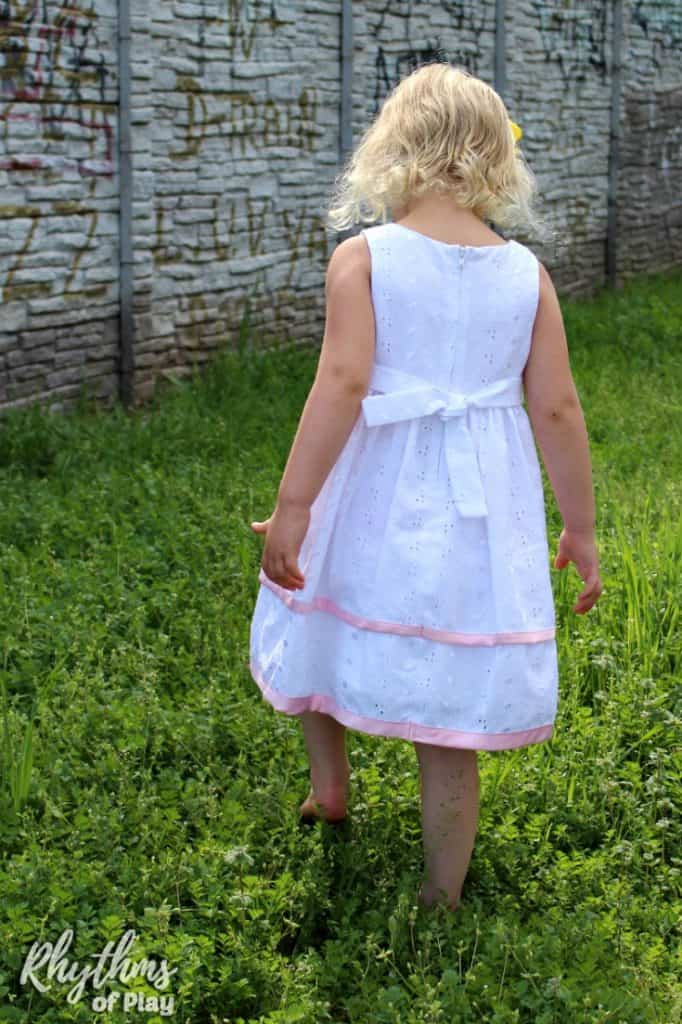
Go outside in the early morning hours on the first of May to wash your face in the morning dew. As an old Irish saying goes: “The plainest girl will be beautiful if she rises early on May Day and bathes her face in the morning dew at sunrise.” Washing hands and walking barefoot in the morning dew is a May Day myth believed by many to bring benefits, even on the days that follow the first of May. The morning Dew is said to cure many ills and offer several benefits to those willing to try it. Especially if the person dared to roll naked in it. Give it a try! What have you got to lose?
2. Kick Off Your Shoes and Go Barefoot:
May Day marks the time of year when many children can go barefoot for the first time. Even adults traditionally take off their shoes longer than just for a walk in the morning dew after May 1. So kick off your shoes, let your feet connect directly with the ground, and root your spirit deeply into the Earth to connect with nature this May Day and throughout the spring and summer months.
3. Dancing Around the Maypole:
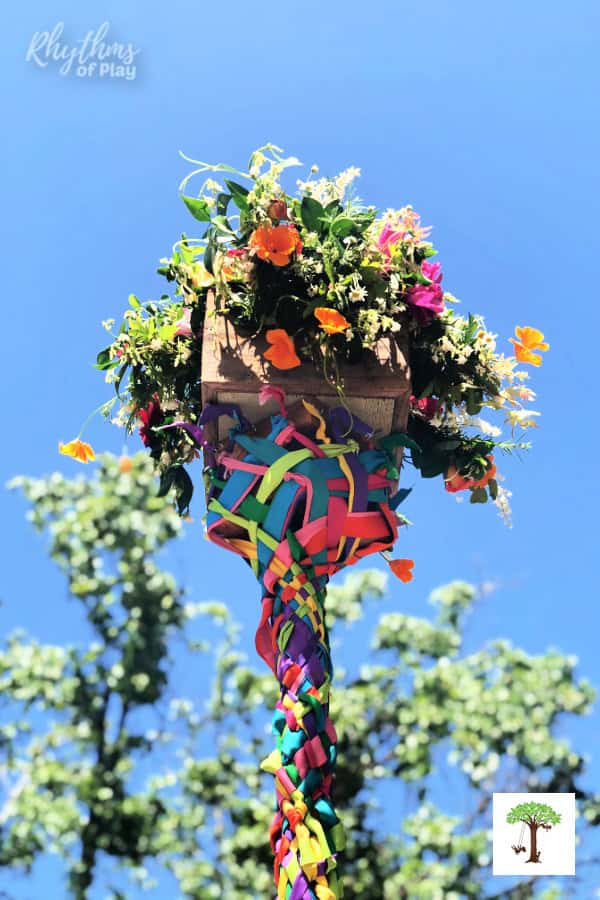
One of the most common and popular traditions for celebrating May Day is dancing around the maypole. The Maypole dance symbolizes fertility and the union of male and female energy. This classic springtime tradition began as a Beltane pagan fertility ritual in northern Europe. However, it has become a staple of May Day celebrations (and Mid-Summer Solstice celebrations) in many countries worldwide.
If you’re unfamiliar, a maypole is a tall pole with bright, colorful ribbons or streamers attached to the top. Participants, traditionally young girls and boys or men and women, dress in pure white. Each holds a ribbon as they dance around the pole, weaving them over and under one another to create an intricate, beautiful pattern.
They weave the ribbons in and out as they dance around the maypole. The Maypole’s brightly colored ribbons represent the lengthening days as summer approaches. As Maypole dancers weave in and out of one another, the Maypole dance creates a multicolored pattern that creeps steadily down the pole.
But like a Tibetan mandala, or mandala created in the natural world, this artistic wrapping of the Maypole is not meant to last. Once the ribbons are wrapped to the bottom, the dancers reverse their steps and undo them until they are completely undone. You can watch a Maypole dance at Waldorf Schools and other May Faire spring celebrations around the world. Search for one near you online, or host a maypole dance in your backyard with the instructions below:
How to Host a Maypole Dance:
Recruit others from your family or community to help set up a Maypole in your yard or community space and decorate it with colorful ribbons and flowers to share the joy of this traditional May Day dance. If you don’t have a maypole handy, you can easily make one using a pole or broomstick. Tie streamers or ribbons of different colors around the pole, and top it with a basket of flowers if desired.
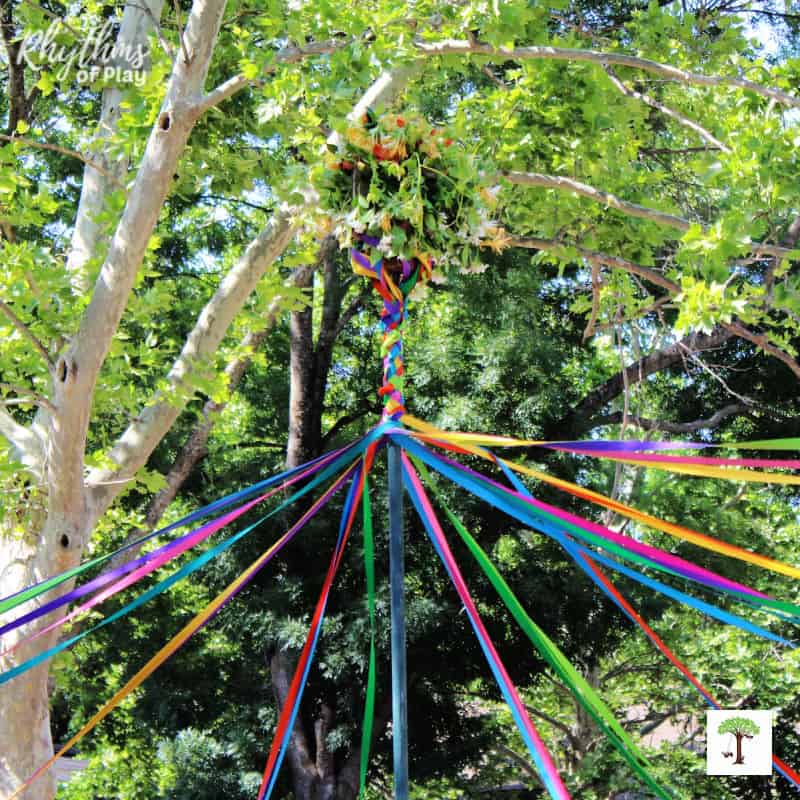
Once you have finished building your DIY Maypole, have everyone take hold of a ribbon and dance around it in a circle. Weave the ribbons in and out by passing the other dancers in an alternating fashion, first left and then right, for example, to create a pretty pattern as you dance. The weaving of rainbow colored Maypole ribbons at a May Faire is shown in the photograph of the Maypole below.
4. Make Spring Flower May Day Crowns:
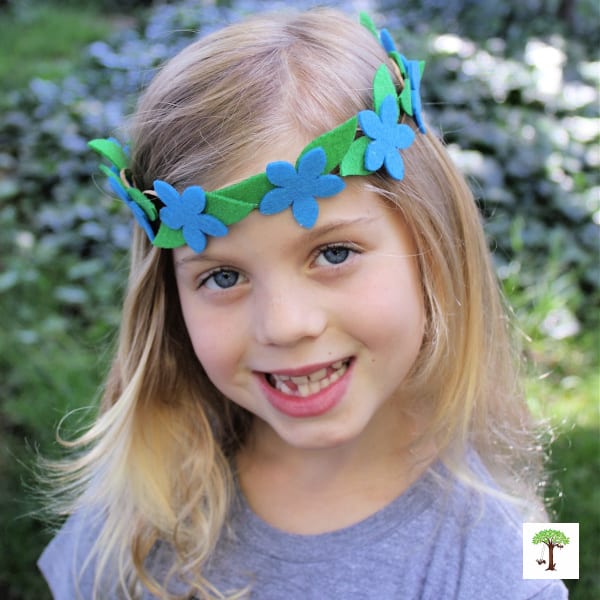
Another traditional May Day activity is making flower crowns to wear during your celebrations. Flower crowns are traditional attire for children coming of age, dancing around the Maypole. A fresh flower May Day crown looks just as gorgeous on kids and adults at any spring (or summer) festival.
There are several easy ways to make a flower crown with fresh or faux flowers. Follow these step-by-step instructions to make a flower crown with faux flowers. If you’d rather use fresh flowers to make beautiful fresh flower crowns like the spring maidens traditionally wore on May Day. Please visit this list of fresh-flower crafts for a few gorgeous DIY crown tutorials that make celebrating this May Day Tradition easy.
5. Celebrate Lei Day on May Day!:
In Hawaii, May Day is Lei Day! Attend or organize a small or large Lei Day celebration with hula dancing, Hawaiian music, and lei-making. I loved celebrating Lei Day when I lived on the island of Kauai as a young adult. Lei Day is a beautiful celebration of Hawaiian culture and the spirit of Aloha on the first of May. It’s a celebration for young and old alike, bringing the Aloha Spirit into the minds and hearts of people everywhere.
The Aloha Spirit is a Hawaiian philosophy that embodies the “coordination of mind and heart,” and fosters a deep love, compassion, and mutual respect among all community members as ohana (family). At a traditional Lei Day celebration on May 1, a May King and Queen are often selected and crowned, with a royal court representing each Hawaiian island, wearing flower leis and crowns. Schools also put on plays, and people from different communities come together to dance the luau in parks and other venues to celebrate Lei Day.
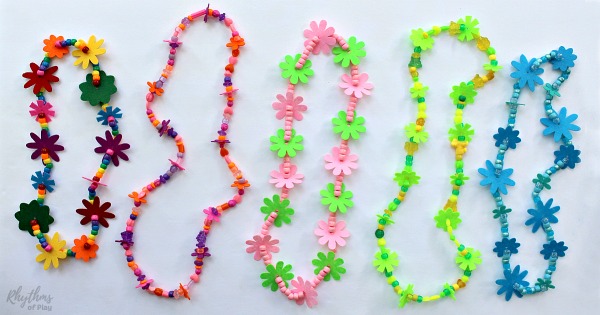
On Lei Day, children and adults make and give fresh flower leis to close family, relatives, friends, teachers, classmates, neighbors, and community members. Wear a lei yourself to celebrate spring and gift one to others to spread the aloha spirit and feelings of ohana on Lei Day. In addition to fresh flowers, you can use leaves, nuts, paper, and fabric to make a flower lei necklace. For example, another fun idea is to make and give felt flower lei necklaces (photo below). Or make fingerprint flower necklaces instead!
6. Sing and Dance the Luau to The Song, May Day is Lei Day in Hawaii:
A famous song and luau dance are also performed in the Hawaiian Islands to celebrate Lei Day on May Day. Here are a few of the lyrics, but be warned, they are catchy and will get stuck in your head (especially if you play the video below): “May Day is Lei Day in Hawaii, garlands of flowers everywhere, all of the colors in the rainbow, maidens with blossoms in their hair.”
You can see the “May Day is Lei Day” song and luau dance performed by members of the global Hula ʻOhana at the Lei Day Hōʻike and hear the rest of the lyrics in the video below. Learn more about Lei Day and its history–> HERE.
7. Give Flowers to Your Loved Ones:
One of the most enduring May Day traditions is giving flowers to your loved ones. Whether in the form of a basket, fresh bouquet, corsage, or boutonniere, or a traditional Hawaiian flower lei. Giving flowers to family and friends on May Day is a May Day tradition that symbolizes friendship, love, luck, and community. Celebrate the rebirth of the natural world with the gift of fresh flowers. This tradition is popular in many countries, including France, Germany, Ireland, Italy, and the United States. If you want to stick with tradition, choose a flower type traditionally associated with May Day.
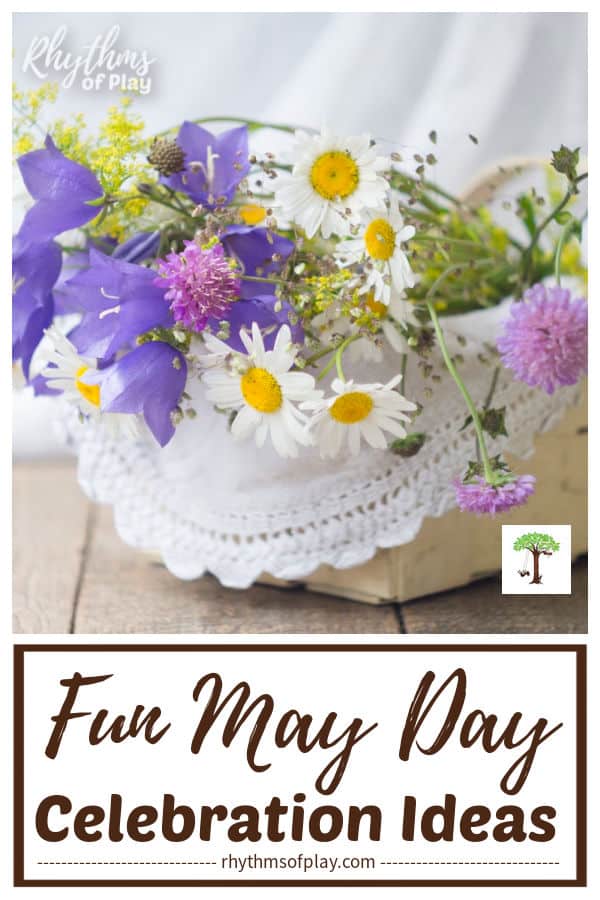
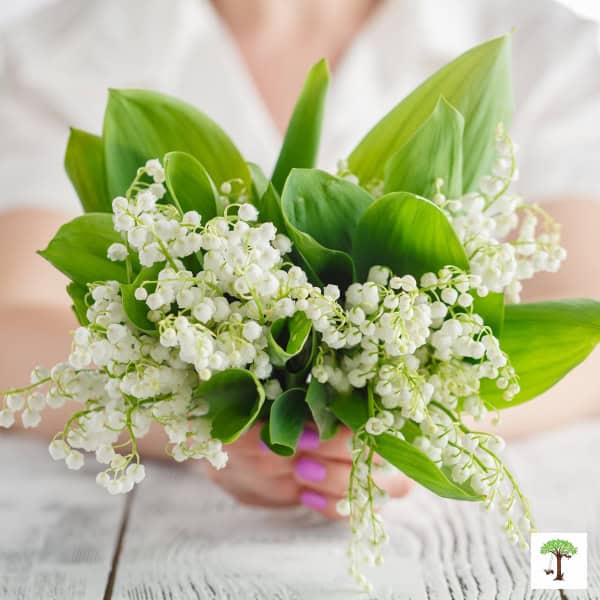
For example, in France, that flower is the lily of the valley (muguet), as shown in the photo below. On the Islands of Hawaii, fresh flower leis are traditionally made, given, and worn around the neck on May Day as mentioned above. Other traditional May Day flowers perfect for a May Day bouquet include Margherita daisies, tulips, daffodils, lilacs, hyacinths, peonies, violets, forsythia, magnolia, and redbud, as well as other flowers that bloom at the height of spring and the beginning of summer.
If you are not a stickler for tradition, any flower is a great gift to spread the love with friends and family in celebration of May Day. Whatever type of flower you choose, giving it to your loved ones is a simple way to show them how much you care. It can also act as a symbol of spring, and the miracles that more sunlight brings to our precious blue and green planet. Plus, it’s a great way to enjoy the beauty of springtime at the onset of summer.
8. Make May Day Baskets:
Another popular May Day tradition is making May Day baskets. Flowers symbolize fertility and rebirth at the height of spring. They are traditionally used to make baskets and given as symbols of luck, love, and community. This May Day tradition is common in many European countries, particularly Germany and Switzerland. It’s also becoming popular in the United States, where people often fill these baskets with flowers and other small gifts.
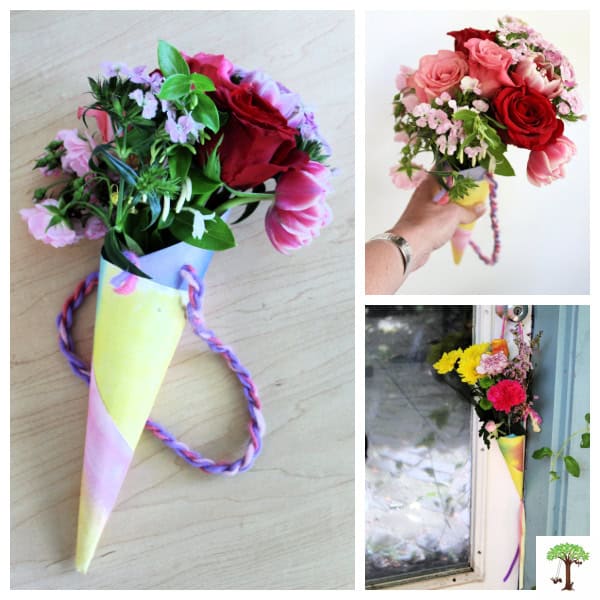
Making May Day baskets is a great way to express your creativity and a lot of fun for kids and adults alike. Making baskets is an excellent May Day activity if you’re looking for a fun spring tradition for kids and adults alike. You only need paper (or a small vase or recycled container), scissors, glue, and flowers. You can craft a simple flower basket for May Day with flowers in several ways. Let your creativity run wild as you make a May Day basket to place flowers in, or use the simple step-by-step instructions below.
Scroll down for one example of how Waldorf teachers show children how to make a May Day flower basket. Another idea is to put flowers in a small vase with a colorful ribbon tied around the neck. Alternatively, use recycled materials, such as appropriately sized containers or fabrics, to create a flower basket. A few options are available in this collection of recycled DIY baskets. Or fashion your May Day baskets any way you wish!
How to Make a May Day Basket Flower Cone With or Without Ribbons:
- Tie 3-5 colorful ribbons, each about 12 to 15 inches long, together at one end to create a large knot with ribbons hanging from it (optional).
- Choose a wet-on-wet watercolor painting, or use a piece of white or colored cardstock and roll it into a cone to hold flowers.
- Turn the painting over so that it shows when the paper is rolled into a cone in the next step. Any side of the paper will work if using white or colored cardstock instead.
- Practice rolling the paper into a cone so that one end is open and the other is curled tightly together before applying tape in the next step.
- Apply glue tape along the edge of the short side of either the back of a painting or a piece of paper.
- Place the knot of the optional ribbon decoration in the middle of the paper. (Skip this step if you are making a flower cone without ribbons.)
- Roll up the paper starting at the side opposite the glue tape, so the tape holds the paper together in the shape of a cone.
- Ensure that the knot is inside and the ribbons hang out the bottom if you are including them.
- Make a finger-knit handle. Or create a simple handle with ribbons.
- Staple, glue, or punch a hole and then tie the handle to the inside of the cone-shaped paper flower basket, as shown in the photo collage below.
- To keep flowers fresh, place their stems into a baggie with a very small amount of water, then slip the bag with the flowers into the flower cone. Use ribbons to tie the top of the bag shut.
- Add other small treats hidden inside the paper cone, below the flowers, if desired.
- Finally, deliver the May Basket full of fresh flowers (and sweet blessings) to hang on a doorknob, as shown in the photograph below.
- Please note: when you put flowers into paper cones, these May Day flower baskets are top-heavy. Carry them in another basket or container to keep them upright, or hold them by the cone rather than the handle. Then, hang them on doorknobs so they stay upright, as shown in the photo collage below.
9. Deliver May Day Baskets:
To try this May Day tradition, make small baskets filled with spring flowers and other small treats and leave them on your neighbor’s doorsteps to spread goodwill, friendship, and the joy of spring. This is often done anonymously to add an element of surprise and delight. Sometimes, the recipient is expected to guess who left the May Day basket and return the favor.
Other times, as with my daughter’s kindergarten class, these May flower baskets are delivered to spread cheer and goodwill to elderly communities and those who live near the school. At the Waldorf school my daughter attended, it’s traditional for kindergarteners to visit retirement communities and nursing homes to deliver flowers and sing spring songs, bringing the spirit of spring into the hearts of the aging community. Sometimes they also visit the homes of neighbors who live near the school.
Delivering Flower Baskets for May Day:
If you want to participate in this May Day tradition, make flower baskets filled with flowers and other small treats to gift to teachers, neighbors, lovers, moms, dads, family, friends, or co-workers. Next, invite the kids to deliver May Day baskets to them. In my experience, children love participating in this fun May Day tradition!
Or, go on a secret delivery mission yourself! Hang them on neighbors’ doorknobs or your lover’s or BBF’s office door, drop them off on the doorsteps of friends, family, and extended relatives, or deliver May Day flower baskets to your local retirement home on the first of May.
Delivering May Day baskets is a fun way for kids and adults of all ages to send springtime greetings to those who live near you. You can also plan to have flowers sent far and wide to appear on doorsteps, bringing May Day cheer wherever it’s needed. Delivering May Day flower baskets is a lovely way to say “Happy Spring” to neighbors, family, and friends, even if they live far away.
10. Bring in the May; Gather Flowers and Decorate Your Home with Fresh Flowers and Flower Crafts:
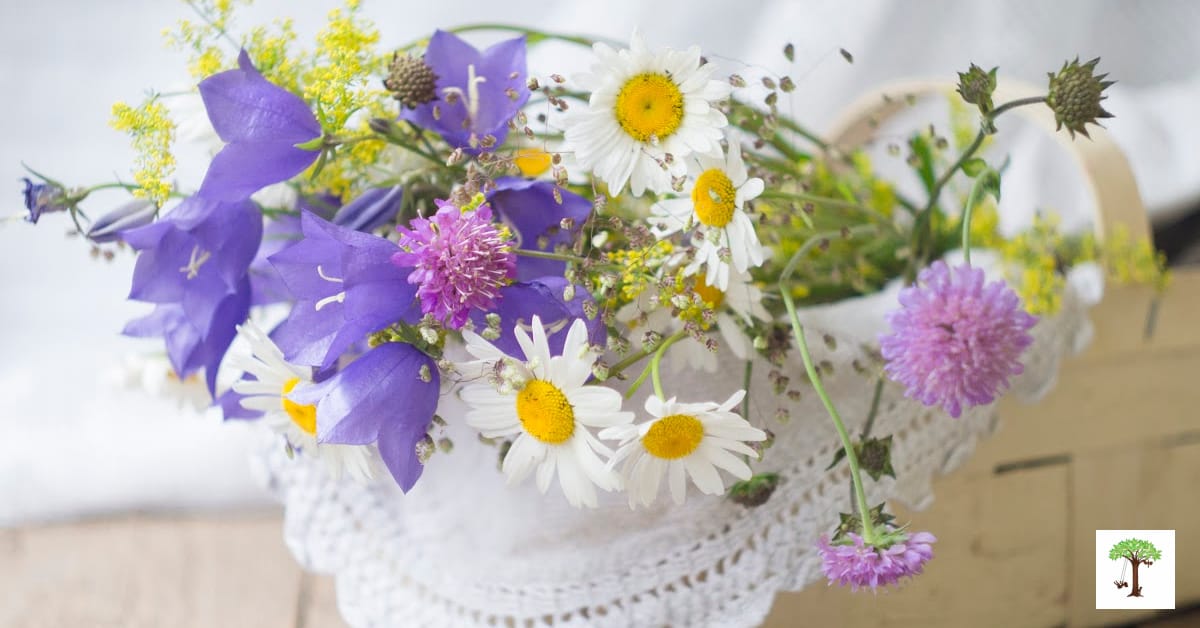
Another fun May Day tradition for all ages is “Bringing in the May.” May flowers are traditionally used to create floral arrangements and other decorations for May Day, which celebrates spring, fertility, and the return of warmer weather. Decorate your home with greenery and seasonal flowers for Beltane or May Day. Bring May into your home, workplace, or classroom by collecting flowers or cuttings of flowering trees. First, gather wildflowers and flowers from your backyard or garden, or grab fresh blooms from your local florist to fill your house with the scent of spring.
Next, invite children of all ages to try flower arranging to help beautify your home or school. You can also use fresh flowers and cuttings to weave garlands and wreaths and make other creative fresh-flower crafts! May Day is the perfect time to decorate your front door or enhance your home decor with beautiful floral arrangements. In ancient times, people even decorated their livestock with fresh flowers. If you don’t have livestock, decorate your pets instead. Children love doing these simple May Day activities!
Decorating with Flowers for May Day:
“Bringing in the May” is common in many European countries, such as Britain (England), Ireland, Germany, and Switzerland. Decorating with flowers for May Day is also popular in the United States, where people often hang flower wreaths or garlands on or around their front doors. Or deliver May Day baskets to give flowers to neighbors, family, and friends.
Use flowers from your yard or garden to decorate your home for May Day. Or use flowers traditionally associated with May Day, such as lilies of the valley, Hawthorne blossoms, or Margherita daisies. Alternatively, decorate with birch branches and yellow flowers, like marigolds, if you want to use traditional flowers for Beltane. The following section lists a few other easy flower craft ideas you can make to celebrate May Day.
11. Make Beautiful Flower Crafts with Fresh or Faux Flowers in Celebration of May Day:
Use the fantastic ideas below to get creative with flower decorations and crafts. Making flower crafts is a fun May Day tradition and a great way to celebrate May Day with kids. Once finished, feel free to use them to decorate your home.
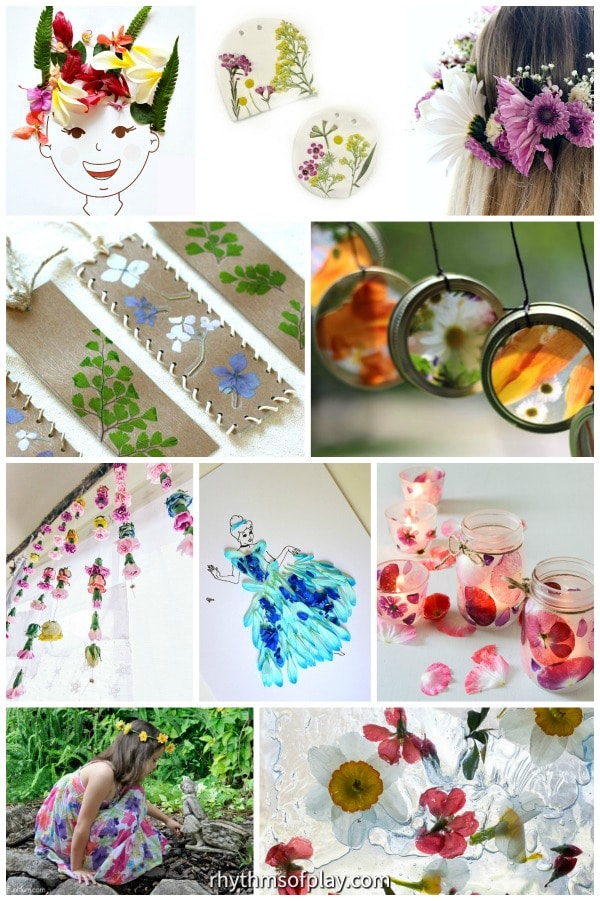
Make a May Day wreath for your front door, or weave a beautiful May Day garland to decorate the inside of your home. Or, if you’re feeling adventurous, try your hand at making a maypole or a maypole craft. Traditionally, fresh flowers are used to make crafts on May Day, but making flower crafts with felt or paper can be fun, too. Here’s a list of Flower arts and crafts you can make with fresh flowers or design to look like flowers at home or in the classroom:
- Fresh Flower Nature Crafts (photo below)
- Fresh Flower Suncatcher Crafts
- How to Make a Flower Crown
- Felt Flowers on Twig Stems
- How to Make a Felt Flower Lei Necklace
- Flower Art Projects, Crafts, and Painting Ideas
- Shell Daisy Craft
- Fingerprint Flower Glass Magnets
- How to Make Fingerprint Flower Necklaces and Keychains
- Fingerprint Flower Candle Holders
12. Plant Flowers in your Yard or Garden:
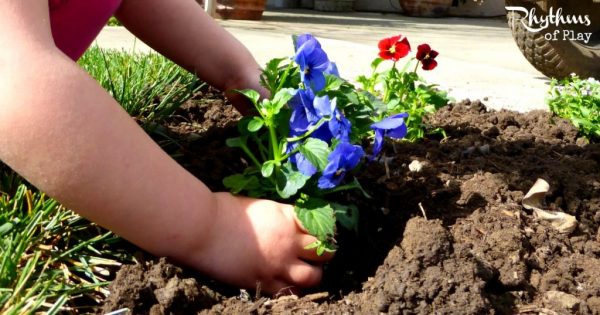
If you haven’t already done so, May Day is an excellent time of year to plant spring flowers around your home and garden, or to get ready to plant them if there is still a risk of frost in your area. Visit your local nursery to pick up some flowers or seed pack trays, and invite children and other family and friends to join you. And if you need a little help, here’s a beginner gardening tutorial that makes it easy to plant flowers organically in your yard or garden, with or without children. It’s also fun to plant sunflowers for May Day.
13. Fly a Kite to Celebrate May Day:
Flying a kite is a popular May Day tradition in many countries, including the United States, China, and India. If you want to join the fun, you only need a kite and wind. Then, let your kite soar high into the sky. Learn how to make a kit, fly a kite, and keep everyone safe and happy in How to Fly a Kite.
Flying a kite is a great way to enjoy the outdoors and get some exercise. Plus, it’s a lot of fun for the kids. So, if you’re looking for May Day celebration ideas from around the world that everyone can enjoy, flying a kite is a great option.

14. Play May Day Games:
Another popular May Day tradition is playing games. Playing May Day games is common on May 1 in many European countries, particularly Germany and Switzerland. Games are also popular in the United States, where people often play them at May Day celebrations. Enjoy a few May Day games for Beltane.
One popular game for children is the Maypole Dance. This game involves dancing around a Maypole while holding onto ribbons or streamers attached to the top, as shown in the photograph at the top of this post. Another popular game is a May Day Basket hunt, similar to Easter egg hunts. In this game, people hide baskets filled with flowers and other small gifts around their homes or neighborhoods. Then, others must find the baskets and return them to the May Day celebration. Alternatively, try hosting an Easter egg scavenger hunt for kids with rhyming clues anytime in the spring, including on May Day.
15. Host or Attend a Feast for Beltane:
Beltane is a joyful turning point in the year. It marks the shift from spring to early summer, when the land and its foods are once again alive and full of promise. After a long winter and a lean early spring, people typically had more to share at this time of year. Feasting also holds a deeper meaning in many Celtic traditons, where food is associated with the blessing of protection. In this worldview, sharing a meal during Beltaine can help ensure the health, fertility, and good fortune for an individual, a family, or an entire community.
Fires are often lit as part of the celebration, and food is cooked over the flames or blessed by them. Eating together strengthens community bonds. It was not just about filling hungry bellies and marking the passage of time. It is about marking a sacred moment in the natural cycle of the year and the transitions we continually face as a result.
Share Gratitude, Connection, and Blessings for a Bountiful Season Ahead at a Traditional Beltane Feast:
At its heart, a Beltane feast is about gratitude and connection. The food is simple, but everything is meaningful. Let each bite reflect the rhythm of the seasons and your relationship with the land around you. Sharing food together makes the season feel even more hopeful and full of life than the increased levels of sunlight around us. Enjoy it and share the wealth with others in celebration of spring and the coming summer.
Have a spring feast on May Day to celebrate the return of abundance in your home or community. Bring your family, friends, and neighbors together to give thanks for the earth, the animals, and the renewed hope of a good growing season ahead. Prepare a feast using fresh, seasonal, locally grown organic produce from your area and the traditional Beltane foods listed below. Alternatively, ask guests to bring a dish prepared with local seasonal foods to share.
16. Eat Traditional May Day or Beltane Foods:
Include traditional Beltane foods, such as fresh spring fruits and vegetables, root vegetables like carrots and potatoes, dairy, and oat-based dishes. Traditional foods at a Beltane feast are simple, fresh, and closely tied to the land. Dairy plays a major role. Milk, butter, and cheese are common because cows and goats are producing again after winter.
Oatcakes and barley breads are also often baked and shared. The grains stored from previous harvests are regarded as precious, so they are used to make food as the sun’s warmth returns, allowing fresh crops to grow in the late spring and early summer. Fresh greens, wild herbs, and early vegetables might be gathered and added to soups or stews. Eggs are another seasonal food that symbolize growth and new life.
Meat is sometimes part of the feast, though not always in large quantities, as it was often no longer in abundance in May. When served, it might come from animals that could be spared or from a special communal dish. Honey is a favorite May Day sweetener, commonly used in simple treats and drinks at this time of year. For example, one of the best-known Beltaine drinks is mead, a fermented honey-based alcoholic beverage enjoyed at celebrations.
Eat Traditional May Day Food Unique to Your Area for Beltane:
Celebrate May Day with traditional foods unique to your area. In many areas, people share round flat cakes in celebration of the abundance to come. Bannocks, for example, are round, flat cakes with Scottish and Indigenous North American Origins. A bannock is a simple, yeast-free quick bread typically made from flour, fat, and water. They are traditionally fried, baked, or cooked over a fire in a skillet.
In Sweden, it’s common to eat a type of flavored porridge called havregröt. This dish is made with oats, milk, and sugar and can be served plain or with fruit. While in the Czech Republic, a sweet treat called May Day cake is often enjoyed on this holiday. This cake is made with yeast dough and filled with fruit or jam.
As mentioned above, it is also traditional in many European countries and in the United States today to deliver a May Day basket along with blessings for a joyful and abundant season ahead. This basket is typically full of flowers, but sometimes contains candy, treats, baked goods, or other small gifts. It’s then hung on a family member’s, friend’s, or neighbor’s doorknob as a surprise.
17. Have a May Day Picnic:
Another popular May Day tradition is organizing a picnic instead of a more traditional feast at home. To enjoy the warmer weather, organize or join a family or community picnic with traditional spring foods, games, and music. Going on a picnic is a common way to celebrate May Day in many countries, including Finland, the United States, France, and Italy.
Gather food and a blanket if you want to enjoy the fun. Then, find a spot outdoors and enjoy a relaxing meal with your friends, family, or schoolmates. Having a picnic is a great way to enjoy the outdoors and the company of your loved ones. Plus, it’s a great excuse to eat some delicious food. So, if you’re looking for a May Day tradition that everyone can enjoy, a picnic in the great outdoors, at a campground, or in a park is a great option.
18. Enjoy a May Faire Celebration for Beltaine:
Go to a May Faire to celebrate May Day! Communities worldwide hold spring carnivals and festivals on or around May 1, often featuring traditional activities such as dancing around the Maypole and other May Day crafts. The Waldorf School my daughter attended before we became homeschoolers (Blue Oak Public Charter School) puts on a May Faire with a gorgeous Maypole dance to celebrate May Day.
Although we are homeschoolers now, we love to visit the school to celebrate spring with our community and the children she’s grown up with for May Day. Every parent I know enjoys the few years their children get to dance the Maypole to kick off the May Day festivities. There are booths where you can make traditional spring crafts, such as flower crowns, a bake sale, and local vendors selling their gorgeous creations. Please join us if you are a resident of Chico, CA. If not, check your local listings for a May Fair near you to enjoy the spring festivities!
19. Host or Attend a Bonfire to Celebrate Beltaine:
It’s traditional in many Northern European countries to celebrate Beltane with a bonfire on May Day. So, hosting or attending a May Day bonfire is traditional in Ireland, Germany, and Switzerland. It’s also popular in the United States, where people often gather around bonfires to sing and dance in celebration of May Day.
In the Middle Ages, the Gaelic people celebrated the festival of Beltane on May Day. Beltane means “Day of Fire” in the Gaelic language. Historically, people created large bonfires and danced at night to celebrate the sown fields as they began to sprout. In some parts of Ireland today, May Day Eve is still considered Bonfire Night. Light a bonfire with your community or in your backyard to symbolize the light and warmth of the coming summer.
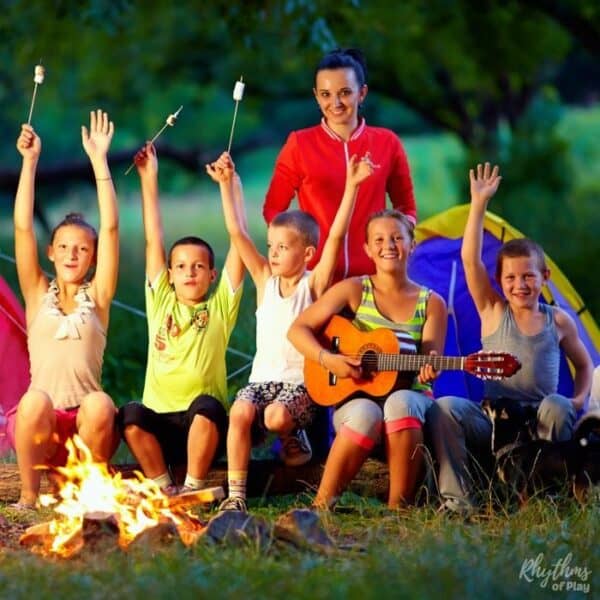
Dancing around the bonfire and playing music are other ways to celebrate Beltane. Today, many people still engage in traditional rituals such as jumping over the bonfire for fertility and luck. If you’d like to join the fun, learn how to build a campfire or bonfire and keep everyone safe. Ask someone to strum a guitar or a ukulele, have a spring sing-along, and enjoy the warmth of the flames. Hosting or attending a bonfire is a great way to enjoy the outdoors and the company of your loved ones. Plus, it’s a great excuse to roast some marshmallows!
20. Sing and Dance to Celebrate The Spring:
Another May Day celebration idea from around the world is singing and dancing. While the type of dance and song may vary, they each celebrate spring. One of the most popular dances on May Day is the traditional Maypole dance. Another is the song and luau dance Hawaiians love singing and performing called “May Day is Lei Day in Hawaii.” Each of these popular May Day traditions is mentioned as discussed above.
Singing and dancing are also traditional ways to celebrate May Day in many Scandinavian countries, such as Switzerland, the UK (Britain, Ireland, and Scotland), Germany, and the Czech Republic. It’s also popular in the United States and Ireland, where people often gather around bonfires to sing and dance. To join in on the fun, put on some music and encourage everyone to get up and dance. This is a great way to enjoy May Day to the fullest by singing and dancing your heart out, traditional spring song or not.
21. Tell May Day Stories or Read Spring Books:
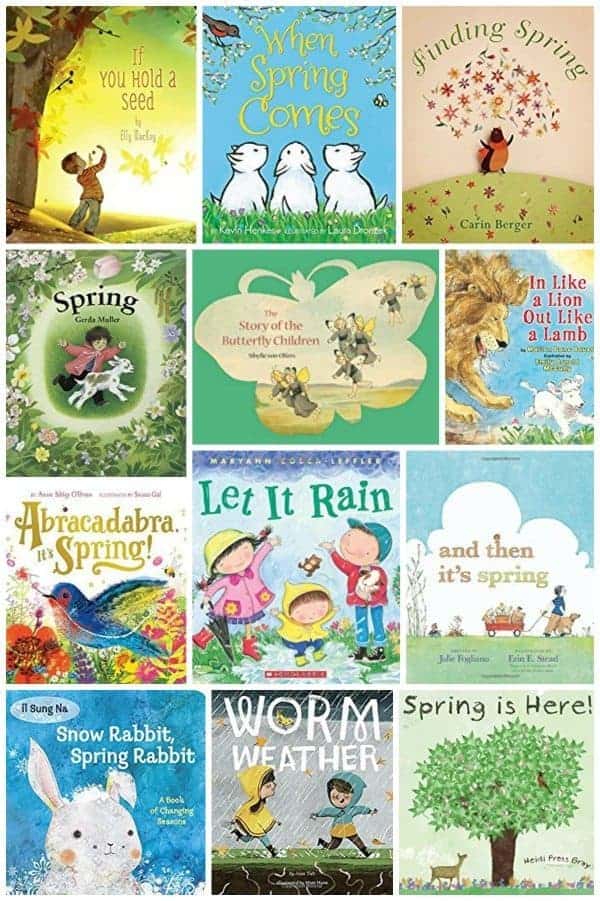
Another fun thing to do on May Day is to tell stories and read books about spring. Look at this list of spring books for kids to gather ideas. Or, learn about May Day in Hawaii and why it is one of the most celebrated traditions in Kalei’s May Day in Hawai’i Nei.
22. May Day is also celebrated as International Workers’ Day:
In many countries, the first of May, or May Day, is observed as International Workers’ Day or Labor Day. It commemorates the historical struggles of the labor movement and workers’ rights and celebrates the gains made by workers and the labor movement throughout the Industrial Age.
So, May Day is also a typical day for rallies, demonstrations, and marches advocating for workers’ rights, fair labor practices, and social justice. In the United States and Canada, a similar observance, Labor Day, occurs on the first Monday of September. Participating in or organizing workers’ rights events, rallies, and marches focusing on labor rights and achievements is another way to celebrate May Day.
22 May Day Traditions And Celebration Ideas You Can Try at Home
May Day is a traditional holiday celebrated in many countries around the world. While the holiday has many different origins, the common themes are the celebration of spring and workers’ rights. Do you have any fun May Day traditions? We’d love to hear how YOU celebrate May Day at home. Please share them in the comments below!
I’d love to hear how you and your family celebrate spring on this special day. Whether you make a Maypole, go for a barefoot walk in the morning dew, make flower crowns, have a picnic, fly a kite, celebrate Beltane with a bonfire, or do something else, I can’t wait to hear about it.
However you decide to honor it—whether through rest, activism, or tradition—I wish you a joyful day. Happy May Day!
Learn more about Nell Regan Kartychok, author of this May Day celebration guide HERE, and Rhythms of Play HERE!




Leave a Comment