
Explore autumn with fall scavenger hunt ideas for kids, teens, and adults, including illustrated checklists, leaf and color hunts, sensory explorations, photography prompts, and even rhyming riddles.
Explore this collection of outdoor fall scavenger hunt ideas and activities, including printable fall scavenger hunts for toddlers, preschoolers, kindergarteners, elementary school-aged children, teens, and the young at heart. Autumn-themed nature scavenger hunts offer a simple way to get outside, learn, and have fun while noticing how the natural world changes.
Depending on where you live, leaves might turn brilliant shades of red, orange, and gold; seeds may scatter across the ground; or changes in weather and wildlife activity may signal the season’s turn. An outdoor fall scavenger hunt invites children and adults to slow down and look more closely. What colors can you spot? Which plants are changing? What can you hear?
Below, you’ll find fun fall scavenger hunt ideas and printable scavenger hunts for kids, families, and groups. Choose an illustrated fall nature scavenger hunt, explore autumn leaves and colors, follow sensory invitations, try a fall photo scavenger hunt, or solve rhyming fall scavenger hunt riddles. Enjoy these activities in the backyard, at the park, on a nature walk, in a schoolyard, or with an outdoor classroom or homeschool group.
Use the ideas as a starting point, then follow your curiosity wherever it leads. There’s no need to find everything on the list. Each discovery can spark another question and another chance to wonder, explore, and connect with nature. You might also enjoy these fall art projects for kids to continue creating after your outdoor adventures.
Choose Your Fall Scavenger Hunt
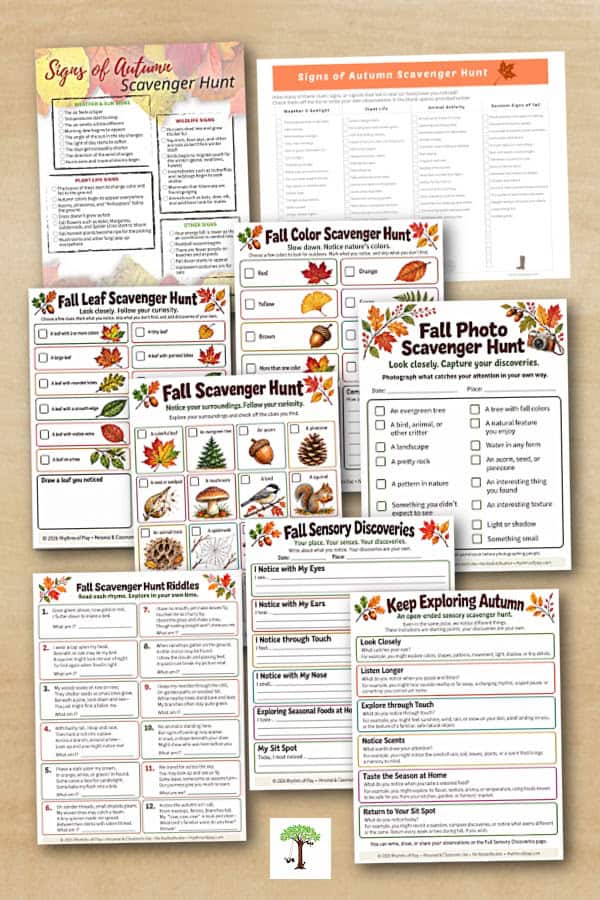
Explore the options below to find a fall scavenger hunt for your family, classroom, or group. Bring a printable on your next outing, create a hunt with local nature clues, or choose a theme to explore together. The tables below link to instructions and ideas farther down the page.
Use the tables below to choose your fall scavenger hunt. Click or tap a hunt’s name to jump to its instructions and activity ideas farther down the page. In the printable table, select “Get the Printable” to visit its product page in the Rhythms of Play Learning Center.
Choose a Printable Hunt
These seven fall scavenger hunt activities have matching printables available individually in the Rhythms of Play Learning Center and as part of the Nature Scavenger Hunt Printable Library. Many of these printable activities can also inspire exploration using spoken clues or your own list. Explore the options below to choose your hunt.
Try any of these autumn activities with your family, classroom, homeschool group, afterschool program, or community group. For younger children, begin with a few illustrated clues and explore together. Older children, teens, and adults may enjoy photography, riddles, or looking for subtle seasonal changes.
| Fall scavenger hunt | What you’ll explore | Get the printable |
|---|---|---|
| Illustrated Fall Nature Scavenger Hunt | Sixteen illustrated nature clues to look and listen for outdoors. | Fall Scavenger Hunt Printable |
| Fall Leaf Scavenger Hunt | Leaf colors, shapes, edges, and other details. | Fall Leaf Scavenger Hunt Printable |
| Fall Color Scavenger Hunt | Colors in leaves, seeds, flowers, bark, fruit, and the surrounding environment. | Fall Color Scavenger Hunt Printable |
| Fall Sensory Scavenger Hunt | Invitations to pause, notice, and record sensory discoveries. | Fall Sensory Scavenger Hunt Printable |
| Fall Photo Scavenger Hunt | 16 photography prompts to help you capture finds. | Fall Photo Scavenger Hunt Printable |
| Fall Scavenger Hunt Riddles | Twelve rhyming nature clues to solve at home, in class, or outdoors. | Fall Scavenger Hunt Riddles Printable |
| Signs of Autumn Scavenger Hunt | Look for seasonal changes in light, weather, plants, and wildlife. | Signs of Autumn Printable |
Use a printable checklist or share a few clues aloud—no printing needed to begin. Let everyone’s interests guide your choice rather than setting a strict age limit. For a closer look at the seasonal changes unfolding where you live, explore these signs of autumn.
Try a Hunt without a Printable
Create your own fall scavenger hunt with local nature clues or a theme that interests your family or group. Look for familiar, safe fallen leaves and seeds, or for pumpkins, bird activity, or neighborhood autumn decorations. These simple ideas turn an ordinary walk into an opportunity to notice, compare, and explore together.
“May you discover something extraordinary in the ordinary moments that make up your day.” ~Nell Regan Kartychok
| Fall scavenger hunt idea | What you’ll explore |
|---|---|
| Fall Scavenger Hunt with Locally-Sourced Nature Clues | Match familiar, safe fallen natural materials using an egg carton, shoebox, or sensory card to hold your clues. |
| Pumpkin and Gourd Scavenger Hunt | Look for different colors, shapes, sizes, and textures at a pumpkin patch, farm stand, or around your neighborhood. |
| Seed and Seedpod Scavenger Hunt | Notice the variety of autumn seeds and seedpods, including acorns, cones, and winged seeds. |
| Fall Birdwatching Scavenger Hunt | Look and listen for birds, noticing their calls, movements, feeding, and other seasonal activity. |
| Neighborhood Fall Decoration Scavenger Hunt | Search for pumpkins, scarecrows, jack-o’-lanterns, and other autumn decorations from sidewalks and public paths. |
| Nature Scavenger Hunt for a Fall Sensory Basket, Bin, or Bottle | Look for safe, appropriate fallen materials to explore more closely after your walk, collecting only where permitted. |
New to scavenger hunts? Learn how to go on a fall scavenger hunt below.
How to Go on a Fall Scavenger Hunt
An outdoor fall scavenger hunt can be as simple as noticing a few things on your next walk. Use a printable checklist, share clues aloud, or make your own short list.
- Choose your hunt and location. Explore your backyard, a park, a schoolyard, a garden, or a familiar path. Choose a comfortable place and route for everyone.
- Gather what you need. Bring a checklist and pencil, a camera for a photo scavenger hunt, or simply your curiosity. Print your chosen activity on regular printer paper, or use cardstock for a sturdier sheet. A clipboard can make drawing or writing outdoors easier.
- Read or share the clues. Look over the prompts together. Younger children may appreciate someone reading aloud or helping record their discoveries.
- Explore at your own pace. Look, listen, pause, and follow what catches your attention. If your printable has checkboxes, mark the clues as you notice them. Pictures are examples, and autumn may look different where you live. Enjoy a few discoveries on one outing or return throughout the season—there’s no need to find every item.
- Share a discovery. Share something you didn’t expect, compare observations, sketch a detail, or record questions in a nature journal.
You don’t need to collect what you find. Instead, observe, photograph, draw, or describe what you find. If you choose to gather natural materials, collect only where permitted, choose appropriate fallen items, and leave living things unharmed. Touch only familiar, safe materials and give wildlife space.
Printable Fall Scavenger Hunt Activities
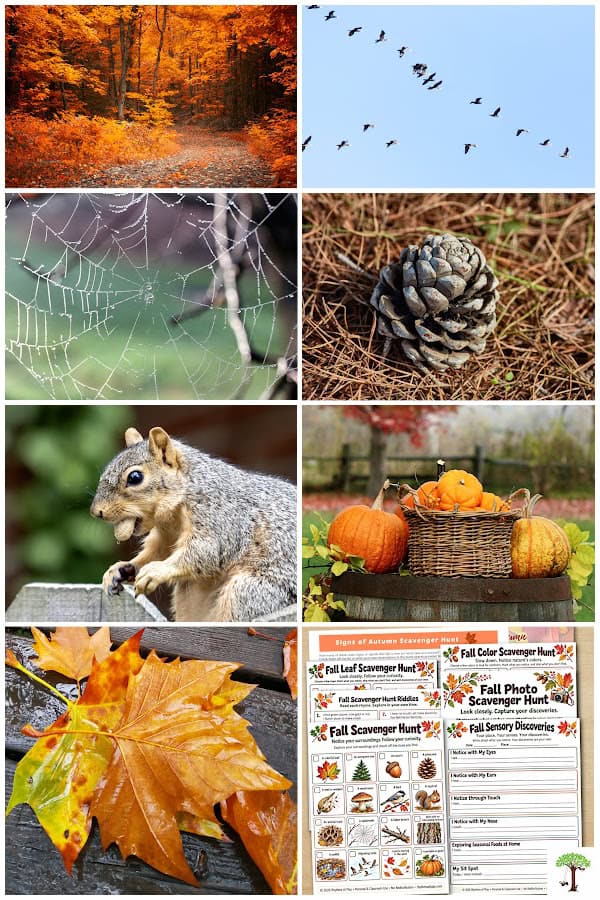
Bring a little inspiration on your next outdoor adventure with these printable fall scavenger hunt ideas. The outdoor fall activities below offer different ways for toddlers, preschoolers, older children, teens, and adults to explore autumn.
They include illustrated clues, leaf and color explorations, sensory prompts, photography, riddles, and autumn signs. Younger children can explore alongside someone who reads the clues, while older participants may enjoy comparing details, interpreting photo prompts, or solving riddles.
Each activity includes ways to get started and a link to its matching printable in the Rhythms of Play Learning Center. Choose one that interests your family or group, then adapt it to your time and the nature around you. Alternatively, explore the autumn scavenger hunt ideas below that don’t require a printable.
1. Illustrated Fall Nature Scavenger Hunt
This printable fall scavenger hunt for kids includes sixteen illustrated clues with checkboxes to mark discoveries along the way. The illustrated clues help toddlers, preschoolers, and kindergarteners who haven’t learned to read participate with someone who shares the prompts. Older children and adults can explore together or independently.
Bring the checklist and a pencil to the backyard, a park, or a nature trail. Look for trees, seeds, wildlife, textures, movement, and other autumn discoveries. Explore a few clues on one outing or revisit the hunt throughout autumn—and join in the fun. I always do! Pause to compare what you notice, ask questions, or take a closer look at something interesting.
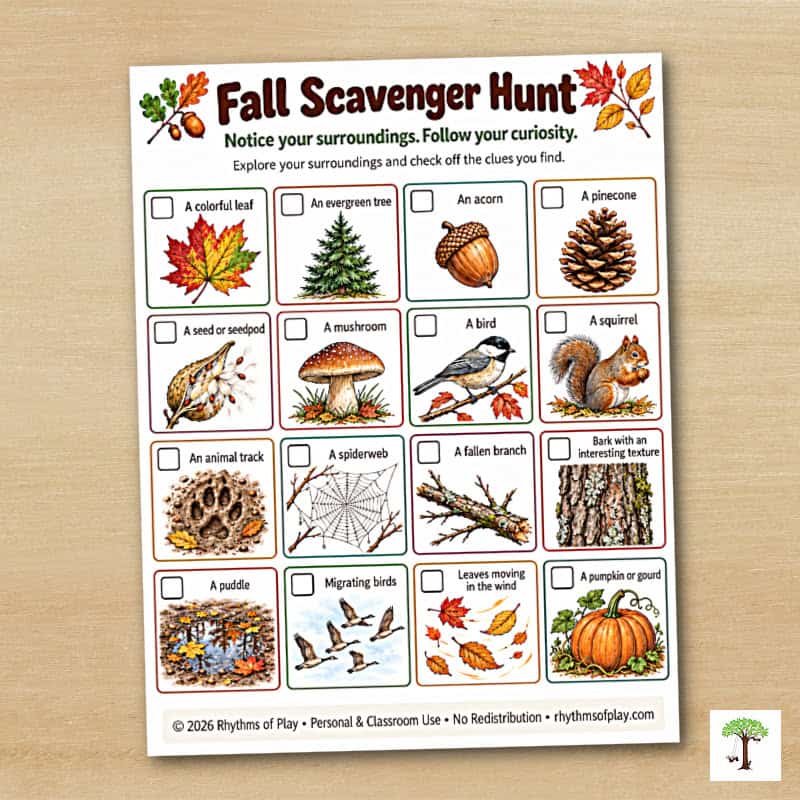
The illustrations are examples, so your discoveries may look different. Choose the clues that interest you and enjoy what you find—there’s no need to complete every checkbox.
Find the Fall Scavenger Hunt Printable in the Rhythms of Play Learning Center, with a separate page that includes activity instructions and personal and classroom use.
2. Fall Leaf Scavenger Hunt
A fall leaf scavenger hunt invites children and adults to look closely at the variety of leaves around them. As you walk through parks, neighborhoods, or wooded areas, notice the trees and the ground below. Explore leaf colors, shapes, sizes, edges, and veins. What makes one leaf different from another?
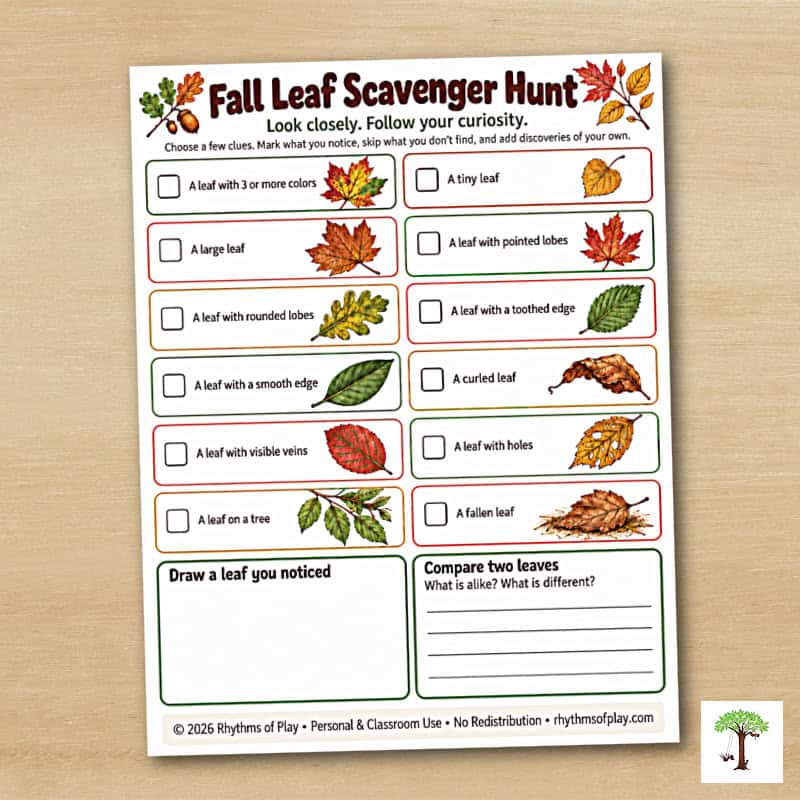
The Fall Leaf Scavenger Hunt Printable includes twelve illustrated clues, a drawing box, and space to compare discoveries. Bring a pencil and use the prompts to guide your exploration, pausing whenever a leaf catches your attention.
Toddlers and preschoolers can start by comparing big and small leaves, fall colors, or similar shapes. Add counting to this fall-themed scavenger hunt: How many leaves can you spot beneath a tree? Can you find two with a similar edge?
Older children, teens, and adults can examine leaf edges, count lobes, or draw vein patterns. Try identifying leaves from deciduous trees common in your area, such as maple, oak, or birch. Compare a fallen leaf with leaves still on a nearby tree, and use a local feild guide, such as The Tree Book for Kids and Their Grown Ups, to learn more. There’s no need to name a tree to enjoy noticing its leaves.
To try a fall leaf scavenger hunt without a printable, choose two fallen leaves and compare them. What looks similar? What looks different? Sort a few by color, size, or shape, or look for several shades of the same color.
Observe leaves where you find them, or gather a few where collecting is permitted. Take only what you need, leave plenty on the ground, and avoid pulling leaves from living plants.
Find the Fall Leaf Scavenger Hunt Printable in the Rhythms of Play Learning Center. For more ways to learn and play with autumn leaves, try these outdoor fall leaf activities.
3. Fall Color Scavenger Hunt
A fall color scavenger hunt invites you to notice autumn colors wherever you live. Look beyond changing leaves to discover colors in bark, flowers, seeds, fruit, water, and other surroundings. Which colors catch your eye? Can you find different shades of the same color?
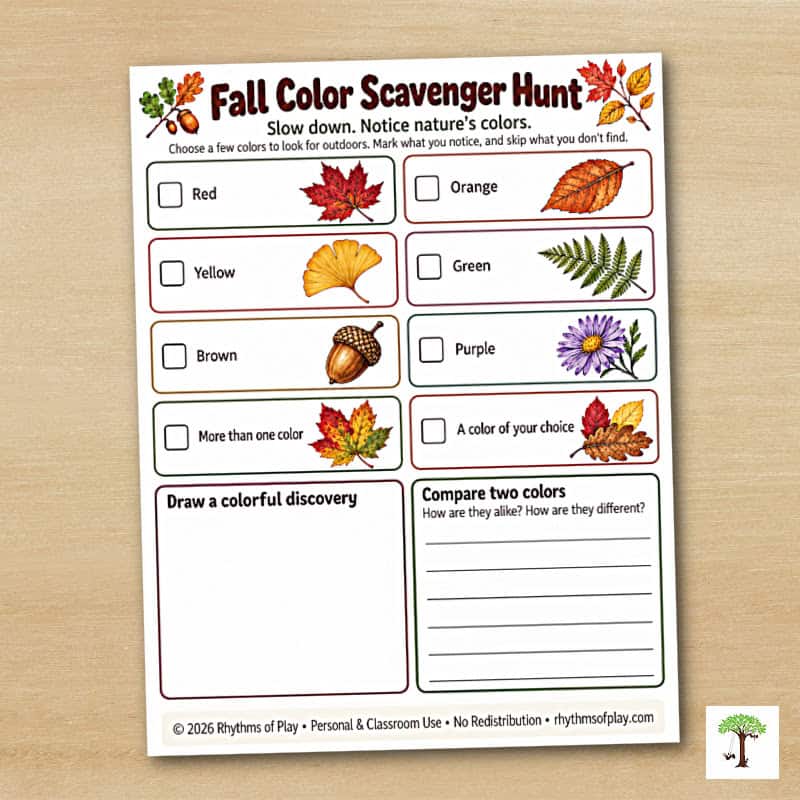
The Fall Color Scavenger Hunt Printable includes eight color prompts, with space to draw and compare whatever you find. Bring a pencil or colored pencils and explore a backyard, garden, park, or familiar path.
Toddlers and preschoolers can begin by looking for one or two autumn colors, such as red, orange, or yellow. Add counting by asking how many examples of a color they can spot. Look beyond leaves to flowers, fruit, bark, and other parts of the surroundings. Older children, teens, and adults might compare shades, notice color combinations, or revisit a place to see how its colors change or even diminish through autumn.
To try this activity without a printable, choose a color together and look for examples as you walk. Pause to compare your discoveries—you may each notice something different.
Find the Fall Color Scavenger Hunt Printable in the Rhythms of Play Learning Center.
4. Fall Sensory Scavenger Hunt
A fall sensory scavenger hunt invites you to slow down and notice autumn through your own experiences. Watch light move across the ground, listen to leaves rustling, or feel the texture of familiar, safe natural materials. What catches your attention may be different from what someone beside you notices.
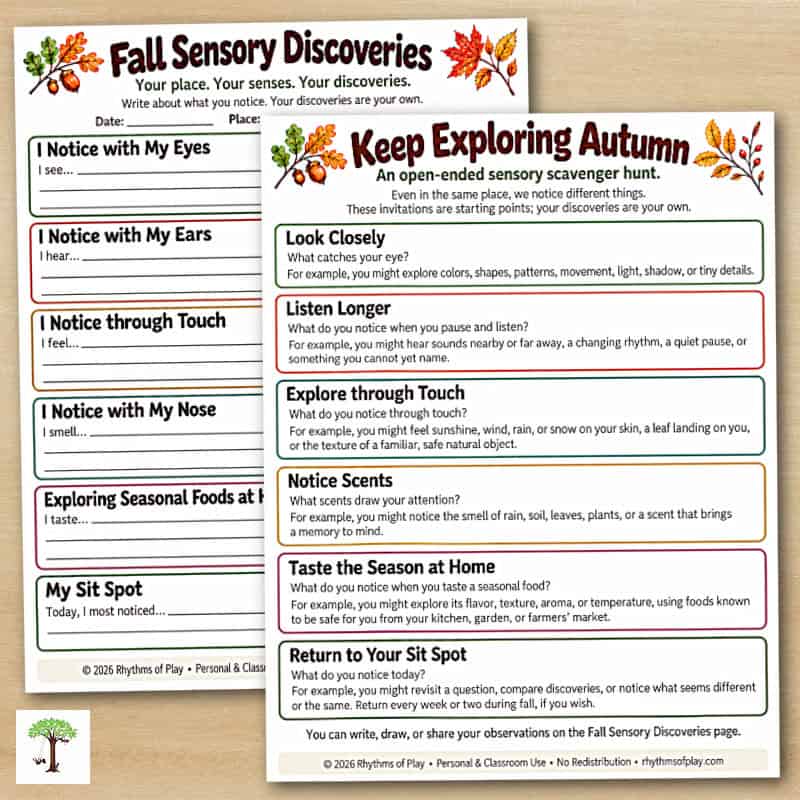
The Fall Sensory Scavenger Hunt & Nature Journal Prompts includes a Keep Exploring Autumn page with invitations and examples, plus a Fall Sensory Discoveries page for recording observations. Choose the prompts that interest you and explore in ways that feel comfortable.
Begin with a short walk or settle into a sit spot—a comfortable place to pause and notice your surroundings. Write or draw about a discovery, describe it aloud, or simply observe. Use the observation page or your own nature journal to record anything you want to remember.
Continue your sensory exploration at home with familiar seasonal foods from your garden, a local farm, or a farmers’ market. Notice their colors, scents, textures, and flavors, using foods prepared appropriately for each participant and considering individual allergies.
To try this activity without a printable, pause together and share something you notice. Follow the discoveries and questions that arise, without needing to explore every sense.
Find the Fall Sensory Scavenger Hunt & Nature Journal Prompts in the Rhythms of Play Learning Center.
5. Fall Photo Scavenger Hunt
A fall photo scavenger hunt invites children, teens, and adults to explore autumn through a camera lens. Notice colors, textures, patterns, and seasonal details as you walk through a backyard, park, or neighborhood. Photograph what catches your attention, however you like.
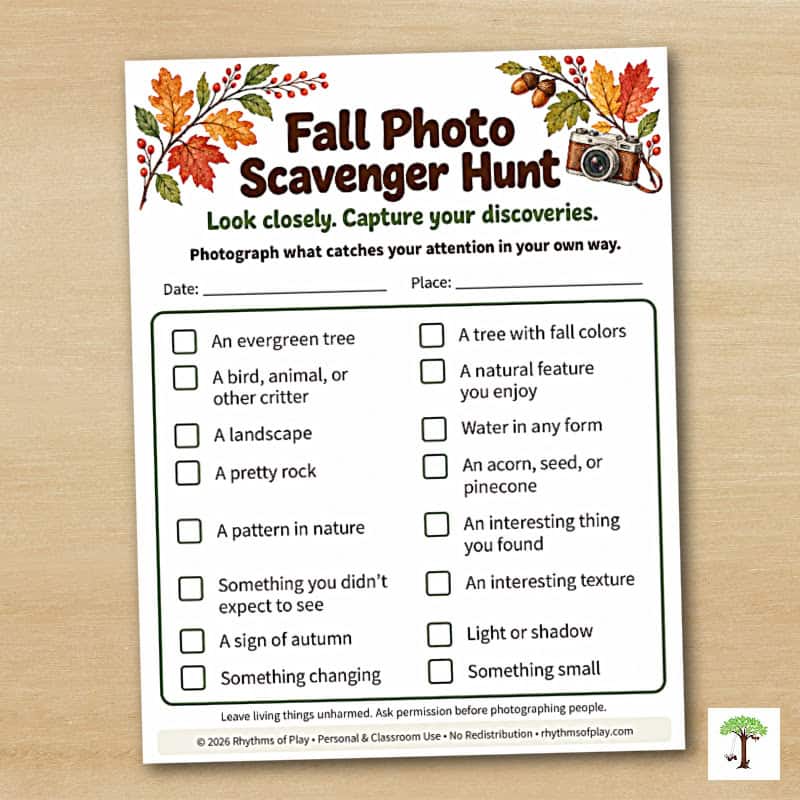
The Fall Photo Scavenger Hunt Printable includes sixteen text-only prompts to inspire your exploration. Bring a camera or camera-equipped phone and choose a few prompts to begin. No example photographs are provided, leaving room for your own ideas and discoveries.
Explore independently or with a group. Even when participants follow the same prompt, their photographs may reveal different perspectives. Give wildlife plenty of space and ask permission before photographing people.
Afterward, look through your photographs together. Which details surprised you? Does a picture make you want to look more closely or ask a question? Add a favorite photograph to a nature journal, or return to the same place later to see what has changed.
To try this activity without a printable, choose a theme such as autumn colors, interesting textures, or signs of seasonal change, then photograph what you notice.
Find the Fall Photo Scavenger Hunt Printable in the Rhythms of Play Learning Center.
6. Fall Scavenger Hunt Riddles
Explore autumn’s magic in rhythm and rhyme! These fall scavenger hunt riddles invite children, teens, and adults to think, notice, and discover. Solve the clues together before a nature walk, bring them outdoors, or enjoy them at home or in class.
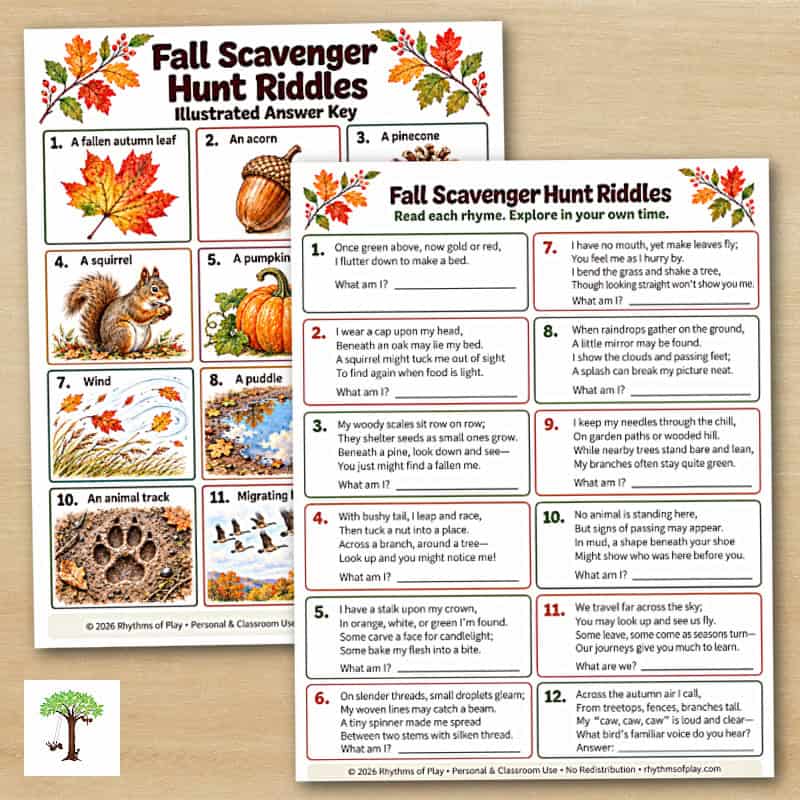
The Fall Scavenger Hunt Riddles Printable includes twelve rhyming nature clues with answer lines, a separate illustrated answer key, and printing instructions. Keep the answer key aside until you’re ready to compare your guesses.
Read independently or take turns reading aloud. Younger children may appreciate help with unfamiliar words or writing their answers. Talk about which words helped you solve each riddle and whether a clue suggested more than one possibility.
Outdoors, use the answers as invitations to look and listen. You might hear a bird before you see it or notice wind moving through the branches. There’s no need to find every answer on your outing.
To try a riddle hunt without a printable, take turns describing something nearby without naming it. Invite others to guess, then share the details that helped them work it out.
Find the Fall Scavenger Hunt Riddles Printable in the Rhythms of Play Learning Center.
7. Signs of Fall Scavenger Hunt
A signs of autumn scavenger hunt invites you to notice how the season unfolds where you live. Look for changes in light, weather, plants, and wildlife—from ripening seeds and changing leaves to shifts in bird activity. Some clues may appear before the autumn equinox, while others become noticeable later.
As fall approaches, my daughter and I enjoy pointing out the signs we see, hear, smell, and feel on our daily walks. A familiar route offers new discoveries as the season changes.
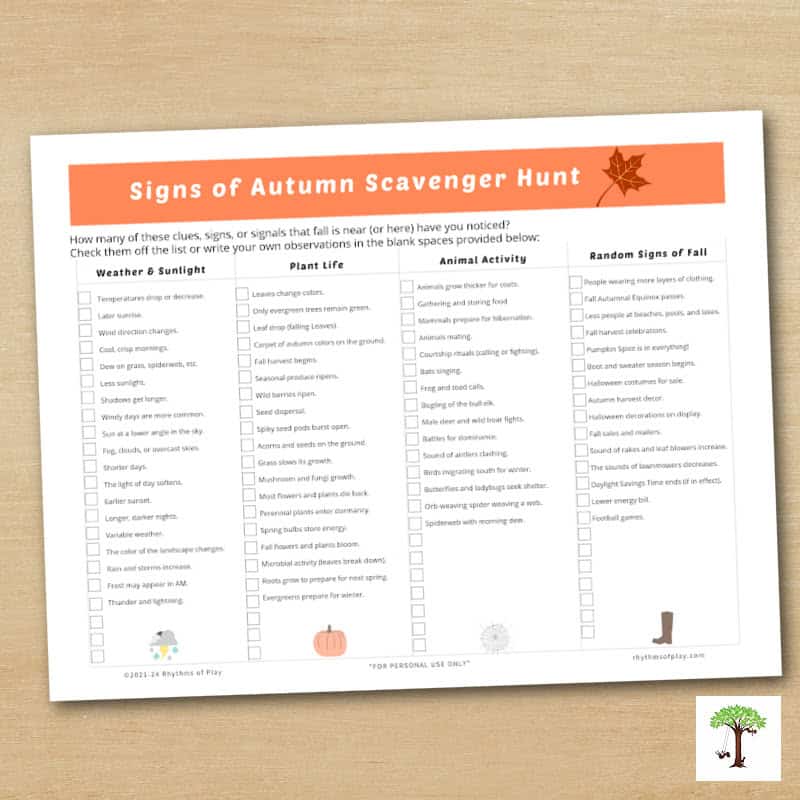
The Signs of Fall Printable Scavenger Hunt includes a landscape checklist, an older text-only version, and a separate instruction sheet. Its detailed seasonal clues offer older children, teens, and adults plenty to explore. Younger children can join with someone who reads and explains the prompts.
Choose a few signs that interest you, then return to a familiar place to compare your observations. What has changed? What seems the same? Record a date, sketch, or question on your checklist or in a nature journal.
Autumn looks different across climates and landscapes, so there’s no need to find every sign. To begin without a printable, share one change you’ve noticed and watch for it on your next outing.
Find the Signs of Fall Printable Scavenger Hunt in the Rhythms of Play Learning Center. For explanations of seasonal clues, explore our guide to the signs of autumn with seasonal signals that help you know when fall is near or here.
Fall Scavenger Hunt Ideas:
Turn the nature around you into clues for an autumn adventure. These fall scavenger hunt ideas invite you to match local natural materials or follow a single theme, such as pumpkins, seeds, or neighborhood decorations. Share a few clues aloud, explore together, and adapt your hunt to whatever catches your attention.
Get outside with the kids today to enjoy the familiar seasonal sights, sounds, and sensations that make fall so magical wherever you are. Here are a few fall scavenger hunt ideas for you to choose from:
1. Fall Scavenger Hunt with Locally-Sourced Nature Clues:
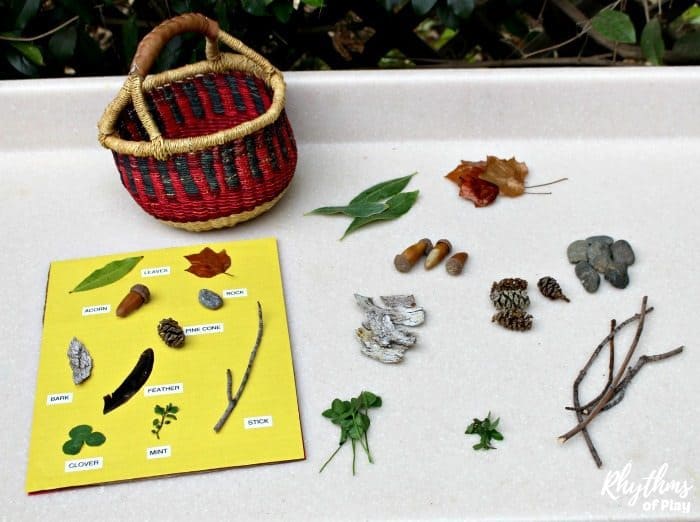
Create a fall scavenger hunt with locally sourced nature clues from your backyard, neighborhood, or a local park. Real objects give young children, including toddlers and preschoolers, clues they can look at and compare without needing to read.
- Gather your nature clues. Choose a few fall-themed items, such as fallen leaves, small twigs, or pinecones. Take only what you need and collect only where permitted, leaving plenty for wildlife and other visitors. Choose fallen materials rather than picking or breaking parts from living plants, and leave animals and their homes undisturbed. Use only natural materials you know are safe to handle and appropriate for the children taking part, avoiding small loose objects for children who may put them in their mouths.
- Arrange the clues. Place the items in an egg carton, a shoebox, or another recycled container. You can also attach suitable materials to a sensory card to create a portable guide.
- Invite children to find matches. Explore together and look for discoveries similar to the locally sourced nature clues you collected. A match might share a color, shape, texture, or material type—it doesn’t need to look exactly the same.
- Compare your discoveries. Place safe fallen finds beside the clues, or point to matches where you find them. Ask questions such as, “How are these leaves alike?” or “What makes this pinecone different?” There’s no need to collect a match or complete every clue.
Start with just a few clues for younger children and follow their interest. Using materials from the place you’re exploring helps make this nature scavenger hunt relevant to your local autumn.
For the full tutorial, visit Nature Scavenger Hunt with Locally-Sourced Nature Clues and a Sensory Card as shown in the photo below.
2. Pumpkin and Gourd Scavenger Hunt
A pumpkin and gourd scavenger hunt turns a neighborhood walk, grocery shopping trip, or visit to a pumpkin patch or farm stand into an autumn discovery game. Look for different colors, shapes, sizes, and textures. What catches your eye, or what do you notice with another sense—a tiny white pumpkin, a tall orange one, or a bumpy gourd?
Choose a few clues to share aloud, or invite everyone to suggest something to find:
- Pumpkins or gourds in two different colors
- A round pumpkin and a tall, narrow one
- A smooth surface and a bumpy surface
- A curved stem
- Two pumpkins of different sizes
- A pumpkin growing on a vine, where available
Toddlers and preschoolers can point out colors, compare sizes, or count the pumpkins they see. Older children, teens, and adults might compare varieties, sketch an unusual gourd, or investigate how pumpkins grow.
Around the neighborhood, observe porch displays from sidewalks and public paths. At a farm or pumpkin patch, follow visitor guidelines and ask before handling produce. Leave growing pumpkins, stems, and vines undisturbed.
Return to a familiar place throughout autumn to notice new displays or changes in the pumpkins growing there. This simple fall-themed scavenger hunt can become a yearly family tradition.
For a creative activity afterward, try painting a fall harvest pumpkin.
3. Seed and Seedpod Scavenger Hunt
A seed and seedpod scavenger hunt invites children and adults to notice the many ways plants hold and scatter their seeds. Explore a backyard, garden, park, or wooded path, looking at plants and on the ground below. What shapes, sizes, and textures can you discover?
Choose a few clues to share aloud, adapting them to the plants growing where you live:
- An acorn or another fallen nut
- A seed with a wing or fluffy tuft
- A dry seedpod
- An open cone
- Seeds still attached to a plant
- A seedling growing nearby
Toddlers and preschoolers can compare big and small discoveries, describe shapes, or count familiar examples. Older children, teens, and adults might investigate how seeds travel. Could a seed float on the wind, cling to an animal, or be carried away as food? Cones can hold seeds between their scales, so look closely without pulling them apart.
Pause to watch for wildlife activity. You might notice a bird feeding on a seed head or a squirrel carrying a nut. Give animals space and leave their food supplies undisturbed.
Observe, photograph, or draw anything interesting that you find. If collecting is permitted, take only a few familiar, safe fallen materials—just what you need—and leave plenty for wildlife and future plant growth. Avoid picking seed heads or opening pods on living plants. Keep small seeds and nuts away from children who may put them in their mouths, and never taste unidentified plant materials.
Continue exploring by sketching a discovery in a nature journal or returning later to see what has changed.
4. Fall Birdwatching Scavenger Hunt
A fall birdwatching scavenger hunt invites children and adults to look and listen for birds as autumn unfolds. Explore your backyard, a neighborhood park, or a familiar nature trail. Which birds do you notice, and what are they doing?
Choose a few clues to guide your observations:
- A bird calling or singing
- A bird eating seeds, fruit, or insects
- A bird perched in a tree
- Two birds interacting
- A flock flying overhead
- A bird visiting water
Toddlers and preschoolers can point out birds, listen for calls, or describe how they move. Older children, teens, and adults might compare beak shapes, sketch a bird, or use a local field guide to identify it. You don’t need to know a bird’s name to enjoy watching it.
Autumn is also a time to watch for migrating birds in your area. A flock overhead or a new visitor may spark questions about seasonal journeys, although seeing a bird fly doesn’t necessarily mean it is migrating. Return to a familiar spot to notice which birds appear throughout the season.
Watch quietly from a comfortable distance, using binoculars if you have them. Stay on established paths where provided, leave nests and resting places undisturbed, and give birds room to feed and move freely.
After your hunt, share something surprising or record a sighting, behavior, or question in a nature journal. For more ways to explore together, visit our birding for kids guide.
5. Neighborhood Fall Decoration Scavenger Hunt
A neighborhood fall decoration scavenger hunt turns a familiar walk into an autumn discovery game. Look for pumpkins, scarecrows, wreaths, and other seasonal displays on doorsteps, porches, and in windows. Which decorations catch your attention?
Choose a few clues you notice in your community to share aloud, or invite everyone to suggest something to find:
- A jack-o’-lantern
- A scarecrow
- A wreath with autumn colors
- A decorative spiderweb
- A skeleton or another Halloween decoration
- Two displays featuring the same fall-themed item
Toddlers and preschoolers can point out familiar objects, name colors, or count the number of pumpkins they see; mine sure did when she was a toddler and preschooler. Older children, teens, and adults might compare handmade decorations, spot patterns, or notice how neighbors use similar materials in different ways.
Choose clues that suit your group. For an autumn-themed walk, focus on harvest decorations, or include Halloween decorations if everyone enjoys them. Skip displays that feel uncomfortable or frightening.
Observe from sidewalks and public paths, leave decorations untouched, and keep doorways and driveways clear. Ask permission before entering private property or photographing people.
Return later in the season to notice new displays. Searching for a favorite fall-themed item can become a simple yearly family tradition, like pumpkins and skeletons were for my daughter, with something different to discover each time.
6. Nature Scavenger Hunt for a Fall Sensory Basket, Bin, or Bottle
Invite children on a nature walk to find autumn discoveries they can explore up close afterward. A nature scavenger hunt for a fall sensory basket, bin, or bottle gives your outing a simple focus while leaving room to follow children’s curiosity.
Choose a few familiar, safe fallen materials to look for, such as leaves in different shapes, small twigs, or pinecones. For older children who can handle them safely, acorns and other nuts and seeds may offer interesting details to compare. Invite children to suggest clues or point out anything unexpected along the way.
Collect only where permitted and take just what you need. Leave plenty for wildlife and future plant growth, avoid picking or breaking parts from living plants, and leave animals and their homes undisturbed. Photograph, sketch, or point out anything unsuitable for collecting.
Back at home or in the classroom, check your finds for sharp edges, mold, insects, or other hazards before adding suitable materials to an autumn nature sensory basket or bin, as shown in the photo below. We also recommend cleaning the materials you find with soap and water. Compare textures, sort by size or shape, or use a magnifying glass to examine details. What do you notice now that you missed outdoors?

Choose materials for each child’s age and needs, including any allergies. Keep small loose objects away from children who may put them in their mouths, and don’t handle or taste unidentified natural materials. Make a homemade sensory bottle durable and use it under supervision; enclosing an unsuitable material doesn’t make it safe unless the contents are securely sealed.
For a contained way to observe appropriate natural materials, follow the full nature sensory bottles tutorial.
For another way to create with appropriate fallen materials, explore these fall nature crafts.
Continue Exploring After Your Fall Scavenger Hunt
Let an interesting discovery inspire what you do next. Sketch a leaf, investigate a question, return to a favorite spot, or enjoy another autumn activity together. Choose whatever builds on your curiosity.
Record a Discovery in a Nature Journal
Draw, write, or add a photograph of something that caught your attention. Include the date and location if you’d like to compare observations later. Younger children can describe a discovery while someone helps record their words.
Try a question such as, “What surprised me?” or “What would I like to learn more about?” Visit our nature journaling guide for more ways to begin.

Return to a Familiar Sit Spot
Choose a comfortable place to pause and observe. Return during autumn to notice what changes and what stays the same. Are there fewer leaves on a tree? Different birds nearby? New seeds on the ground?
Noticing when seasonal changes happen in living things is called phenology. Your observations can help you understand the seasonal rhythms of a familiar place. Explore these signs of autumn for more clues to look for, listen to, feel, or even smell.
Create with Your Discoveries
If you gathered safe fallen materials where collecting is permitted, use a few for drawing, sorting, or nature art. Take only what you need, leave living things unharmed, and choose materials appropriate for everyone participating. Photographs and sketches can also inspire creative projects without collecting anything.
Explore these fall nature crafts and fall art projects for kids for several creative ideas you can try.

Enjoy Another Autumn Adventure
Continue your fall explorations with a visit to a pumpkin patch, an apple orchard, or a corn maze. For a quieter afternoon, find fall books for kids at the library or bake pumpkin cranberry bread together.
You might also enjoy these fall autumnal equinox celebration ideas for more ways to welcome the changing season.
How Are These Autumn Scavenger Hunt Activities Educational?
Autumn scavenger hunts give children opportunities to observe, compare, count, describe, and ask questions about the world around them. A familiar walk can become an investigation when someone notices a changing leaf, an unfamiliar seed, or a bird feeding nearby.
Comparing leaves may reveal differences in color, shape, edges, and veins. Children might notice that some trees lose many leaves in autumn while others stay green. Questions such as “What looks different?” and “What could we watch next time?” invite further exploration without requiring an immediate answer.
Watching wildlife can prompt questions about food, shelter, and seasonal movement. Which birds visit a familiar tree? What is a squirrel carrying? Repeated observations help children distinguish what they have seen from what they wonder might be happening.
Younger children can practice counting discoveries, matching shapes, and describing textures. Older children may enjoy identifying local plants, consulting field guides, or recording changes over time. Sharing observations also gives participants a chance to listen, compare perspectives, and learn from one another.
An outdoor fall scavenger hunt also offers opportunities to move and explore. Children might walk between discoveries, crouch to examine a fallen leaf, or reach to point out a bird. Adapt the route and activity so everyone can participate comfortably, including those observing from a seated spot.
There’s no need to turn every discovery into a lesson. Leave room for play, unanswered questions, and the simple pleasure of noticing something together.
Related: Nature Sensory Bin Scavenger Hunt
Explore Autumn with a Fall Scavenger Hunt
Fall is full of small wonders waiting to be noticed. A changing leaf, a scattered seed, or a bird calling nearby can turn an ordinary walk into an autumn adventure.
Choose a printable fall scavenger hunt, create your own clues, or follow whatever catches your attention. Explore with your family, classroom, homeschool group, or on your own. There’s no need to check every box. Sometimes the most interesting thing you find is something you weren’t looking for.
For the printable collection, visit the Nature Scavenger Hunt Printable Library in the Rhythms of Play Learning Center. For more ways to keep exploring, try these outdoor learning activities.
Learn more about Rhythms of Play on our About page, or meet the creator and author, Nell Regan Kartychok.
More Scavenger Hunt Ideas for Kids:
- Nature Sensory Bin Scavenger Hunt
- Seasonal Nature Scavenger Hunt Ideas
- Sensory Card Nature Scavenger Hunt
- Bird Scavenger Hunt Ideas (Included in Birding for Kids)
- Signs of Summer Scavenger Hunt
- Search for the Signs of Autumn Fall Scavenger Hunt
- Signs of Winter Nature Scavenger Hunt
- Search for the Signs of Spring Scavenger Hunt





Leave a Comment