
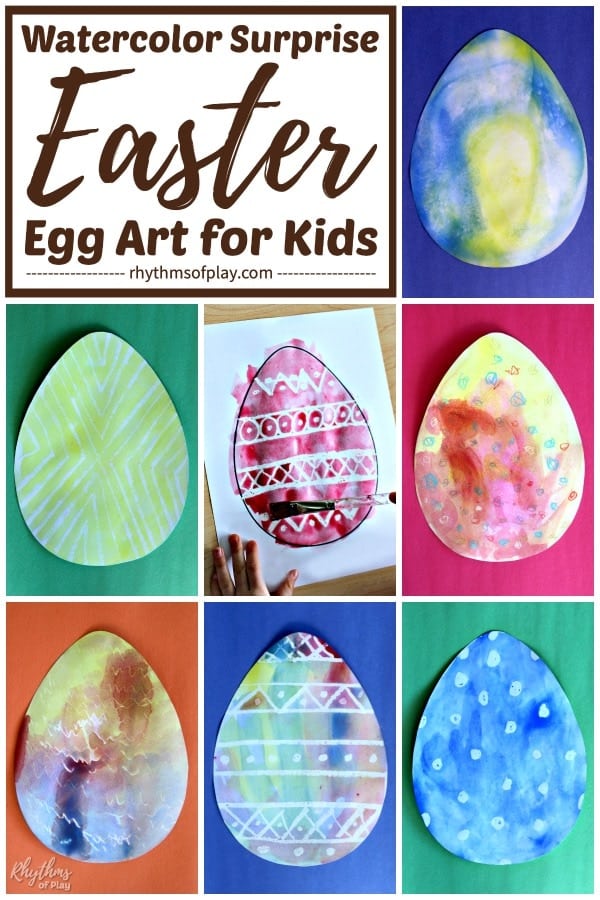
Invite children to paint watercolor surprise Easter egg art and see what magically appears!
Painting watercolor Easter eggs is a simple activity that allows artists of all ages and skill levels to explore color during springtime. Invite kids of all ages to try these Easter watercolor painting ideas to create gorgeous Easter art at home or in the classroom. In this tutorial, you can choose between two enjoyable watercolor painting methods to create surprise Easter egg art. One uses a watercolor resist medium, and the other uses the wet-on-wet watercolor painting method to produce a surprise that appears like magic before the children’s eyes.
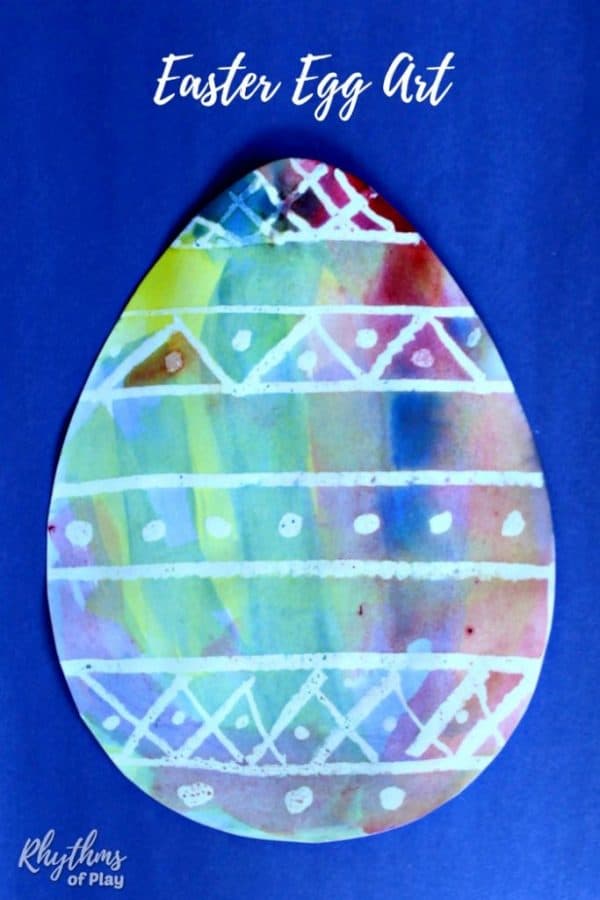
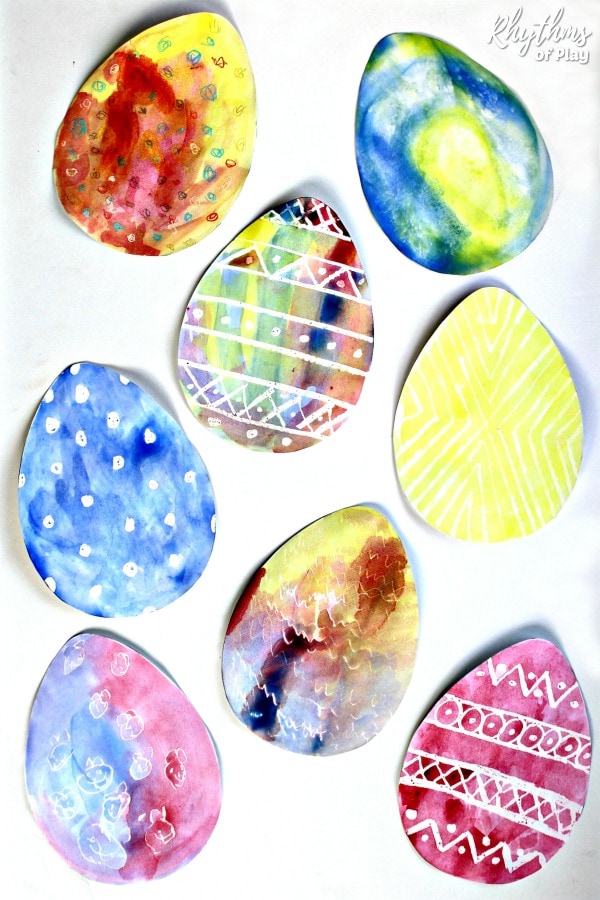
Each of these creative watercolor painting ideas offers a unique surprise and a different simple science lesson. The first surprise watercolor Easter art project uses a wax resist, such as a wax stick, white crayon, or oil pastel. This Easter art activity requires that someone other than the artist first draw hidden designs, doodles, or messages. When the artists paint over them, patterns are revealed that seem to “appear” as if by magic. Of course, the artists can create these designs themselves, but then it wouldn’t be a surprise!
The second method uses a wet-on-wet watercolor technique with just two or three primary colors. Paint on damp paper with two or three wet colors to watch them spread, blend, and create new secondary shades right before your eyes. You might also enjoy these other inspirational Easter art projects and painting ideas.
Paint Surprise Easter Egg Art at Home or in the Classroom:
This Easter art activity is simple, calming, and full of beautiful surprises, with each new egg painting. Invite children from toddlers to teens to try either of these easy Easter art projects. Easy watercolor Easter egg painting ideas, like this surprise art activity, make creating art at home or in the classroom a fun experience!
First, draw an Easter egg or use one of these printable Easter egg templates. Next, invite children, from toddlers to teens, to try one of the two watercolor techniques described in detail below to discover a fun surprise that magically appears as they paint egg art. Both watercolor painting methods offer more than just pretty art.
Each watercolor painting technique helps develop fine motor skills as hands grip crayons and guide brushes. They support artistic thinking as artists make choices and take creative chances to see what happens next. The wax resist activity adds a sense of wonder and discovery, while wet-on-wet painting promotes patience and observation.
For children, these egg art activities can help build confidence and strengthen focus. For adults, they provide a quiet moment to slow down, relax, and enjoy the process rather than just the outcome. No pressure–just color, water, and a little bit of surprising Easter magic.
Related: Wooden Easter Egg Decorating Ideas
Surprise Watercolor Easter Egg Art Supplies and Materials:
The watercolor Easter egg art supplies listed below can be used to paint Easter eggs using the watercolor painting lesson activity ideas in the instructions. Use the watercolor resist method or the wet-on-wet watercolor technique to create surprise Easter art today!
- Stockmar watercolors, liquid watercolors, watercolor tubes, or a watercolor palette
- Cardstock or watercolor paper
- Flat wash watercolor paintbrush
- Glass or another container filled with tap water to rinse the paintbrush between colors.
- Crayons or Oil Pastels
- Easter Egg Template Printable (optional)
- Scissors (optional)
- Construction paper or colored cardstock (optional)
Related: The Best Art Supplies for Kids and Why Young Artists Should Use Them
How to Paint Surprise Easter Egg Art Using a Watercolor Resist Medium:
Creating watercolor surprise Easter egg art using a watercolor resist medium, such as a wax stick, white crayon, or oil pastel, is a fun and easy Easter art project for kids (and adults!). Basic directions with alternatives are provided below. Scroll down for step-by-step instructions on how to paint surprise watercolor Easter egg art.
- First, print the Easter egg Art Template or draw an egg outline.
- Then invite children, from toddlers to teens, to use crayons or oil pastels to draw designs on the eggs.
- Or draw designs on the egg template without letting children know they are there to see if you can surprise them like I surprised my daughter in the video below.
- You can see her pause once she discovers the surprise pastel designs in the egg outline.
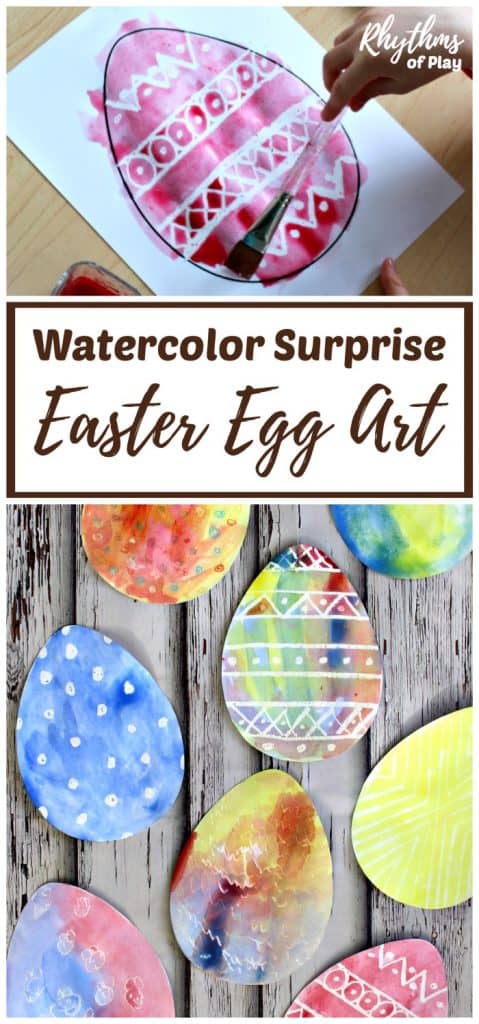
- Next, use a flat-wash watercolor paintbrush to paint Easter Eggs with watercolors, and watch the surprise Easter art magically appear!
- Place a container of tap water nearby to wet the brush before dipping it into the watercolor paints, and rinse the paintbrush between color applications, as shown in the video tutorial below.
- Alternatively, draw the egg with the resist medium and ask toddlers, preschoolers, and kindergarteners to paint the page to see surprise Easter egg art appear before their eyes, Easter egg and all.
For even more watercolor surprise fun, invite children to draw designs for one another at home or in the classroom to create double surprise, Easter Art. Surprise siblings, friends, or mom and dad with hidden art doodles and designs! Another fun alternative watercolor art activity uses a heart shape to make Watercolor Surprise Heart Art. Write messages to someone you love in heart art. Visit the post link above for all the DIY details, including another video tutorial to see this watercolor technique in action!
Related: Black Glue Rose Watercolor Art
Watercolor Resist Surprise Easter Egg Painting Step-by-Step Directions:
- Invite children to draw an egg or print the Easter Egg Template onto cardstock or watercolor paper.
- Use crayons or oil pastels to draw designs inside the outline of the Easter egg printable or hand-drawn egg. (All colors can be used to create designs to decorate the eggs, but only white will create a hidden surprise Easter Egg art.)
- Use a flat wash watercolor paintbrush and watercolor paints to reveal the hidden Easter egg designs. (Alternatively, use a large round paintbrush.)
- Dip the paintbrush in water to rinse it before and between watercolor paint applications.
- Once the artist has finished the watercolor egg painting, allow it to dry completely.
- Cut the Easter Egg art out and use a glue stick or glue tape to attach it to construction paper or colored cardstock (optional).
- Place the Easter egg art in a frame, pin it to a bulletin board, or give it as an Easter gift.
Related: Rainbow Rainy Day Art
Surprise Watercolor Easter Art Painting Tips:
We painted with only the primary colors (red, yellow, and blue) to encourage color mixing and experimenting. You are welcome to use more than the primary colors if desired. Learn more about working with watercolors in wet-on-wet watercolor painting.
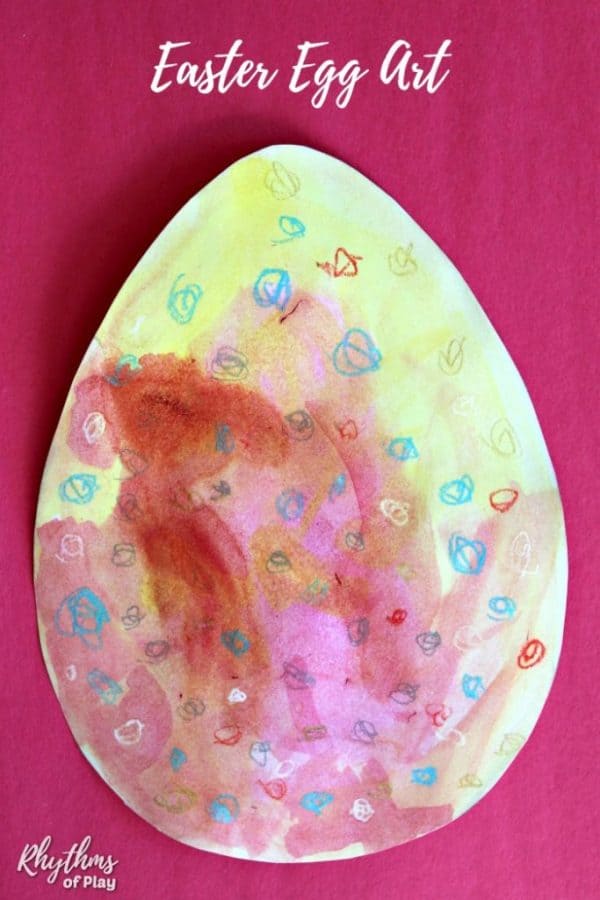
Making designs on the Easter egg template with colored crayons and pastels creates colorful designs that the children can see before they paint with watercolors. Drawing only white egg designs and doodles makes the designs hard to see before the child paints. You can see my daughter’s experiment with colored pastels and watercolor paint in the photo below.
When children use watercolors to paint an area colored with white crayons (or oil pastels), they are surprised to see the drawings appear, even when they know the art is there. It’s magic—invite the kids to experiment and have fun! I like to use white oil pastels because they work well as a watercolor-resist medium. Experiment with watercolor-resist mediums to learn which you like best!
Related: Top 10 Spring Chick Crafts
Watercolor Resist Easter Egg Painting Step-by-Step Video Tutorial:
Watch my daughter paint surprise watercolor Easter egg art in action below. You can see her pause in surprise when art doodles and designs first appear in the Easter egg art template when she paints.
Wet-on-Wet Watercolor Surprise Easter Egg Art:
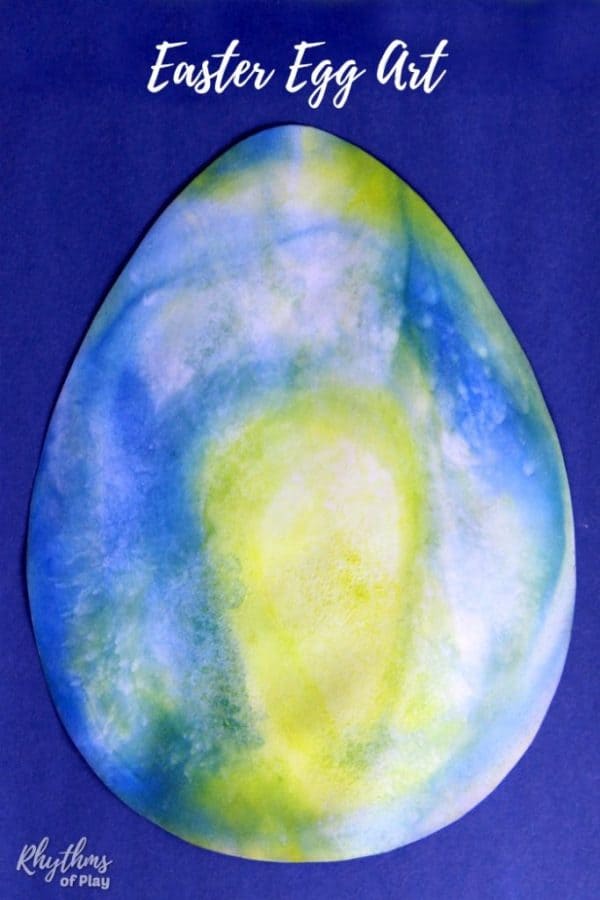
The second way to create watercolor surprise Easter egg art is to use the wet-on-wet watercolor painting technique. For best results, use only two primary colors for each egg and watch the surprise color appear! The surprise is revealed when children discover the magical third secondary color created by mixing the two primary colors while painting.
Painting with primary-colored watercolors only allows children to experience that blue and yellow make green, red and yellow make orange, or red and blue make purple. For example, my daughter used yellow and blue to paint the egg pictured below. As she painted the entire egg, the surprising a surprising secondary color, green, appeared. This Easter watercolor painting idea makes the simple science of color mixing look like magic.
You could also call this type of Easter art color-mixing Easter art, but I think “surprise” is more fun for the little ones. Besides, who would want to spoil the surprise by telling children that they will be doing color mixing? These types of art activities make learning fun for children of all ages and artistic abilities. Shhh… it’ll be our little secret!
Related: DIY Easter Ornaments
Wet-on-Wet Watercolor Easter Egg Painting Step-by-Step Directions:
- Invite children to draw an egg or print an Easter Egg Template onto cardstock or watercolor paper.
- Hop over to learn more about wet-on-wet watercolor painting if you want to try creating surprise Easter Eggs using this simple watercolor painting technique. The article explains soaking the paper first, but you can also use a spray bottle filled with water. (Spray the cardstock or watercolor paper to wet it, then wait a few minutes to paint.)
PLEASE NOTE: The ink from the Easter egg art template may run slightly when sprayed with water. Cut the watercolor egg art out when dry for a cleaner look, like the one pictured above. Or, use the pink outline, or cut off the egg’s black outline, then spray it with water and paint it with watercolors. Alternatively, you can hand-draw or sketch an egg shape.
Related: Pom-Pom Baby Chick Craft

Surprise Watercolor Easter Art for Kids:
Painting watercolor Easter eggs is about more than just the finished piece. It’s about what happens along the way. With wax resist, there’s joy in the reveal. With wet-on-wet painting, there’s beauty in letting go and seeing where the colors lead.
These simple techniques invite artists of all ages to explore, experiment, and enjoy the process. Kids learn that mistakes can turn into something beautiful. Adults get a gentle reminder to slow down, play, and expect magic. Together, you create not just art, but connection, and a relaxed atmosphere filled with a sense of wonder.
Remember, whether your eggs turn out bold and bright or soft and dreamy, they are perfect just as they are. Because the real magic isn’t just in what you paint. It’s in how it makes you feel while you are painting. I hope you enjoy these fun ways to create watercolor surprise Easter egg art with the kids this spring. Don’t forget to hop over to see more fantastic Easter Art Project Ideas that kids LOVE!
If you have ever wondered how Easter eggs or Easter baskets came to be associated with Easter, find out in Easter Traditions to Start with Your Family. I have discovered some interesting theories to share with you.
You may also like this collection of Fun Art and Craft Ideas for Kids, and our Spring Bucket List Seasonal Activity Guide filled with fun activities to try with the kids this spring!
Learn more about Nell Regan Kartychok, author, photographer, and creator of these original watercolor Easter egg art activities HERE, and Rhythms of Play HERE!


Leave a Comment