Making and keeping a nature journal or nature notebook is a fun way for kids (and adults) of all ages to study nature and record their observations and experiences in the natural world. This informative guide includes ideas, prompts, activities, beginner tips, and printable resources to get you (and your little naturalist) started with nature journaling.
Have you ever admired the first wildflowers of spring, watched a butterfly pause on a blossom, or listened to birds greeting the dawn? Like everything else in life, nature is always changing. Offering small moments of beauty and wonder that are easy to miss amid the busyness of everyday life. Fortunately, keeping a nature journal helps you slow down and become mindful enough to notice these moments.
Part sketchbook, part science notebook, and part personal reflection, a nature journal is a place to record your outdoor observations, questions, discoveries, feelings, and experiences. Here at Rhythms of Play, we believe that wonder begins with being present to what is. When we pause and take the time to observe the world around us, we strengthen our connection with nature, nurture our curiosity, and discover that learning can literally happen anywhere.
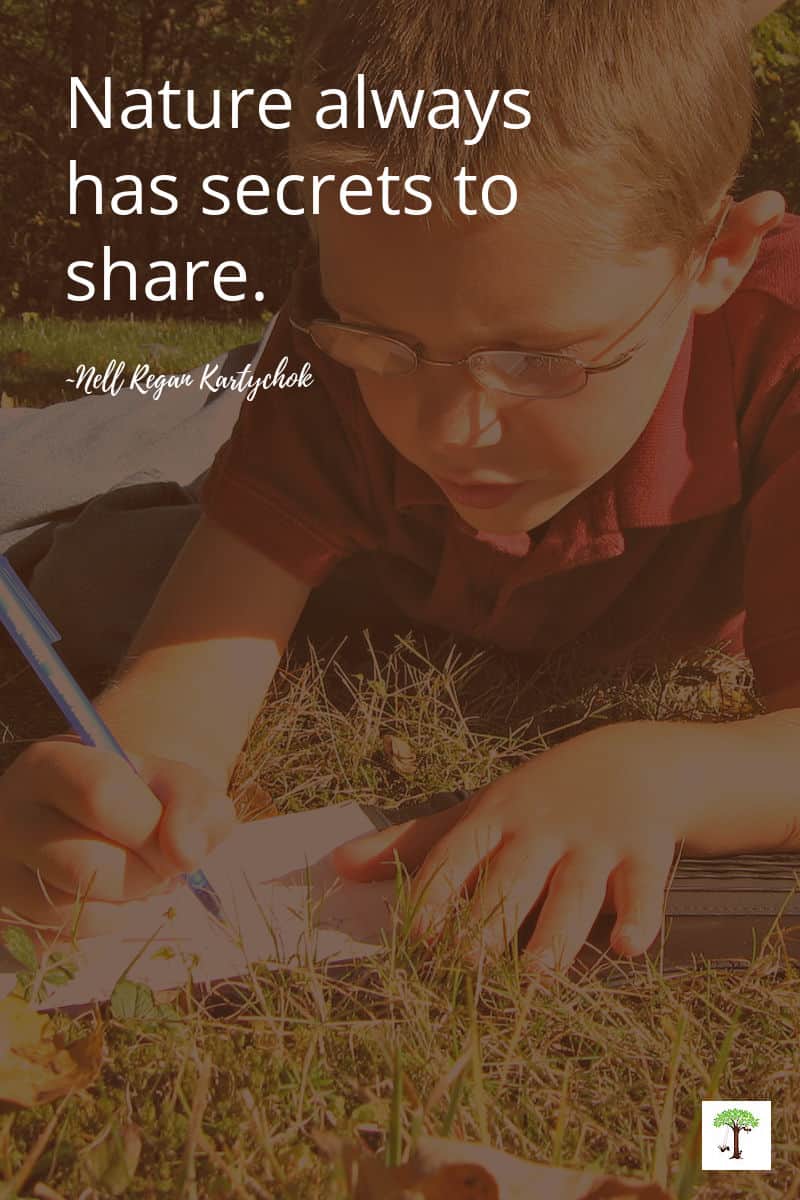
Nature always has secrets to share, and it shares them willingly with those wise enough to listen in each passing moment. Every flower, feather, cloud, birdsong, and changing leaf has a story to tell. Whether you are a parent, teacher, homeschooler, nature enthusiast, or simply someone looking to spend more time outdoors, Nature journaling is a rewarding practice for children and adults alike. You might also enjoy this list of outdoor learning ideas and nature activities for kids and their nature guides.
Learn how to start a nature journal (and keep one) with this beginning guide to nature journaling. In this guide, you’ll learn how to start a nature journal, what to include, the many benefits of nature journaling for children and adults, creative ideas to inspire your pages, and simple ways to make nature observation a meaningful part of your daily, weekly, and seasonal rhythms.
In This Nature Journaling Guide:
Explore the guide from beginning to end, or click any link below to jump straight to the section you need—from getting started and choosing supplies to journal prompts, seasonal observations, and ideas for every age.
- What nature journaling means
- Reasons to begin
- Start journaling in five steps
- Choosing a notebook and supplies
- Ideas for your journal pages
- Prompts for your next entry
- Activities for deeper exploration
- Learning and well-being benefits
- Tracking nature through the seasons
- Journaling ideas for every age
- Books and learning resources
- Encouragement for your first page
- More outdoor activities
What is Nature Journaling?
Nature journaling is the practice of observing the natural world and recording what you notice through writing, drawing, painting, mapping, or other creative expression. Sharing your observations, experiences, and feelings in a nature notebook offers an excellent way to learn, create, and connect with the living world just outside your door.
You don’t need to be an artist, a naturalist, or need to know the names of any plants and animals you encounter. The goal isn’t to produce picture-perfect drawings or identify every plant and animal you write about, draw, or paint. Instead, it’s about becoming curious, asking questions, and learning to notice the beauty and rhythms of the world around you. Curiosity and attention are all you need.
Best of all, nature journaling can happen almost anywhere. You can explore a forest trail, visit a neighborhood park, wander along a creek, lake, or ocean shore, sit beneath your favorite tree, or even observe birds in your own backyard.
More than just a creative activity, nature journaling is a lifelong practice of paying attention. It is an educational outdoor activity that encourages kids and adults of all ages to observe the natural world more closely, ask thoughtful questions, and deepen their understanding of the places they visit throughout the year. As the seasons change, your journal becomes a record of both the natural world and your journey through it.
Every page shares the story of your growing relationship with the natural world, reminding you that there is always something new to discover or explore in more depth. Looking back through its pages, you can start noticing patterns, remember special moments that might otherwise be forgotten, and begin to see familiar places from a new perspective.
Nature Journaling Is More Than a Notebook
A Nature journal offers an invitation to slow down, pay closer attention, and grow curious about the world around you. When you start nature journaling, you start becoming more aware of the subtle details you might have overlooked before. You begin to recognize patterns, ask better questions, and see familiar places with fresh eyes. Over time, these small notes and drawings become a record of the seasons, weather, and life around you.
This way, familiar places become new and exciting again. Even a walk through a neighborhood park or your own backyard becomes a chance to make new discoveries and explore them more deeply. The observational journal or notebook itself is simply a tool. Nature journaling is the practice of paying attention. Every page reminds you to pause, observe, wonder, and connect with the living world.
There are no perfect pages and no right or wrong way to record an entry or keep a journal. The goal isn’t to fill a notebook just to put something on the page. It’s to develop a lifelong habit of paying attention to the world around you, and become more aware of the world full of wonder waiting just outside your front or back door.
Like gardening, birdwatching, or hiking, nature journaling is something you return to again and again. You begin to recognize familiar wildlife, follow the changing seasons, and discover tiny details that may have seemed insignificant only weeks prior. Over time, your nature journal becomes a living, breathing record of your growing relationship with the natural world. Every sketch, note, question, and observation tells the story of how your curiosity deepens, your perspective expands, and your connection to nature’s rhythms grows with each passing season.
Why Start a Nature Journal?
Starting a nature journal is one of the simplest ways to spend more meaningful time outdoors. It encourages you to slow down, explore with curiosity, and keep a lasting record of your discoveries. Rather than walking through nature, you’ll start paying closer attention to the plants, animals, weather, and seasonal changes around you. You might notice the first spring blossoms, migrating birds overhead, or the changing colors of the autumn leaves. In time, these observations help you better understand the rhythms of the natural world.
Nature journaling also blends science, art, and creativity in a way that’s enjoyable for all ages. You can sketch a leaf, write a poem about the wind, identify a bird, paint a landscape, record the weather, or simply jot down something that made you smile. Each page reflects your interests and experiences.
For children, nature journaling builds observation skills, creativity, and confidence while making learning outdoors more engaging. For adults, it offers a chance to slow down, reduce stress, and reconnect with the sense of wonder that comes so naturally in childhood.
Perhaps the greatest reason to start a nature journal is that it invites us to be more present while encouraging a lifelong love of learning. Spending a few quiet moments observing a tree, listening to birdsong, or watching clouds drift overhead can help calm busy minds, encourage mindfulness, and lead to new discoveries. It reminds us to slow down, breathe deeply, and appreciate the beauty that often goes unnoticed in our daily lives.
What is the Difference Between a Nature Journal and a Nature Notebook?
If you’ve searched online for ideas, you’ve likely noticed that some people use the terms nature journal, nature notebook, field journal, forest school journal, and several other related terms interchangeably. In most cases, they mean the same thing: a place to record observations, sketches, questions, discoveries, and experiences in nature.
Some people make a subtle distinction between the two. A nature notebook often focuses on field observations, scientific notes, measurements, species identification, and outdoor sketches. A nature journal, on the other hand, may include those same observations while also making room for personal reflections, stories, watercolor paintings, poems, gratitude notes, and creative expression.
Of course, nature journals and nature notebooks can vary slightly in focus and structure depending on the individual using them. However, these nature study tools are similar in that they let you document experiences and observations in nature and the great outdoors. You might also enjoy making nature sensory bottles with the specimens you collect.
Sometimes, nature journals and notebooks combine several types of nature logs: a diary, sketchbook, and scientific log. Combining different journaling practices helps people connect with the natural world, deepen their understanding of their environment, practice mindfulness to improve self-regulation skills, and soothe the soul with the magic of the great outdoors.
There is no right or wrong way to keep either one. Your journal can be as scientific, artistic, or personal as you like. It might include careful drawings of plants and wildlife, lists of birds you spotted in your backyard, pressed leaves, local weather notes, or simply a few sentences about how spending time outdoors made you feel.

How to Start Nature Journaling (5 Simple Steps)
People of all ages can enjoy nature journaling. Keeping a nature journal helps people build a stronger connection to and understanding of the natural world. Both children and adults can use a nature journal to record what they see, hear, smell, feel, sense, and intuit outdoors. All you need is a notebook, something to write or draw with, and a willingness to pay closer attention to the world around you to unlock curiosity, learning, and creativity.
Starting a nature journal is as easy as counting to five. You don’t need artistic talent, expensive supplies, or an extensive knowledge of plants and animals. Best of all, the more you engage in this practice, the more you’ll discover. Nature journals offer an expressive way for children and adults to build mindfulness, deepen their relationship with nature, and better understand the great outdoors.
Teach your little naturalist how to keep a nature notebook for fun, to connect with the natural world, or as a part of your classroom, nature school, or homeschooling learning adventures.
This handy guide shares how to get started with nature journaling. It also includes simple prompts, easy activity ideas, and several fantastic resources for using a nature journal, so anyone of any age or ability can start exploring, observing, and recording the many secrets and wonders of nature they encounter today! Here are a few simple tips to get started:
Related: Sorting and Classifying Rocks
1. Choose a Journal and Gather a Few Simple Supplies:
Any notebook can become a nature journal. A blank sketchbook, lined or dotted notebook, or loose-leaf binder works well for writing observations. Choose a journal or notebook you enjoy using from the options and recommendations in the next section. It can be plain, lined, or a three-ring binder filled with your favorite nature journal supplies.
Binders make great nature notebooks because you can include printables if you like and move entries around to organize them later. Alternatively, you can make a DIY nature journal or homemade notebook using the step-by-step instructions that were once included in this post but will be published as a separate DIY tutorial in August.
Many people prefer a mixed-media journal because it lets them sketch, paint, and write on the same page. You can either make your own or buy a blank mixed-media sketchbook for this purpose. You may also want to bring a pencil or pen, colored pencils, watercolor paints, fine-tip pens, or a small ruler.
Keep your supplies simple enough to carry on walks, so your journal is always ready when inspiration strikes. You can carry them in a small bag or backpack for field use, or walk with a small pencil and notebook you can carry in a pocket for making quick notes and sketches. Then, create a more detailed entry in your nature journal when home or back in the classroom later. A few recommendations follow this brief how-to tutorial.
2. Find a Place to Observe Nature:
You don’t have to travel far to begin. Nature is all around you. Just wander out onto your patio or into your backyard, sit beneath a favorite tree, explore a neighborhood park, walk along a beach, or simply look out your window. Returning to the same place throughout the year helps you notice seasonal changes and the rhythms of nature that are easy to miss day to day.
Bring your nature notebook or journal and something to write, draw, or create art with when you head out into the great outdoors. Use it to record your observations in the wilderness and all your experiences with nature and her bounty. Nature always has secrets to share. Mother Earth wants to share her abundance with you and your children.
Find a comfortable place to sit quietly for a few minutes before opening your journal. Allow yourself time to look, listen, feel, smell, and notice without rushing to write anything just for the sake of writing. Pay attention, and use your senses; what do you notice? Share something you observe that interests you, write down any questions you have, or wait for inspiration to strike before you put pen, pencil, or paintbrush to the page.
Choose a regular spot to sit and observe nature outdoors. It can be in your backyard, at a local park, under a tree, by a shore, on a bench near a hiking trail, or anyplace else that speaks to you. Visiting the same location regularly will help you notice subtle changes throughout the seasons and the year’s rhythm. These observation locations are often called a “Sit Spot.”
3. Record What You Notice or Observe:
Slow down to spend time just looking around, sensing, and becoming aware of the natural environment’s sights, sounds, scents, and textures. Record any details that stand out to you. What do you observe or sense? Notice the colors, shapes, sounds, feelings, smells, textures, and movements. Open your senses and take your time.
Remember, there is no right or wrong way to fill your homeschooling nature journal. Make it a personal reflection of what interests you, use it to study something specific, or do anything in between. Start by writing the date, time, weather, and location. Then record what captures your attention.
You might sketch a leaf, describe a bird’s song, press a flower between the pages later, or write a few sentences about how the air feels against your skin. Draw maps, sketch something that interests you, write down questions and observations, record measurements, or make simple lists.
Write or draw descriptions of plants, animals, and weather conditions, and note any changes you observe. Document or draw any seasonal changes you notice or animal behaviors you observe in your nature journal, such as a bird building a nest in the springtime. Each observation helps strengthen your ability to notice more over time. Even the observations you don’t expect.
If you are unsure of where to begin, use each of your five senses. What do you see, hear, smell, or what textures can you feel? Or, what do you notice that surprises you? You can also use nature journal prompts to inspire your entries. Several are listed within a dedicated section of this handy guide below, “What to Include in a Nature Journal.” Scroll down to find them.
4. Stay Curious and Ask Questions:
A nature journal isn’t about having all the answers. It’s about making room for wonder and curiosity to inspire exploration and discovery. When something catches your attention, write down your questions alongside your observations. Start with simple questions about the world around you and go from there. For example:
- Why is this mushroom growing here?
- What bird is making that call and why?
- Why are these leaves changing color before the others?
- What makes the sun rise?
- Where are the ants carrying their food?
- Why does the moon change its shape?
Write curiosity questions like these down in your nature journal or notebook. You can look up the answers later or simply leave them unanswered for now. Sometimes, wondering and letting questions go unanswered for the moment is the beginning of lifelong learning. Let your natural curiosity and imagination lead you on a journey deep into nature to discover the answers to your most pertinent questions.
5. Make Nature Journaling a Habit:
I recommend making nature journaling a regular part of your daily or weekly rhythm. Like any meaningful practice, nature journaling grows more rewarding the more often you engage with it. Keep your nature journal by the door so you can grab it easily before heading out.
Visit the same sit spot each week, spend a few quiet minutes in your garden each morning, or bring your journal on family hikes and vacations. Even ten minutes under a tree in a schoolyard can lead to magnificent discoveries.
No matter where you choose to create an entry, write, sketch, and record observations, questions, and experiences in your nature journal or notebook on a regular basis. Consistency improves observation skills, deepens your connection to nature, and increases your understanding of the world.
Over time, a nature journal becomes more than a collection of notes and sketches. It becomes a record of the changing seasons, memorable adventures, growing knowledge, and countless moments of wonder that arise from paying close attention to the world around you.
Remember, the goal isn’t to create perfect drawings or identify every plant and animal that you come across. It’s simply to notice a little more about the world than you did yesterday. Each page is another step toward a deeper connection with nature. You might also enjoy making Nature Sensory Bottles.

What to Use for a Nature Journal:
Mother Nature loves to whisper her secrets to young and old alike, so it’s best to be prepared so you can jot things down whenever inspiration strikes. There are a multitude of different types of sketchbooks, notebooks, journals, and printables you can use as a nature journal. You can even make your own with almost anything from a single folded page of paper to a complete 3-ring binder system with categorized tabs and pockets.
You can also create separate nature logs and divide them by study area or by notebook type. But this is one of the best things about them: you can use just about anything to make and personalize them however you wish, making them not only unique but also fulfilling the purpose you want them to.
Nature journals and notebooks are often used as record-keeping tools for children and adults to document their observations, thoughts, questions, and understanding of the natural world. They are also often used to write reflections, poems, or short nature stories, or to create artistic drawings to deepen their knowledge of and connection to nature.
In other words, choose a journal that works for how you want to use it. If you want to write, use a lined notebook or binder with notebook paper. If you plan to draw or create art, use a blank or mixed media journal. Use the quick and easy outdoor journal ideas below to create your own nature notebook. You might also enjoy the helpful nature study printables and resources below (such as these bird-watching printables).
Best Notebooks, Sketchbooks, and Ready-Made Options for Nature Journaling:
I like to use a blank nature journal that is a mixed-media artist sketchbook, small enough to throw in my purse (or a small hiking backpack) and big enough for my creative ideas, thoughts, poems, and nature art. These mini craft paper notebooks, or this gorgeous Tree of Life leather journal, also make great nature journals for kids and adults.
School or outdoor classrooms and homeschool families can use them on adventures in the natural world. Children can use them to record discoveries and ask questions. Teachers can incorporate them into science and art lessons. Adults also find that nature journaling helps reduce stress and rediscover a sense of wonder. A few more excellent nature journals for kids are listed below:
Related: Nature Memory Matching Game
Blank Nature Journals for Kids and Adults:
- Mixed media sketchbook (blank)
- Moleskine artist sketch pad (blank)
- Mini craft paper notebooks (blank) or composition books (lined)
- Small spiral-bound notebooks (blank)
- Tree of Life Journal (lined)
Best Guided Nature Journals for Kids:
If you want to purchase a guided nature study journal for kids, look at the options below:
- A Kid’s Nature Journal
- Nature Journal For Little Explorers
- Outdoor Explorers: Take a Hike! Field Journal Activity Nature Book for Kids
- A Nature Journal for Kids
- The Nature Journal for Kids
- Nature Study and Outdoor Science Journal
- Hit the Beach Coastal Activity Journal for Kids
You might also enjoy this gratitude journal printable or our list of printable gratitude journal prompts.
What to include in a nature journal?
A nature journal provides a lovely space to connect with the natural world, document your observations, and deepen your appreciation for the environment around you. Here are a few things to consider recording when you make nature journal entries:
Date and Location:
- Always start with the date and the location where you’re making your observations in a nature notebook.
- This helps you track changes over time and space and better interpret what the information or data is telling you.
Weather and Conditions:
- Note the weather conditions, temperature, and any other relevant environmental factors that might influence what you observe.
Observations:
- Document or describe what you see, hear, smell, and feel in detail in your nature journal or notebook.
- This could include descriptions of plants, animals, insects, weather, landscapes, textures, sounds, etc.
Sketches and Drawings:
- Include drawings, sketches, or paintings of what you’re observing in your nature journal. You don’t need to be an artist; these visual representations can help capture details that might be difficult to describe in words.
- Encourage children to choose something to write about, draw, or paint in their journals. If they have trouble coming up with ideas for nature journal entries, give them a few suggestions—a tree, flower, bird, or animal—or something else to focus on.
- We highly recommend the Laws Guide Book to Nature Drawing and Journaling. And we recommend a few more nature journaling resources to help you and your children keep a journal at the bottom of this post.
Species Identification:
- If you can identify a plant, animal, or insect, note its common and scientific names.
- If you need more clarification, you can also research these later with the field guides and resources listed at the bottom of this post or on this list of Nature Study Supplies.
Behavior and Interactions:
- Describe the behaviors and interactions you witness.
- For example, you might document how a bird feeds, how insects interact with flowers, or how animals communicate.
Personal Reflections:
- Allow your nature journal to reflect your experiences with nature.
- Write about how you feel in nature or any thoughts or emotions that arise during your observations in the natural world.
- Let your intuition guide you; give the still, small voice within you a chance to speak up for itself.
- Ask questions and reflect on what you’re observing to increase understanding.
- Consider how each experience makes you feel and the connections it sparks within you.
Questions and Curiosities:
- Jot down any questions that arise during your observations. This can lead to further research and learning.
Collections:
- Collect leaves, feathers, or flowers to press or paste into your journal. (Please be mindful of local regulations and environmentally sustainable practices.)
- Press flowers, leaves, feathers, or other interesting natural items into your journal if desired.
- Attach nature specimens to the pages of your notebook with glue (heavyweight cardstock or botany paper works best), or use clear adhesive pockets to preserve them.
Quotes, Short Stories, or Poems:
- Include quotes, short nature stories, poems, or other bits of literature that resonate with your observations in your nature journal.
Photographs:
- You can print and paste photographs of your observations into your journal.
- Or, if you’re using a digital journal, you can include photos directly.
Comparisons:
- Over time, compare observations from different seasons, years, or locations.
- This can help you understand the changes that occur in nature.
Environmental Notes:
- Consider including information about conservation efforts, environmental challenges, or any news related to the natural world.
Mindfulness and Meditation:
- Use your Nature Journal to reflect on your mindfulness and meditation experiences in nature.
Maps and Diagrams:
- If you’re exploring a specific area, consider sketching maps or diagrams to better understand the natural landscape.
Creative Writing:
- Write short stories, poems, or descriptions inspired by your observations.
Field Notes:
- If you’re exploring an area, make notes about the terrain, the path you took, and any unique landmarks.
There are no strict rules for what should be in a nature journal. It’s a personal reflection of your relationship with the natural world. Let your creativity flow and adapt your journal to your interests and experiences. There are a few recommended items, nature journal printables, and other resources that you can include with your nature journal or notebook on the lists below.
Educational Nature Journal Printables & Resources to Include:
- Printable Squirrel Behavior Tally Sheet | Rhythms of Play Learning Center.
- Bird Watching Printables | Rhythms of Play Learning Center
- What’s that Bird? Bug? Animal? | The Crafty Classroom.
- Nature Scavenger Hunt Printable Library | Rhythms of Play Learning Center
Optional Nature Study Items to Include with a Nature Notebook:
Here are a few optional items that make studying nature even more fun! Look at the list of supplies for kids below, and check out our list of Nature Study Supplies for more fun ideas!
- Butterfly net or butterfly garden
- Critter cage or keeper
- Pencil boxes, small plastic bins with and without dividers, and sturdy notebook pouches for holding and carrying specimens and supplies
- Art supplies, including drawing pencils, crayons, colored pencils, and portable watercolor paints with a paintbrush. Learn about our favorite art materials in the best art supplies for kids, and why young artists should use them.
Nature Journal Prompts:
One of the best things about nature journaling is that beyond every sidewalk and around every bend on the trail, there is always something new to discover. Every walk outdoors brings new curiosities and fresh questions to explore. Some days, you may be inspired by a new connection you make. On others, you may fill pages with sketches and scientific observations. Or you might simply write a few sentences about what caught your attention, or a single line from a song or a poem.
On other days, you may not be able to find anything to write about until a simple prompt inspires you to write something thoughtful, intelligent, meaningful, or entirely unexpected. That’s the brilliance of nature journaling: it opens us to discovering the extraordinary within the ordinary, wherever we go. The nature notebook simply provides the avenue. Thus, the nature journal prompts below can offer a doorway to new discoveries you may not have expected.
Use these Prompts to inspire your next journal entry if you ever feel stuck for something to write in your field book or are looking for another angle to consider. Choose one or two on each outdoor adventure to spark your own ideas. Or use them only when needed. You choose. The only goal is to slow down, pay closer attention with each of your senses, and stay open to new answers and new questions.
Below are a few categories of writing prompt ideas for nature journals or notebooks for kids or adults. You can slightly modify each for the desired age group.
Observe:
Observation is a core concept of nature journaling, but observe with more than your eyes. Use each of your senses when considering the prompts below.
- What caught your attention first today?
- What has changed since your last visit?
- Describe something in nature that caught your attention.
- What has stayed the same since your last visit?
- Describe 5 details you notice in a natural object.
- Have you noticed any repeating patterns?
- Share something tiny that most people would miss.
- Describe the colors, textures, or scents around you.
- Observe and compare two different leaves, rocks, flowers, or trees.
- Choose one natural object and observe it for five minutes. What details do you notice?
- Describe the colors, shapes, patterns, and textures around you.
- Draw and label something you found interesting.
- What is the smallest detail you noticed today?
- What surprised you when you looked more closely?
Wonder:
Curiosity is at the heart of nature journaling. You don’t need to have all the answers. Sometimes the best journal entries begin with a question.
- What questions came to mind today?
- Do you expect anything to change before your next visit?
- If this rock, flower, or tree could tell its story, what might it say?
- Are there any mysteries you would like to solve?
- What do you wonder about most?
- What do you think happened here before you arrived today?
Create:
Your journal doesn’t have to be filled with words. Many people don’t use many words in their journals; they turn them into nature art books. Nature can inspire art, poetry, storytelling, and of course, your imagination. Best of all, you get to create yours exactly how you’d like.
- Sketch your favorite discovery.
- Create a color palette from the colors you see today.
- Draw something you saw today.
- Write a haiku or poem inspired by nature or something in nature.
- Describe a natural object with vivid language.
- Create a field guide page for something you observed.
- Draw the same object from two different angles.
- Write a short story about something in your surroundings or the entire area.
Reflect:
Journaling also offers a welcome opportunity to reflect on your experiences in nature and anything that you may have learned, whether in the moment or days, weeks, months, or years later. By recording these valuable insights, you can revisit them whenever you wish. Here are a few nature prompts to help you, or your students, reflect in the moment, or the same day that they have their experience outdoors:
- How did spending time outdoors make you feel?
- What are you grateful for today?
- Which moment would you like to remember?
- What did you notice when you slowed down?
- What did nature teach you today?
- How did this place make you feel?
- What would you like to observe or experience next time?
- How has today’s visit changed how you see this place?
Notice the Changing Seasons:
One of the greatest joys of nature journaling or simply enjoying a regular sit spot is watching the same place change over the year. Different places change in different ways depending on several factors, including weather, climate, and region.
- Are there any signs of nature you notice that help you tell which season it is?
- Are any plants growing, blooming, or producing seeds?
- Do you notice any animals or insects that are active today? If so, which ones and what are they doing?
- How has the weather affected what you observed?
- Do you expect any changes before your next visit?
Clues in nature you might become aware of as each season transforms into the next
Please visit each informative seasonal guide below to discover common signs that tell you the season has arrived or is on the way.
Make the Prompts Your Own
These prompts invite you to look more closely in a few different directions. You don’t need to answer every question or complete them all in a single sitting. You don’t even have to use any of them if you don’t want to. When you do use them, you may find that you write a single sentence or fill several pages with sketches, observations, and reflections. Use the ones that speak to you and set the rest aside. They just might inspire your thoughts on another day.
I’m creating a new printable for the Rhythms of Play Learning Center with even more prompts you can use in your observation field books. Be sure to bookmark this page to refer back to later. Even better, subscribe to the Rhythms of Play newsletter so you don’t miss it!
Keeping a Nature Journal or Notebook: Extension Activities for Deeper Learning
Keeping a nature journal can be an educational and awareness-enhancing ritual for anyone who engages in it. Remember, there’s no right or wrong way to do it. Studying nature, writing, or drawing about experiences in nature is a simple path to connect with the natural world. However, like most investigations, there are many paths to the same truth. Mother Nature whispers her secrets and shares magical tales with those wise enough to listen.
Take your journal or notebook with you and record your observations and experiences. Some people like to write about how they feel in nature, while others enjoy drawing or painting their rich experiences in the natural world. Others use them to conduct studies or scientific investigations. Record your observations and express your feelings using whatever medium speaks to you. Add pictures, poetry, song lyrics, flowers, leaves, and other specimens from the natural world.
The options are endless: make your nature journal reflect your experiences with nature, create a novel rich with understanding, an artistic masterpiece, a scrapbook of varied mediums, a notebook of scientific discovery, or anything else the subject matter requires or your heart desires. For example, a birding journal could be a creative or scientific nature study companion (or both), depending on the individual and that person’s intent. Stay curious, and allow your intuition to guide your journey into the natural world.
1. Use Nature Journal Prompts:
If you need more inspiration, use prompts to help you focus on your thoughts, emotions, and ideas. Ask yourself questions such as “What sounds do I hear?” or “What colors stand out today?” The section above provides several categories of nature journal prompts you can use.
2. Include Nature Art:
Draw what you see in nature, even if you’re not an artist. Sketching landscapes or drawing detailed pictures of the flora, fauna, animals, and insects you observe can help you notice the details you might otherwise miss. Dare to express yourself with art, no matter what it looks like. Allow whatever unfolds to be as it is without judgment.
Most sketch artists didn’t hone their craft in a single day, and you won’t either. Continued practice will bring new life into each sketch or illustration you create. Everyone is an artist, but it takes a lot of practice. You can do it, trust yourself, get out of the way, and let it flow onto the page. Several nature journal drawing resources I recommend are included at the bottom of this handy guide for your convenience. You might also enjoy this list of nature crafts and art ideas made with natural materials.
3. Go on Wild Adventures Near and Far:
Contrast helps create understanding. Let the places where you regularly observe nature inform your baseline knowledge, but visit other wild places near and far to sharpen your awareness and deepen your connection. Visit other parks, nature reserves, and wild spaces to document different areas over time. For more ideas, look at this list of nature activities.
4. Create a Sit Spot Challenge:
One of the simplest and most rewarding ways to deepen your nature journaling practice is to choose a sit spot. A sit spot is a special outdoor place you visit regularly to quietly observe the natural world. It could be beneath a favorite tree, beside a pond, on a rock along a trail, in your backyard, or even by a window with a view of birds and trees (but outdoors is better).
At first, your sit spot may seem ordinary, or even a bit boring. But each time you return, you’ll notice what you missed before. A flower opens. A spider spins a web. Birds and other wildlife grow accustomed to your presence and come a little closer. The angle of the sunlight shifts slightly. Leaves appear, change color, and fall. And then one day, everything is covered in snow, and nothing is like it was the day before. You’ll soon realize that nature is never standing still; you just needed to sit still long enough to notice.
Keeping a nature journal at your sit spot helps you document these changes over time. Before you know it, you’ll build a personal record of the seasons while developing observation skills, patience, and a deeper connection to one of your favorite outdoor spots near your home, as well as to the wildlife you share it with. I’m known to talk to birds and other wildlife. I know I’m not alone. It’s human nature.
12-Week Sit Spot Challenge:
Visit the same outdoor spot once a week for twelve weeks. Spend 10 to 20 minutes quietly observing before you write or draw.
During each visit, record any of the following in your nature journal:
- The date, time, and weather.
- The temperature, if known, or how it feels.
- The season and any signs of seasonal change.
- The colors you notice most.
- The sounds you hear.
- Birds, insects, mammals, or other wildlife you observe.
- Plants that are blooming, growing, or producing seeds.
- Changes in leaves, bark, or branches.
- Interesting fungi, rocks, clouds, or natural treasures.
- Questions that come to mind.
- A sketch, watercolor, map, or photograph of your favorite discovery.
- One thing that filled you with wonder.
As the weeks pass, compare your journal entries. What has changed? What has stayed the same? Which animals return each week? Are any plants beginning to grow? Which flowers have disappeared? You may be surprised by how much life unfolds in a single familiar place.
5. Set Curiosity Goals:
First, list topics or skills you want to investigate or learn about. Then, schedule regular time to explore those interests one at a time. Exploring our interests is the most enjoyable way to learn. Consider what you most want to know about the natural world, and find fun ways to discover its mysteries. Or ask your children (or students) questions about their interests to help them set curiosity goals. Once you have a few in mind, please visit the link for setting or achieving goals to create a plan of action to explore what interests you most.
6. Spend Time in Review and Reflection:
It’s a good idea to read through your entries occasionally. Notice your thoughts and observe how they evolve as you learn and grow in awareness of the natural world in tandem with the number of pages in your journal or notebook. Look in the nature journal prompts above under the heading “Reflect” for a few prompts you can use to inspire your entries.
Why Nature Journaling Works (Science and Benefits):
Writing in a nature journal is much more than a creative pastime. It brings together observation, curiosity, art, writing, and time spent outdoors into a single practice that supports learning, well-being, and a lifelong appreciation of the natural world. Whether you’re five or ninety-five, keeping a nature journal helps you slow down, notice more, and engage with nature meaningfully in your surroundings.
Journaling Outdoors Helps You Notice More
One of the greatest benefits of nature journaling is that it changes how you see the world. When you know you’ll be recording your observations, you naturally pay closer attention. You notice when the first spring blossoms appear, the patterns on a butterfly’s wings, and the songs of birds common to your area. Over time, this practice strengthens your observational skills and fosters curiosity. Instead of merely looking at nature, you begin to truly see it and engage with it more deeply.
Strengthens Scientific Thinking
Many of history’s greatest naturalists, including Charles Darwin, Beatrix Potter, and John Muir, meticulously documented their observations of the natural world. Nature journaling cultivates the same habits of careful observation, questioning, comparison, and recording.
As you sketch, measure, describe, and continue to look a little deeper into the places you revisit throughout the year, you’ll begin to recognize patterns in weather, wildlife, plants, and the rhythms of seasonal change. This process of observing first and asking questions later helps develop the skills scientists use every day.
Supports Learning Across Subjects
A single page in a nature journal can integrate science, art, writing, math, geography, and language arts. Children might measure a leaf, identify a flower, sketch a bird, write a poem inspired by the wind, or map a nature walk. This cross-curricular approach makes learning feel natural because it grows from genuine curiosity and experience rather than from forced memorization or a planned activity.
Encourages Creativity
Nature journals provide an ideal atmosphere for children and adults of all ages to express themselves creatively because they have no rules. Some pages might be filled with detailed botanical drawings, while others may feature watercolor paintings, poems, pressed flowers or leaves, color swatches that mirror the natural world, or simple observation lists. By removing pressure to create perfect artwork or write anything of worth, journaling fosters creative expression and helps children and adults build confidence in their artistic and writing abilities.
Improves Focus and Attention
Nature invites us to slow down, take a deep breath, and notice the environment more closely. Taking time to quietly observe a flower, watch a bird, or listen to the wind cultivates sustained attention in a world full of distractions. Research shows that time spent in natural environments can restore attention and reduce mental fatigue. Pairing those experiences with drawing or writing deepens focus, making nature journaling a calming activity that helps build strong self-regulation skills for children and adults alike.
Supports Emotional Well-Being
Time spent outdoors has been linked to lower stress, improved mood, and greater emotional well-being. Nature journaling adds another layer by creating space for reflection, gratitude, and processing thoughts and experiences through writing or art. Many people find that recording moments of beauty and wonder helps them feel more grounded, present, and connected to their surroundings. I am one of them, and maybe you are, too?
Builds a Lifelong Record of Seasonal Change and Relationship with the Natural World
As your journal grows, so do you. It becomes a personal record of the places you’ve explored and the seasons you’ve experienced. You can look back to see when flowers first bloomed, when migrating birds returned, or how your favorite tree changed throughout the year. This practice of recording recurring natural events is called phenology, the study of seasonal changes in plants, animals, and weather. Your journal becomes both a cherished keepsake and a valuable record of nature’s rhythms on the land where you live, and of your deeper relationship with it. For more about this benefit, please scroll down to read the section on Nature Journaling and Phenology below.
Inspires Wonder
Perhaps the greatest benefit of nature journaling is that it cultivates a lasting sense of wonder. The more time you spend observing the natural world, the more questions you’ll ask, the more connections you’ll make, and the more beauty you’ll find in ordinary moments. A feather, a pinecone, a spider web, or even a single wildflower can spark a lifelong fascination with nature.
As Rachel Carson wrote in The Sense of Wonder, “Those who contemplate the beauty of the earth find reserves of strength that will endure as long as life lasts.” Nature journaling cultivates wonder by reminding us that every moment spent outdoors offers something new to discover.
Nature Journaling, Phenology and Seasonal Observation
Phenology is the study of recurring events in nature and when they occur. You don’t need to be a scientist to participate in phenology. Every observation you note down in your nature journal becomes a part of a growing record of nature’s rhythms.
The first spring blossoms, the return of migrating birds, leaves changing color in autumn, and mushrooms appearing after rain all respond to nature’s changing cycles throughout the seasons. Keeping a nature journal turns these ordinary observations into a long-term record of seasonal change.
Soon, you notice that the natural world follows patterns. By visiting the same places throughout the year, you’ll begin to recognize patterns unique to your local environment and the land in which you live. Recording these events over time is called phenology, the study of recurring seasonal changes in plants, animals, and weather.
What Can You Record?
Almost anything in nature can be recorded in a phenology journal. You might record:
- The first flowers to bloom in spring
- When trees begin to leaf out
- The arrival or departure of migrating birds
- The first butterflies, bees, or dragonflies you notice
- When frogs begin calling
- When mushrooms appear after rain
- The ripening of berries and other fruits
- Leaves changing color in autumn
- The first frost or snowfall
- Changes in sunrise, sunset, daylight, and weather
These Observations may seem minor on their own, but over weeks, months, and years, they reveal the changing rhythms of the natural world.
Become a Nature Detective:
Tracking seasonal changes encourages you to look more closely at places you visit often. Instead of simply noticing that it’s spring, you’ll start looking more closely and asking questions inspired by renewed curiosity.
- Which flowers bloom first?
- Which trees leaf out first?
- Do any birds disappear and return each year?
- Which insects appear as the weather warms?
- How does a rainy week change the landscape?
Soon, you’ll discover that every backyard, park, forest, meadow, beach, ocean, lake, river, creek, or neighborhood has its own seasonal story to tell.
Compare Notes Year After Year:
One of the greatest joys of nature journaling is revisiting older entries. You may notice that the same wildflowers bloom around the same time each year, or that a favorite tree changes color a little earlier or later in the season depending on the weather.
These comparisons help children and adults understand that nature is constantly changing yet follows recognizable cycles. They also spark conversations about weather patterns, local ecosystems, and how climate can influence seasonal events.
A Tradition That Grows Over Time:
Phenology is a wonderful outdoor activity for families, classrooms, and homeschoolers because each year adds another chapter to the story. Children often enjoy comparing their observations from previous seasons and seeing how much they’ve learned.
You might return to the same tree every month, revisit a favorite sit spot each week, jot a few quick notes from your backyard every day, or simply record the first signs of each new season as you notice them. Over the years, your nature notebook becomes more than a collection of sketches and notes. It becomes a treasured phenological record of your family’s experiences in nature and of the changing rhythms of the place you call home.
The Rhythms of Nature:
In the Rhythms of Play philosophy, paying attention is the first step toward wonder and a deeper connection with everything you share space with. Phenology invites us to slow down and return often to take another look and observe the subtle changes that unfold right in front of our faces each day, even when they are nearly invisible.
As you continue to make regular observations in familiar places, you’ll begin to notice patterns that might otherwise go unnoticed. Soon you’ll realize that your nature journal has become more than a notebook. It becomes a living, breathing window into the rhythms of the natural world right outside your window. And a reminder that we are part of it, too.
Nature Journaling by Age:
Nature journaling can grow alongside our children as they grow. As they learn and develop, their journals naturally become more detailed, creative, and scientific. Fortunately, there is no “right” way to keep a nature journal at any age. The goal is simply to become aware of the wild world around you, nurture wonder, curiosity, and observation, and a love of spending time outdoors. Get outside and connect!
Toddlers (Ages 2 to 3):
Toddlers experience nature through all of their senses. Instead of expecting them to draw or write, encourage them to touch tree bark, smell flowers, watch butterflies, listen to birds, play with tadpoles, and explore interesting natural treasures. Adults can record their observations and funny comments. Then, toddlers can add scribbles, fingerprints, or simple drawings.
Nature Journal Activities for Toddlers:
- Record what they saw, heard, or touched.
- Ask, “What do you notice?” or “What’s happening now?”Glue a fallen leaf onto a page.
- Make rubbings of bark, leaves, and other natural objects.
- Draw circles around or pictures near favorite discoveries.
- Add fingerprints, handprints, or stickers.
You can also encourage children not yet reading and writing to use crayons or colored pencils to draw or doodle their feelings, experiences, observations, and interpretations of the natural world.
Preschoolers (Ages 4 to 5):
Ask preschoolers about their experiences; this age group loves asking questions and making discoveries. Ask them questions about what they saw, felt, heard, sensed, etc., and write down what they tell you without editing what they say. Remember, there is no right or wrong way to make or keep a nature journal. As parents and educators, we must value the children’s authentic expressions in our care.
Encourage them to draw simple pictures, describe colors, shapes, and other natural features, and share what they observe. Don’t worry about accuracy at this age. Their journal should celebrate curiosity and the desire to learn more, not picture-perfect pages.
Nature Journal Ideas for Preschoolers:
- Draw flowers, insects, or birds.
- Count petals, rocks, or pinecones.
- Sort or classify natural objects, such as rocks or leaves, by color or shape.
- Use simple labels and beginning words.
- Record favorite nature finds.
- Draw or write about something that made them smile.
Early Elementary (Ages 6 to 8):
Children at this age begin to connect what they observe with what they already know. They enjoy identifying plants and animals, comparing them, and asking thoughtful questions.
Nature Journal Ideas for Kids Ages 6 to 8:
- Label sketches.
- Write a few sentences about each outing.
- Record the weather and the seasons.
- Sort, classify, and compare natural objects.
- Create simple maps of favorite nature spots.
- Start a “Questions I Wonder About” section.
Upper Elementary (Ages 9 to 12):
Nature journaling offers a wonderful blend of science, art, and personal reflections for this age group. Older elementary students can make detailed observations, record measurements, and recognize seasonal patterns. If children have trouble coming up with ideas for nature journal entries, give them a focus, such as writing about the sounds they hear, textures they feel, or anything they notice beyond sight.
This age group also enjoys collecting nature specimens in pockets, pouches, bins, and boxes.
Nature Journaling Ideas for Kids Ages 9 to 1:
- Draw detailed, labeled sketches.
- Measure leaves, flowers, or tree trunks.
- Identify local plants and wildlife.
- Track moon phases or weather patterns.
- Record first blooms, migrating birds, and changing leaves.
- Write poems or short reflections.
Teens (Ages 13 to 17):
Nature journals often become more personal during the teen years. Many teenagers enjoy using their journals to sketch, paint, write creatively, and reflect on their time spent outdoors. Teens can also use field journals primarily as scientific observation journals for specific nature study classes, or a little of both.
Nature Journal Ideas for Teens:
- Watercolor landscapes or wildflowers.
- Botanical illustrations.
- Nature photography with journal notes.
- Poetry and creative writing.
- Phenology observations.
- Research local ecosystems.
- Reflect on how nature influences mood and well-being.
Adults Aged 18 and Up:
Nature journaling isn’t just for children, school, or nature study purposes. Adults who keep a nature journal find it helps them calm down, reduce stress, and reconnect with the sense of wonder they had as children. Many enjoy pairing scientific observations with artistic expression, photography, gardening, hiking, birding, or mindfulness practices.
You don’t need to create perfect pages. Your journal can become a place to doodle, sketch, ask questions, collect your thoughts, and record memories and notes about the changing seasons. Adults also enjoy pressing flowers in their nature journals and gluing them to the pages, as shown in the photo below.
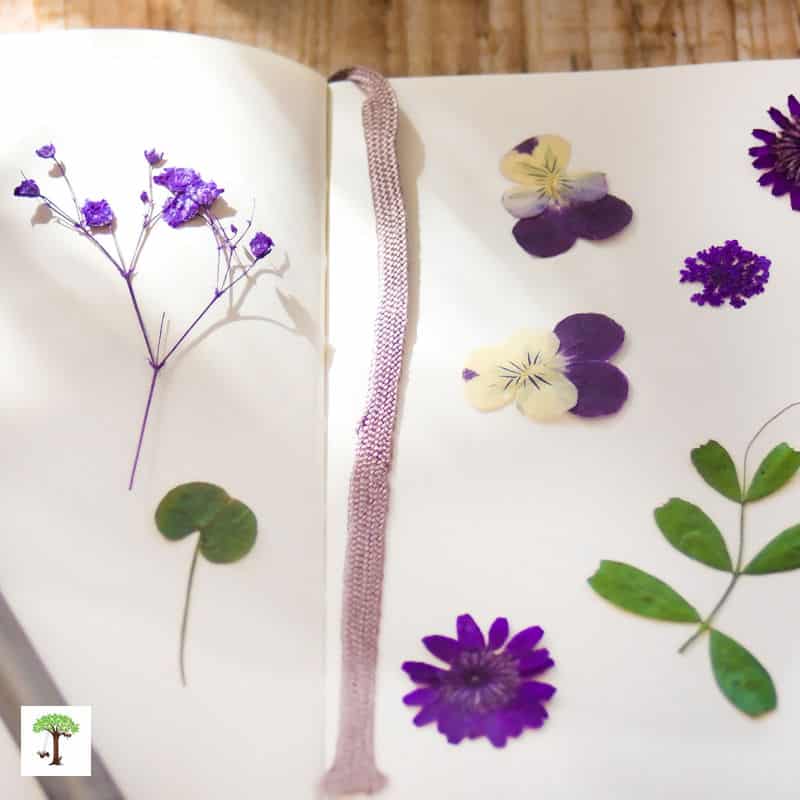
A nature journal is a place where people of all ages and backgrounds can express themselves in whatever way comes naturally. Adults also enjoy gluing nature specimens into their nature notebooks.
Nature Journal Resources for Kids and Adults: Recommended Reading for Keeping a Nature Journal:
Below is a list of my family’s favorite nature study guides and resource books for nature journaling. These books can help you (and your children or students) keep a nature journal and act as a springboard to your learning adventures in the great outdoors. Please visit Nature Study Supplies for Kids and these birding resources to see several more of my favorite nature books and field guides for kids and adults.
Naturalist Books by John Muir Laws:
John Muir Laws is a well-known naturalist with a few valuable resources I recommend for anyone interested in nature journaling. His books are fantastic for children and adults who wish to deepen their field journal practice.
- The Laws Guide to Nature Drawing and Journaling: Laws provides a beautiful combination of art and science in this nature art how-to guide for becoming a better artist and a more attentive naturalist. Step-by-step illustrations and dozens of exercises lead the hands and minds of young and old alike as they create accurate reproductions of plants and animals, landscapes, skies, and more.
- The Laws Guide to Drawing Birds: This nature journal book by John Muir Laws shows beginning nature journalists how to blend artistic technique with details that make drawing the vehicle for seeing and drawing each bird. This beautiful how-to guide to drawing our wild feathered friends can help artists hone their bird-drawing skills and guide those who insist they can’t draw birds.
- How to Teach Nature Journaling: This book expands on the philosophy and methods of The Laws Guide to Nature Drawing and Journaling. It brings together curriculum plans, advice, and in-the-field experience so educators of all stripes can jump into journaling with their students. These approaches are designed to work in various ecosystems and settings and suit classroom teachers, outdoor educators, camp counselors, and homeschooling parents.
- The Laws Sketchbook for Nature Journaling: This book provides a great starting point for anyone interested in the practice and joy of getting out, observing, and recording nature. Sturdy covers and a lay-flat sewn binding make field sketching easy, and artists of all levels will appreciate the blank pages of high-quality paper. Also includes tips, techniques, and advice from master nature journalist and teacher Jack Laws.
Nature Study Books by Anna Comstock:
Anna Comstock’s Handbook of Nature Study is essential for all budding naturalists. Today, you can purchase this book in its original single-volume black-and-white format or as separate volumes available with color pictures:
- Handbook of Nature Study (original single volume)
- Alternatively, purchase this massive handbook in smaller volumes:
A few Other Favorite Books and Resources for Nature Journaling:
Here are a few more valuable nature journaling resources I recommend for children and adults interested in nature journaling:
- The Nature Handbook: A Guide to Observing the Great Outdoors. This nature study handbook explores and explains nature through these connecting patterns, making them accessible to a wide range of nature lovers.
- Nature Anatomy by Illustrator Julia Rothman: This book for kids combines art and science into an exciting, educational guide. Rothman’s whimsical illustrations are paired with interactive activities that encourage curiosity and inspire children to look more closely at the world around them.
- Keeping a Nature Journal by Claire Leslie Walker: Leslie’s accessible style of teaching people to see, witness, and appreciate the wonders of nature is a classic guide still used by individuals, groups, and educators, from elementary school teachers to college-level instructors.
A Nature Journal is the Perfect Place to Grow Your Thoughts about the natural world:
Nature journals are the perfect place to grow your thoughts, feelings, ideas, observations, and experiences with nature. Keeping a nature journal offers a rich opportunity for children and adults of all ages to develop mindfulness and study the natural world. Writing in a nature notebook also helps kids develop a deeper connection to and relationship with the earth.
“Nature always has secrets to share.”
~Nell Regan Kartychok. (Founder of Rhythms of Play)
You can keep a nature journal in various formats, including physical notebooks, digital documents, or dedicated apps. Regardless of the format, the primary purpose of a nature journal is to create a space where you can record your interactions with and observations of nature, whether in your backyard, at a local park, on a hike in the wilderness, or during travels in whatever way works best for you.
Nature notebooks are also an excellent place to record any nature study or outdoor learning activities you or your children (or students) complete each week. Whenever you head out on an adventure into the great outdoors, take your nature study journal to write, draw, or paint your observations, feelings, and experiences with nature and the wild.
Immersing yourself in nature is a wellness practice that continues to show many physiological and psychological benefits for children and adults. Whether you call it forest bathing (Shinrin-yoku), forest therapy, nature therapy, woodland therapy, green therapy,
Friluftsliv, or ecotherapy, a nature journal is an excellent way to increase these physical and mental-emotional benefits through connection with nature.
You might also enjoy reading Caring for Earth. It includes several small steps you can take to create a better future for our children.
Here are a few simple reminders to get you started with nature journaling:
- Take your nature study journal whenever you head out on an adventure.
- Write, draw, and paint in your notebook or journal to record experiences with nature. (Don’t forget to date entries!)
- Write thoughts, feelings, ideas, observations, experiences, and relationships with the natural world.
- Encourage your child to choose something to focus on and draw or paint, such as a flower, tree, bug, or bird.
- If your child is too young to write, let them draw and then write down what they tell you, without editing what they say or how they say it. After all, it is their journal.
- Add poetry or quotes that are meaningful to you and related to your experience with nature.
- Place, trace, or press the natural specimens you collect inside it.
- Download the free printable templates below for specific observations and nature journal activities.
Your first page doesn’t have to be beautiful. It simply has to begin. Every observation, question, sketch, and note becomes a part of the story of your relationship with the natural world. Eventually, it becomes a living record of your experiences in, understanding of, and relationship to the natural world throughout the rhythm of the seasons. Start one today!
Nature Journaling for Kids and Adults:
DIY Nature journals make it fun for kids and adults to study nature. Record observations, create art, and write learning experiences in the natural world.
You may also be interested in this fantastic collection of Outdoor Learning Ideas and Nature Study Supplies for kids, as well as our Nature Study Resource Page.
Please visit our About page to learn more about Rhythms of Play. For more information about this website and the author and photographer of “How to Start a Nature Journal and Deepen Your Connection to the Natural World“, please visit the Home page for Rhythms of Play or the author page, Nell Regan Kartychok.
More Nature Activities for Kids and Adults:
Here are several more nature activity ideas for your homeschool, classroom, or family adventures.
- Birding for Kids: Birdwatching Activities and Lessons
- The Art and Science of Skipping Stones
- Go on a Nature Walk or Hunt
- The Best Rock Painting Ideas for Kids
- Rock Balancing Stone Stacking Art
- Flower Nature Crafts
- Nature Sensory Bottles
- Squirrel Facts and Activities for Kids
- Outdoor Learning and Nature Activities for Kids
- Learn more about Nature Study on our Nature Study Resource Page.



Thank you for providing so much valuable information about nature journaling. I can’t wait to make some with my kids and start recording our experiences.
Thank you, Charlene!
I’m so glad that you found this article useful. I hope you enjoy making and keeping a nature journal as much as we do!
I never knew that it was so easy to make a nature journal. Thank you for this informative post filled with great information about keeping a nature journal.
You are welcome Henrybow! I’m so glad that you found the information about making and keeping a nature notebook useful. Nature always has secrets to share. Enjoy!
Thanks for your post. Seeking accurate information is among the biggest
concerns for its younger generation.
Thanks, Mack! So glad you appreciate the value of how to make and keep a nature journal. 🙂