

Learn how to achieve goals by creating a solid plan of action. Achieving goals can become a lifelong habit with these personal and professional productivity tips.
The best way to accomplish personal or professional goals is to create a step-by-step action plan. The reason most people fail to achieve their goals is that they don’t write down the action steps they need to take and then follow through on completing them. Please don’t make the mistake of setting goals without creating a step-by-step action plan to achieve them. As my late Mother always used to say, “Wanting something does not a plan make.”
Use this list of goal-setting tips to create a step-by-step plan to accomplish different types of personal, family, or professional goals to co-create a life you LOVE! I have even included a few quotes about achieving goals to keep you inspired and on track. When you’re finished, turn your Goals Into Affirmations to keep you motivated to meet them. First published December 28, 2015, this guide to creating an action plan to accomplish your goals is regularly updated and republished to improve the content. You might also enjoy learning how to set goals.

How to Create an Action Plan to Achieve Goals and Avoid Potential Obstacles
Knowing how to set goals and achieve them is integral to your success. The list of action steps below can help you clarify your vision and achieve your goals. But before you get started, I recommend using a goal planner or workbook to make it easier to track progress toward your professional, family, and personal goals.
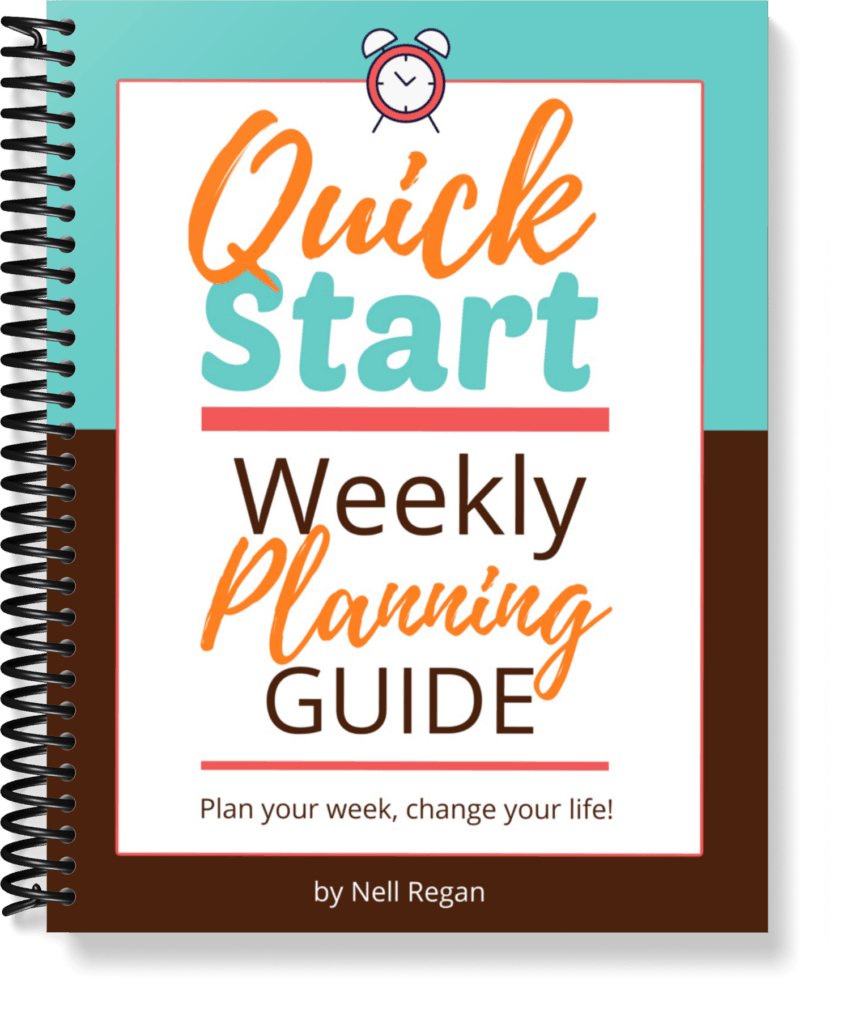
I use the goal-setting printable template included in the Dream Life Tool Kit. I also like to use the weekly routine planner included in our FREE QuickStart Weekly Planning Guide to help me complete the action steps needed to achieve my goals. Follow the simple steps below to make it easy to accomplish goals!
Choose an Accountability Partner
It’s also a good idea to choose an accountability partner. An accountability partner is someone who will work with you to reach your respective goals. Having an accountability partner increases your likelihood of staying focused and motivated, whether you are working to lose weight, get fit, finish an important project, or reach your career goals. This person can help balance your strengths and weaknesses, support you in areas where you need help, hold you accountable, help you solve problems, and vice versa.
Instead of competing and causing conflict, you motivate each other, communicate clearly, and make adjustments as challenges arise. This type of partnership turns individual efforts into steady, shared progress toward your ultimate success. Having an accountability partner you can turn to for support when needed can make the difference between failing and succeeding in reaching your goals. Choose someone to be accountable to for the best results.

Related: Household Rhythms: The Power of Routine in the Home
Create a Plan of Action to Achieve Goals: Steps to Make Accomplishing Your Goals A Reality Now
When you make a plan of action with clear, actionable steps, it becomes much easier to achieve your personal and professional goals. Learn how to create a plan to achieve goals using the goal-setting process below.
Even when you make specific, measurable, attainable, and realistic goals, you must follow through by creating a plan to achieve them. These personal and professional productivity tips will help you make accomplishing goals a lifelong habit! Use this List of action steps to achieve goals:
1. Clearly Define Your Goals:
Before you can create an action plan to achieve your goals, it’s important to understand precisely what you want. Clear goals provide direction. When goals are unclear, your actions are likely to be unfocused. This is why it is best to begin by setting goals that are Specific, Measurable, Attainable, Relevant, and Time-bound, using the tips in this how-to guide: How to set SMART goals.
Avoid vague goals such as “get or do better,” “earn more money,” or “be successful.” Instead, use the step-by-step instructions in the tutorial to create clearly defined goals with short- or long-term objectives. Describing what attaining the goal looks like will make it easier to list the action steps and make a plan to achieve it.
Once finished, please write each of your goals down on a blank piece of paper, in your journal, or on your “Master Goal List.” (A printable “Master Goal List” is included in the Rhythms of Play Dream Life Tool Kit.) When you have at least one clearly defined goal and are ready to create a plan to achieve it, move on to the next steps. If not, get started with goal setting using the step-by-step instructions HERE —> How to set SMART goals. Once finished,

2. Start with one goal:
Starting with one specific professional or personal goal can help you eliminate setbacks and narrow your focus enough to achieve the desired outcome. It’s better to start with one short-term goal and complete it than to begin with three long-term goals and fail to achieve any of them. If you feel confident in your plan, come back and do this process with another goal that you would like to achieve. Just make sure it is a SMART plan.
If not, stick with one specific goal at a time until you master the skill of achieving goals. One goal is sure to have risen to the top as your number one priority since you created your “Master Goal List.” If not, allow yourself a few more days to contemplate which of your aspirations holds the most meaning, relevance, and importance for you at this time in your life.
3. Understand Your Motivation (Your “Why”):
Before making a plan to achieve it, first, figure out why this goal matters to you at this time in your life, and why you want to achieve it. Start by asking yourself questions such as: “Why do I want this?” and “What will change, if anything, when I achieve it?” Then, write down, or journal about, at least one personal reason.
For example, “I want to be able to run three miles without stopping in under 30 minutes to improve my health and reduce weight so I can feel better about myself.” Taking the time to understand your “why” and write it down makes you more likely to stay motivated to keep going, even when it becomes tedious or difficult.
4. Research What It Takes To Achieve the Goal:
Before making an action plan to meet a goal, you must first understand what it takes to accomplish that type of goal. In other words, it’s essential to know the steps to reach the goal, as well as each milestone along the way. Bigger goals will likely require more research than smaller goals with fewer steps. Your research can include online research or visits to the library, and speaking with people who have prior experience achieving the end goal.
Once you know the primary steps to achieve your goal. Begin creating a list of actionable items (a basic outline of each little step you need to take to accomplish that goal) before moving on to the next step in setting up your goal action plan. Use the next steps in the goal-setting process to help you complete this step and finalize your plan of action.

Related: 10 Reasons to Make Rhythm and Routine a Habit
5. Make a List of Steps to Accomplish the Goal:
Create a “Goal Action Plan” by creating a list of action steps to take to achieve the personal or business goal you set out to achieve. Short-term goals, like getting a job, can be accomplished in as little as a few weeks because they typically have fewer action steps, unless you need to train for the job or get an education before looking. In contrast, larger long-term goals, such as earning a degree, mastering a trade, buying a house, starting a business, or writing a book, can take several years to achieve, depending on how much time and energy you devote to them, and will require many more action steps.
Break the Goal INto Smaller Steps:
To create a plan to reach a larger goal, break it down into the fewest steps possible to make it easier to achieve. In other words, transform a single big goal into a list of manageable actions that feel easier to achieve. When you break a goal into several steps that you can complete in a few days or weeks, each step becomes a separate goal to accomplish. Breaking your goal down into these smaller, easier-to-achieve interim goals can help prevent procrastination and make progress more visible.
To do this, start by listing each step required to accomplish that goal. Each step or interim goal should feel doable, not overwhelming. If any of these smaller interim goals feel too big or scary, keep breaking them down into smaller steps until they feel a little easier to complete. Ultimately, you want to break larger goals into several steps, organized into sub-goals, groups, subcategories, or areas of focus.
Finally, create a basic outline of the steps to be accomplished, in the order they should be completed, and when (provide a due date for each major group and subcategory). Use the step-by-step instructions below to break goals down into sub-goals, with a list of action steps to take for each, and place them in order of priority:
How to Break Each Main Goal (and Sub-Goal) Down into Manageable Baby Steps or Interim Goals:
- List each step it takes to accomplish your goal.
- Break each action step toward your goal into manageable tasks so that each step you take is as small as possible.
- Break each larger step into actions, with only one task or action per step.
- In other words, break your plan down into smaller steps until there is only one thing to do for each action step in your goal action plan.
- Once you have broken each personal goal into the smaller tasks required to complete it, create your official “Goal Action Plan.”
- Start by getting out a blank piece of paper, or use the Printable “Goal Worksheet” and “Goal Action Plan” in the Dream Life Tool Kit by Rhythms of Play.
Prioritize the List of Action Steps to Achieve Your Goal:
- Organize the action steps it takes to achieve your goal by priority.
- Place the most critical step first, then the next most important interim goal, and so on.
- When you are finished, move on to the next step in the goal action plan process.
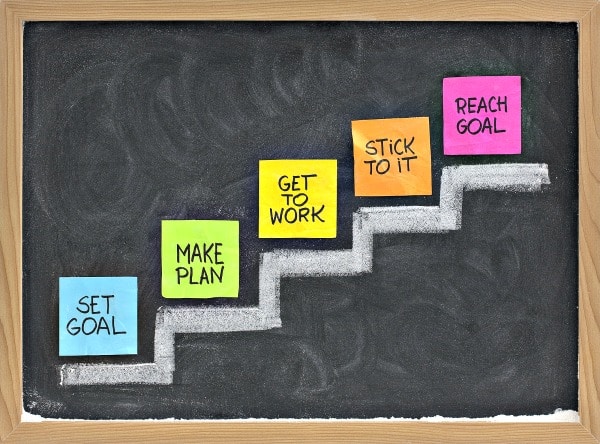
Related: 15 Ways to Raise a Helper
6. Set a Completion Due Date or Deadline to Achieve the Goal:
First, make a realistic assessment of the time frame (how long it will take) for completing each action step needed to achieve your goals. Then, choose a due date that feels doable, so you don’t lose faith and give up. Larger goals will take longer to complete than smaller ones. Finally, add it to your calendar to energize it and make it real. Setting a due date is necessary to keep your goals SMART because it keeps them time-bound.
The steps you need to take and the time you have to dedicate can help determine how long it should take you to accomplish your goal. After completing the previous steps in this process, you should have a pretty good idea of how long it might take to achieve your goal. Consider what you have learned and choose a due date that feels attainable given all the factors required for its completion, so you don’t lose faith and give up.

7. Create a Realistic Timeline and Set Interim Goals:
Set interim due dates based on the overarching due date selected in step 5 above. Interim goals or deadlines are due dates set to reach each of the smaller steps or goals within the primary end goal. Like the overarching goal, they also contain specific action steps or phases that you need to complete to achieve it. As Antoine de Saint-Exupéry said, “A goal without a plan is just a wish.” Time turns intention into action.
For example, if your goal is to lose 25 pounds in 6 months, an interim plan would be to lose 3-5 pounds in a month. On the other hand, if your goal is to start a business and earn a full-time income in 2 years, the interim goal might be to earn part-time income after 1 year. Interim due dates help people feel they are making progress toward their goals and are a great way to keep motivation high.
Decide when and how you will complete each step outlined in the previous steps. Give each step a deadline or due date, but be honest with yourself about your schedule and energy level. Don’t overload yourself. Keep your load light so that each sub-goal feels attainable. Then create a basic timeline to help keep your plan SMART and measure your progress toward reaching your goal. Once again, the printables in the Dream Life Tool Kit by Rhythms of Play make this step simple.
How to create your timeline and set interim goals:
- Write the overall goal due date, as well as any interim goals and deadlines, into the “Goal Action Plan” printable. (Write it down and make it happen!)
- Also, record these dates in your calendar.
- Next, write each action step you need to take into your calendar
 or weekly planner so you can stay on track to achieve your goals. (In other words, create space in your schedule over the coming weeks to complete each task listed in step four by writing it into your daily and weekly planner.)
 - Check off each goal action step as you accomplish it.
 or
or 8. Collect Resources and Support:
Identify tools, information, or people who can help you reach your goals. Consider reading books, watching videos, contacting teachers and mentors, and listing family and friends who may be able to help or support you in reaching your goals. Enlist the help of an accountability partner, as mentioned in the introduction to this helpful guide.
Ask for help early in your pursuit of the goal, before you even get started, as opposed to waiting until you are stuck. You don’t have to do it all alone. Gather support to speed progress, develop the right mindset, and reduce overwhelm and frustration.
9. Delegate as Needed:
Delegating responsibility is a superpower that helps us use our time, energy, and talents wisely and makes it much easier to accomplish the goals we set. Asking others for help when we need it is an excellent way to do this, especially if there is a specific task you don’t feel qualified to complete. Please delegate all tasks and action steps that you cannot do or are unwilling to complete.
In other words, hire others to complete those tasks and action steps, or hire others to take care of chores and tasks that free up your time to reach your goals. For example, if you would prefer or need to complete each of the action steps yourself, pay or trade for work with someone to take care of your children, landscape the yard, or clean the house, so you can spend the time you would typically spend on those tasks working toward your goals instead. Remember, you can’t do it all, but you can ask others for help to accomplish your goals.
Related: DIY Projects for Do-it-Yourself Families
10. Post Your Plan:
Post your goal plan somewhere you will refer to daily. Keeping your goals and action steps in a place you can see them daily makes it easier to stay on track. When you post your plan, you are more likely to complete the tasks needed to reach your goal, even when motivation is low. Having my goals in front of me helps me stay motivated and on track to complete the action steps required to achieve them.
Personally, I need my goals in my face, so I’m constantly reminded of the next steps I need to take. For this reason, I put my goals somewhere I can see them daily. Following through on this one simple step makes it much easier for me to accomplish them, and I’ll bet it will help you as well.
Recommended Tools for Keeping Your Goals In Front of You:
I use a giant wall calendar with wet-erase markers
 so I can see my goals and make a plan to achieve them. I also like to make copies and use heavyweight sheet protectors, dry-erase pockets, or laminating sheets and a laminator to make it easy to reuse goal printables. Not only does this help me conserve paper and printer ink, but it also ensures that I always have my printables ready to go, since there is no need to reprint them.
I also like using dry-erase pockets because they make it easy to reuse my goal-setting printables and worksheets, and make simple changes to my plan when needed. They also make it easy to hang your action steps for achieving goals on the wall with a pushpin or a small nail, so you can display them just about anywhere.
Another beautiful way to display your personal goal plan is to put your printables into a frame and hang them on any wall in your home or office. Wet-erase markers work great with most 8.5 X 11-inch frames and clean up in a snap!
If you are curious, I prefer to write with wet-erase markers instead of dry-erase markers
 on my whiteboards and laminated weekly planning sheets because they don’t rub off while writing, and all you need is a wet cloth to wipe them clean. Give them a try!

11. Take Consistent Action:
Do your best to complete the goal action tasks you set out to accomplish each day, week, and month to make your goal (or dream) a reality. Focus on consistency, not perfection. Goals are achieved through repeated action, not in a single, enormous effort. Continue to show up for yourself, even when the effort feels small.
It’s also a good idea to allow yourself a few bag-out opportunities to choose not to complete a step on time, so you can attend other important functions or events that conflict with your interim goals when they arise, such as your best friend’s wedding.
However, when you do this, I recommend adjusting your plan so the final due date doesn’t change if possible. Find a way to fit the steps you missed into the days leading up to the event, and after the event, to stay on track.
That said, sometimes final due dates need to be adjusted when progress isn’t going as planned, and that’s perfectly okay. Make any adjustments you need and keep on keeping on, but please don’t quit. Instead, call your accountability partner for help when needed.
12. Complete High-Prority Tasks First:
Focusing on high-priority tasks first is one of the most effective ways to steadily make progress toward your goals. High-priority tasks are those likely to have the greatest impact on your results. When you address these tasks early, you ensure your time and energy go toward what truly matters, rather than being consumed by smaller, less important activities that don’t help you make any progress toward your goals.
Begin with your most crucial tasks first to ensure you can give your best effort without distractions or fatigue. Starting with your high-priority tasks also reduces stress because you won’t have an unfinished, essential task haunting you in the back of your mind. Once it’s completed, or at least underway, everything else feels more manageable.
Prioritizing important tasks also helps develop discipline and confidence. Each time you finish something meaningful, you strengthen the habit of purposeful action and show yourself that you can handle challenging work. Over time, these small wins accumulate, making your long-term goals seem more attainable. By consistently focusing on high-priority tasks, you create a clear path to success and make better use of each day.
Eat That Frog:
Mark Twain wrote, and Brian Tracy mentions in his book Eat That Frog, that if the first thing you do in the morning is to eat a live frog, you can go through the rest of the day knowing the worst is behind you. Likewise, when we do the most challenging task first, everything else becomes more manageable. You’ll also have the satisfaction of knowing that you finished the most challenging thing you’ll have to do all day.
Use the goal-setting tips provided in this post to organize the critical tasks you need to accomplish to achieve your goals. Then dedicate yourself to getting those tasks completed efficiently and effectively before working on low-priority tasks. Whatever you do, avoid false productivity. Don’t take a detour to “Procrastination Station.” Instead, complete your high-priority goal action steps FIRST!
13. Avoid False Productivity: Don’t detour to “Procrastination Station”:
Beware of false productivity; do not take a detour to “Procrastination Station.” “Procrastination Station” is when you spend time working on low-priority tasks instead of taking action on high-priority goals and completing your most essential tasks first. “Procrastination Station” can fool you into thinking that you are being productive because you are getting things done.
Unfortunately, no matter how constructive, procrastination will steal your focus and keep you from reaching your goals. There is not enough time in our day-to-day lives to complete everything on our to-do list, and there never will be. The most successful people don’t try to do everything. Instead, they create a “Not Doing List” or a “Stop Doing List” and learn to focus on getting the most important tasks done first. “They eat their frogs.”
14. Create a “Not Doing List” or “Stop Doing List”:
A “Not Doing List” or a “Stop Doing List” is a list of actions that you promise to stop doing. These lists are excellent tools that can help you eliminate setbacks, stay focused on your priorities, and make it possible (and much easier) to accomplish goals.
“Give yourself permission to stop doing the things that drain your energy and steal time from your dreams.”
Nell Regan Kartychok
A “Not Doing List” can also help you make time for your dreams by making a simple promise to yourself–that you will STOP DOING the things on it. Without one, you are likely to spend your day putting out fires without making any real progress towards your goals. Use this list to keep your priorities straight, eliminate distractions, and delegate responsibility so you can make a beeline toward your goals.
There is a printable “Not Doing List” with several suggestions and prompts provided in our Dream Life Tool Kit. Or you can sign up for the QuickStart Weekly Planner and get it sent to you as a gift for subscribing to the Rhythms of Play newsletter.
15. Overcome Obstacles, Setbacks, and Mistakes:
No matter how well you plan, there will always be challenges. Achieving goals is easier when you expect challenges and have a plan to handle them. Identify any obstacles that might get in the way of reaching your goals, such as time constraints, distractions, stress, and items on your “Not Doing List.” Decide in advance how you will respond to these challenges. In other words, will you delegate, stop doing it, or take another course of action?
Setbacks and mistakes are normal. It’s the persistence to pursue your goals, even when faced with the most significant challenges, that separates those who succeed from the quitters. Make a plan for how you will handle each likely obstacle, setback, or mistake so you can turn them into speed bumps rather than roadblocks and keep moving forward.
When you make a mistake, treat it as an opportunity to learn, not as the endgame. Mistakes are not failures or a reason to quit. A mistake is simply missing the mark. It’s not a reflection of you as a person. Choose to let your mistakes show you how to do better next time, and keep putting one foot in front of the other. Let it go, carry on, and stay calm. You’ve got this.
16. Use the Power of Rhythm to Make Achieving Goals Easier:
Rhythm and routine are some of the most effective time management tools you can use to accomplish your personal and professional goals. Following a daily and weekly rhythm will help you build strong habits that keep you moving step by glorious baby step toward your goals.
Don’t rely on motivation alone. Learn how to use the power of rhythm to plan your daily routine and build strong habits that make it easier to achieve your goals and dreams. Grab my FREE Guide and get started today–> QuickStart Weekly Planning Guide
17. Turn Goals Into Affirmations:
Once you have completed each of the steps listed above, turn your goals into positive affirmation statements to make achieving them a reality. Turning goals into affirmations helps create a positive mindset that enables you to check off action steps, meet benchmarks, and cross the finish line. Click HERE to learn more about why and how to–> turn your goals into positive affirmations!
18. Be True to Your Word, Honor Your Commitments, and Stay Patient:
If you want to achieve your goals, take consistent action, stay true to your word, honor your commitments, and do what you say you are going to do. No excuses. Be authentic, develop healthy habits, take responsibility for co-creating your dreams, and live in integrity. Your commitments matter. You must take responsibility for co-creating your dreams. No one else can do it for you.
If you constantly break your promises to yourself and others (or fail to do what you say you will), you will have difficulty accomplishing your goals. Prove to yourself that your dreams and goals are worth it, and success will be yours!
But remember, Grandma is right, “Patience is a virtue.” Focus on the progress you make toward your goals, not the speed at which you achieve them. Especially if it is an important yet challenging goal. Not all goals are easy to achieve. Just ask anyone about those last 5 pounds or completing their Master’s Thesis or Doctoral Study.
If things get challenging, remind yourself of your “why.” This is especially helpful when completing your interim goals. Most goals fail because people stop too early and give up short, not because they weren’t capable of achieving them. I would have a PhD in Psychology if I hadn’t given up on my doctorate when I came down with pneumonia, but I did.
Remind Yourself of Your “Why” if You Ever Feel Stuck
While working three jobs, completing hours to become a yoga therapist, and putting myself through school to acquire my doctorate, I made myself sick. After completing all my coursework, I became a doctoral candidate in the philosophy of psychology once my “study” was approved in 2006. However, I failed to complete my doctoral degree because I did not return to finish my studies once I recovered.
Before I got sick, I was up by 4 AM every day to train clients as a personal trainer, working as a nanny of three young children (one a baby) during the day, and teaching yoga or fitness classes in the evenings. In my memory, it was the most challenging daily rhythm I ever kept up with, until I literally couldn’t. I worked into the wee hours of the morning, then fell asleep for a mere few hours to do it all over again.
Weekends had become nonexistent, and I was too busy to do anything fun. Eventually, I got so worn out that I came down with pneumonia. Then, I gave up on myself and walked away from all those years of hard work. It felt so far away, distant, and unattainable by the time I recovered, because I would have had to start my “study” all over again. I didn’t want to go backward to get there. But I was so much closer than I gave myself credit for.
I wish I had had a better “Goal Action Plan” and a “Not Doing List” at the time, because they would have kept me from overextending myself, and helped me reach that goal, but hindsight is 20/20. Live and learn. Please learn from my mistake. Work your plan step by step and be patient; meaningful goals take time to accomplish.
19. Visualize Your Success: Act “As If” your Goal is real now:
Creation by default won’t get you very far. Stay conscious of what you are co-creating and manifesting in your life. In other words, if you want to achieve your goals, you need to make a plan. Setting goals doesn’t help you achieve them. To make your dreams and goals a reality, you must first create an action plan to achieve them.
Once you have a basic plan or outline for achieving your goals, it is important to visualize what your life would be like if you accomplished them. Take a moment to act “as if” your dreams and goals are real now. Set aside time in your day to see or feel what life is like from the perspective of having attained your goals–to help you reach them.
Related: Word of the Year Ideas and Tips
Ask the following questions to visualize accomplishing goals:
- What does it look like to achieve this goal?
- How would it feel to accomplish this goal?
- Would your life be different? If so, how?
Close your eyes to become aware of the finer details. If it feels good, you are on the right track. The positive emotions you feel will help you bring your dreams and goals to fruition. Or, you may learn that you need to make some adjustments to your plan, and that’s perfect, too. Just continue to visualize your success, stay true to your vision, and follow through on your goal action steps, and you will get there, one baby step at a time!
20. Monitor Progress and Adjust with a Regular Goal Review:
Check whether your actions are working by doing a weekly, monthly, quarterly, or annual goal review. Ask yourself what’s working, what isn’t, and adjust your plan if needed. Conducting a goal review will help you reflect on what you have achieved and learned thus far and reassess as needed. Reflection builds confidence and makes it easier to achieve future goals. Reassess and revise your goal action plan with the “Weekly Review Worksheet” included in the RoP Dream Life Tool Kit and the goal review tips found HERE—> How to do a Goal Review.
Doing a review to check your progress and adjust your plan increases the likelihood that you will achieve your business and personal goals. Conducting a goal review at regular intervals each week, month, quarter, or year is a great way to determine whether you need to rework any actions or due dates and to stay motivated. It builds flexibility into your plan, helping you keep moving forward instead of getting stuck. This is especially helpful when things aren’t going as planned.
Please don’t give up on achieving your goals if you ever fall behind. Instead, make a plan to rework your “Goal Action Plan” each week to review your goals and stay on track to accomplish them. Designing an action plan to achieve goals and completing a goal review are the most effective ways to create the life of your dreams — one goal, habit, or rhythm at a time!
21. Reward Yourself!
Congratulate yourself on a job well done. Celebrate progress, not just final results. Rewarding yourself for achieving goals is a great way to stay motivated and on track. Whether you finish the goal of creating an action plan to achieve goals, complete an important step, or reach the goal you set to accomplish, reward yourself for a job well done! There are many simple ways to reward yourself for each milestone you achieve, even if it’s just your first step.
For larger goals with several steps or subgroups, I recommend giving yourself a small reward for each milestone and a larger reward upon completing the goal. Remember, the best reward is one that feels meaningful and fulfilling and makes sense to you. So it’s vital to choose rewards that align with your values and contribute to your overall well-being.
Fun ways to reward yourself for Accomplishing Milestones and Achieving Goals:
- Take a Break or Vacation: After reaching a significant milestone, take a day off or plan a vacation to relax and rejuvenate.
- Treat Yourself to Something Special: Buy something you’ve been wanting for a while, such as a new book, gadget, or piece of clothing.
- Enjoy Your Favorite Meal: Go out to your favorite restaurant or cook a special meal at home.
- Experience Something New: Try a new activity or hobby you’ve been interested in, like a cooking class, dance lesson, or a day trip to a new place.
- Pampering Session: Book a spa day, get a massage, or have a relaxing bath at home.
- Celebrate with Friends or Family: Organize a small party or get-together to share your success with loved ones.
- Quiet Time Alone or in Nature: If you prefer solitude, reward yourself with some quiet time to read, meditate, go for a walk in nature, or relax.
- Health and Wellness Activities: Sign up for a yoga class, gym membership, or a personal training session.
- Invest in Personal or Professional Growth: Enroll in a course or workshop that interests you and supports your growth.
- Charitable Acts: Sometimes giving back is the most rewarding. Donate to a cause you care about or volunteer your time.
- Creative Outlets: Indulge in a creative activity, such as painting, writing, or crafting.
- Digital Detox: Reward yourself with a day free from electronic devices and social media to unwind and reconnect with yourself.

Create an Action Plan For Achieving Goals With a GOAL SETTING WORKSHEET AND GOAL PLANNER:
I highly recommend using a goal planner to help you stay on track. As I mentioned above, I like to use the goal-setting worksheets in our Dream Life Tool Kit and the weekly routine planner included in our FREE QuickStart Weekly Planning Guide to help me fit the action steps I need to take into my weekly rhythm.
I also like to use a four-month magnetic whiteboard wall calendar to literally “see” the goal action steps that I need to take next. But, please, use the tools and resources that work best for you.

Make a Plan to Achieve Your Goals and Live Your Dream Life!
Setting business and personal goals, creating an action plan, and sticking to it is a surefire way to attain your goals and live the life of your dreams. Follow the steps listed above, and you will be well on your way to achieving your goals. Please don’t wait, do it today!
Achieving a goal is typically not about talent or luck. It’s about having a clear direction, taking consistent action, and learning along the way. Any goal becomes achievable when you break it down and keep moving forward slowly, step by step. Create an action plan to achieve goals today!
Learn more about Nell Regan Kartychok, author and photographer of this guide to achieving goals HERE, and Rhythms of Play HERE!






thanks a lot. i will try this plan
You’re welcome Youg. So glad you found this information useful 🙂
Great article, you are right about interim goals. I break all of my goals down into mini goals (interim goals), and have a date due to have the mini goals accomplished. I find this works very well. Thank you for your article
You’re welcome, Douglas. Thanks for the vote of approval 🙂