
Discover the benefits of playing at a splash pad for kids and learn essential safety tips in this informative guide.
Is there anything more fun than playing in the water on a hot day? Although they have existed for decades, splash pads have been popping up everywhere as recreational water play areas that serve as alternatives to local pools in many cities and towns worldwide.
Splash pads with various water features are typically located at shopping malls, public parks, water parks, resorts, hotels, and gyms. This post was originally a part of the Get Outside and Connect series. Please visit for more information about this call to parents, caregivers, and teachers worldwide.
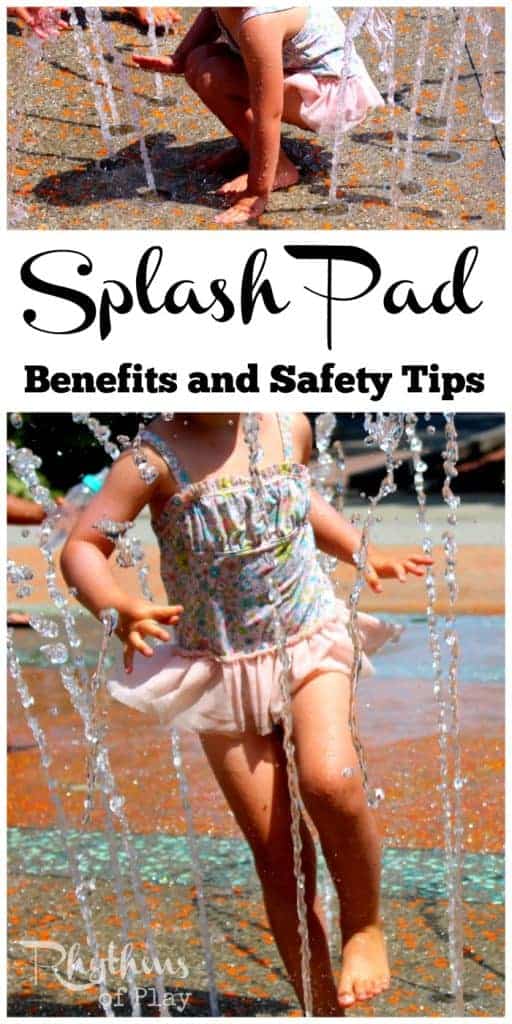
Splash Pad Benefits and Safety Tips:
A splash pad (or spray pool) is a recreational area featuring water spraying nozzles of various kinds, with little to no standing water. They are an easy alternative to swimming pools for many families concerned about water safety. Since there is no standing water, the need for lifeguards or other supervision is reduced, and the risk of drowning is minimal.
There are numerous benefits to playing at a splash pad for kids. Although they are generally safer than pools and other open bodies of water for children to play in, several considerations are still necessary to keep your kids safe while having fun.
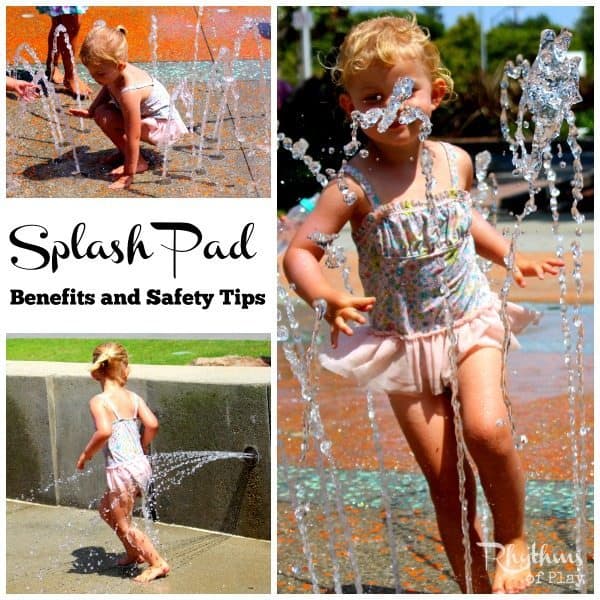
How to Find a Splash Pad Near You:
Most communities have a park with a splash pad. Splash pads are typically located at shopping malls, public parks, water parks, resorts, and gyms.
If you don’t know where your local splash pad is, try searching for it online using a search engine like Google. Enter “splash pad” plus your city name.
If there are none in your town, search nearby towns and cities. I’m sure you’ll find one that’s not too far away to visit and enjoy.
Benefits of Splash Pad Play:
Besides the benefits of cooling down and getting much-needed exercise, there are many other great reasons to play at a splash pad. Splash pad play provides numerous benefits for children, making it a valuable activity during warm months.
Physical Activity:
One of the most significant benefits of splash pad water play is the opportunity for physical activity. Running through fountains, jumping over water jets, and playing water games encourage movement and coordination. Unlike swimming pools, splash pads are usually shallow or feature only sprays, making them a safer environment for young children to engage in physical activity without the risk of deep water.
Sensory Development:
Besides physical benefits, splash pad play aids sensory development. Water play offers a rich sensory experience for developing children, playing a vital role in their sensory integration and overall growth. Splash pads offer a great way to enjoy a variety of water activities and engage in sensory play. The cool water on skin, the visual stimulation of moving sprays, and the sounds of splashing all create a rich sensory experience. These interactions can be especially beneficial for children with sensory processing challenges, providing a playful way to develop tolerance and enjoyment of various textures and stimuli.
Social Development:
Social development is another significant benefit. Splash pads serve as community spaces where children often engage in cooperative play, take turns, and develop social skills. This type of unstructured social interaction promotes communication and empathy.
Educational Activity:
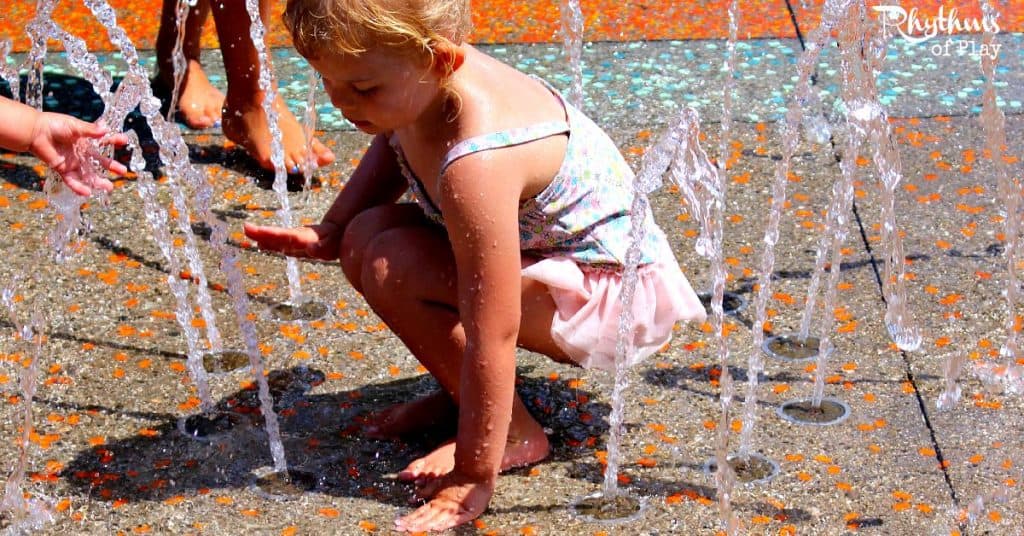
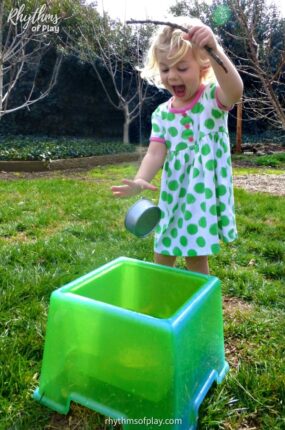
While they are busy having fun, kids can also begin to learn about and experiment with the physics of water as the different nozzles turn on and off. It is not necessary to teach them anything. Just allow them to observe, experiment, and learn while they play, as my daughter is doing in the photo below of her playing at a splash pad.
Overall, splash pad play combines fun and learning, creating an environment where children can grow physically, socially, and emotionally—all while staying cool and having a great time.
Splash Pad Safety Tips:
Here’s a list of splash pad safety tips to help ensure a fun and safe experience for everyone:
1. Always supervise children:
A responsible adult should be present and attentive at all times, even when kids are playing in shallow water.
2. Follow posted rules:
Read and obey all safety guidelines provided by the splash pad facility.
3. Watch for slippery surfaces:
Encourage walking, not running, to prevent slips and falls.
4. Consider wearing water shoes:
Non-slip footwear can help protect feet from hot surfaces, sharp objects, and slipping.
5. Please be kind to others enjoying water play and avoid playing rough:
Keep an eye on your kids to ensure they are safe and not engaging in rough play. Avoid pushing, chasing, or roughhousing to prevent accidents. Splashing other kids when they don’t want it, or doing so in an overly exaggerated, hurtful way, isn’t a nice way to share the space.
6. Please don’t drink the splash pad water:
Remind your little ones not to drink the water, as they might mistake the nozzles for water fountains. Splash pad water is recirculated and not intended for drinking.
7. Stay hydrated:
Bring lots of water to drink. Active kids need a lot of water on a hot day, even when they are playing in it.
8. Use swim diapers:
Babies and toddlers should wear swim diapers to maintain water cleanliness.
9. Take bathroom breaks:
Encourage your kids to use the bathroom frequently and change soiled diapers promptly to minimize the risk of contamination.
10. Apply sunscreen:
Use a chemical-free, water-resistant, and reef-safe sunscreen, and reapply it often. All water eventually returns to the ocean, so it’s best to use a sunscreen without toxic contaminants that can harm aquatic life.
11. Don’t play if you’re sick:
Stay home if your child has diarrhea, a cold, or any other contagious illness.
By following the tips above, families can enjoy the splash pad safely while minimizing the risk of injury or illness for children participating in water play activities.
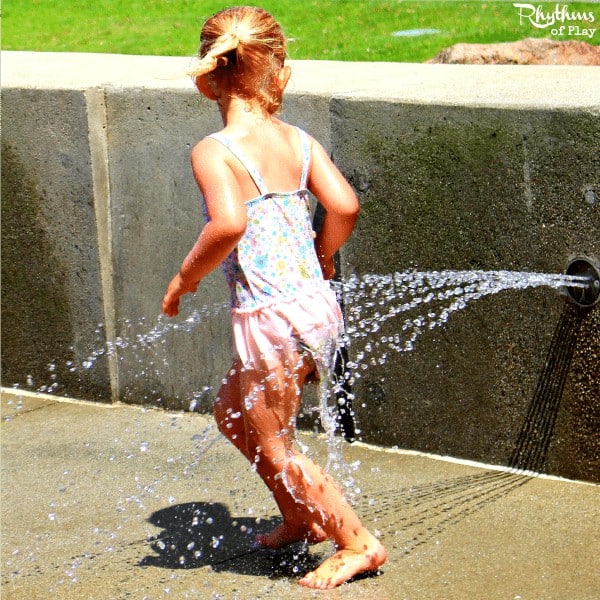
Splash Pad Water Play for Kids
Although my husband and I are both ocean lifeguards ready to handle any water-related emergency, we appreciate the break that going to the splash pad provides. With little to no standing water and non-slip surfaces, splash pads are generally a safe environment to play in.
We can watch our daughter enjoying herself, having fun with other kids in the water, with less concern for her safety, which is a welcome break for any caregiver.
Kids can have fun, learn, stay cool, and keep safe on a hot day at a splash pad. For alternatives to splash pad play, please visit our water-wise sprinkler play, things to do at a creek, and explore fun, relaxing, and educational creek activities. Additionally, discover 25 Beach Safety Tips from an Ocean Lifeguard Mom.
This post is a part of the Get Outside and Connect series. Click the link to learn more.
You may also like:
- How to Raise a Helper
- 11 Reasons Walking Barefoot is Good for You!
- All Season Hand and Fingerprint Tree
- DIY Leave-In Conditioner and Detangling Spray
- How to Color Wooden Blocks, Beads, Peg Dolls, and Other Toys



Great pics! We’re lucky enough to have a splash pad a couple of blocks away – we’re there all the time! 🙂
My husband and I are wanting to install a splash pad in our backyard for our kids during the summer. I like how you mentioned some benefits of a splash pad like the ability to cool down as well as getting the needed exercise for kids. I think it would be a blast to have a splash pad in our backyard so they can run and play and still be in the comfort of our home. Do you know what best surface would be best when installing a splash pad?
That sounds fun! Most splash pads have the soft rubberized ground found on many playgrounds today. On the surface they look like pebbles, but they are made of rubber. Here is an affiliate link to interlocking tiles http://amzn.to/29yasgM. I hope that helps!