
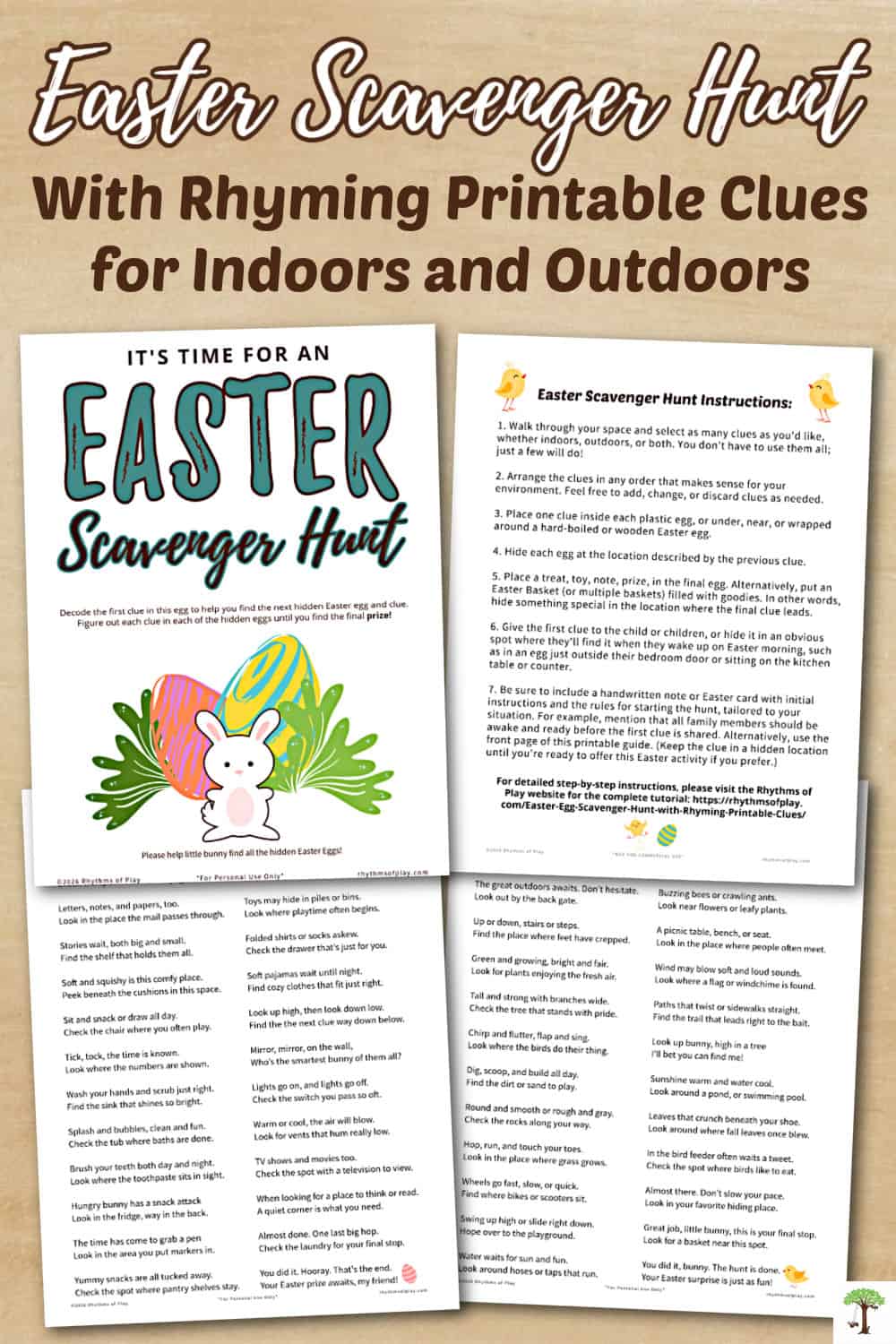
Here’s a fun egg hunt alternative for indoors, outdoors, or both. Choose from 50 optional printable clues (25 indoor and 25 outdoor) to host a Rhyming Easter egg scavenger hunt!
Here’s a complete, ready-to-use Easter scavenger hunt you can run at home, in the yard, or at a park. Each clue goes inside a plastic egg and leads to the next spot. This fun rhyming Easter activity offers a wonderful twist on the traditional egg hunt. Instead of rushing willy-nilly to gather as many eggs as possible. Kids follow rhyming clues, solve simple riddles, and move from one spot to another until they reach the final treasure at the end of the hunt.
This Easter scavenger hunt can be held indoors, outdoors, or both. It is an ideal way to host an Easter egg hunt for an only child, or create a more cooperative experience for multiple children. It turns Easter morning into a shared experience rather than an elbow-to-elbow competition. Best of all, this Easter Egg scavenger hunt includes rhyming printable clues you can use, which makes finding each one so much more fun!
As someone who grew up with three brothers competing for every last egg, I would have liked to try an Easter egg hunt like this at least once before adulthood. Now that I am the parent of an only child, who will forever remain one. My husband and I have created an Easter egg hunt experience just as magical as the ones we remember from childhood, but better, because everyone wins!
What is a Rhyming Easter Scavenger Hunt?
This engaging activity uses plastic Easter eggs with clues that lead to the final Easter treasure hidden inside. Alternatively, you can use decorated hard-boiled or wooden eggs with clues (sitting under or near them) that lead to the location of the next egg. This egg may contain another clue or the final prize, instead of candy. However, candy or small toys can be provided along with the clues if you’d like.
In other words, each egg contains a short, rhyming riddle that leads to the next hiding spot. Children find one egg, read the clue (or ask a parent or caregiver to read it to them), and follow the clue to the next location. This activity also inspires young children to learn to read. The final egg contains a small prize, a note, an Easter basket for one person, to share, or one for each participant. Think of it as a fun activity that helps children solve puzzles until they reach the final Easter treasure!
An Easter Scavenger Hunt is a Great Alternative to a Traditional Easter Egg Hunt:
Traditional Egg hunts can feel rushed and competitive, and many of them end up with battles over who found it first. Worst of all, some kids end up with lots of eggs, while others miss out. A scavenger hunt with clues shifts the focus. Use these Printable Scavenger Hunt Clues or hand-write your own with the step-by-step instructions below!
Here’s why some families prefer this version:
- There’s no competition or rushing.
- It encourages reading, listening, and problem-solving.
- It creates anticipation and joy.
- You can do it in small spaces.
- It’s easy to adjust for age, ability, and location.
- It makes it more interesting for only children.
- Younger siblings and children overwhelmed by crowds have a better chance.
- Everyone wins.
How to Set Up an Easter Scavenger Hunt:
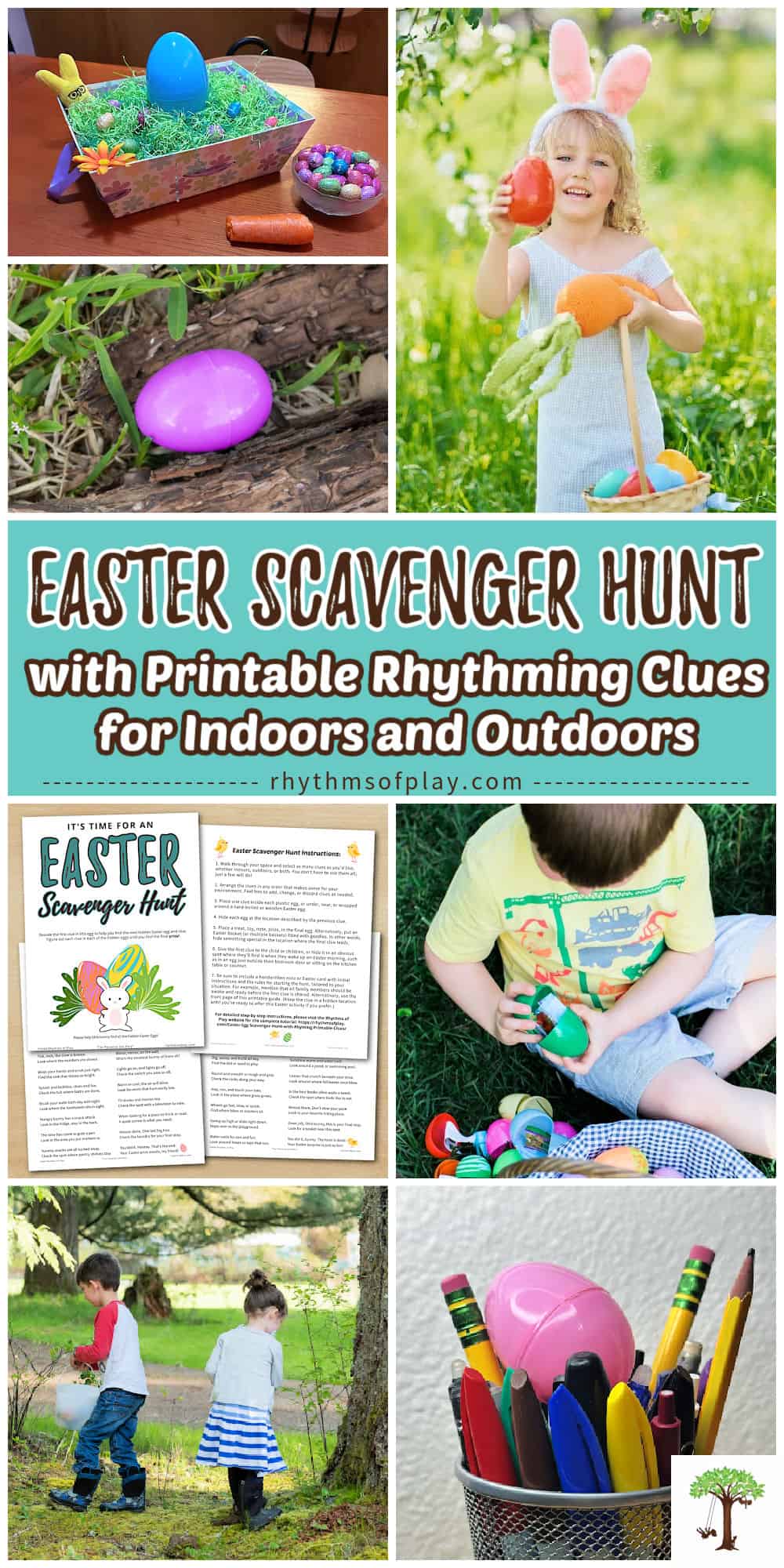
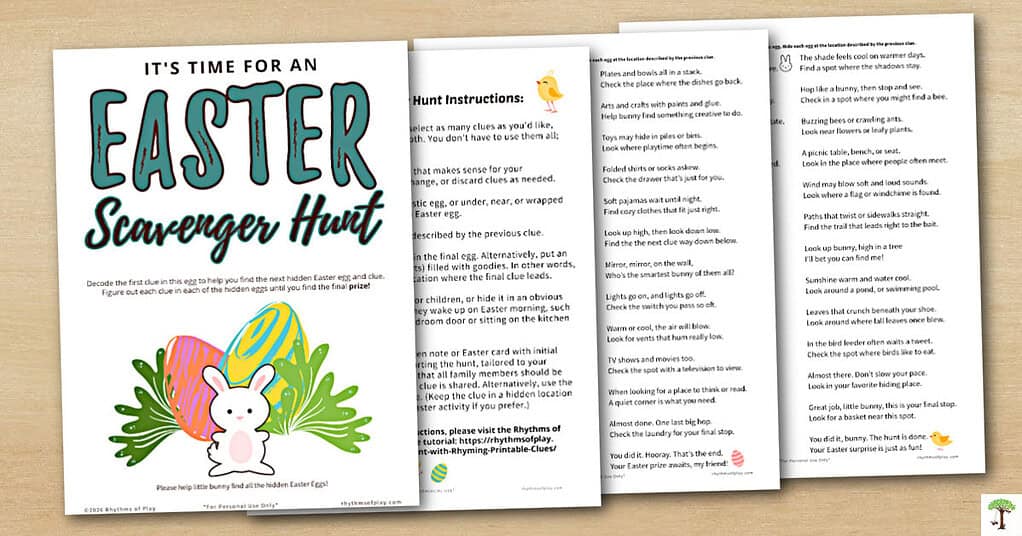
Set up an Easter scavenger hunt with this ready-to-use Easter activity for kids of all ages. The printable clues make it easy to create an Easter egg hunt you can run at home, in the yard, or at a park. Each clue goes inside a plastic egg (or near a wooden egg) and leads to the next spot. You can use all 50 clues or pick and choose the ones you like best, or fit the location where you are hosting the hunt. You don’t need much. A small amount of prep can go a long way.
Easter Scavenger Hunt Supplies:
- Wooden or fillable small or jumbo plastic Easter eggs.
- Handwritten or printed clue strips (Use these handy rhyming Printable Scavenger Hunt Clues, or write your own with the step-by-step instructions at the bottom of this tutorial)
- Scissors or a paper trimmer to cut out the clue strips. (I highly recommend the paper trimmer for paper-cutting projects like this. It makes cutting the strips quickly and evenly a breeze.)
- Easter basket(s), bucket(s), bag(s), or other containers for collecting eggs. Each person can have their own, or participants can share a basket to gather eggs. A few recommended options are listed below:
- Plush Easter Bunny Basket for collecting eggs.
- Jute Easter Baskets with Bunny Ears for kids.
- Classic Wicker Rattan Basket with Handle.
- A final prize, such as a new homemade Easter basket filled with goodies. If there is more than one participant, you can have a basket for each child or a single basket that they share.
- For example, you can put coupons or tickets to a summer vacation or family activity in a shared basket as the shared reward.
Step-by-Step Easter Scavenger Hunt Instructions:
These instructions are also included in a more condensed form in the printable Easter Scavenger Hunt Set, making it even easier to host your own hunt.
1. Choose places to hide Easter eggs:
- Walk through your space and choose as many clues as you like, whether indoors, outdoors, or both.
- You don’t have to use them all; just a few will do!
2. Place clues in order:
- Arrange the clues in any order that makes sense for your environment or situation.
- Feel free to add or amend any of the clues as you see fit, and discard clues as needed.
3. Put one clue in each egg:
- Place one clue inside each plastic egg.
- Alternatively, you can hide the clues under or along with decorated wooden or hard-boiled Easter eggs.
4. Place candy or a small toy inside the egg with the clue (optional):
- Feel free to add a small toy or piece of candy, such as a chocolate egg wrapped in foil, inside the plastic Easter egg with each clue.
- This is not necessary, because the purpose of this alternative Easter egg hunt is to find the last egg to find the final treasure or prize, but it can be fun. Not everything needs to be filled with sugar, but holiday rules do exist! (They sure do in our home.)
- This optional step can also help avoid a toddler tantrum or even a major meltdown if the participating children are accustomed to finding candy or toys in the eggs they find during an Easter egg hunt. Do as you will.
5. Hide the eggs with rhyming clues inside:
- Hide each Easter egg at the location described by the previous clue.
- This is both a lot easier and sometimes more challenging than it sounds, believe me. My husband and I have had some late-night laughs and frustrations over the years, trying to get it together and hide all the eggs in their proper places, but fortunately, I have a much better rhythm for getting it done today.
- I recommend keeping everything (Easter eggs, rhyming clues, and candy or toys if you are including them) in one central location, such as the dining room table or the kitchen counter.
- Place the first clue in an egg and place it in the location where you will start the hunt, or keep it somewhere safe until you are ready to offer this Easter activity.
- Then, put the next clue inside another egg, hide it in the location described by the first clue, and remember the spot it leads to.
- Go back to the eggs and clues, place the next clue inside the next egg, remember the next spot, but hide it in the location described by the last clue.
- Continue the steps above until each egg is hidden in the spot described by the last.
- Whew! I know that sounds a bit complicated, but it’s the easiest way I’ve found to set it up without mixing up all the eggs or going through the extra step of running through the scavenger hunt to ensure it is set up correctly. Which isn’t nearly as much fun as it is for the kids on Easter Morning.
6. Put the final prize or treasure in the last spot
- Place a treat, toy, note prize, or an Easter Basket (or multiple baskets) filled with goodies in or near the last egg or in the same location where the final clue is located.
- In other words, hide something special in the location where the final clue leads.
- Gifting experiences, such as a family trip, tickets to a show, or a nice dinner, instead of things, is another great scavenger hunt prize option.
- You can even make your own DIY Easter basket with recycled materials and fill it with whatever Easter gifts you like.
- Alternatively, instead of a basket hidden at the end of the egg hunt, you can hide gifts inside or along with some or all of the hidden eggs along the way. Or have it sitting on the table with the first clue, but then the point of the scavenger hunt can be lost, as children are easily distracted by Easter baskets.
- A few more creative Easter basket and gift ideas are included in the tips below these step-by-step instructions.
- You might also enjoy these eco-friendly Easter Basket Ideas.
7. Place the first clue in an obvious location, hide it, or keep hold of it:
- There are several simple ways you can start this Easter Scavenger hunt. My husband and I have done it many ways over the years. A few of our favorite examples follow and are included throughout this tutorial.
- Either give the first clue to the child, children, or participants, read it aloud, or place it in an obvious location for them to find when they wake up on Easter morning. Such as waiting for them just outside their bedroom door, on the kitchen table, or on the counter.
- Another option is to place the first egg and rhyming clue inside an empty Easter basket at the start of the hunt, with the goal of finding the hidden eggs, clues, and prizes along the way to fill the basket, instead of hiding the entire basket or Easter treasure at the end of the hunt. Feel free to wrap the gifts that don’t fit inside the eggs if you like, and put the clue on the gift tag with or without an egg.
- The number of participants, along with the location and time of the scavenger hunt, can help you determine the best way to start this fun Easter activity. Get creative and have fun! If you ever find yourself stuck, act young at heart and pretend to be a kid. It always works for my husband and me.
- My husband is the best at helping me come up with rules before the hunt, because he’s just a giant toddler in a man’s body. Those of you who know him are probably laughing aloud right now because you know how true this is.
8. Include a note or card with the “Rules of the Hunt”:
- Be sure to include a handwritten note or Easter card with initial instructions and rules specific to your situation for starting the hunt. Alternatively, you can share them aloud before you start the hunt.
- Create a few simple rules tailored to the location and the age group enjoying the hunt.
- Alternatively, you can use the first page of the Printable Easter Scavenger Hunt bundle made to go with this tutorial.
- For example, you can mention that all family members are up and ready before the first clue is shared.
- Another example would be informing kids to give each egg to an adult to read the clue aloud if a large group will be participating at once. Use a sticker or a piece of tape to ensure the eggs stay closed when they are found, if you like.
- Creating rules like these helps keep the Easter scavenger hunt fair for all ages and abilities.
- Keep this first clue hidden, if you prefer, before offering this Easter activity.
9. Leave a carrot out for the Easter Bunny (Optional):
- Invite the kids to leave out a carrot for the Easter Bunny the night before Easter for even more fun! Leaving a carrot out for the Easter Hare is a tradition that originated in Germany. However, many people in the US and UK incorporate this tradition in their Easter activities today.
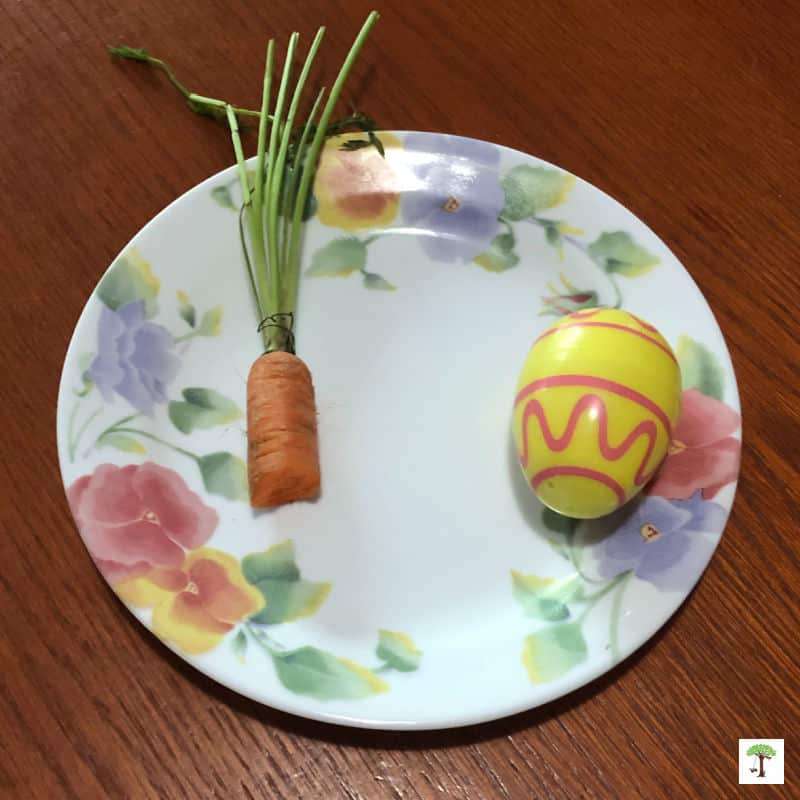
- In the photograph below, you can see a half-eaten carrot nibbled by the Easter bunny that my daughter left out the night before Easter. She was young, so she hadn’t washed it beforehand. I snapped it in half with my hands and placed the “eaten” end back in the bag of carrots in the fridge to use another day. She never knew, and your children don’t need to know either.
- On Easter morning, she woke to the carrot half-eaten and an egg with the first clue inside.
Indoor Easter Scavenger Hunt Clues:
An indoor Easter scavenger hunt is ideal for rainy days, small homes and apartments, classrooms, or quiet mornings. Indoor hunts are cozy and more focused. Chilren move slowly, read carefully, and stay engaged from start to finish. This option works especially well for Toddlers and preschoolers, classroom celebrations, and Early morning Easter surprises. Common indoor spots include:
- Entryways.
- Stairs.
- Counters.
- Tables.
- Windows or windowsills.
- Chairs.
- Couches.
- Shelves.
- Desktop or drawers.
- Pencil or pen containers.
- Pantry.
- Under pillows.
- Bathrooms.
- Toy Bins.
- Bedrooms
- Kitchen.
- Dresser top.
- Drawers.
- Laundry bins.
- House plants.
- Near or around doors.
- Hiding in or around various home decor items.
Outdoor Easter Scavenger Hunt Clues:
Outdoor hunts provide fresh air, a connection with nature, and physical activity. They encourage chilren to observe the world around them as they play and hunt for each Easter-themed clue. These types of Easter egg scavenger hunts are great for Backyards, gardens and patios, parks and nature areas, mixed age groups, and kids who love (or need) to move! Keep the clues close together or spread them out for a longer adventure.
Of course, the types of rhyming outdoor scavenger hunt clues you use will be slightly different depending on the type of environment and location. For example, a backyard Easter scavenger hunt might have patio furniture to hide eggs around, whereas a more natural outdoor location, such as a local hiking trail, will not have this type of hiding place. Choose the clues that best match your environment, or write a few of your own.
Outdoor hiding spots might include:
- Trees, shrubs, flowers, and plants.
- Garden beds.
- Playgrounds and various playground equipment.
- Sidewalks, paths, and stairways.
- Picnic tables.
- Patio furniture and chairs.
- Birdhouses or feeders.
- Near, on top of, or hidden among rocks, stones, boulders, or pebbles.
- In a sandbox.
- On a water table.
- Sitting on a fence.
- Medows and grassy areas.
Easter Egg Hunt Tips for Success:
- Keep clues brief and easy to understand.
- Match locations to your setup.
- Adjust the difficulty based on age.
- Read clues aloud for those who can’t read.
- Use pictures with symbols if desired.
- End with something meaningful, not just candy. A note, a book, art supplies, or a shared activity can be just as exciting!
End with Something Meaningful or Hide Gifts Along the Way:
The final clue should lead to something special. Alternatively, you can hide Easter gifts and goodies to find along the way with each egg. Examples include:
- An Easter basket to share among children, or one for each participant.
- Shared Easter treat (Home-baked goodie, bakery treat, new toy or game).
- Note from the Easter Bunny.
- Small story or book.
- Tickets for a group adventure, family travel, or experience.
- A new bike basket filled with Easter goodies for one child. (Read about this option below.)
Get Creative With Easter Baskets and Gifts
Get creative with what you use as an Easter basket, and what you put inside of it. It doesn’t need to be a plastic-wrapped store-bought basket full of sugary treats and plastic junk. In fact, I think homemade baskets are much better, even if you don’t actually “make” a thing. There are a million and one ways to create an Easter basket filled with goodies. No one ever said it has to include a chocolate egg unless it’s your tradition, as it is in my family.
Gift baskets have been a tradition and trend since they became widely popular in England during the Victorian era (1837-1901) as thoughtfully curated Christmas gifts. These gift baskets remain popular for the holidays, and Easter Baskets have remained popular in the spring. Gift baskets in their various forms have also resurfaced and regained popularity several times throughout history. Someone created a gift basket for everything under the sun at some point, and you can too.
It’s really easy to purchase a handwoven basket you like and handpick its contents specifically for the child, children, or person you intend to give it to. Because it will be hidden, it doesn’t even need to look pretty. For example, several years ago, my daughter had a bike basket on her wish list. So, my husband and I decided to get one for her and fill it just like an Easter basket.
Bike Easter Basket:
Here’s what I did to make the bike Easter basket for my daughter that Easter:
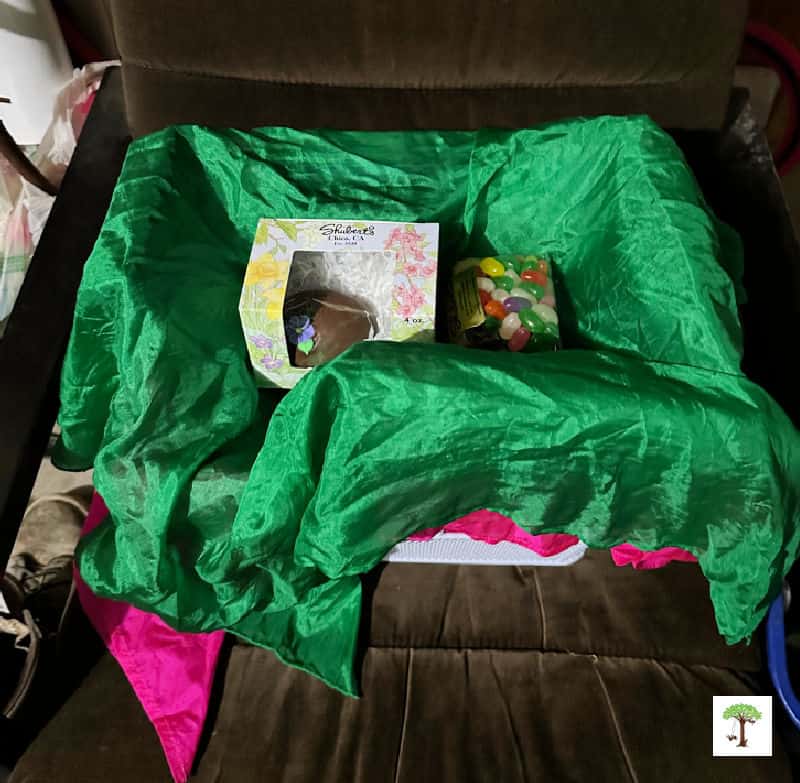
First, I lined a white bike basket with green and pink play silks and filled it with Goodies for her on the bottom and candy to share with her Mom and Dad on top. You can see it sitting in the spot the final clue led her to that year in the photo below: the ugly chair in the garage. It didn’t look very pretty, hiding in the dark garage on our dirty old chair. But she had a blast finding it, and it didn’t need to look pretty in hiding.
She whooped with joy louder than any plastic-wrapped basket full of junk would have made do at the sight of her bike Easter basket. I hid a few new books and art supplies for her under the Chocolate egg and jelly beans made at a local candy shop to share with Mom and Dad, per the note from the Easter Bunny.
A Perfect Easter Activity for One Child:
While it can be a cooperative activity for multiple children, this Easter scavenger hunt idea works well for a single child. There’s no pressure to rush, no eggs get missed, and parents, teachers, and caregivers don’t have to remember where we hid each egg. There’s no comparing baskets or egg counts.
The child solves all the clues (with help if needed) and completes the entire puzzle to win the ultimate prize. Not only does this Easter activity feel more special and personalized, but it is a meaningful Easter tradition that helps build confidence, focus, and joy.
A Cooperative Easter Hunt for Multiple Children:
This Easter activity idea also works well for siblings and small groups. Instead of racing, children can take turns reading clues, solve riddles together, walk as a group, and share the final prize or treasure. Unless you provide separate Easter baskets for everyone, of course.
Doing an Easter egg hunt this way promotes teamwork, communication, and shared excitement. It is especially useful for siblings who are close in age, for classroom groups, for playdates, and for family gatherings.
Learning Benefits of an Easter Scavenger Hunt:
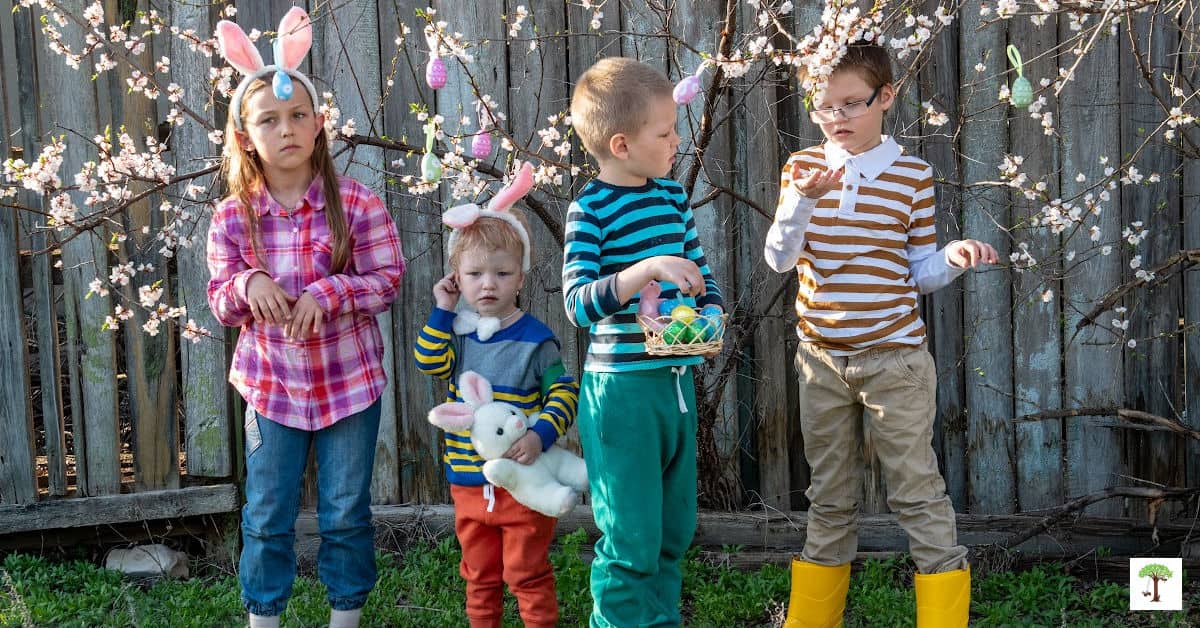
This fun Easter activity for kids may seem simple, but it helps develop a wide range of skills. It also promotes social and emotional growth by reducing competition and encouraging shared success. Children practice:
- Reading or listening.
- Following directions.
- Memory and sequencing.
- Problem-solving.
- Cooperation and patience.
Make it a Family Easter Tradition:
Once you try a rhyming Easter scavenger hunt, it often becomes a yearly tradition, as it has in my family! No one said you had to give up the more traditional competitive Easter Egg hunt, because you can do both if you like.
Families can reuse the idea every year by tweaking the clues, if needed. Children usually don’t remember last year’s clues, but they can be changed if needed. You can also switch up the location of the hunt, or the order of locations or prizes. This Easter activity is simple, flexible, and brings everyone together. Isn’t that what the holidays are all about!?
How to Create Your Own Easter Scavenger Hunt Clues:
Creating your own Easter Scavenger hunt clues for different situations and locations is simpler than it may seem. You don’t need to be a poet, nor do they have to make perfect sense. It’s not rocket science; it’s for fun. Relax and enjoy. A little rhythm and a clear idea of where you want kids to look is enough.
The best advice is to create your handwritten rhyming Easter scavenger hunt clues well before 6 PM on Easter Eve for the most joyful experience. It’s no fun burning the midnight oil, or getting snippy with your partner, trying to finish them before you go to bed the night before Easter. Trust me, I’ve been there. Here’s a straightforward step-by-step guide to help you do it:
1. Choose Your Hiding Spots First:
Before you write a single clue, walk through the space or area that you plan to host your egg hunt. Pick places that are:
- Easy to find.
- Safe for children (or easy enough for a helping adult to reach up and grab at the insistence of a pointing finger).
- Familiar.
Examples of great hiding places include:
- Couch
- Sink
- Bookshelf
- In a shoe
- Toy bin
- A garden bed
- Low tree branch
- Stairway
Once you have determined each of the indoor and or outdoor places where you will hide eggs, the clues will almost write themselves. All you need is a little rhythm and imagination.
2. Describe the Location, Not the Object:
Good scavenger hunt clues hint at the place without naming it directly. For example, instead of saying “Look in the fridge.” Try “Cold and chilly, snacks do hide, find the place with food inside.”
To create the rhyme, think about:
- What the place, thing, or object is used for.
- Describe it, or mention things that most people notice about it, such as how it is used, or what it feels, smells, looks, or sounds like.
- The kinds of things children notice about this location or item.
3. Use Simple Rhymes:
Rhymes make clues fun and easier to remember. You don’t need perfect poetry. Near rhymes work just fine, porcupine. Two short lines are usually enough. Try common pairs like:
- away/stay
- bright/light
- in/begin
- play/day
- near/hear
- grow/go
4. Keep the Language Kid-Friendly:
Use words that children already know. Keep sentences short and avoid tricky vocabulary. Read each clue out loud before using it. If a child can understand it when they hear it, you are on the right track. For younger kids:
- Use fewer words.
- Add movement clues like hop, bounce, jump, walk, look, search, find, or check.
- Include any small riddles you know, or make up your own.
- Use simple directions such as under, in, beside, near, behind, and next to.
5. Adjust Easter Scavenger Hunt Clues for Indoor or Outdoor Spaces:
Indoor Easter scavenger hunt clues often focus on:
- Rooms in the location.
- Furniture in the place.
- Specific places, things, or items, such as a chair, a toy bin, a drawer, a shelf, or a refrigerator.
- Daily routines and rhythms that happen in each area of the location.
Outdoor Easter scavenger hunt clues work best when they mention:
- Natural spaces and specific natural items, such as pathways, trees, flowers, boulders, and grassy areas.
- The type of movement that commonly occurs in this location.
- Sights and sounds in the area.
Helpful Easter Scavenger Hunt Clue Writing Tips:
If writing feels difficult, begin with one clue and copy the pattern. Once you find one that works, everything else will fall into place. If a clue feels confusing, simplify it or toss it. They don’t have to be perfect, but they do need to make enough sense for children to find the next Easter scavenger hunt clue. Clear clues keep the hunt fun and frustration-free for everyone!
Create at least 6 to 10 clues, but feel free to write more if you’re feeling up for it or find, like most things, that they come easily once you get started. The printable set of rhyming Easter egg scavenger hunt clues I wrote includes 25 indoor and 25 outdoor rhyming clues, but you don’t need to use them all.
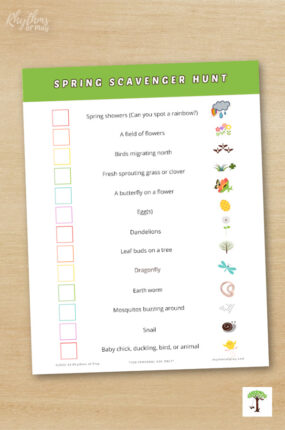
These tips and the step-by-step Easter scavenger hunt clue writing instructions above make it easy to write a few of your own to use along with them if there are hiding spots you like that don’t have a matching clue. Just follow the same rhyming pattern. Keep it simple, playful, and fun, or create a more challenging Easter scavenger hunt adventure for older children, teens, or adults! You might also enjoy this spring scavenger hunt for kids.
Host a Rhyming Easter Egg Scavenger Hunt for Kids, Teens, or Adults:
A rhyming Easter scavenger hunt is more than just a game; it’s a memorable experience for everyone. This fun Easter activity for all ages encourages children to slow down, think, move, and wonder. Whether indoors or outdoors, for one child or many, this Easter egg hunt alternative builds literacy skills and creates lasting memories.
For older children, teens, and adults, hosting an Easter scavenger hunt can bring the magic of Easter back to those willing to have a little fun! The instructions and tips above, along with the printable Easter scavenger hunt clues, make it easy to host an Easter egg hunt that participants of any age can enjoy.
I hope you enjoy this creative and fun interactive Easter activity! Learn more about Nell Regan Kartychok, author, photographer, and creator of this rhyming Easter scavenger hunt activity HERE, and Rhythms of Play HERE!



Leave a Comment