
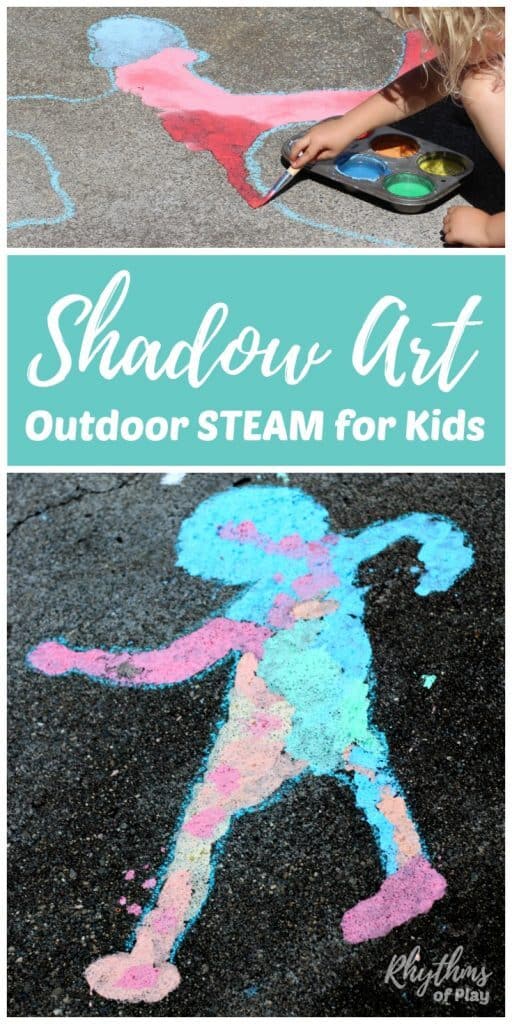
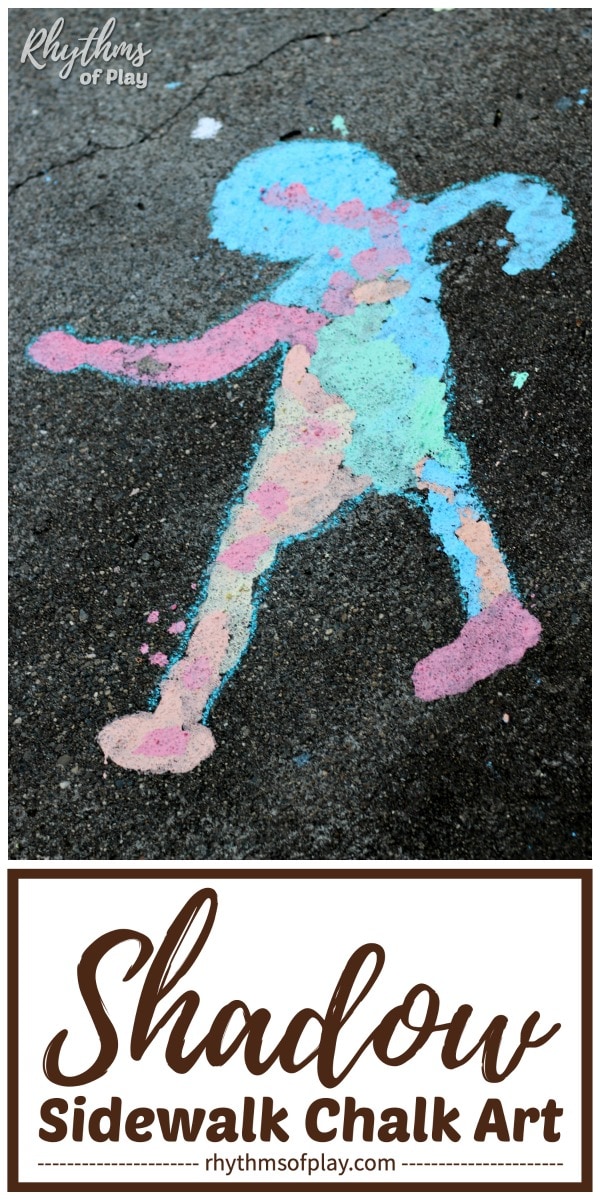
This shadow sidewalk chalk art project is a hands-on STEAM activity that helps children learn about shadow science (such as how shadows form) as they paint sidewalk chalk art.
Creating sidewalk chalk art with your shadow is a fantastic way to get kids outside, learning, and flexing their creative muscles while having fun. This outdoor art activity for kids is ideal for homeschoolers and teachers looking for a hands-on STEAM project and process art lesson idea for their students. It’s also a fun sidewalk chalk art idea for families looking for a creative project to do together.
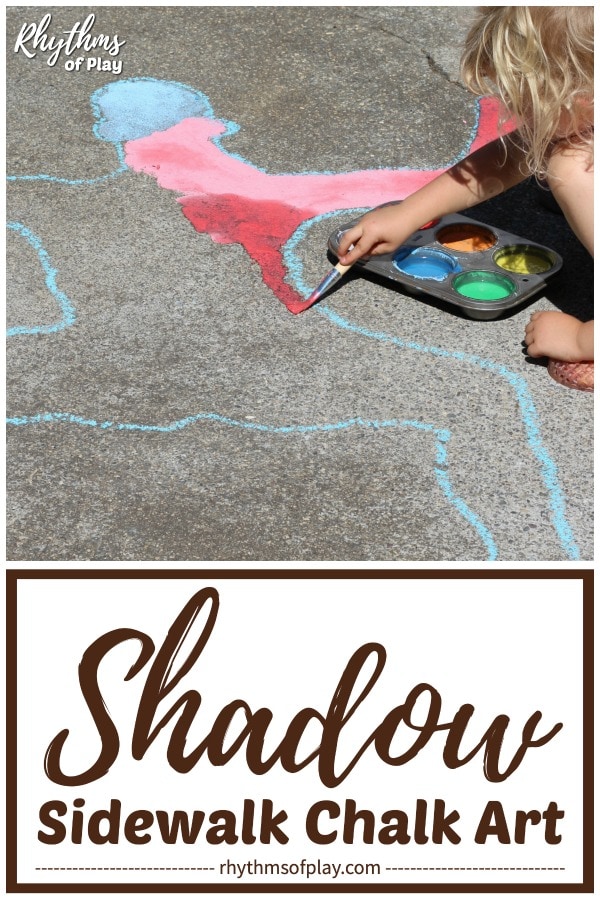
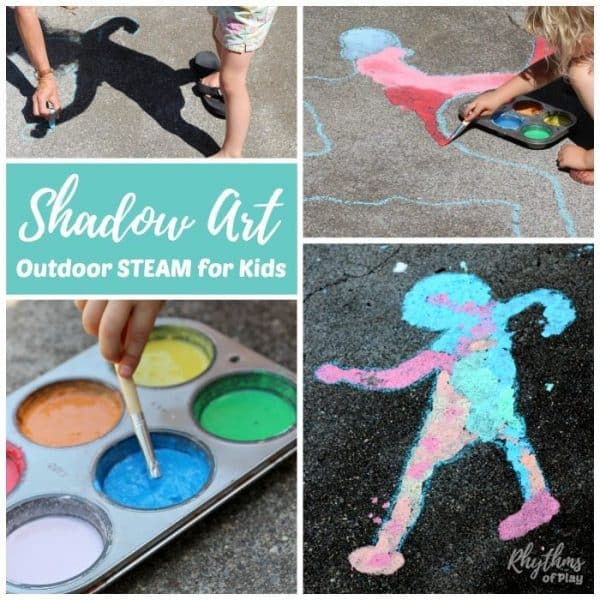
First, invite children to create shadows on playgrounds, driveways, parking lots, patios, and sidewalks. Next, trace the outlines of the shadows you make with sidewalk chalk. Finally, paint inside the outlines of your shadow tracings with homemade chalk paint for a fun outdoor shadow art STEAM activity that kids of all ages will enjoy. You might also enjoy this giant list of outdoor activities for kids.
Making DIY chalk paint and painting shadow art are easy outdoor art projects and science activities for kids from toddlers to teens. Painting shadows with chalk paint is as easy as coloring a printable without the paper! Use the step-by-step shadow art instructions below to create beautiful sidewalk chalk art on a grand scale. First published in May 2016, this outdoor STEAM project idea for kids is regularly updated to keep the content current.
Related: Rock Balancing Stone Stacking Art
Sidewalk Art with Shadows: STEAM Activity for Kids
Combine art with science with this educational art activity for kids of all ages. Playing with light and shadows to create sidewalk chalk art is a fantastic way to get the kids outside to learn, create, and have fun!
Invite children to trace shadows and use them to make sidewalk chalk art with this outdoor STEAM activity for kids. Before you get started, you may want to try this Human Sundial Shadow Science Experiment. This science activity can help kids learn how the sun’s position in the sky affects the size of their shadows.
Shadow STEAM: Blending Process Art and Science outdoors
Shadow art outdoor science is a hands-on STEAM activity to help children learn basic shadow science concepts. Outdoor shadow art activities like this help children understand that shadows are formed when an object blocks light.
That said, the primary goal of this outdoor art project is to guide children through the activity so they can experience this understanding firsthand. In other words, this outdoor art idea for kids offers a creative way to create vibrant sidewalk art while learning a few shadow science concepts. All without children, even realizing it.
This outdoor process art activity is not about teaching children how shadows form. Instead, gaining this understanding is a natural byproduct of the activity. Help children enjoy the hands-on process of their unique creative expression, and they will naturally learn from it.
Do your best to allow children the freedom to create shadow art in their own unique way with sidewalk chalk paint. This way, children will gain a deeper understanding of shadow science by doing this fun outdoor art activity. Get started with the simple shadow sidewalk art step-by-step directions below! You might also enjoy Rain Painting and Rainbow Science for Kids.
How to Make Sidewalk Chalk Art by Painting Shadows with Chalk Paint:
Start by choosing a clear area of pavement and gathering chalk paint supplies in various colors. Please visit this DIY tutorial to learn how to make homemade chalk paint from pieces of sidewalk chalk.
Next, invite children and students to use their bodies and other objects to block the sun’s light to create a shadow. I recommend tracing shadows at different times throughout the day. Doing so will allow participants to experiment with creating shadow art of different shapes and sizes.
Challenge your children or students to see how many types of shadow shapes they can cast onto the pavement. Experiment with different angles and lighting conditions to achieve unique effects. Then trace the outline of the shadow with chalk.
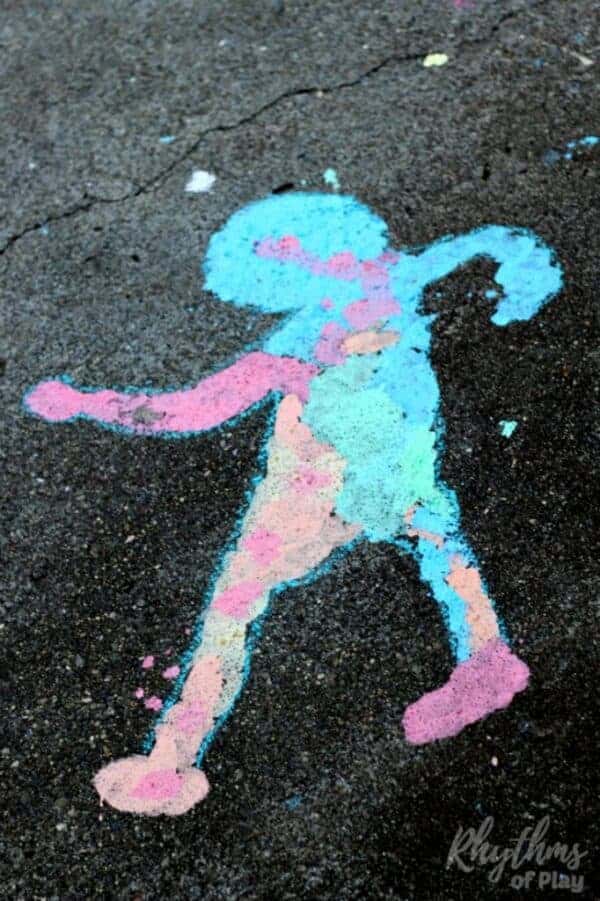
Finally, paint the shadows to create shadow sidewalk chalk art. In other words, fill in or color by painting within the outlines of these shadow tracings with chalk paint to add depth and detail to your artwork.
Related: Art & Science: Experiment with Watercolor Resist
Sidewalk Chalk Art Supplies:
- Sunny day and a large open paved space or sidewalk, such as a driveway, parking lot, or playground. Ensure there is ample open space with no shadows casting over the area you intend to create shadow art and no clouds overhead.
- DIY chalk paint – Making recycled chalk paint is another great way for kids to explore science!
- Sidewalk chalk for tracing shadows and making chalk paint.

- Paintbrushes for painting outdoors on rough surfaces.
- Camera (optional).

How Do Shadows Form: Recommended Shadow SCience Reading for Kids:
Below are some outstanding books for children to help extend your child’s understanding of shadows and how they form. Understanding shadows will help children create the sidewalk chalk art they’d like to make for this STEAM activity. The shadow science books for kids listed below would be a great adjunct to this shadow art science lesson.
Working with Homemade Chalk Paint:
Tracing shadows with chalk paint is an easy way to create gorgeous sidewalk art quickly. Filling in large areas with sidewalk chalk can be time-consuming and uncomfortable. Painting with chalk paint, on the other hand, allows you to fill in large areas, such as long shadows cast across a driveway, in minutes.
Best of all, you don’t need to paint the shadow sidewalk chalk art you make from shadow art tracings immediately. Feel free to trace the shadows at any time and paint them later. In other words, if there is an area of your sidewalk, driveway, or playground that gets sunlight for part of the day and is shaded at other times.
Trace the shadows when it is sunny, then go back outside later to paint them in the shade! However, please ensure your shadow art doesn’t get wet and washed away before you paint it to make sidewalk chalk art. Sprinklers can turn on, and unexpected rain can wash away your shadow art tracings before children have time to paint them.
Teach children to be mindful of this possibility to avoid meltdowns if their project disappears before they finish. It’s also best to warn unsuspecting people, such as unknowing siblings, fathers, and neighbors, who might accidentally wash it without realizing it was a work in progress. Been there, done that. Please learn from my mistakes.
Related: Under the Sea Black Glue Ocean Art Projects
How to Make Shadow Sidewalk Chalk Art
Read the step-by-step shadow art instructions below to understand the process and what to expect before you start. As mentioned above, you may want to start with this Human Sundial Experiment before trying this STEAM activity for kids.
1. Create shadows outside using the sun as the light source:
- Invite children to experiment and create different types of shadows outside.
- Encourage kids to use their bodies and other objects, such as leaves, plants, flowers, toys, and bikes, to block sunlight and create shadows on the ground.
2. Trace shadows for sidewalk chalk art:
- Use sidewalk chalk to trace shadows in various positions.
- Be sure to tell those silly kids, especially tweens and teens, to keep their shadow art clean! That age group is full of changing bodies with raging hormones and sassy attitudes that are best kept in check before the laughter starts. Trust me. I grew up with three naughty brothers!
- To make shadow sidewalk art, trace the shadows of human, animal, or object bodies, or stencils.
- For example, trees, flowers, and children’s toys are a few more shadow sidewalk art ideas you can trace to create shadow art.
- Finding a good position to create shadow art on the sidewalk or driveway can be challenging for kids at first, especially toddlers and preschoolers.
- Encourage children to keep experimenting with creating different forms of shadow art tracings; this is how learning happens!
3. Paint shadow sidewalk chalk art:
- Paint or color within the traced shadow outlines to create shadow sidewalk chalk art.
- Make DIY chalk paint, buy sidewalk chalk paint, or use regular sidewalk chalk to ‘fill in’ or ‘color’ your shadows.
- Emphasize process over product.
- In other words, as discussed in the introduction, this outdoor art activity is more about the experience of learning and having fun than how the sidewalk chalk art looks or turns out.
4. Take pictures of shadow sidewalk chalk art:
- Sidewalk chalk art doesn’t last long, especially if it is likely to rain or get hit by the sprinklers.
- Please take pictures of your beautiful shadow art creations and share them with us on Instagram #rhythmsofplay before they disappear!
- I can’t wait to see your shadow art creations!
Next, make shadows with a flashlight Indoors or Outdoors:
- After creating shadow sidewalk chalk art outside in the sunlight, invite children to see what happens when they use a flashlight indoors or outdoors.
- Encourage the kids to grab a flashlight to cast a shadow outside at night and during the day.
- See if your children will naturally experiment in shady areas; if not, see if you can lead them to develop the idea independently.
- Trace your shadows with a pencil, crayon, or marker onto paper to color, paint, and create other artistic shapes and outlines.
- Then fill them in or color them using any art materials you prefer. Use crayons, colored pencils, markers, watercolor paints, and more to create shadow art!
Related: What is the Summer Solstice?
Shadow Art STEAM Activity: Questions to Consider
Once children have finished painting shadow sidewalk chalk art, ask them a few questions to reinforce the simple science concepts they can learn from this STEAM project.
How do Shadows Form?
- Shadows form when an object blocks light from a source, such as the sunlight or a light bulb, creating an area of darkness behind a surface.
- Light travels in straight lines, and when an object interrupts its path, it prevents some or all of the light from reaching the surface beyond the object. The boundary where the light is blocked creates the shadow.
How do shadows form outside?
- A shadow forms when an object, person, or animal blocks the sunlight or another external light source, such as a flashlight or street lamp. In other words, shadows form outside much the same way as indoors.
- When sunlight, the primary outdoor light source, encounters an object, it may be partially or wholly blocked, depending on the object’s size, shape, and opacity. The area behind the object where sunlight is obstructed creates a shadow.
- Factors such as the sun’s position in the sky, the time of day, atmospheric conditions, and the surroundings influence the size, shape, and intensity of outdoor shadows.
- For instance, shadows tend to be longer and more defined when the sun is lower on the horizon, such as during sunrise or sunset, and they can appear softer or distorted when sunlight is diffused by clouds or other atmospheric elements.
 In other words, shadows form outside much the same way as indoors.
What Primary light source did we use to make shadows?
- The sun! (You can also use a flashlight or light source indoors.)
- Encourage children to experiment by making shadows and shadow art with other light sources indoors and outdoors for even more learning fun!
How did you block the light?
- The sunlight is blocked when an object (or body) is between the sun (external light source) and the sidewalk or driveway.
What happens when you block the light of the sun?
It creates a shadow! Blocking the sun’s light can have several other effects, depending on the context and duration of the blockage (use the following examples as teaching points):
- Near the obstruction, a shadow forms on the ground or any surface where sunlight is blocked. This will create a dark area where sunlight cannot reach because the object blocks its path.
- On a larger scale, if sunlight is completely blocked, as during a solar eclipse, there is a temporary reduction or absence of sunlight in the affected areas. This can lead to a noticeable drop in temperature and changes in ambient light levels.
- Additionally, blocking sunlight can affect plant growth and ecosystems, as plants rely on it for photosynthesis, which converts light into chemical energy to fuel their growth and development.
- Overall, blocking the sun’s light, whether temporarily through an obstruction or during astronomical events like eclipses, can have immediate and broader effects on the environment and conditions on Earth.
How do you change the size or shape of a shadow?
- The size and shape of the shadow depend on the size and shape of both the object casting the shadow and the light source.
- Additionally, factors like the distance between the object and the surface where the shadow falls and the angle of the light influence the shadow’s appearance.
Related: The Best Art Supplies for Kids and Why Young Artists Should Use Them
Shadow STEAM Sidewalk Chalk Art for Kids
Is there anything better than learning scientific concepts through play? Children’s curiosity will lead them to experiment and learn as they create process art with their shadows.
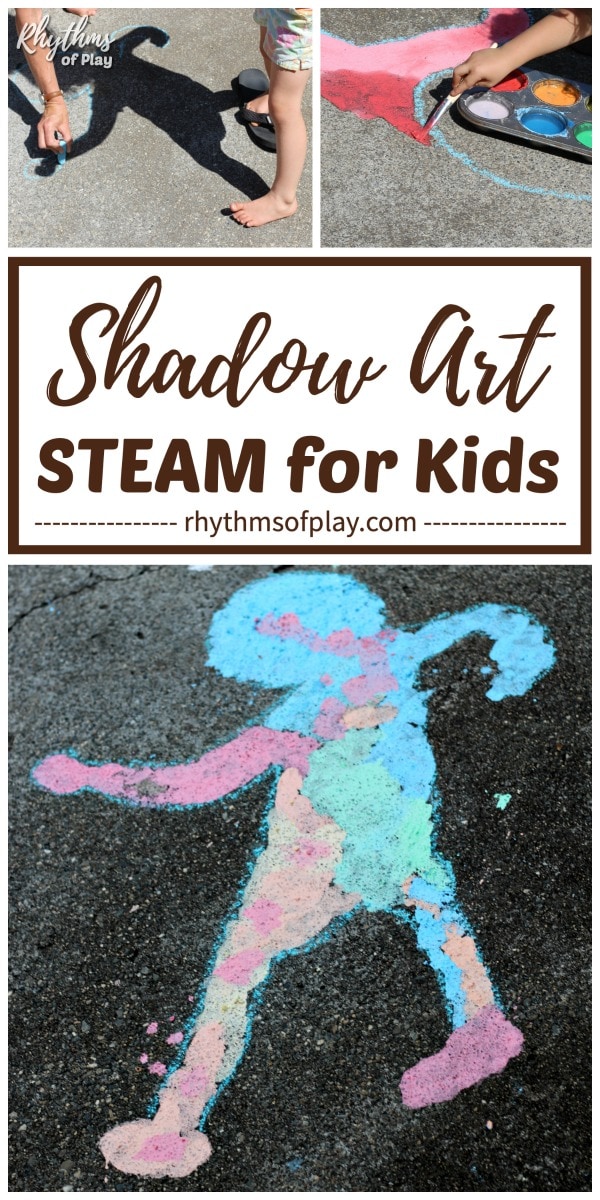
My daughter initially had trouble figuring out how to make her shadow do what she wanted it to do for sidewalk chalk art. As she played (experimented), she learned how to move her body to block the sunlight to produce the type of shadow she wanted to turn into sidewalk chalk art. Encourage your children or students to do the same!
We loved working with recycled chalk paint and shadow tracings. Painting shadow art outdoors is a fantastic process art-and-science activity that we thoroughly enjoyed!
This art-and-science activity is NOT just for kids. Creating shadow art with DIY chalk paint was like painting with dusty watercolors in a giant coloring book on the driveway. So, adults will enjoy this activity, too. Try this shadow sidewalk chalk art idea with your children today!
Shadow Art Outdoor Science Activity: Chalk Paint Art for Kids
Shadow art outdoor science is a hands-on STEAM activity that helps children learn about shadows while making art. It’s a fun outdoor art-and-science activity for toddlers to adults!
Don’t forget to check out our summer bucket list seasonal activity guide for more fun ideas.
Learn more about Nell Regan Kartychok, author, photographer, and creator of this original STEAM project and process art activity HERE, and Rhythms of Play HERE!
If you liked this shadow art project for kids, you might also enjoy these STEAM activity ideas:
- Human Sundial Shadow Science Experiment
- Sorting and Classifying Rocks: Geology for Kids
- Rainbow Rainy Day Art: STEAM Activity
- Art & Science: Experiment with Watercolor Resist



This is really wonderful idea, Nell. I hope by this way, boys and girls can enhance their hand.
Thanks Samuel! So glad you like it 🙂
Very Creative and imaginative idea, Thanks Nell
Thanks, Stev! So glad you appreciate it 🙂
This is a great outdoor art idea! I enjoyed reading all about shadow art and all of the important tips that you shared. Thank you for the great art project and the recycled chalk paint tips!
You’re welcome, Philip!
I’m so glad that you enjoyed this article about shadow sidewalk art, and I hope you have a wonderful time creating your own sidewalk shadow art!
Nell