
Simple ways to nurture curiosity, support child-led outdoor play, and help children build a lasting connection with nature.
Helping children learn through outdoor play starts with simple opportunities: time to notice their surroundings, the freedom to explore what interests them, and a nearby adult who welcomes curiosity.
For example, a child watching an ant carry a crumb may look as though they have stopped doing anything at all. But look closer. They are observing movement, following a trail, and discovering something about another creature in the living world they share.
To help children connect with nature, spend time outside together, follow their interests, and leave room for discoveries you haven’t planned. You don’t need a forest, an outdoor classroom, or a bag full of supplies. A neighborhood tree, a garden bed, or a small patch of grass can be a place to start.
Whether you’re a parent, teacher, or homeschooler, these ideas can help you make outdoor play a regular part of children’s lives. Explore several nature play ideas in our guide to Outdoor Learning Activities for Kids.
In This Nature Play Guide
Read through the guide at your own pace, or use the links below to jump to the topics that interest you most. You’ll find practical tips for supporting outdoor play, simple nature play invitations, and answers to common questions.
- What Is Learning Through Play Outdoors?
- What Do Children Learn Through Outdoor Play?
- The Rhythms of Play Philosophy
- How to Help Children Connect with Nature Through Play
- Spend Time Together Outdoors: Begin Somewhere Familiar
- Follow the Child’s Interest
- Share Your Own Sense of Wonder
- Act as a Guide and Fellow Nature Explorer
- Encourage Curiosity with Open-Ended Questions
- Engage the Senses in Nature
- Protect Time for Unhurried Play
- Keep Supplies Simple: Tools to Support Nature Play
- Offer Different Ways to Explore
- Show Respect for Nature Through Your Actions
- Set Clear Boundaries and Encourage Independent and Group Exploration
- Make Outdoor Play a Daily Rhythm
- Return Often and Notice What Changes
- Simple Nature Play Invitations to Try
- Adapting Outdoor Learning for Different Ages and Abilities
- Common Questions About Learning Through Play Outdoors
What Is Learning Through Play Outdoors?
Learning through play outdoors happens when children explore ideas, materials, movement, and relationships outside.
A child pouring water into a sandy channel is experimenting with flow. Two children deciding how to build a pretend animal home plan, negotiate, and solve problems together. A preschooler comparing fallen leaves is noticing similarities and differences.
Nature play is outdoor play that involves the natural world, such as soil, plants, stones, weather, or wildlife. It can include imaginative games, sensory exploration, building, and quiet observation.
Adults can invite children to explore or help them discover something while leaving them room to decide what happens next.
What Do Children Learn Through Outdoor Play?
Outdoor play creates opportunities to practice skills in situations that matter to children.
For example:
- Observation: Watching where a beetle goes or noticing which trees have lost their leaves.
- Language: Describing a sound, telling a story, or explaining a discovery.
- Math: Comparing stick lengths, sorting stones, sharing materials, or classifying rocks.
- Problem-solving: Working out why a small structure keeps falling over.
- Movement: Digging, carrying, reaching, and navigating suitable uneven ground.
- Cooperation: Making plans, taking turns, and adjusting a shared game.
The University of California San Francisco’s California Childcare Health Program describes outdoor play as an opportunity for children to develop their imaginations, motor skills, knowledge of nature, and social skills. Read their outdoor play guidance.
“The evidence supports pediatricians in advocating for equitable nature contact for children in places where they live, play, and learn.” —Nature and Children’s Health: A Systematic Review, published in Pediatrics (2021). Read the research summary.
You don’t need to identify a learning objective every time children go outside. Give them something worth exploring, and watch what they do with it.
The Rhythms of Play Philosophy: If Life Is a School, the World Is Our Playground
At Rhythms of Play, we believe in the wonder of childhood, the power of imagination, learning through play, making the world a greener place to live, getting outside in all seasons, and co-creating a life you love—one rhythm at a time.
“If life is a school, the world is our playground.” —Nell Regan Kartychok. This philosophy shapes how we approach learning. Everyday experiences offer opportunities to explore, create, ask questions, and discover more about ourselves and the world around us.
Our Daily Living Practices—Wonder, Connect, Explore, Imagine, Create, and Contribute—invite us to bring this philosophy into everyday life. Outdoors, children can experience them through small discoveries, shared adventures, imaginative play, creative projects, and caring for the places they love. These are possibilities to explore in your own way, with room for each child and family to find their own rhythm.
Putting Our Philosophy into Practice Outdoors
Outdoors, this means giving children space to follow their curiosity and build a relationship with nature through direct experience. A familiar tree, a muddy patch of ground, or the changing seasons can invite discoveries that no lesson plan could fully anticipate.
As parents and educators, we provide time, thoughtful guidance, and opportunities for exploration. We can share what we know, wonder alongside children, and recognize when to step back so their ideas have room to grow.
Nature’s rhythms remind us that learning takes time. Returning to familiar places, repeating a favorite activity, and noticing small changes give children opportunities to deepen their understanding at their own pace.
“Roots of understanding grow deep when curious minds are nourished in nature.” —Nell Regan Kartychok (Founder of Rhythms of Play)
Outdoor play puts this philosophy into practice. We make space for curiosity, creativity, movement, and connection—and stay open to what children and nature teach us.
How to Help Children Connect with Nature Through Play
Create opportunities to learn, foster curiosity, and encourage safe exploration outdoors to help children connect with and play in the natural world with the tips and strategies below:
1. Spend time together outdoors: Begin somewhere Familiar
Start by spending more time together outdoors in a familiar place. Your backyard, neighborhood, or a nearby park can be a simple starting point for learning through outdoor play. Choose somewhere you can visit easily and return to often.
“There must be provision for the child to have contact with nature”—Maria Montessori. Explore the passage on the Association Montessori Internationale’s website.
When you’re outside, invite young nature explorers to look closely at leaves, insects, rocks, animal tracks, and whatever else catches their attention. Pause alongside them and share in their discoveries. Even familiar places hold surprises: a flower opening, a puddle drying, or a bird visiting a favorite tree.
As you explore together, take kids on nature walks or visit forests, woodlands, and beaches. Let them lead the way, with you nearby to guide them.
One of the best things parents and nature teachers can do for young children is give them time to discover what truly excites them.
2. Follow the Child’s Interest
You may head outside hoping to look at birds and discover that your child wants to investigate tree roots. Pause before redirecting them. What catches their attention can become the starting point for a nature play adventure.
Child-led outdoor play gives children meaningful choices about what they explore and how they play. Watch what they return to, listen to their ideas, and give them room to experiment. A fallen branch might become a pretend fishing pole, part of a shelter, or something to examine closely.
When an interest continues, offer a small next step. A child fascinated by ants might enjoy watching the same trail another day or finding an ant book afterward. Let their curiosity guide what you offer next, while leaving them free to develop their own ideas.
“When we follow our children’s interests, they are much more interested in learning.”—Nell Regan Kartychok (Founder of Rhythms of Play)
3. Share Your Own Sense of Wonder:
Model wonder, awe, and respect for the natural world. When adults and older children show enthusiasm for wildlife, plants, and outdoor experiences, younger children are more likely to mirror that interest and look more closely. These small discoveries can spark excitement and curiosity.
You don’t need to name every flower or explain every sound. Share what catches your attention: “Look how the raindrops gather on this leaf,” or “I can hear a bird, but I haven’t spotted it yet.” Show children you are curious and still discovering things, too.
“If a child is to keep alive his inborn sense of wonder … he needs the companionship of at least one adult who can share it, rediscovering with him the joy, excitement and mystery of the world we live in.” —Rachel Carson, The Sense of Wonder, Explore the full passage on Rachel Carson Homestead
The key is not to rush or overstructure the experience. Share your enthusiasm, then let children’s natural curiosity guide their interactions. Something you barely notice may fill a child with wonder—and their excitement can help you see a familiar place with fresh eyes.
4. Act as a guide and fellow nature explorer:
When exploring nature with young children, it’s often best to act as a guide and fellow nature explorer. Get the kids outside, and use the nature play invitations below as starting points for day-to-day learning adventures.
Many outdoor activities work well as opportunities to facilitate play without teaching a specific skill. Offer a simple invitation, such as “Shall we see what’s growing beside the path?” Once play begins, step back and let it unfold naturally. Stay nearby to listen, help, and share discoveries while giving children space to explore what truly interests them.
This is especially important for toddlers, preschoolers, and kindergarteners. Watch what they do before offering a suggestion. Sometimes they need help; sometimes they need another chance to try or more time to develop an idea.
These early explorations can provide a foundation for more focused learning as children grow. Support older children and teens with books, classes, nature journals, and projects that build on their interests and connect with their academic studies.
Continue to leave room for unstructured play and their own discoveries. There is no rush. Being an attentive companion gives you opportunities to recognize when to join in, when to offer guidance, and when to take a step back and let children lead.
As my daughter got older, I stayed nearby, watching and giving her space to do her own thing. Later, when the opportunity arose, I would offer books and activities that reflected the interests I’d noticed during her explorations.
5. Answer children’s questions with open-ended questions:
When children ask questions about nature, try responding with a question that helps them investigate and reach their own conclusions. For toddlers, preschoolers, and kindergarteners, keep questions simple and connected to what they can observe.
Open-ended questions invite children to look closely, consider possibilities, and share their ideas. For example:
- “Why do you think that bird is calling out?”
- “What do you think made these tracks?”
- “What do you notice about this leaf?”
- “How could we find out?”
Give children time to think and explore before offering another prompt. You might examine the tracks together, listen for another bird’s response, or compare the leaf with others nearby. Follow their ideas and help them look for clues.
Answering a question with a thoughtful question can encourage children to become more observant and find answers independently. They learn they can investigate, try an idea, and reconsider it when they notice something new.
Direct answers also have a place. If a child wants a name, needs safety guidance, or becomes frustrated, share what you know. When neither of you knows the answer, model how to find reliable information together.
The goal is to nurture curiosity and help children become confident learners who can observe, ask questions, seek help, and find answers. These are skills they can use throughout their lives. Isn’t that what education is all about?
“The important thing is learning to learn … to go on learning from life their whole life long.”—Rudolf Steiner, A Social Basis for Education, lecture of May 18, 1919, Explore the full passage on learning to learn from the Federation of Waldorf Schools.
6. Engage each of the senses:
Encourage children to explore nature using all of their senses, not just their eyes. Sight, hearing, smell, touch, and appropriate opportunities for taste can offer a richer, more immersive experience of the natural world.
Invite children to notice the bright colors of wildflowers, the movement of clouds, or sunlight shining through leaves. Pause to listen to rustling branches, birdsong, or the gentle babble of a stream. The scent of pine, fresh earth, or salty sea air adds another dimension to their discoveries.
Touching the rough bark of a tree, the softness of a fallen leaf, or the coolness of a stone offers a tactile connection to nature. Let children take time to notice and compare these sensations.
Taste can also connect us to nature. Eating a ripe strawberry from a known food garden or enjoying an apple you’ve picked together connects growing food with its flavor, scent, and texture.
Keep tasting separate from exploring unfamiliar plants. Children should ask a knowledgeable adult before eating anything they find outdoors. Wild foraging requires reliable identification and knowledge of what is safe to eat; never taste a plant or berry to identify it. “When in doubt, don’t put it in your mouth.”—Nell Regan Kartychok (Founder of Rhythms of Play)
7. Protect Time for Unhurried Play
There is no rush; let them dawdle and take their time: One of the best things you can do for a child in the natural world is to give them time outdoors. Letting children take their time to play and explore outdoors nurtures curiosity, creativity, and a strong connection to nature. When children aren’t rushed, they can engage their senses, ask questions, and follow their interests.
Nature provides endless chances for discovery. Whether children observe wildlife, listen to birds, examine natural treasures, or become absorbed in their own games, give them time to explore at their own pace.
Children may stop to watch a beetle cross the path, imitate a bird sound, investigate a fallen branch, or invent a story about what they find. Give them chances to linger over a discovery, repeat an activity, or follow an idea wherever it leads. What looks like dawdling to an adult may be the part of the outing that matters most to a child.
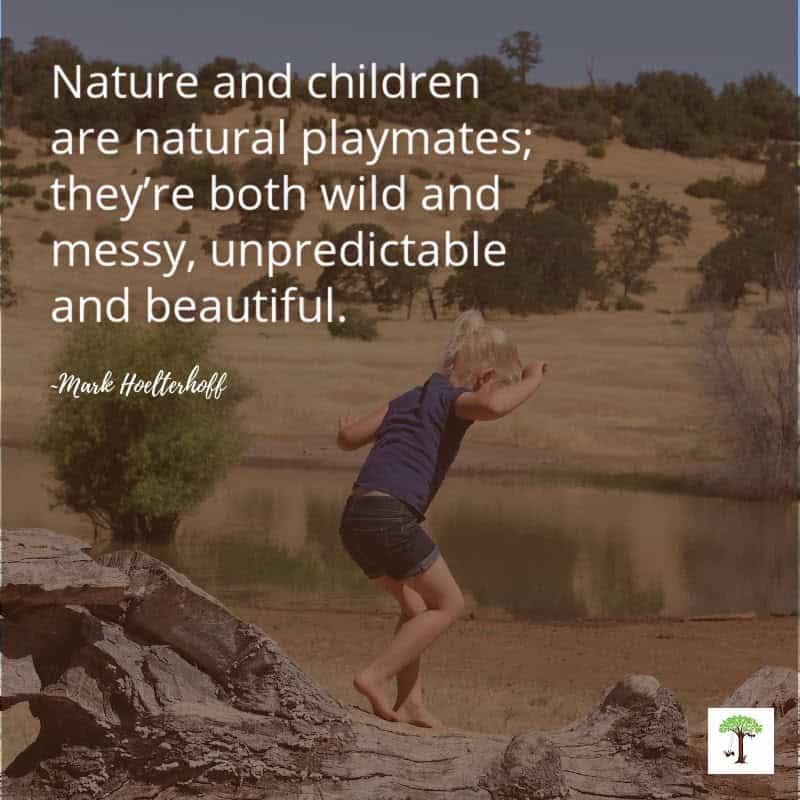
Nature fosters wonder and patience. Rushing children through these experiences can interrupt their opportunities to focus, imagine, and learn at their own pace, as my daughter demonstrates in the photo below. Letting kids explore at their own pace gives them time to deepen their understanding and develop respect for the natural world.
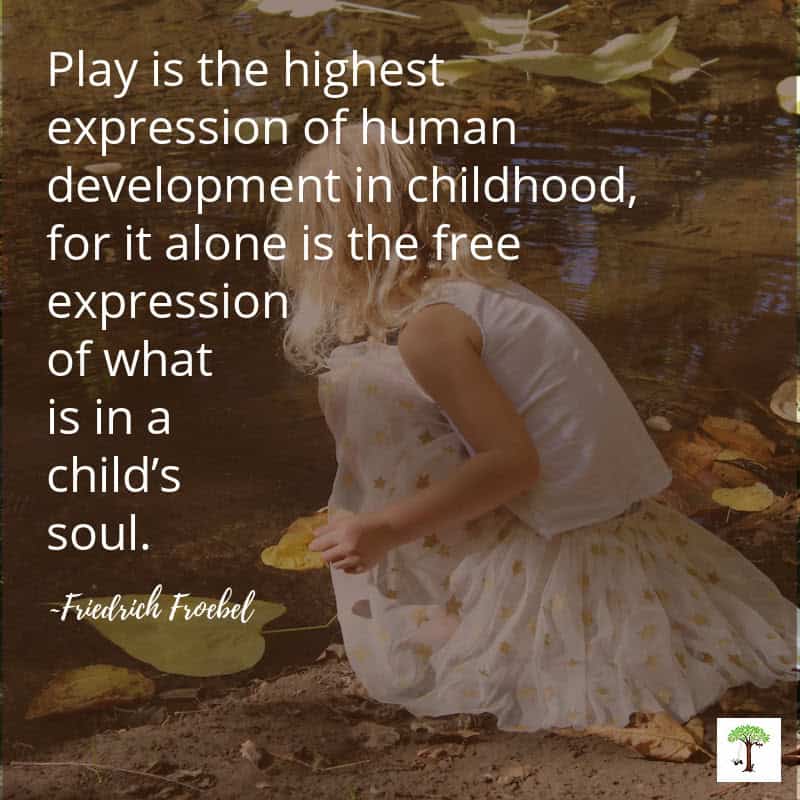
Learning to Slow Down Together
When my daughter was a toddler, preschooler, and in kindergarten and early elementary school, I remember spending hours in nature, allowing her to dawdle, explore, and do her own thing. Although my goal was to get us both outside and walk the dog, we spent more time being in nature than walking, so our daily one- to three-mile nature walks often took two to four hours. This gifted me with the opportunity to nurture patience whenever I felt the need to get going.
Most of the time, I was happy to be present out in nature. It let me slow down and abandon the rush-rush mentality that often prevails outside the natural world. At the same time, our dog got to explore what interested him. By the time our nature walk ended, we all got the exercise we needed, and each of us felt better for the time spent.
Make Room for Pauses on Shorter Outings
You don’t need hours available to protect time for unhurried play. When time is limited, choose a shorter route or a smaller area to explore so children still have room to pause. Give them a little notice before you leave so they can finish playing or take one last look at a discovery. Some days, you may spend more time being in nature than going anywhere. That time matters, too.
8. Keep Supplies Simple: Tools to Support Nature Play
Providing simple tools can also help children engage with nature and learn from their discoveries. Items such as magnifying glasses, buckets, collection baskets, field guides, nature journals or notebooks, and other basic nature study supplies can turn an ordinary outing into a grand adventure.
Start with what children already notice and enjoy, then offer a tool that supports their interest. A magnifying glass invites a closer look at a fallen leaf. A bucket and scoop create opportunities to dig and build. A notebook gives children somewhere to draw discoveries, make maps, or record questions they want to investigate.
Keep supplies manageable. You don’t need to bring everything on every outing or buy special equipment before heading outside. A small selection of useful items gives children room to explore without weighing everyone down.
Some days, you won’t need supplies at all. Watching clouds, listening for birds, following shadows, and inventing games can begin with whatever children notice around them. Let tools support the adventure while leaving plenty of room for imagination and their own discoveries.
9. Offer Different Ways to Explore
Children connect with nature in different ways. Some enjoy moving, digging, and building, while others prefer watching wildlife, drawing, or quietly examining small details. Offer different ways to participate, and let children choose what interests them.
A child who hesitates to touch mud might enjoy stirring it with a stick or using a scoop. Another may want to watch an insect from a comfortable distance before moving closer. Give children time to become familiar with new experiences without pressuring them to join in.
Consider how the setting supports each child’s participation. An accessible path, a comfortable place to sit, or natural materials placed within reach can make exploration more inviting. A quieter spot or a shorter outing may suit a child who finds busy places overwhelming.
You can also connect outdoor play with something a child already enjoys. Bring drawing materials for a child who loves art, invite a storyteller to imagine who lives in a hollow tree, or help a young builder find suitable fallen materials to create something where gathering is permitted.
Ask children what would help them take part, and pay attention to how they respond. Leave room for active adventures, quiet observation, and changing preferences. There are many ways to enjoy nature and build a connection with the wide world outside your door.
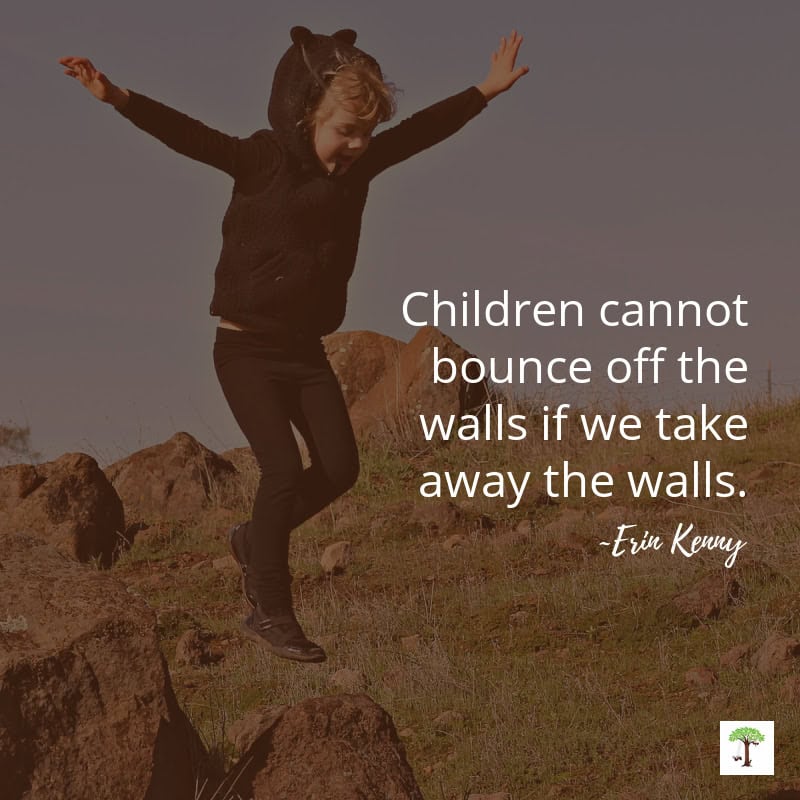
10. Show Respect for Nature Through Your Actions
Watch wildlife quietly, handle living things gently when appropriate, and leave plants growing where you find them. These everyday moments show children how to enjoy, care for, and show kindness to nature. The care you show for nature can leave a lasting impression on how children care for the natural world.
Explain the Care Behind Your Actions
Explain your choices as opportunities arise. You might say, “Let’s walk around these seedlings so they have room to grow,” or “We’ll watch from here so the bird feels comfortable coming back.” Simple explanations help children understand how their actions affect other living things.
Encourage children to observe animals in their natural habitats. Give wildlife space, leave nests undisturbed, and avoid chasing, feeding, or bringing wild creatures home. If you lift a small stone to look underneath, replace it gently as you found it, taking care not to harm the creatures sheltering there. When children see us treat nature with respect, they have examples to carry into their own outdoor adventures.
Bring a bag for your own rubbish, take your belongings home, and invite children to help leave the places they enjoy ready for the next visitors—human and otherwise.
Gather Natural Materials with Care
Before collecting natural materials, check the rules of the place you’re visiting. Even fallen leaves, sticks, and stones can provide food or shelter. Where collecting is permitted, take only a small amount of plentiful fallen material and leave living plants undisturbed. A photograph, sketch, or journal entry can also help children remember a discovery.
Nurture the Stewards of Tomorrow
Through nature play, children can learn to know and love the living world they are an integral part of. That connection can grow into care as they learn to notice what plants, wildlife, and natural places need—and discover ways to help just as my daughter did with the pipevine butterfly.
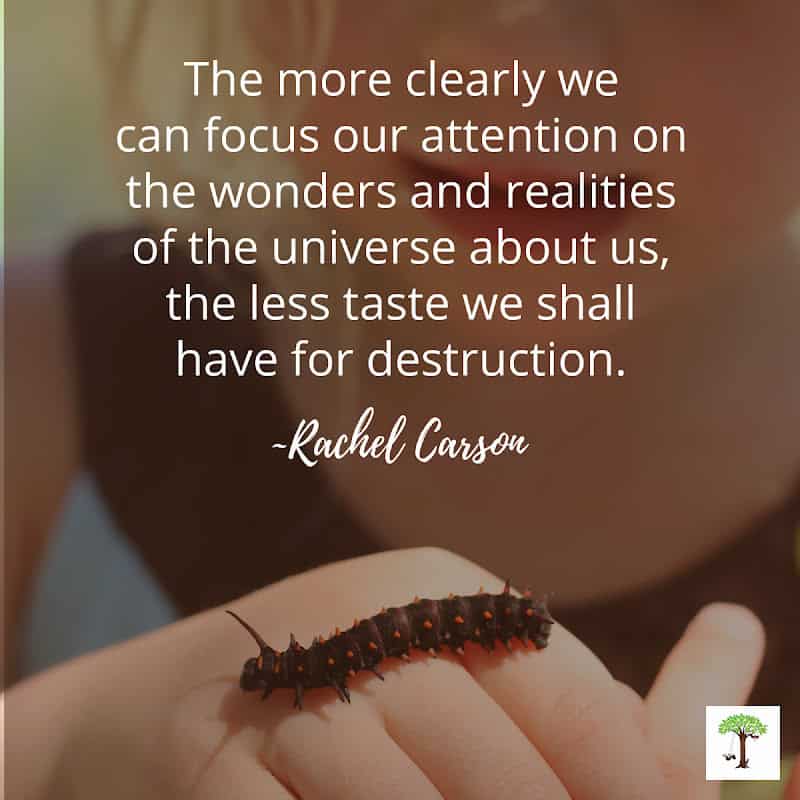
We called my daughter the caterpillar whisperer because she would rescue them from bike paths and walkways on our daily excursions into Lower Bidwell Park in Chico, CA, and place them on the pipevine plant to help them find food instead of getting squished underfoot or run over by a bike.
In the summer, we called her the Florence Nightingale of butterflies because she spent hours taking them out of danger and putting them on flowers so they could drink nectar. They were attracted to her like a magnet.
I have never before, and never since, seen so many butterflies flirt with and land on someone as much as they did my daughter. They loved her, and she loved them, and I have several photographs and videos to prove it. You can see another photo of her holding a pipevine butterfly on our about page.
Watching them go through their life cycle during the spring and summer months kept her busy outdoors, learning through play during the 2020 and 2021 quarantine. Still today, as we ride down the path on our bikes in the spring, she tells everyone we are with, “Watch out for the caterpillars!”
Caring for Nature Today Leads to a Better Future for All Beings
We urgently need more children and people who care for nature in their own way today. By modeling it ourselves and inviting children to participate in meaningful ways, we nurture the compassionate, capable stewards of tomorrow while caring for the Earth together now, when it matters most. For more ways to put that care into practice, explore our ideas for Caring for the Earth with kids.
11. Set Clear Boundaries and Encourage Independent and Group Exploration:
With parental or teacher guidance and firm boundaries, outdoor adventures can lay the groundwork for lifelong learning and create a strong bond with the natural world.
Encouraging children to explore nature on their own or in groups is a valuable way to support their development once they are old enough to navigate nature safely. Supervised unstructured play experiences foster independence, problem-solving, and resilience as children learn to assess risks, make informed decisions, and discover their capabilities.
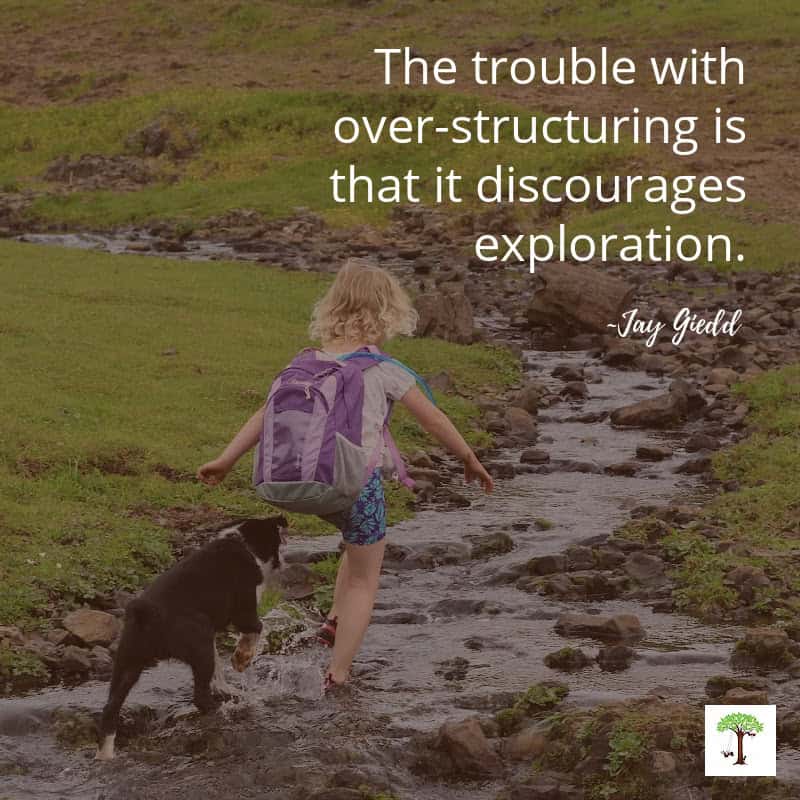
Whether venturing out alone or with friends, time in nature sparks curiosity, creativity, and a greater appreciation for the environment. Group exploration, in particular, helps children build teamwork and communication skills, while solo adventures foster reflection and self-confidence.
I recall spending hours outside exploring with my brothers and neighborhood friends, or embarking on solo adventures in the natural world. These make up most of my favorite childhood memories. When we were inside during daylight hours, I can still hear my mother saying, “What are you doing inside? The sun is still shining.” Those were the same words her own mother said to her whenever she was indoors during the day.
12. Make Outdoor Play a Daily Rhythm
Give children opportunities to learn and play outside every day by encouraging them to spend time outside, even if it’s just in your backyard. Give them plenty of unstructured time to explore the natural world and investigate what interests them most. Daily nature explorations offer children of all ages sensory experiences and opportunities to learn and develop naturally.
Make Space for Everyday Exploration
Make outdoor play part of your daily rhythm in ways that work for your family or group. You might head outside after breakfast, pause for play on the way home from school, or visit a nearby green space before dinner. Keep it manageable so you return to the outdoors regularly.
Young children need opportunities to explore nature and discover their interests without adults turning every experience into a lesson. Allow time for digging, wandering, watching, pretending, and following their own ideas. Familiar activities are worth repeating, too; children may discover something new each time.
Support Growing Interests as Children Get Older
As children enter school, you can help elementary-aged kids, tweens, and teens fuel their curiosity with in-depth explorations through lessons and projects in areas that interest them. Support their learning with classes, activities, books, nature arts and crafts, and other outdoor projects that match their interests and abilities while meeting their academic needs.
The ideas in the Simple Nature Play Invitations section below and in our guide to Outdoor Learning Activities for Kids can serve as springboards for learning. That said, older children still need ample time for unstructured play. Leave room in their schedules for outdoor experiences they choose themselves, alongside organized activities and schoolwork.
Some days, you’ll have time for a longer adventure; other days, a short visit outside may be what fits. Plan around the weather and local conditions, and begin again when a day doesn’t go as expected. The aim is to make time outdoors a regular, enjoyable part of everyday life.
13. Return Often and Notice What Changes
Return to familiar outdoor places and give children opportunities to discover how they change over time. A favorite tree, a patch of garden, a local trail, or a quiet corner of a nearby park can offer something new to notice throughout the year.
Look for buds opening, leaves changing color, seeds forming, or puddles appearing after rain. Listen for different bird calls and watch for insects returning as the weather warms. These everyday discoveries give children opportunities to explore nature’s rhythms and follow changes as they unfold.
Explore Seasonal Changes Through Phenology
Noticing the timing of seasonal events helps children explore phenology—the study of recurring events in nature, such as flowering, leaf changes, and bird migration, and how they relate to climate. Children can begin by watching one familiar tree or recording when they first notice a particular flower blooming each year. Over time, their observations offer opportunities to compare seasons and discover that nature doesn’t follow exactly the same calendar every year.
Begin with what children remember: “Last time we were here, this branch was bare. What do you notice today?” Let their observations guide the conversation. They may recognize a change you missed or want to revisit something that captured their attention before.
Choose a Sit Spot and Record Discoveries
You can also choose a regular sit spot—a comfortable place to pause and observe your surroundings. Stay as long as the children are interested, whether that means a quick look around or watching what happens nearby for longer.
If children want to keep a record, invite them to draw in a nature journal, take photographs, or tell you what they noticed. Looking back can reveal changes that were difficult to see from one visit to the next. Simply watching and talking together is valuable, too.
Returning often gives children time to build a relationship with a place. A tree becomes the tree they watched lose its leaves and grow new ones. A familiar path holds memories of discoveries, games, and adventures. Through these repeated experiences, children can deepen their understanding, feel a sense of belonging, and develop care for the natural world.
Simple Nature Play Invitations to Try
An invitation gives children somewhere to start while leaving the outcome open.
Become shadow explorers. Find your shadow, compare its shape, and invent a shadow creature. Explore more fun ways to play with shadows in our guide to shadow activities and experiments.
Create a tiny imaginary world. Where gathering is allowed, offer fallen leaves and twigs to create a miniature landscape. Let children decide who lives there. For more ideas, explore How to Make a Fairy Garden.
Follow a sound. Listen together and try to locate a sound without disturbing wildlife. A great place to start is listening for birds. Explore Birdwatching for Kids for resources and ideas.
Investigate a familiar tree. Look at its bark, watch its branches move, or draw its shape on paper or in a nature journal. Return another day to compare.
Make a nature map. Invite children to draw places or discoveries that matter to them. Their map might include a favorite stump or a spot where they saw a snail.
For more starting points, explore our collection of outdoor learning activities for kids.
Adapting Outdoor Learning for Different Ages and Abilities
Toddlers: Offer close supervision, simple choices, and safe opportunities to move and explore. Avoid small loose materials when children still put objects in their mouths.
Preschoolers and kindergarteners: Leave room for repetition, pretend play, carrying, sorting, and building. Introduce a short invitation, then see where they take it.
Elementary-aged children: Support developing interests with field guides, maps, drawing materials, or a question they want to investigate.
Tweens and teens: Let them help choose destinations and projects. Photography, wildlife observation, gardening, and outdoor skills may offer appealing ways to connect.
Common Questions About Learning Through Play Outdoors
Here are answers to some common frequently asked questions about learning through outdoor play:
What if my child doesn’t want to play outside?
Start by identifying what makes the experience difficult. Your child may be uncomfortable, tired, unsure what to do, or bothered by noise or textures.
Try a familiar place, a brief visit, and an interest they already enjoy. A child who loves drawing might want to sketch outdoors. A child who enjoys vehicles might watch how a toy truck travels over different suitable surfaces. Allow kids to observe before joining in.
Can children connect with nature without a backyard?
Yes. Look for places you can access regularly, such as a community garden, a park, a planted courtyard, or trees along a neighborhood route.
Choose somewhere you can pause safely and notice what lives and changes there.
Does outdoor play always need an activity?
No. Children can start with a question, an interesting material, or something they notice.
Offer an idea when it helps them begin, and allow the plan to change once play gets going.
How can I tell whether my child is learning?
Watch and listen. Notice what they compare, repeat, explain, change, or try again.
A child adjusting a channel to help water move is investigating a problem. A child explaining the rules of a pretend game is communicating an idea. Learning may show up in their actions long before anything makes it home.
The next time you go outside, leave room for one unexpected discovery. Pause with your child, notice what draws their attention, and see where their curiosity takes you.
Help Children Find Their Own Connection with Nature
Outdoor learning through play starts with time together, space for curiosity, and chances to explore. We can offer guidance, share our wonder, and provide a steady rhythm while leaving children space to make discoveries of their own.
Some days, that might mean an adventure along a woodland trail. Other days, it might mean watching an insect, making mud pies, or returning to a familiar tree. Nature provides endless chances for discovery, and we have much to learn when we slow down and pay attention alongside our children.
Through these everyday experiences, children can come to know the living world and their place within it. As familiarity grows into affection, we can help that connection become care—modeling kindness, inviting meaningful participation, and tending the places we love together.
The next time you head outside, let curiosity lead you somewhere unexpected. Make room to wonder, connect, explore, imagine, create, and contribute—in whatever ways fit your child, your surroundings, and the season of life you’re in.

What does your child love to discover outdoors? Share a favorite nature play experience in the comments below.
Learn more about Rhythms of Play on our About page, or meet the creator and author, Nell Regan Kartychok.





Leave a Comment