

Explore eco-conscious sprinkler use and water play conservation tips for outdoor families.
Playing in the sprinklers on a hot summer day is a fantastic gross motor activity and sensory play activity for kids. Who doesn’t love playing in the water and running barefoot through the sprinklers? Even adults love to cool down, taking a few leaps through the sprinklers on a hot summer day! The problem is that many areas are experiencing a deepening drought that is only worsening.
Below are a few excellent tips for water-wise sprinkler play so you can have fun while conserving water this summer. Go green and conserve water while having fun with these easy water conservation sprinkler play instructions. Be safe. Have fun. Be water-wise with the sprinkler play tips for families below. You might also enjoy these Swimming and Beach Safety Tips from an Ocean Lifeguard Mom.
Water-Wise Sprinkler Play Tips to Conserve Water and Have Fun This Summer:
Playing in the sprinklers is a classic water play activity for families with children to cool off and enjoy time outdoors during the summer. However, it is essential to remember that a typical sprinkler system uses between 1,000 and 2,000 gallons of water per hour. The total amount of water used depends on the type of irrigation system, flow rates, and water pressure.
When sprinklers are left running for extended periods, especially during the hottest part of the day, a substantial amount of water can evaporate or run off before it can be effectively utilized. With water resources becoming more limited in many areas due to climate change and population growth, conserving water is more important now than ever.
Water Conscious Sprinkler Play Guidelines:
To enjoy sprinkler play while being water conscious, families with children can take a few simple steps, including limiting sprinkler play to cooler times of day when evaporation rates are lower, setting a timer to ensure the water is not left on too long, and choosing water-efficient sprinklers. Playing in the sprinklers only in areas where the water can benefit your lawn or garden, rather than on pavement or driveways, is another simple tip you can use alongside the water conservation tips below.
Conserving water while using sprinklers in warm weather to have fun isn’t just about saving money on your water bill; it’s also about being environmentally responsible. It’s about caring for the Earth and protecting a vital resource for future generations. Many communities face water shortages, especially during dry seasons. Seemingly small actions, such as reducing water use, can add up to significant savings when practiced widely.
By making thoughtful choices, we can keep summertime fun in the sprinklers while remaining responsible stewards of our precious environment for a better tomorrow. Read the water conservation sprinkler play tips below before enjoying the experience of running barefoot through the sprinklers in your backyard this summer, and be part of the change you wish to see in the world. You might also enjoy these fun Summer Activities for Kids.
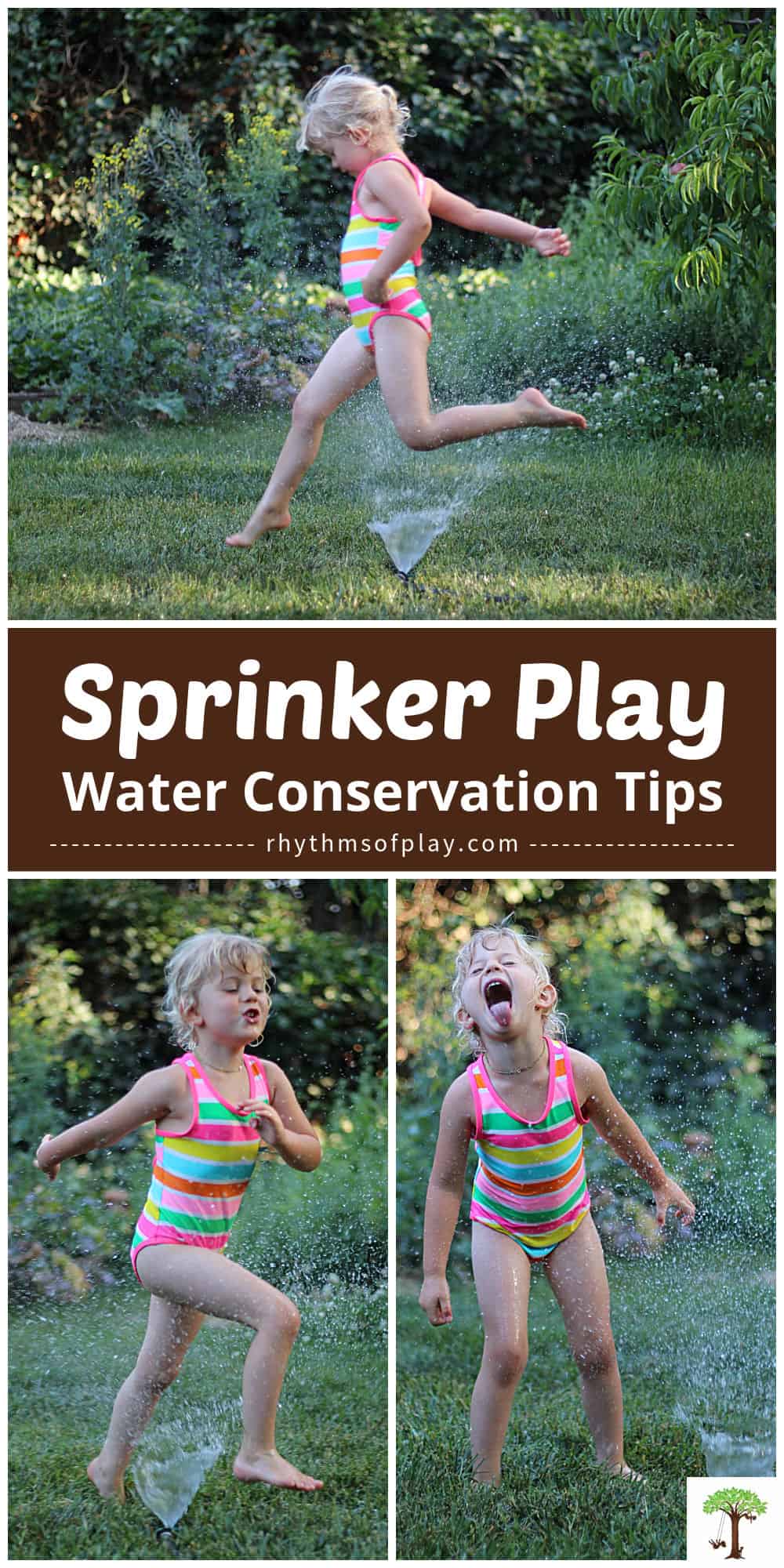
10 Eco-Conscious Water Play Recommendations for Sprinkler Use:
Here are several effective ways to save water while still enjoying fun outdoors. These practices align recreational water use with local watering guidelines, which are often in place to protect valuable water supplies during dry seasons. Enjoy playing in the sprinklers with these simple tips:
Related: Splash Pad Benefits and Safety Tips for Kids
1. Play in the sprinklers during the cooler parts of the day:
Please use sprinklers in the early morning or late afternoon. Warmer temperatures increase evaporation rates, while cooler temperatures allow more water to be used by plants or enjoyed during play rather than disappearing into the air.
This is why it’s not a good idea to water in the middle of the day, especially between 11:00 am and 3:00 pm. Therefore, I don’t recommend allowing children to play in the sprinklers during this time, even if you’re watering your lawn while they’re playing.
2. Turn off or adjust the automatic irrigation systems:
If you know your children will want to play in them often, turn off the sprinkler system so it won’t go off automatically, conserving water for those occasions. This will make it easier to say yes the next time the kids ask to play in the sprinklers, helping you feel comfortable allowing them to play for a while and giving the lawn the deep watering it needs when it’s not being watered daily.
Another idea is to adjust the time your sprinklers are set to run in the summer to ensure they turn on less frequently. Or change the time you water from the early morning to the late afternoon and early evening. This final option will provide the kids with a regular opportunity to go for a barefoot run through the sprinklers.
3. Choose water-efficient types of sprinklers:
Look for sprinklers labeled as low-flow or water-efficient, featuring controlled spray patterns. These sprinkler systems use less water per minute and reduce overspray, saving water while still providing plenty of fun!
4. Consider using a singular spray head attached to a garden hose:
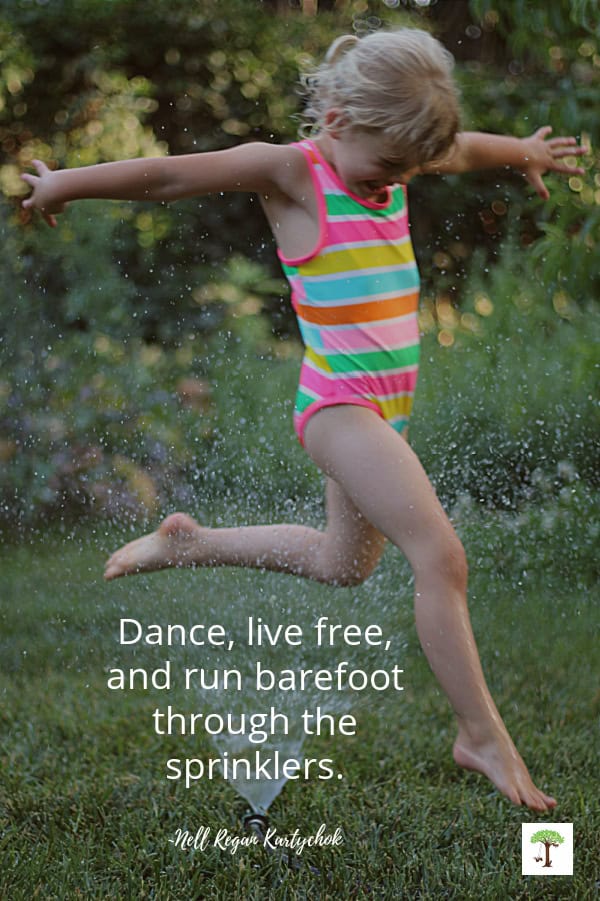
Instead of turning all your sprinklers on, use a low-flow, small, singular sprinkler  head of some kind, like the one my daughter is enjoying jumping over in the photos below. If you must turn all of your sprinklers on, use a timer
 or a cell phone alarm to limit the amount of time the water is running and conserve water usage.
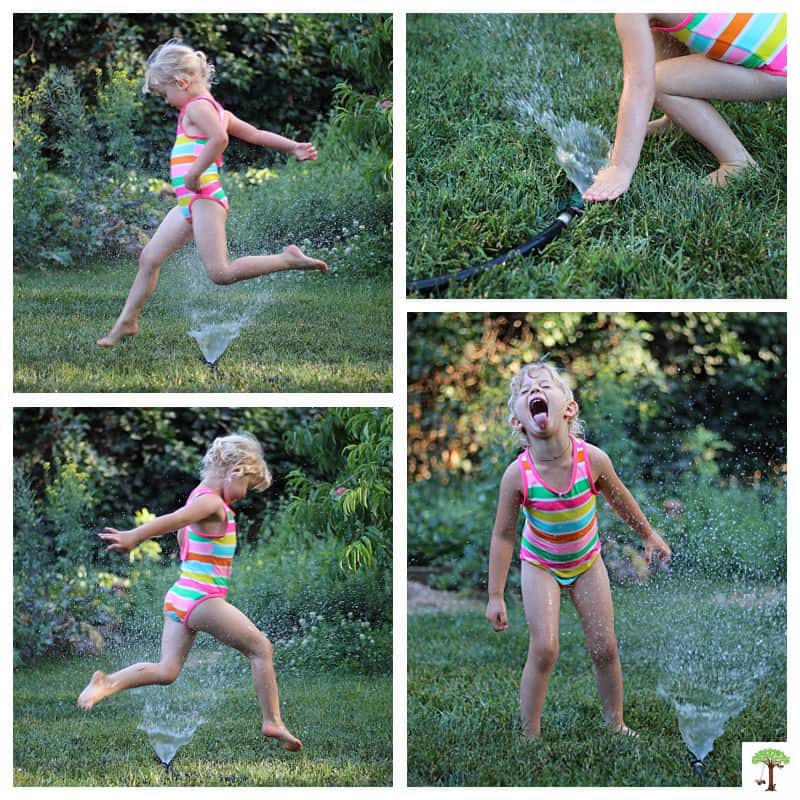
5. Put the sprinkler over dry patches or near plants that require watering:
Encourage children to play in a single sprinkler that also doubles as a lawn-watering system. Position the sprinkler so it waters your lawn or garden while the kids play. This way, the water serves double duty: keeping your yard healthy while providing children with a place to cool off and expend energy.
There are dry patches on our lawn because we don’t set our sprinkler timing system to run every day. Throughout the summer months, we have our sprinklers set to go on for only 10 minutes every few days to conserve water. When we see dry patches on a hot day, we consider that evening the perfect time for sprinkler play.
6. Set a timer for efficient water usage:
It’s easy to lose track of time when you’re having fun, but overuse leads to unnecessary water waste. Setting a timer ensures water is used efficiently. Place a single sprinkler head attached to a garden hose over each dry patch in your backyard for approximately 5-10 minutes.
Alternatively, limit water play to 15-30 minutes per session when using the sprinkler system. Use a timer or a phone alarm so you don’t forget to move the sprinkler head to the next dry patch or turn the water off after a maximum of 30 minutes.
7. Keep the water level low:
Keep the water flow as low as possible while still being fun. We like to keep the spray level at belly-button height for our children. There is plenty of water to play in, and it doesn’t splash them in the face as much. Lower water flow means more time to have fun, while higher water flow means less time to have fun. Be water-conscious.
8. Avoid watering anything that isn’t growing:
Do your best to keep sprinklers from hitting driveways, sidewalks, and patios. Water that hits the pavement and other non-growing surfaces runs off and is wasted. Keep the spray focused on grassy or planted areas to engage in conscious water play.
9. Supervise young children when playing in the sprinklers:
Have an adult present to monitor the sprinkler use. Kids may accidentally leave the sprinkler on too long, leave the tap running when they become distracted by something else, and forget to turn off the water when they are finished. They can also accidentally or unknowingly move it to areas that don’t need it. Supervision ensures that water is not wasted during playtime.
10. Create a rhythm or schedule for water play:
Using a rhythm or schedule for playing in the sprinklers helps conserve water by limiting water play to specific times, thereby reducing consumption. By designating specific days and times for sprinkler use, families can avoid running the sprinklers during the hottest part of the day, when evaporation is highest, or when the lawn has already been sufficiently watered. Establishing a sprinkler play rhythm also teaches children the importance of water conservation and encourages them to develop mindful habits that support environmental sustainability. For more information, learn how to establish a daily and weekly rhythm.
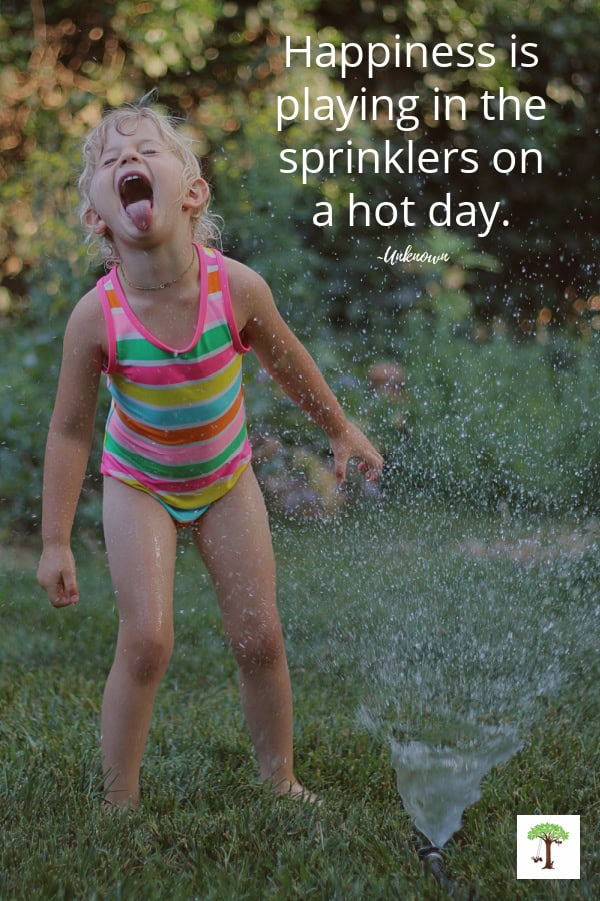
Eco-Conscious Water Conservation Sprinkler Play Guidelines for Outdoor Families
When the drought intensifies, it’s essential to conserve water while enjoying the sun during the hotter summer months. Following these simple, conscious water-play guidelines helps families enjoy outdoor fun while staying mindful of conservation efforts.
Saving water helps reduce the strain on local water systems, protects natural ecosystems, and ensures this precious resource remains available for future generations. Please use these water conservation sprinkler play tips to help conserve water while having fun in the sun with the kids this summer. Be safe. Have fun. Be water-wise.
If you’re looking for more fun outdoor activities to do with the kids this summer, read about these other fun options. For more summer activities for kids, be sure to check out our summer activities, complete with a printable bucket list designed for kids and families.
Learn more about Nell Regan Kartychok, author and photographer of these eco-conscious sprinkler play tips, and Rhythms of Play HERE!
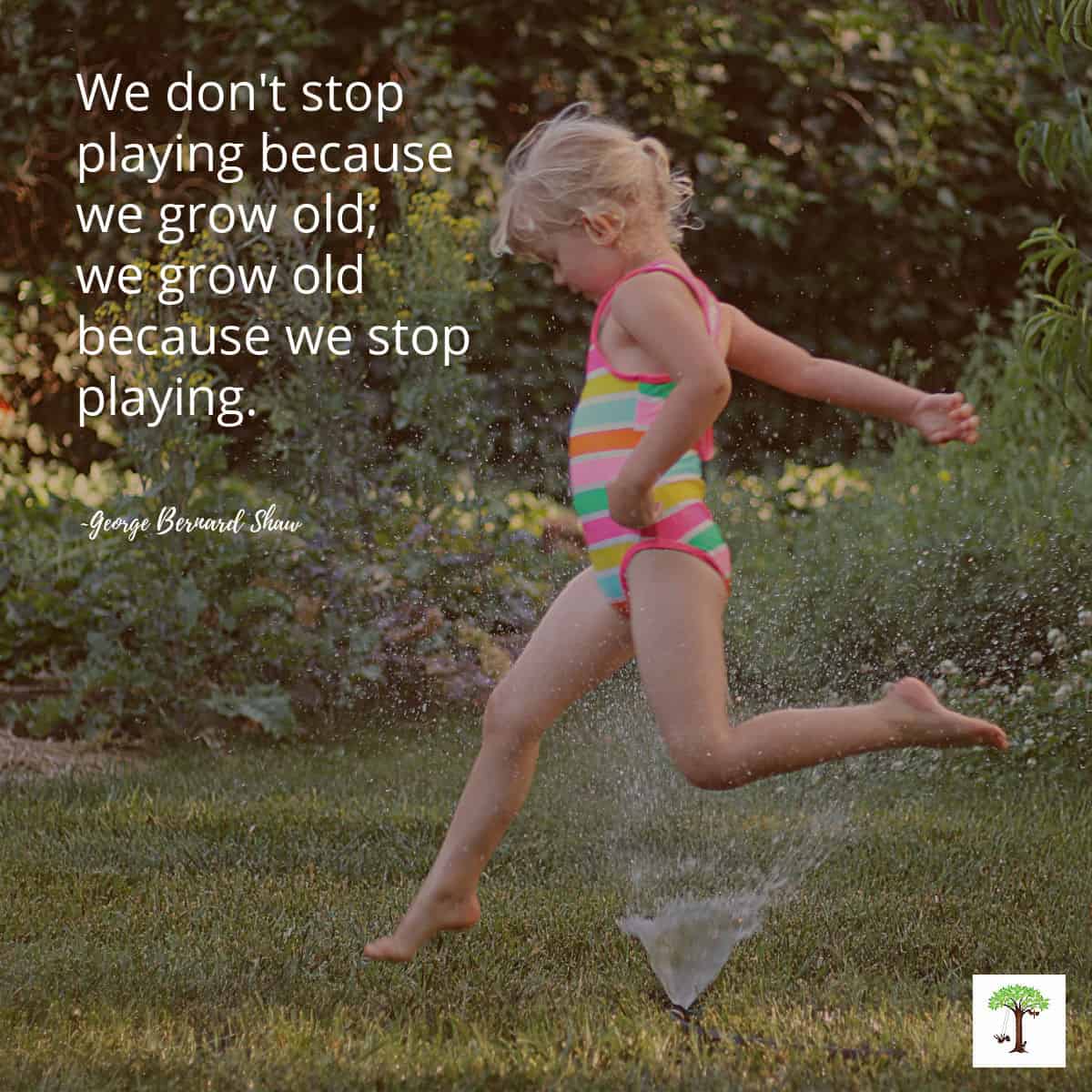






Pretty hard to beat playing in the sprinkler! What fun!