
Explore the wonders of nature and uncover its mysteries with this fantastic collection of outdoor activities and nature play ideas for kids.
This article provides a list of fun and engaging outdoor learning ideas and nature activities for kids. Engaging children in daily outdoor learning adventures is an excellent way to educate and entertain children of all ages, interests, and abilities. The outdoor activity ideas below include child-led and loosely structured outdoor activities, along with suggestions for more advanced nature studies and outdoor science experiments. Use the creative ideas below to get toddlers, preschoolers, kindergarteners, elementary-aged students, tweens, and teens outside to learn naturally every day, spring, summer, fall, and even winter!
In a world increasingly dominated by screens and indoor activities, outdoor learning provides a crucial alternative for children’s education and development. Learning in nature encourages physical activity, supports overall child development, inspires a lifelong passion for learning, and fosters a deeper connection with the natural world. Furthermore, playing outdoors fosters a child’s sense of self while offering numerous additional benefits for their physical, mental, emotional, and social well-being.
This list of outdoor activities features a collection of outdoor learning activities and nature craft ideas suitable for parents, teachers, homeschoolers, or anyone seeking to enhance their child’s understanding of or connection to the natural world. These outdoor nature activities also make excellent suggestions for educators and instructors who teach at nature preschools, forest school kindergartens, outdoor education programs, or summer camps.

Educational Outdoor Activities for Kids:
Educational outdoor nature activities, such as those offered here, provide a wide range of beneficial learning opportunities for the developing child. Natural settings offer a diverse range of sensory experiences, including sights, sounds, textures, and smells, that stimulate the brain in ways indoor environments cannot. This fosters creativity, curiosity, and problem-solving skills, while helping children feel present and deeply connected to their surroundings, in addition to several other benefits that contribute to their physical, mental, emotional, and social development.
The suggestions below include fun outdoor activities for kids of all ages, such as nature study ideas and outdoor science activities, as well as an extensive selection of nature crafts suitable for toddlers, preschoolers, kindergartners, elementary school-age children, tweens, and teens. Be sure to scroll to the bottom of the page to see all the easy ways to get kids outside, learning, and having fun. You might also enjoy this quick list of weekly outdoor activities, along with a personal story about why I started the “Get Outside and Connect” movement.
“Roots of understanding grow deep when curious minds are nourished in nature.“
Nell Regan Kartychok (Founder of Rhythms of Play).
Related: The Ultimate Eco-Friendly Gift Guide for Kids
Learning through play outdoors: Helping Children Connect and Engage with Nature:
Create opportunities to learn, foster curiosity, and encourage safe exploration outdoors to help children connect with and play in the natural world with the tips and strategies below:
1. Spend time together outdoors:
One of the easiest and most effective starting points is spending time together outdoors. Take kids on nature walks, visit parks, forests, woodlands, or beaches, and let them lead the way. When outside in nature, encourage young nature explorers to spend time examining leaves, insects, rocks, animal tracks, or any other natural objects in their surroundings closely. One of the best things parents and nature teachers can do for young children is to allow them to discover and explore subjects that truly excite them.
2. Model a sense of wonder, awe, and respect for nature:
Model a sense of wonder, awe, and respect for the natural world. When adults and older children show enthusiasm about wildlife, such as plants and animals, and outdoor experiences, younger children are more likely to mirror that interest and take a deeper look. These small discoveries can spark excitement and curiosity. The key is not to rush or overly structure the experience, but to allow their natural sense of curiosity to guide their interaction.
3. Act as a guide and fellow nature explorer:
Instead of teaching young children about nature and the great outdoors, acting as a guide and fellow nature explorer is often the best approach. Get the kids outside and use the nature activities listed below as a starting point for your day-to-day adventures in learning.
In other words, many of the nature activities and outdoor play suggestions below are best used to facilitate play rather than to teach specific skills. Once play begins, step aside and allow it to unfold naturally. As parents and educators, we must give children the space to discover what truly interests them. This is especially important when educating toddlers, preschoolers, and kindergarteners. When children are educated in this way, older children and teens will be better prepared for lessons in the areas that interest them and are required for their studies. There is no rush.
4. Answer children’s questions with open-ended questions:
Instead of providing an answer to the questions they ask, answer children’s questions with another question that helps them reach their own conclusion. Ask toddlers, preschoolers, and kindergarteners simple things to help them learn the answers they seek. Open-ended questions such as “Why do you think that bird is calling out?” or What do you think made these tracks?” prompt deeper thinking and engagement.
In other words, ask open-ended questions that help them discover the answers independently. This will ignite their curiosity and guide them to understand the answers to the questions they seek through exploration in the natural world. Answering a question with a question will help them become more observant and acutely aware of the natural world around them, and learn to discover the answers on their own, rather than expecting someone else to provide them.
Not only does this early educational practice help prevent children from relying on you or anyone else for all the answers, but it also teaches them how to uncover the clues that will enable them to discover the solution independently. Developing these skills will serve them well throughout their entire lifetime. Isn’t that what education is all about?
5. Engage each of the senses:
Encourage children to explore nature using all of their senses, not just their eyes. Engaging all five basic senses—sight, hearing, smell, touch, and even taste (with caution)—in nature provides a richer, more immersive sensory experience. Natural settings offer a diverse range of sensory experiences that stimulate the brain and body. For instance, the bright colors of wildflowers attract their eyes, while the rustling leaves, birdsong, and gentle babble of a stream soothe their ears. The scent of pine, fresh earth, or salty sea air deepens their understanding and connection to the environment.
Touching the rough bark of a tree, the softness of moss, or the coolness of a stone offers children a tactile connection to nature. Even taste can enhance their experience—biting into a ripe berry provides children with sensory experiences that solidify their connection to the natural world and their place within it in ways that can not be accomplished with sight alone. With that said, please do not allow children to taste or eat anything potentially toxic or harmful to their health. Wild foraging is best done with knowledge and caution. When in doubt, don’t put it in your mouth.
6. Provide opportunities to learn and play outside every day:
Encourage young children to spend time outside daily, even if it’s just in your own backyard. Ensure they have plenty of unstructured time to explore the natural world and investigate the things that interest them the most. Daily unstructured explorations in nature offer children of all ages a much-needed sensory experience and the opportunity to learn and develop naturally. Toddlers, preschoolers, and kindergartners are best left to explore nature and discover their interests without any “teaching” involved.
When children enter their school years, you can begin to help elementary-aged kids, tweens, and teens fuel their curiosity by offering in-depth explorations through lessons and projects in areas of interest. In other words, support their educational efforts with classes, activities, books, nature arts and crafts, and other outdoor projects that align with their interests and abilities, and fulfill their academic needs. This post includes several nature activities for kids that can act as a springboard to learning. With that said, it is still essential to allow older children ample time for unstructured play.
7. There is no rush; let them dawdle and take their time:
One of the best things you can do for a child in the natural world is to give them the gift of time outdoors. Allowing children to take their time playing and exploring outdoors nurtures curiosity, creativity, and a strong connection with the natural world. When children are not hurried, they can fully engage their senses, ask questions, and follow their interests, which supports cognitive growth and emotional health.
Nature provides endless chances for discovery. Whether collecting treasures, observing wildlife, listening to birds, and allowing children time to do as they will fosters a sense of wonder and patience. Rushing children through these experiences can hinder their ability to focus, imagine, and learn at their own speed. By giving kids the freedom to explore at their own pace, we cultivate not only their intelligence but also their respect for the environment.
When my daughter was a toddler, preschooler, and in kindergarten and early elementary school, I remember spending hours in nature, allowing her to dawdle, explore, and do her own thing. Although my goal was to get us both outside and walk the dog, we spent more time being in nature than walking, so our daily 1-3 mile nature walks took at least two to four hours. This gifted me with the opportunity to nurture patience whenever I felt the need to get going.
Most of the time, I was happy to be present out in nature. It allowed me to slow down and abandon the rush-rush mentality that often prevails outside the bounds of the natural world. At the same time, our dog had the chance to explore on his own. By the time our nature walk was complete, we all got the exercise we needed, and each of us was better off for the time spent.
8. Support nature play and outdoor adventuring with simple tools:
Providing simple tools can also help children engage with nature and learn from their discoveries. Items such as magnifying glasses, buckets, collection baskets, feild guides, nature journals or notebooks, and other basic nature study supplies can turn an ordinary outing into a grand adventure.
9. Encourage solo or group exploration in a natural setting when children are mature enough to handle it:
With parental or teacher guidance and firm boundaries, outdoor adventures can lay the groundwork for lifelong learning and create a strong bond with the natural world. Encouraging children to explore nature on their own or in groups is a valuable way to support their development once they are old enough to navigate nature safely on their own. These unstructured play experiences foster independence, problem-solving, and resilience as children learn to assess risks, make informed decisions, and discover their capabilities.
Whether venturing out alone or with friends, time in nature sparks curiosity, creativity, and a greater appreciation for the environment. Group exploration, in particular, helps children build teamwork and communication skills, while solo adventures foster reflection and self-confidence. I recall spending hours outside exploring with my brothers and neighborhood friends, or embarking on solo adventures in the natural world. These form the majority of my favorite childhood memories. I can still hear my mother’s voice saying, “What are you doing inside? The sun is still shining.” If ever in the house during daylight hours.
Nature Activities and Nature School Ideas for Kids of All Ages:
Exploring the great outdoors can be a transformative experience for children. It offers many opportunities to learn, play, and connect with the natural world. Whether hiking through the wilderness, exploring forest trails, spotting wildlife, climbing trees, or dipping toes into cool streams and warm ocean currents. Spending time outside can foster a sense of wonder and curiosity, building brains and bodies in a way only nature can provide.
Outside activities like those here encourage a deeper appreciation for nature, nurture a sense of wonder, build connections, and ignite creativity. This makes creative outdoor playtime an essential part of childhood development. Whether tending a garden, searching for hidden treasures, camping under the stars, or unraveling nature’s more profound mysteries, these activities in nature allow children of all ages to develop resilience and ignite a lifelong love for the outdoors.
Below, you will find several lists of outdoor activities suitable for children of all ages. They include several fun activity ideas to support outdoor learning in nature. However, these forest school nature activities and outdoor learning ideas for kids are only suggestions. Remember, forest school education is about allowing kids to take the lead in their outdoor education. You might also enjoy Get Outside and Connect.

Outdoor Nature Activities for Kids:
I must admit that a few of the articles linking to the suggested outdoor activities for kids were written a long time ago and are in desperate need of a refresh. I am working on improving each one and will continue to do my best to incorporate new outdoor activities, forest school ideas, and nature-based activities for kids of all ages.
In other words, I will continue to add more outdoor learning ideas, nature activities, and nature crafts for nature school preschools, forest schools, and nature-based homeschoolers to this list as I find and create them. Bookmark this page for easy reference and check back often to see what’s new. If you’re looking for creative ways to educate children while making something useful, you might also enjoy this list of homemade gifts kids can make.
Fun and Educational Outside Activities for Kids:
Children will love these outdoor activities so much that they won’t even realize they are learning. This list of nature activities for kids includes some of the best outdoor activities for toddlers to teens. Which of these classic outdoor activities is your favorite?
1. Go on a Nature Walk:
- Take a moment to connect with nature on a walking exploration.
- To go on a nature walk, select a location that suits your ability. Local parks, greenways, and nature reserves are excellent options, but any outdoor area with a natural presence will suffice in a pinch.
- Slow down, observe your surroundings, and become aware of what is happening around you.
- Most importantly, take your time—there’s no need to rush. Let all of your senses guide you and experience the peaceful rhythm of the natural world.
- Whether you’re taking a short stroll along a nature trail or embarking on a longer hike through the forest, nature walks help us stay present to the wonders of nature, both big and small.
- Write down anything of significance that occurs to you along your journey in a nature journal.
2. Spend Time in a Sit Spot:
- Choose a spot anywhere outdoors, preferably in a natural setting, where you can sit regularly (daily, weekly, or monthly) to become aware of and observe your surroundings with each of your senses.
- A “sit spot” can be anywhere: under a tree, near a stream or creek, on a beach, in the middle of a forest, or even in your backyard. What matters most is consistency.
- Returning frequently to the same spot will allow you to develop a deeper connection with the land and its rhythms in that particular spot.
- Unlike a nature walk, the goal is not to move, but to be still and allow nature to come to you.
- Slow down and become aware of the subtle changes that are occurring within and around you.
- Spending time in a “sit spot” serves as a reminder that we are not separate from nature, but an integral part of it.
- Once you are finished, write your thoughts and experiences down in your nature journal.
3. Skip a Rock:
- Learn how to skip a rock and everything you need to know about rock skipping in this fun article about the art and science of skipping stones.
- Can you beat the world record number of skips?
4. Enjoy Birding for Kids:
- Bird watching, also known as birding, is a fun wilderness observation activity suitable for children from toddlers to teens.
- Click the link to learn more about bird watching with kids and discover birding lesson plans and ideas for kids.
5. Squirrel Activities and Learning Ideas:
- Invite children to learn about squirrels with these fun facts, squirrel-themed teaching ideas, outdoor activities, and cute squirrel crafts for kids!
- Get the Printable Squirrel Behavior Tally Sheet and invite kids to count the common squirrel behaviors they notice.
6. Make Mud Pies:
- Making mud pies and other creations with water and dirt is a classic old-school nature activity for kids.
- Playing with mud and creating works of art with the hands is an excellent sensory play activity for developing children.
- Visit How to Make Mud Pies for step-by-step instructions and ideas.
7. Climb a Tree:
- Tree climbing is an outdoor activity that offers numerous benefits for developing children.
- Discover how to climb a tree, support your child’s first efforts, and learn about other benefits of risky play in 15 Reasons to Climb a Tree (and other benefits of risky play).
8. Make a Mandala:
- Create Nature Mandalas!
- Gather nature’s treasures to make a mandala with natural materials outside.
9. Explore a Shore:
- Take the time to explore a seashore, lakeshore, river shore, or creek shore; Learning happens naturally when we get outside!
- Stay cool on a hot sunny day, or bundle up and enjoy a sit or a stroll any day of the year.
- Play in the water, look for hidden treasures, and explore the area to discover the creatures who call it home.
- Visit your favorite shore near a body of water today! Please remember to follow basic beach and swimming safety guidelines.
- For more seaside or creekside activity ideas, visit this post.
10. Go Bouldering:
- Find an outdoor area and let the kids scramble and climb on small boulders.
- This is a fantastic outdoor gross motor activity that offers numerous physical, mental, and emotional benefits.
- Some playgrounds and climbing gyms also provide bouldering opportunities for children.
11. Hug a Tree:
- Hugging trees is a feel-good outdoor activity suitable for all ages, offering mental and emotional benefits to anyone willing to try it.
- Hug a Tree is also an initiative to help children if they ever find themselves lost in the woods:
- Please teach children aged 5 to 12 to hug and even talk to a tree should they ever find themselves alone in the wilderness.
- Staying near a tree provides protection and keeps the child in one location, which increases the chance of survival and success of search party efforts.
- It is easier for searchers to find children when they don’t move.
12. Roll Down a Hill:
- Rolling downhill is an excellent outdoor activity for their developing sensory system.
- Learn more about the benefits of this fun outdoor idea for kids HERE–>Roll Down a Hill.
13. Walk Across Fallen Trees and Logs:
- Here’s an exciting outdoor gross motor balance challenge for Kids.
- Walking across fallen trees or logs is a fantastic activity for developing the kinesthetic and vestibular sensory systems.
14. Make Sunprints:
- Get sunprint paper and invite children to play with sun exposure.
- First, invite them to place objects from nature onto the sunprint paper.
- Then, place the sun print paper with the natural objects in the sun to see what happens.
- Creating art with sunprint paper is a fun way to keep children of all ages busy learning outside.
15. Build an Outdoor Fort or Shelter in nature:
- Encourage children to build an outdoor fort or shelter in the natural environment using readily available supplies, such as sticks, leaves, and other natural materials.
- Building a fort or shelter promotes problem-solving, creativity, and helps children develop basic engineering skills as they learn to use natural materials for structure and stability.
- This activity can enhance appreciation for the outdoors, foster environmental awareness, and spark imaginative play in a natural setting.
16. Have Fun with Fall Leaves:
- Autumn is an excellent time to get outside and play in falling leaves.
- We have ten leaf activities to make outdoor fall leaf play more exciting and fun!
17. Make Rain Art:
- Rain painting is fun on a rainy day!
- Place marker drawings and doodles outside to be transformed by the rain, creating rain art with this fun rainy-day STEAM activity for kids.
- Discover more about this innovative outdoor art project for kids in Rain Painting.
18. Play in the Rain:
- Here are 20 outdoor rainy-day play activities that will have your kids running for the back door when it rains: Fun Ways to Play in the Rain.
Nature Games for Kids:
Playing nature games outdoors fosters a sense of wonder and curiosity that only Mother Earth can provide. Nature games of various types encourage the exploration of outdoor environments, where children can discover specific elements or components (such as minerals and animals) that make up the natural world. They also offer an engaging way for kids of all ages to connect with the natural world while promoting physical activity and learning through gameplay. You might also enjoy this list of Natural Play Materials that can be used as open-ended toys indoors and out.
1. Fall Leaf Counting Game:
- Have you ever tried to catch autumn leaves as they fall to the ground?
- Counting and catching fall leaves as they fall is a fun, gross motor movement and nature math game for the kids to enjoy in the fall or autumn.
2. Stone Skipping Games:
- Play a simple stone-skipping math game with the ideas in this article about rock skipping.
- Rock-skipping games are fun for all ages!
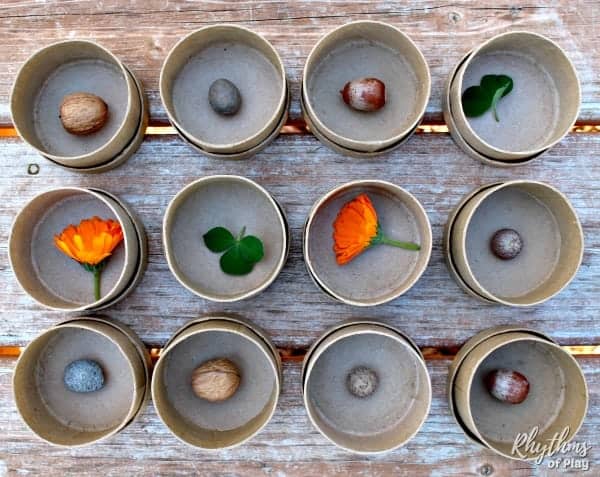
3. Nature Matching Game: (Photo Below)
- Exercise the brain and boost memory skills with this fun twist on the classic game of memory. Make your own DIY Nature Memory Matching Game for Kids!
- Using items found in nature adds a sensory component to the memory game, increasing its brain-building power.
4. Nature Scavenger Hunts:
Nature scavenger hunts appeal to the child’s natural interest in discovering the many clues that can be seen, heard, and felt in the natural world. Activities like scavenger hunts spark a sense of wonder and curiosity in children as they learn about different plants, insects, and animals, honing their observational skills. Invite children to discover the magic and wonder of the natural world with some of these creative nature scavenger hunt ideas for kids.
Fun Nature Scavenger Hunt Ideas for Kids:
- Sensory Card Nature Scavenger Hunt for Toddlers: Make a nature sensory card with your children and send them on a nature scavenger hunt.
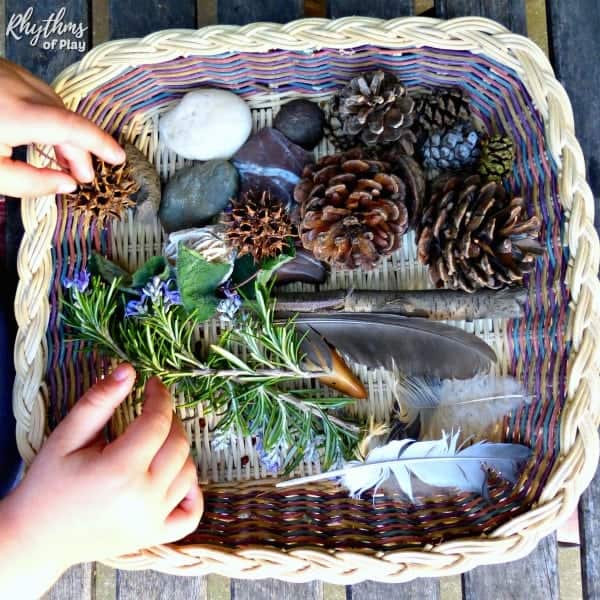
- Nature Sensory Bin Scavenger Hunt: Gather natural items to create a nature-inspired sensory bin for children. (Photo below)
- Heart Shape Nature Scavenger Hunt: Have you ever been on a scavenger hunt for colors or shapes? My daughter and I love looking for hearts in nature. Check out the fantastic video we made.
- Birding Scavenger Hunts: Visit our bird-watching activities post for a few fun birding scavenger hunt ideas for kids.
- Seasonal Nature Scavenger Hunt Ideas: With these seasonal nature scavenger hunt ideas, invite your children to witness the transformation in nature as one season changes to the next:
Outdoor Gardening Activities for Kids:
A garden is also a fantastic place for children to plant the seeds of their learning. Early literacy, math, and science concepts are abundant in homegrown gardens. When children know how to grow and harvest the foods they eat, their minds, bodies, and the future of our planet will each benefit immensely. Tending the cycle of nature in our backyards via gardening and composting is becoming a lost art. Join us.
Begin by nurturing nature’s many cycles by offering hands-on gardening activities in your home, homeschool, classroom, or outdoor classroom. Or, click the link to gather more creative ideas (in addition to or instead of gardening) to become one of the way-showers for the next generation in your neck of the woods, whether rural, urban, suburban, or city.
- Plant Flowers with Kids
- How to Plant a Tree
- Composting with Kids
- How to Start Tomatoes
- Growing Sunflowers with Kids
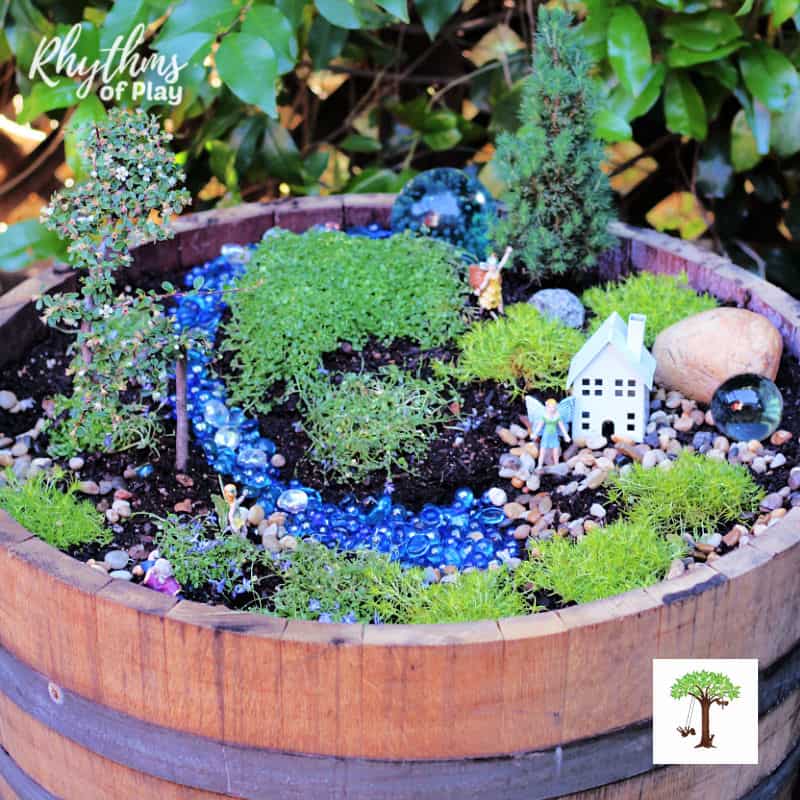
- How to Make a Fairy Garden (photo below)
Related: 15 Ways to Raise a Helper
Nature Study Ideas for Kids:
We have a few nature study ideas to use as a starting point in your outdoor science learning adventures. You will notice that some of these outdoor activity suggestions are also listed under other headings in this article; this will ensure you find the ideas you seek. Learn from and with nature with the list of engaging nature study ideas for kids below. (Learn more on our Nature Study Resource Page)
- How to Make and Keep a Nature Journal:
- Nature journals are excellent places for our children to write about their observations of the natural world.
- They are also excellent for creating artwork when out in nature.
- The Best Nature Study Supplies for Kids:
- A must-have list of nature study supplies to keep in your child’s nature backpack.
- Bird-Watching Activities and Lessons for Kids:
- Children love to watch and learn about birds in their backyards, neighborhoods, local parks, and nature reserves.
- Squirrel Facts and Fun Ways to Learn All About Squirrels:
- Invite children to learn everything there is to know about squirrels with this list of squirrel-themed nature study ideas!
- Spend time observing the squirrels in your backyard with these fun outdoor learning activities for kids.
- Get the printable Squirrel Behavior Tally Sheet from the Rhythms of Play Learning Center.
- Observe Bees:
- Watching bees is an excellent way for children to learn about the importance of pollination and much more!
- Investigate Worms:
- Discover how worms enrich the soil and contribute to your garden’s growth.
- Explore a Shore:
- Take the time to explore and study a seashore, lakeshore, river shore, or creek shore. Learning happens–naturally when we get outside!
More Outside Activities for Kids: Outdoor Learning Ideas and Suggestions for Children:
The list of engaging outdoor learning ideas below provides additional suggestions (in addition to those shared in the previous section) that can enrich children’s knowledge across various subjects.
Outdoor Science and STEAM Activity Ideas for Kids:
There are numerous enjoyable ways to learn and interact with nature. Try these educational outdoor science, STEM, and STEAM ideas for children:
- Fun and Educational Shadow Activities for Kids
- Fly a Kite
- Skip Stones
- Human Sundial Science Experiment
- Shadow Art STEAM project
- Rainy Day Art
- Sorting and Classifying Rocks: Geology for Kids
- Make a Nature Mandala
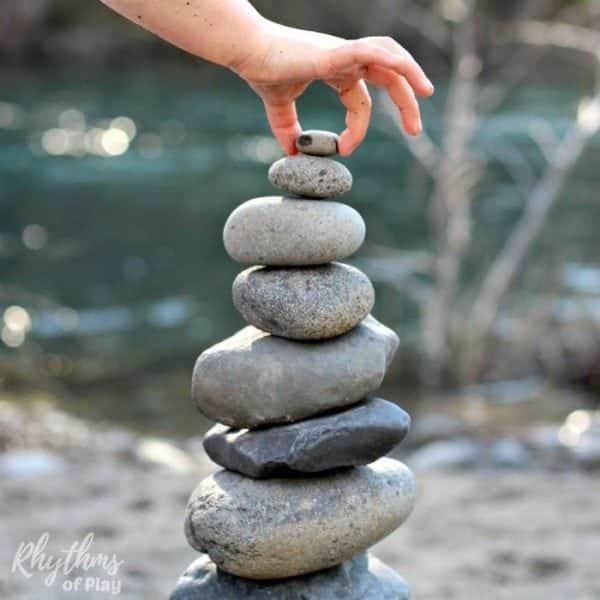
- Rock Balancing Stone Stacking STEAM
Related: Rainbow Science and STEAM activities
DIY Outdoor Play Areas to Support Learning Outside:
In today’s screen-filled world, challenging children’s minds and bodies with outdoor spaces that support and benefit the development of a healthy vestibular system, cardiovascular system, and gross and fine motor muscle movements is essential. Below is a list of fun outdoor play areas for nature school preschools, forest school kindergartens, homeschoolers, and backyard play areas that help do just that! Give your children the opportunity to get outside and learn through play in spring, summer, fall, and winter with these fun outdoor play spaces:
- How to Make an Outdoor DIY Chalkboard
- Best Sand and Water Tables to DIY or Buy!
- How to Grow a Sunflower House or Fort
- DIY Outdoor Art Table and Mud Kitchen
- How to Make a Fairy Garden
- Sandboxes Children LOVE!
- Swingsets, swings, and hammocks
- Little slides and big slides
- Climbing wall or structure
- Balance beams, logs, stumps, stepping stones, or large boulders to walk or climb on.
- Ninja Warrior Obstacle Course
- Zipline pulley and slack lines
- Outdoor trampoline
Field Trip Ideas for Parents and Educators:
Go on a field trip with the kids for even more outdoor learning fun!
- Apple Orchard Field Trip Ideas
- Pumpkin Patch Field Trip Family Guide
- Find your way in a Corn Maze
- Berry Picking and Wild Foraging
- Enjoy nature reserves near and far for wildlife viewing and more.
- Visit the information center at private, local, national, and state parks to learn about activities and adventures you can do with kids in each area.
Related: 8 Reasons I Allow My Child to Go Barefoot
Nature Activities for Kids: More Fun Ways to Learn about Nature:
Here are additional nature activities for kids that make learning fun and interesting:
Nature Tables for Every Season:
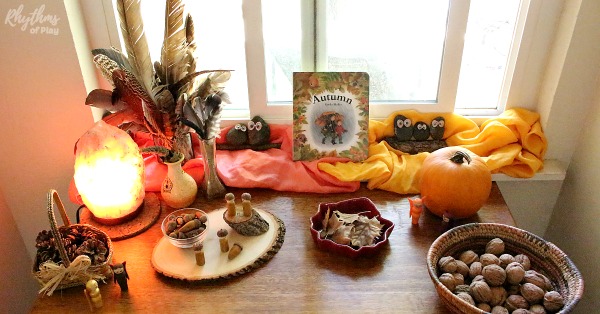
A nature table is a space in the home dedicated to nature and the natural world. Items collected in the natural world (or natural objects representing nature) are placed on the table to be learned about, played with, and enjoyed.
We change our nature table every few months to reflect the season, adding and removing items throughout the year. Check out our nature table ideas for each season! Invite your children to bring the treasures they collect from the natural world home to their nature table or shelf, where they can explore them more deeply:
Nature Activities for All Seasons:
Here’s a list of traditional seasonal celebration ideas during the year’s rhythm. Celebrating the changes that occur throughout the year and observing seasonal shifts is a great way to educate children about the annual transformations that take place in the natural world, bringing more meaning to family life.
Seasonal Celebration Ideas:
Celebrate the changing seasons within the “Wheel of the Year” with the solstice and equinox solar festival celebration ideas and cross-quarter day sabbat festivals below:
- Winter Solstice Celebration Ideas
- Imbolc Traditions and Celebration Ideas
- Ways to Celebrate the Spring Equinox
- May Day Traditions and Celebration Ideas
- Summer Solstice Celebration Ideas
- Celebrate Lugnasada or Lammas
- Ways to Celebrate the Fall Autumnal Equinox
- Samhain Traditions and Celebration Ideas
- Traditional Fall Lantern Walk Celebration Ideas
- Stone Spiral Advent
Fun Seasonal Activities To Do with Kids:
Here’s a list of fun outdoor activities for kids (and adults) during each season. Each one comes with a printable bucket list to help you easily check off each activity you accomplish:
- Summer Activities for Kids
- Fall Activities for Kids
- Winter Activities for Kids
- Spring Activities for Kids
Seasonal Books for Kids:
Reading seasonal books with your children is a beautiful way to share the wonder and magic of nature and the changing seasons:
Related: Kids’ Books That Teach Important Life Lessons

Nature Arts and Crafts for Kids (And adults, too!)
Creating arts and crafts with natural materials such as acorns or pinecones is an excellent way to help children develop their fine motor skills. Help children create arts and crafts with nature’s treasures with the fantastic list of nature arts and crafts ideas below. Be sure to visit this collection of Nature Crafts and Nature Art Activities for even more nature craft ideas.
- Acorn Marble Necklace or Christmas Ornament Craft
- Nature Mandla Art and Craft Ideas
- Fresh and Pressed Flower Crafts
- Flower Suncatchers
- How to Paint Rocks: Rock Painting Ideas for Kids
- Pine Cone crafts and activities
- The Best Fall Nature Crafts for Kids
- How to Preserve Leaves
- Leaf Lantern Craft (You can also make leaf lanterns with heart-shaped leaves or make a leaf turkey for Thanksgiving!)
- Easy Turkey Leaf Crafts for Thanksgiving
- How to Make a Fall Leaf Crown
- Nature-Inspired Sensory Bottles
- Sea Glass and Driftwood Wind Chime
- How to Crack Walnuts for Crafts
- Baby Jesus in a Walnut Shell
- Twig Tree Ornaments
- Orange Slice Ornaments
- Rustic Alphabet Ornaments
Seasonal Art Projects for Kids:
Creating seasonal art is an excellent way for children to learn about nature and the changing seasons. Try any of the fantastic art project ideas below!
- Fall Art Projects for Kids
- The Best Winter Art Projects for Kids
- Rainbow Art Projects, Crafts, and Painting Ideas
- Flower Art Projects and Painting Ideas
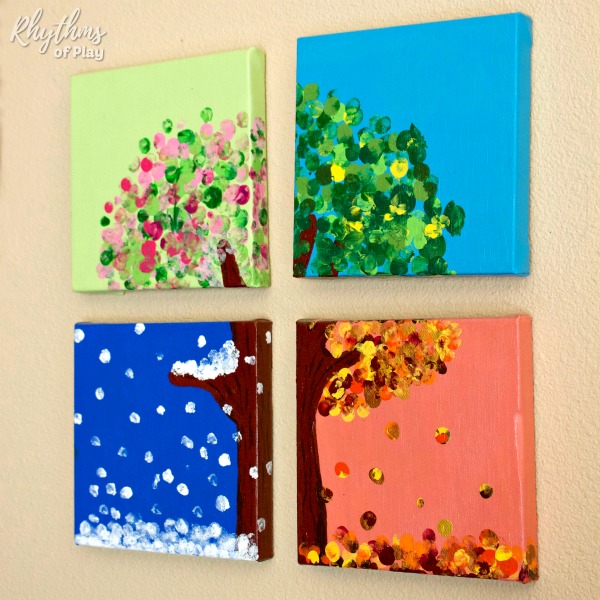
- Four Season Handprint and Fingerprint Tree
The Best Books for Outdoor Parents and Educators Raising Nature-Loving Kids
The list of books below is my all-time favorite for outdoor parents and nature school educators who are passionate about getting kids outside to learn naturally and away from those damaging, glowing screens. I know it can be challenging at times, but the health and wellness of our children and their developing brains and minds are worth it. I hope you enjoy the books on this list as much as I do:
- There is No Such Thing as Bad Weather
- Failure to Connect
- Last Child in the Woods
- Vitamin N: The Essential Guide to a Nature-Rich Life
- Nature Preschools and Nature Kindergartens: The Handbook of Outdoor Learning
- Balanced and Barefoot
- How to Raise a Wild Child
- Nature Fix
- Endangered Minds
- Glow Kids
The Best Nature Activities for Kids and Educators
I hope you enjoy this collection of outdoor learning ideas for homeschoolers, outdoor educators, and anyone looking to enhance their child’s connection to the natural world. You may also like this collection of nature crafts and art ideas.
I will continue to add to this list of nature school preschool, forest school kindergarten, and nature study ideas as we discover and create more, so be sure to bookmark this list of outside activities for kids and check back often!
Learn more about Nell Regan Kartychok, author and photographer of these outdoor nature play activities, and Rhythms of Play HERE!
If You Liked Nature Activities for Kids, You Might Also Enjoy:
- Spring Activity Ideas (with a printable spring bucket list)
- Summer Activity Ideas (with a printable summer bucket list)
- Fall Activity Ideas (with a printable fall bucket list for the autumn)
- Winter Activity Ideas (with a printable winter bucket list)